

How to Help a Dog Sleep Comfortably During a Heat Wave
Keep your dog cool with airflow, hydration, and a cooling bed. Place their bed in the coolest room of the house. Offer frozen treats and fresh water before bedtime.
Never shave a double-coated dog. Watch for heavy panting or lethargy, and call your vet if you see those signs.
Learning how to help a dog sleep comfortably during a heat wave is one of the most important summer skills any dog owner can develop. When temperatures stay high even after dark, your dog’s normal sleeping routine can fall apart completely. Panting, restlessness, and constant shifting position are all signs that your dog is struggling to cool down.
A dog’s normal body temperature sits between 101 and 102.5 degrees Fahrenheit, which means they start feeling the heat well before you do. Their cooling system relies on panting and limited sweat glands in their paw pads, not full-body sweating like humans. That makes nighttime heat waves genuinely dangerous, not just uncomfortable.
Understanding how your dog’s body handles heat is the first step toward building a safe sleep routine.

Why Getting This Right Matters for Your Dog’s Safety
Heatstroke is one of the fastest-moving emergencies a dog can face. Once a dog’s body temperature climbs past 104 degrees, organ damage can begin within minutes. The American Veterinary Medical Association classifies heatstroke as a life-threatening condition that requires immediate veterinary intervention.
Dogs cannot tell us when they are overheating. They rely on us to manage their environment. A heat wave that keeps temperatures above 80 degrees overnight creates a situation where your dog cannot cool down naturally.
The risk is highest for puppies, seniors, and dogs with existing health conditions.
Getting the sleeping environment right is not about extra comfort. It is about preventing a medical emergency that could land your dog in the ICU.
How Dogs Regulate Temperature (and Why Heat Waves Are Hard)
Dogs cool themselves primarily through panting. The moisture on their tongue and respiratory tract evaporates, carrying heat away with it. This works well in moderate heat with low humidity.
In a heat wave, the air is already saturated with moisture, so evaporation slows down dramatically.
Your dog also loses heat through their paw pads and nose, but those surfaces are tiny. They cannot shed enough heat through those areas alone to make a real difference when the ambient temperature stays high all night.
The American Kennel Club notes that dogs have a higher baseline body temperature than humans. That means the gap between “warm” and “dangerously hot” is smaller than you might think. A room that feels stuffy to you can feel like an oven to your dog.
The Real Danger Zone: Heatstroke vs. Heat Exhaustion

Heat exhaustion is the early warning stage. Your dog will pant heavily, drool more than usual, and may seem tired or unsteady. They might vomit or have diarrhea.
At this point, moving them to a cool area and offering water can reverse the situation.
Heatstroke is the next stage and it is a crisis. The dog stops panting effectively because their body is overwhelmed. Their gums turn bright red or blue, their eyes look glassy, and they may collapse.
At this point, cool them with wet towels (not ice water) and get to a vet immediately.
The difference between the two stages can be as little as 10 to 15 minutes in extreme heat. That is why proactive cooling before bed is so important.
Brachycephalic, Senior, and Double-Coated Breeds: Higher Risk
Not all dogs face the same level of danger during a heat wave. Brachycephalic breeds like Bulldogs, Pugs, and French Bulldogs have shortened airways that make panting far less effective. Their anatomy already puts them at risk for breathing problems, and heat adds another layer of stress.
The special needs of flat-faced breeds require extra attention when temperatures rise.
Senior dogs have weaker cardiovascular systems and may struggle to circulate blood efficiently for cooling. Their bodies also produce less panting response as they age. Dogs with heart conditions, obesity, or respiratory disease fall into the same high-risk category.
Double-coated breeds like Huskies, Malamutes, and Golden Retrievers have a thick undercoat that traps heat close to the body. Their coat is designed for cold weather, not summer. Brushing out the loose undercoat helps, but these dogs still need aggressive cooling measures during a heat wave.
Cooling the Sleeping Area: Airflow, Temperature, and Surfaces
Start by choosing the right location for your dog’s bed. The coolest room in the house is usually a basement or a room with northern exposure. Close curtains during the day to block solar heat from entering.
Open windows at night if the outdoor temperature drops below the indoor temperature.
Air conditioning is the most effective cooling method. As of 2026, the recommended thermostat setting for dogs during a heat wave is between 72 and 75 degrees Fahrenheit. If you do not have AC, use fans to create airflow.
Point a box fan toward your dog’s sleeping area, but aim it so it does not blow directly on them for hours. Direct airflow can dry out their eyes and respiratory passages.
Tile or concrete floors stay cooler than carpet or wood. Many dogs naturally gravitate toward the bathroom floor or kitchen tile during a heat wave. That is not a bad habit.
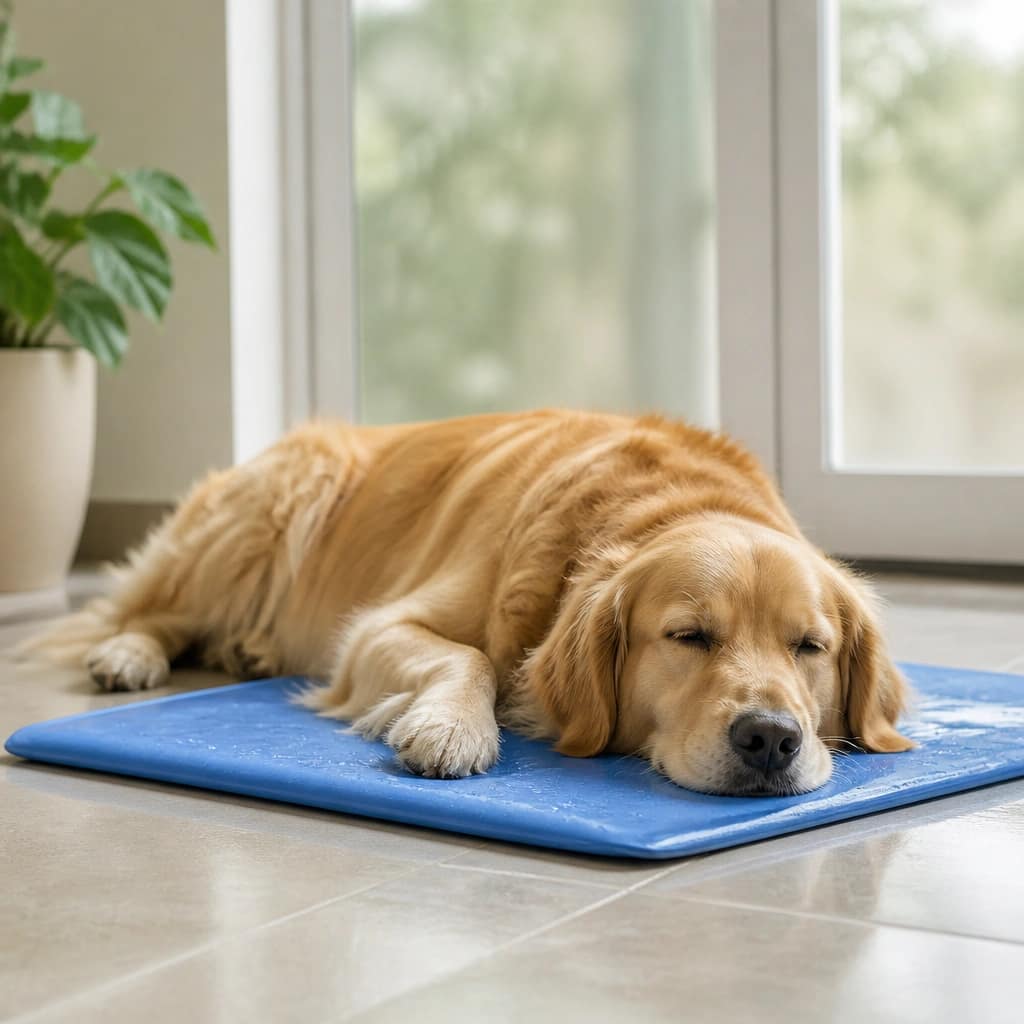
If your dog prefers the floor over their bed, let them sleep there. You can place a thin cotton mat or a cooling pad on the tile for a bit of cushion without trapping heat.
Think carefully about choosing the right location for your dog’s rest area. A spot near a draft or an open window can make a big difference, but avoid places where the sun hits directly in the morning.
Cooling Beds vs. Cooling Mats vs. DIY Cooling: What Actually Works

Elevated cot beds are the strongest option for continuous airflow. They lift your dog off the ground so air can circulate underneath. The mesh fabric stays cool to the touch and does not trap body heat.
Gel cooling mats absorb heat through phase change materials. They are great for short periods but need to recharge between uses. Most gel mats stay cool for 4 to 8 hours before they need to be removed and reset.
DIY cooling works well in a pinch. Frozen water bottles wrapped in a towel can be placed near your dog’s sleeping spot. A damp cotton towel laid on the floor gives them a cool surface to lie on.
Make sure your dog can move away from the cold spot if they get too chilly.
Our research shows that the best approach is a layered system. Start with an elevated bed in the coolest room. Add a gel mat or a frozen bottle option nearby so your dog can choose what feels best.
Hydration and Frozen Treats: What to Do Before Bedtime
Offer fresh cool water right before lights out. Dogs drink more when the water is cool rather than room temperature. Add a few ice cubes to keep it cold longer.
Frozen treats are a smart way to lower core temperature. Freeze low-sodium chicken broth or plain yogurt in ice cube trays. A few cubes before bed give your dog extra fluids and a slow cooling effect.
Avoid giving large amounts of ice water at once. That can cause stomach upset or bloat in deep-chested breeds. Steady small sips are safer than a big gulp of ice water.
Grooming for Heat: What to Brush and What to Never Shave
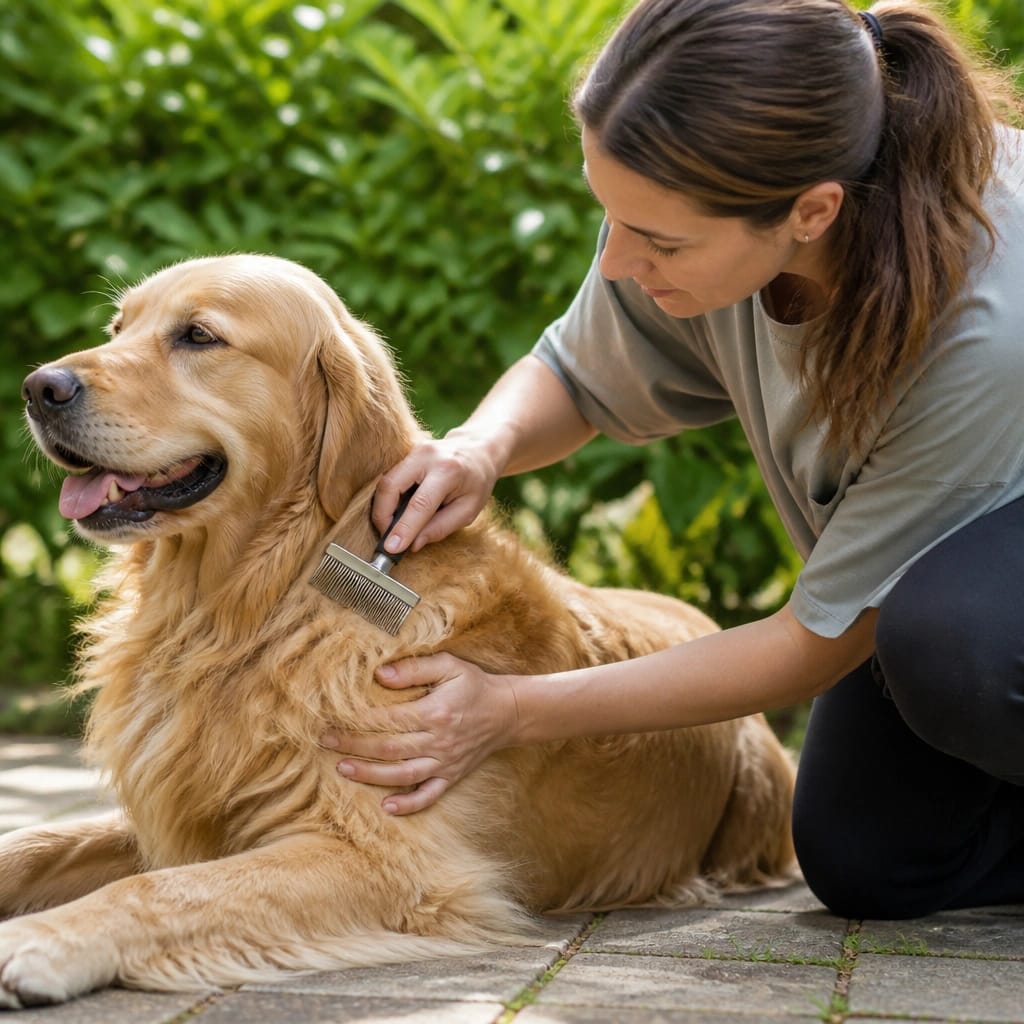
Brush out the loose undercoat on double-coated breeds. That trapped fur acts like an insulating blanket. Removing it lets air reach the skin and helps heat escape.
Never shave a double-coated dog. Their coat has two layers that work together to regulate temperature. Shaving damages the coat permanently and increases the risk of sunburn and heatstroke.
The American Kennel Club warns against it for exactly this reason.
Single-coated breeds can benefit from a trim, but leave at least an inch of fur. A short clean coat helps with cooling without exposing bare skin to the sun.
Common Cooling Mistakes That Can Make Things Worse
Leaving a wet towel on your dog for hours is a common error. The towel traps moisture against the skin and can actually raise body temperature. Use a damp towel for 10 to 15 minutes, then remove it.
Pointing a fan directly at your dog all night can dry out their eyes and nose. Aim the fan so it circulates air through the room without blowing straight on them.
Filling a plastic bed with memory foam that retains heat is another mistake. Many standard dog beds trap body heat. If your dog is sleeping on a thick foam bed, consider switching to an elevated cot or a thin cotton pad during a heat wave.
Some dogs naturally avoid their usual bed when it gets too warm, and understanding why they might avoid their usual bed can help you adjust.
Signs of Heat Stress: When to Act Fast and When to Call the Vet
Heavy panting that does not stop after 10 minutes of rest is a red flag. Drooling more than usual, bright red gums, and a glazed look in the eyes all signal trouble.
If your dog seems wobbly, collapses, or stops panting entirely, start cooling immediately. Move them to a cool area. Wet their paws, belly, and ears with cool (not ice) water.
Offer small amounts of cool water.
Call your vet right away if the panting continues, if they vomit, or if they seem confused. Heatstroke can cause organ damage even after the dog looks normal again. The American Veterinary Medical Association recommends immediate veterinary care for any suspected heatstroke case.
FAQs: Keeping Your Dog Cool and Comfortable at Night
Is it safe to give my dog ice cubes before bed?
Yes, in moderation. Ice cubes made from water or low-sodium broth are a safe way to lower core temperature. Avoid giving too many at once, especially for deep-chested breeds prone to bloat.
Should I leave a fan on all night for my dog?
A fan is helpful, but do not point it directly at your dog for hours. Position it to circulate air through the room. Watch for signs of dry eyes or excessive panting that suggest the airflow is too strong.
Can I use a cooling mat in my dog’s crate?
Yes, but make sure the mat is chew-resistant and non-toxic. Place it over a crate pad, not directly on plastic. Check that your dog can move off the mat if they get too cold.
What temperature is too hot for a dog to sleep in?
Any temperature above 80 degrees Fahrenheit becomes dangerous overnight. A dog’s body temperature is already higher than a human’s, so they feel the heat more intensely. Aim for 72 to 75 degrees if you have air conditioning.
How do I know if my dog is too hot at night?
Watch for heavy panting that does not stop, restless pacing, drooling, or seeking out cool surfaces like tile. If your dog cannot settle into a normal sleeping position, the room is too warm.
Bottom Line: A Simple Nighttime Routine That Works
Start with the coolest room in your house. Place your dog’s bed there, ideally an elevated cot or a thin cotton pad. Add a frozen water bottle wrapped in a towel nearby.
Brush out loose undercoat before bed. Offer fresh cool water and a few frozen treats. Watch for signs of heat stress, and call your vet at the first sign of trouble.
A proactive routine keeps your dog safe through the hottest nights.


