

How to Measure the Actual Sleeping Area of a Bolster Bed
You pull the tape measure from edge to edge. The bed looks huge. But when your dog curls up, half their body hangs off the bolster.
That’s because the number on the tag isn’t the real sleeping area.
How to Measure the Actual Sleeping Area of a Bolster Bed starts with understanding one simple fact: bolsters take up space. In our research across dozens of product pages, the actual flat surface is typically 20 to 30 percent smaller than the listed overall dimensions. That gap is exactly why so many dogs end up sleeping on the floor instead of their bed.
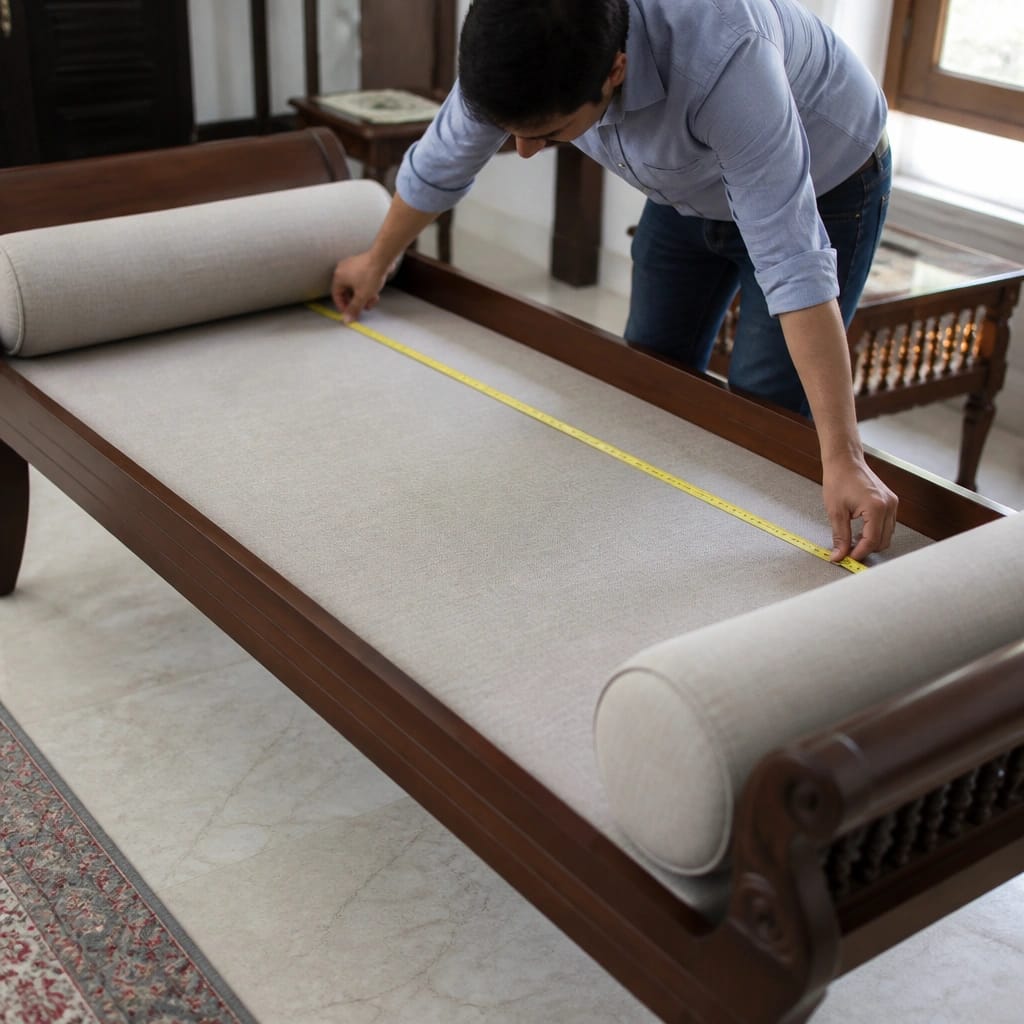
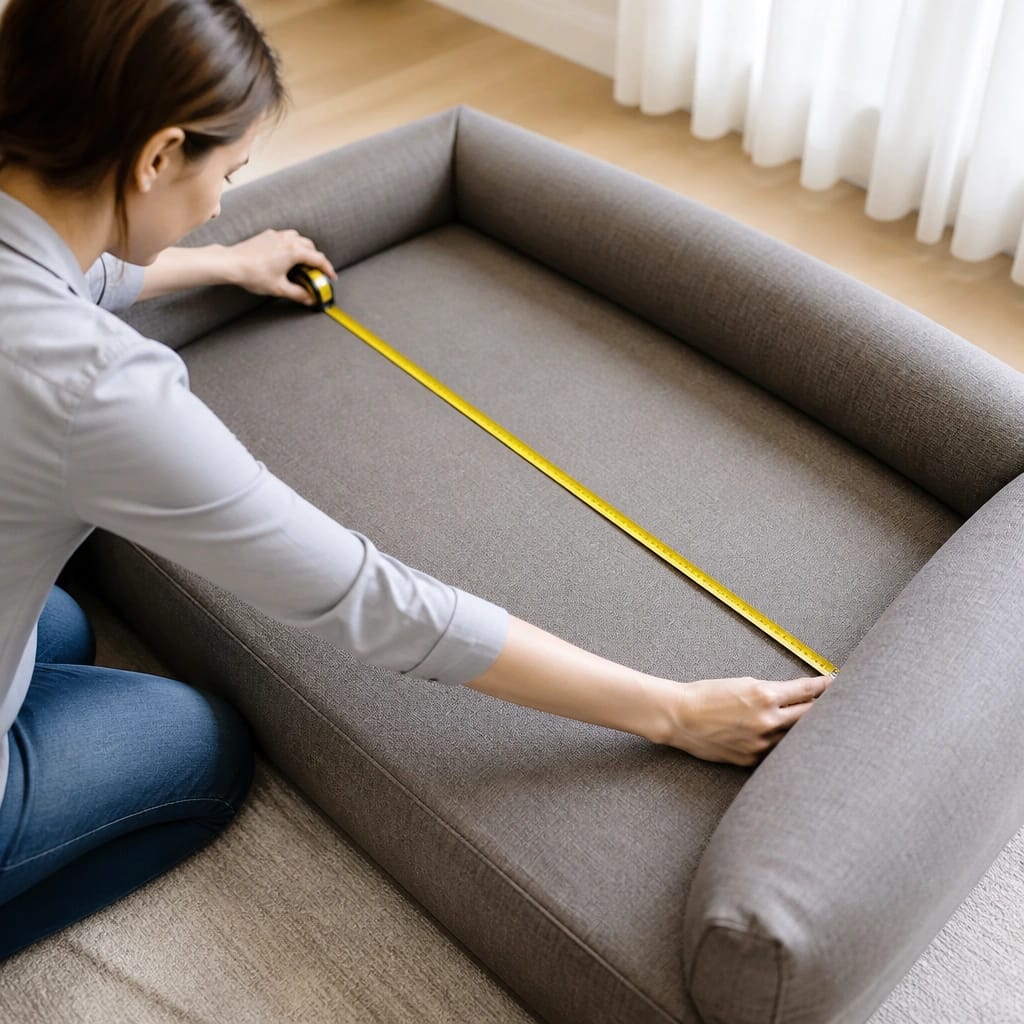
Measure from seam to seam. The seam is where the raised bolster attaches to the flat base. Use a flexible tape measure.
Run it along the center of the sleeping surface. Record length and width. Compare those numbers to your dog’s body length from nose to tail base.
Add two to six inches for stretching room.
Why Most Owners Measure Wrong (The Real Problem)
The biggest mistake is measuring the outer edge. People see a 36‑inch round bed and think it’s huge. But that 36 inches includes the bolster.
The actual flat center might only be 24 inches across. That’s why a Great Dane owner can buy a “large” bed and still find their dog’s legs hanging over the side.
Aggregate buyer feedback confirms this pattern. Hundreds of one-star reviews say “too small” when the bed technically matches the dog’s breed. The real issue isn’t the overall size.
It’s the usable sleeping area. And most product listings don’t show that number. If you measure correctly, you avoid returns and wasted money.
It also helps you decide the right size for a growing puppy, since you can check our guide on what size bed a puppy needs vs an adult dog.
Why Bolster Beds Are Trickier Than Flat Beds
Flat beds are simple. The sleeping area equals the full dimensions. But a bolster bed has a raised rim that eats into the center.
The bolster’s thickness and fill material determine how much space it claims. A high‑loft polyfill bolster can compress 50 percent under a heavy dog, but it still takes up horizontal room around the edge.
The key difference is the seam line. That seam is the border between the bolster and the base. Everything inside that seam is usable.
Everything outside is not. Some brands use a continuous bolster that wraps around the whole bed. Others have bolsters on two or three sides.
Each shape changes how you measure. If your dog loves to stretch out with their head on a pillow, a bolster dog bed can be great, but only if the sleeping area is wide enough for their full body.
What You Actually Need: Tools and Setup
You don’t need much. Here’s the short list:
- Flexible tape measure, Cloth or vinyl works best. A metal tape is too stiff to follow curves.
- A flat floor, Carpet can compress the bed and give a false reading.
- Good lighting, You need to see the seam clearly.
- Optional: a helper, For large beds, an extra set of hands keeps the tape straight.
Before you start, remove any cover or topper. Lay the bed flat with the bolster facing up. Let it sit for a few minutes so the fill settles naturally.
A freshly fluffed bed can measure larger than its settled state.
Step-by-Step: Measuring Seam to Seam
Follow these steps exactly. Take your time. A quarter‑inch difference can mean the difference between a perfect fit and a cramped dog.

Step 1: Identify the Bolster Seam Line
Run your fingers along the edge where the raised cushion meets the flat base. You’ll feel a ridge or a stitched line. That’s the seam.
In many beds, it’s a different fabric color or a double stitch. If you can’t see it, turn the bed over and look for the seam on the underside. It’s usually easier to spot there.
Step 2: Measure Length from Seam to Seam
Place the end of the tape measure at the seam on one end. Pull it straight across the center of the bed to the seam on the opposite end. Keep the tape flat against the sleeping surface.
Don’t let it ride up the bolster. Record that measurement in inches or centimeters.
Step 3: Measure Width from Seam to Seam
Repeat the process from side to side. Again, measure from seam to seam across the middle of the bed. For rectangular beds, the width is typically the shorter dimension.
For round beds, length and width should be nearly the same.
Step 4: Account for Curve or Taper in Oval/Round Beds
Oval and round beds often have a curved seam. The flat center might be narrower at the ends. To get an accurate read, take three measurements: one at the widest point, one at the narrowest, and one halfway.
Use the smallest measurement as your usable width. That’s the space your dog will actually fill. If the bed tapers sharply, the usable area can be much less than the listed diameter.
Compare your results to our dog bed size chart by weight for a reality check.
How to Compare Your Measurements to Your Dog’s Body
You’ve got the seam-to-seam numbers. Now you need your dog’s actual body length. Measure from the tip of the nose to the base of the tail.
Keep the tape straight along the spine. Don’t follow the curve of their back.
A common mistake is measuring while the dog is standing. A standing dog can be two to three inches longer than a sleeping one. Measure when they’re lying down in their natural sleeping position.
Add two to six inches for stretching room. A Golden Retriever that measures 30 inches nose-to-tail needs a sleeping area of at least 32 to 36 inches in length.
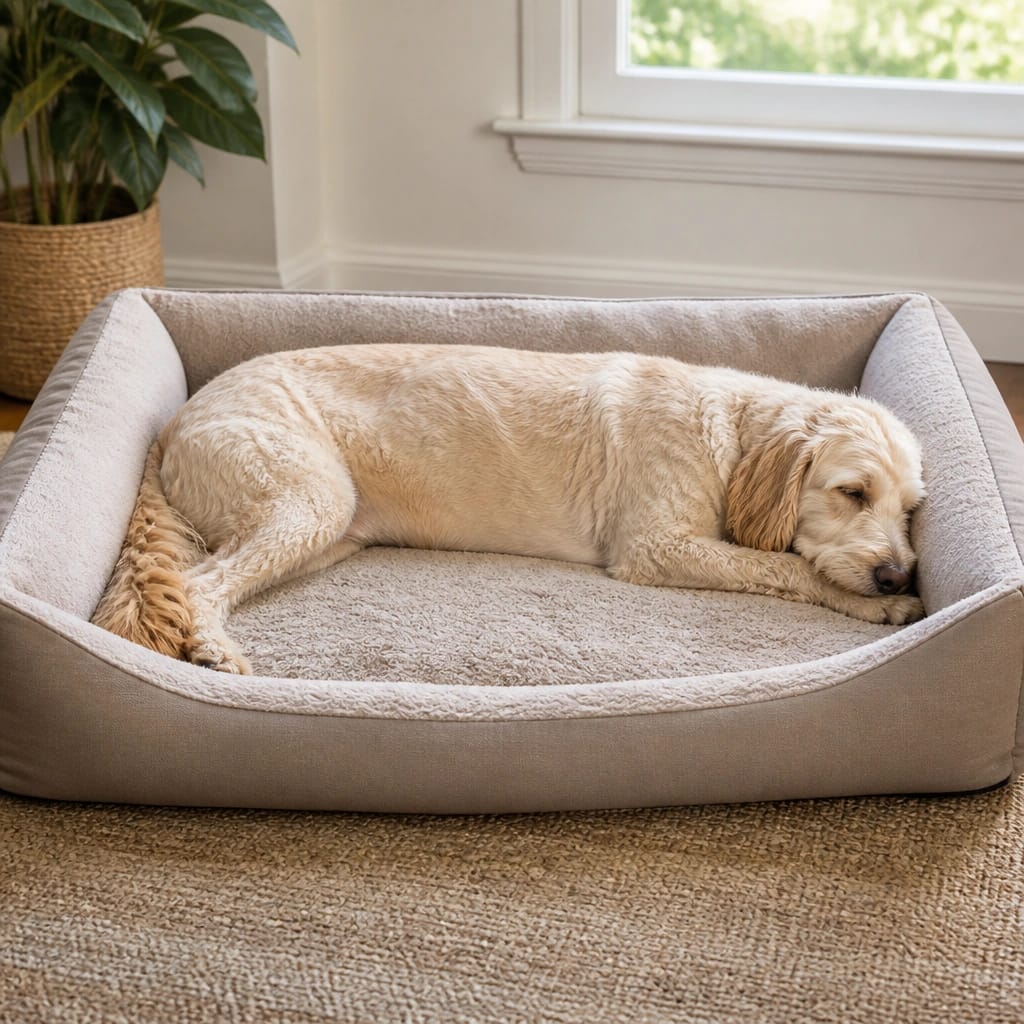
If your dog likes to curl up tight, a round bed with a shorter diameter can still work. But if they stretch out like a supermodel, prioritize length over width. Check their typical sleeping posture before you commit.
Common Visual Mistakes (And How to Avoid Them)
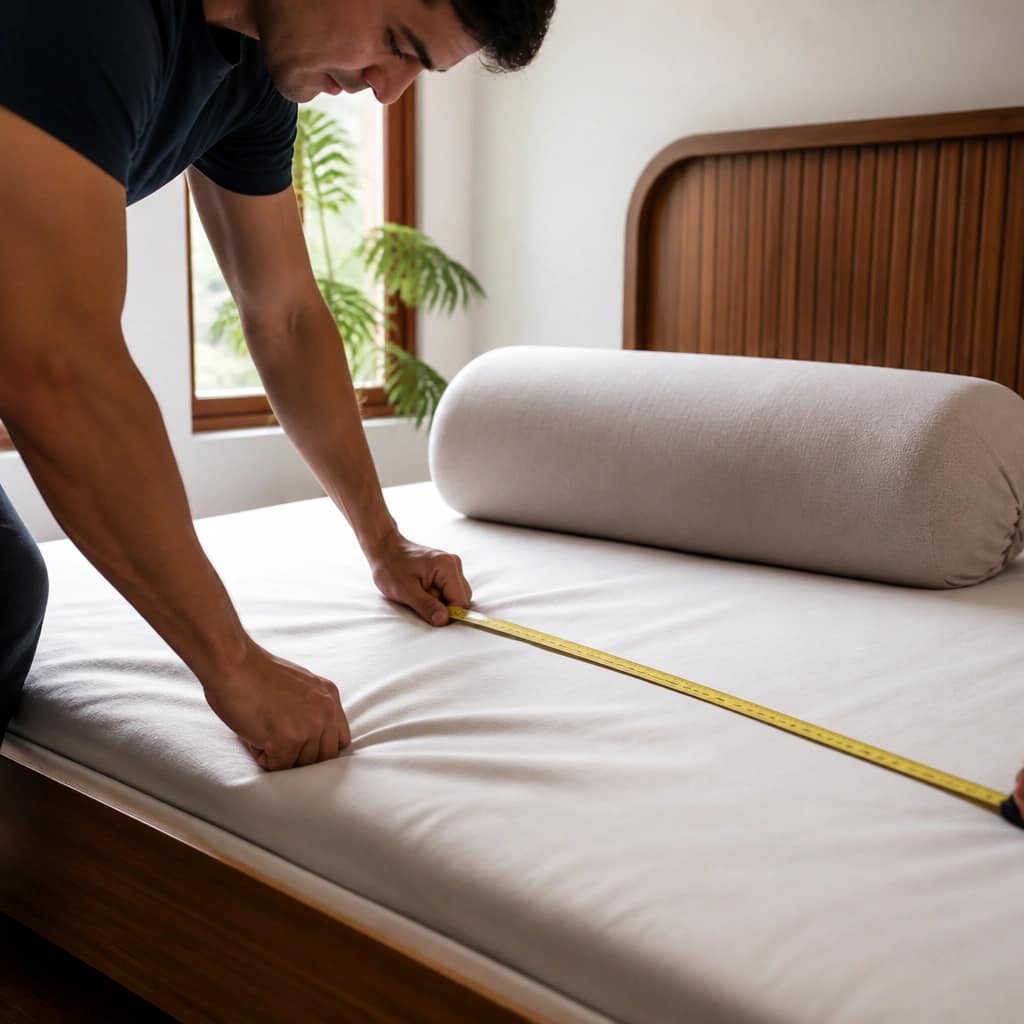
The biggest visual trap is the edge. Your eyes see the outer rim of the bolster and assume that’s the sleeping boundary. It’s not.
The bolster is a wall, not a floor. Your dog can’t sleep on the vertical part.
Another mistake is trusting the product photo. Manufacturers often shoot beds at an angle or with the bolster fully fluffed. That makes the flat center look bigger than it is.
Always read the spec sheet. Look for “sleeping area” or “interior dimensions.” If neither is listed, assume the flat surface is 70 percent of the overall size.
A third error is measuring on a soft surface. Carpet or a sofa lets the bed sink in. That changes the shape.
Always measure on a hard, level floor for consistent results.
When the Bolster Eats Up the Sleep Surface (Explained)
Some bolsters are built thick. A six-inch bolster on a small round bed can reduce the usable width by 10 to 12 inches. That’s the difference between a bed that fits a Cocker Spaniel and one that only fits a Chihuahua.
The fill material matters too. Shredded memory foam bolsters compress more than solid foam. A compressed bolster takes up less horizontal space.
But a polyfill bolster stays poofy and pushes inward. That’s why a bed advertised as 30 inches might only have 18 inches of flat space.
If your dog is close to the upper weight limit of a bed size, go up one size. A heavier dog compresses the bolster less (they sink in), but the outer wall still eats floor space. As of 2026, most major brands still don’t list interior dimensions.
That makes your tape measure the only reliable tool.
Real-Life Examples: Small, Medium, and Large Dogs
For a 12-pound Shih Tzu, a small round bed with a 20-inch overall diameter works fine. The seam-to-seam measurement is typically 14 inches. That leaves plenty of room for a curly sleeper.
A 55-pound Labrador needs more planning. A large rectangular bed with 40-inch overall length often has a 30-inch sleeping area. If your Lab measures 28 inches nose-to-tail, that two inches of extra room is tight.
Many owners end up upgrading to an XL.
For a 90-pound Great Dane, only XL or Jumbo beds matter. Look for a sleeping area of at least 42 by 32 inches. Anything smaller forces the dog’s legs over the bolster.
That defeats the purpose of the bed entirely. Check our guide on why some dogs choose the floor if your dog keeps avoiding their bed.
Frequently Asked Questions
Does the bolster compress enough to count as sleeping area?
Not really. Even a compressed bolster is still a raised edge. Your dog can’t spread out flat over it.
The seam-to-seam measurement is the true flat zone.
Should I measure with the cover on or off?
Off is better. Covers add thickness and can hide the seam line. If the cover is removable, take it off before measuring.
How do I measure a bolster bed that’s already in a crate?
Slide the bed out first. Measuring inside the crate adds compression and angles. You’ll get a false reading.
Always measure on a flat floor.
What if my dog’s body length matches the sleeping area exactly?
That’s too tight. Always add two to six inches. Dogs need room to shift positions during sleep.
A snug fit leads to restlessness.
Do different bolster shapes affect measurement?
Yes. A continuous round bolster has a smaller inner diameter than a U-shaped one. Measure each bed individually.
Don’t assume same size equals same sleeping area.
Final Checklist Before You Buy
Before you click purchase, run through this list. Confirm the seam-to-seam measurement matches your dog’s body length plus two to six inches. Check that the bolster height won’t crowd the flat center.
If the bed is for a crate, verify the interior dimensions against your seam measurement.
Look for products that list “sleeping area” or “interior dimensions” in the specs. If they don’t, assume the flat surface is smaller than advertised. Read buyer reviews for notes on usable space.
And if your dog has a habit of chewing or digging, check our guide on chew proof materials before committing.
The right fit means your dog can stretch, curl, and shift positions without hanging off the edge. That’s the whole point of a bolster bed. Measure once.
Buy right. Sleep better.


