

How Fabric Weave Affects Dog Bed Durability?
You don’t need a lab to check fabric quality. A simple hand test tells you a lot.
First, press your fingernail into the fabric and drag it sideways. If the threads shift or snag easily, the weave is too loose. A tight weave won’t budge.
Second, hold the fabric up to a light. If you see many small pinpricks of light coming through, the weave gaps are wide enough for claws to catch. A dense weave blocks most light.
Third, rub the fabric against itself in a circular motion. If it pills or fuzzes up quickly, it won’t hold up to daily scratching.

Finally, check the seam construction. Turn the cover inside out. Seams should be double-stitched or bound with extra fabric.
Single-stitched seams are the first failure point even on tough weaves.
If you’re buying online, look for denier and weave type in the product specs. Contact the manufacturer if the information isn’t listed. A reputable brand will tell you exactly what weave they use.
When to Replace a Bed vs. Repair the Cover
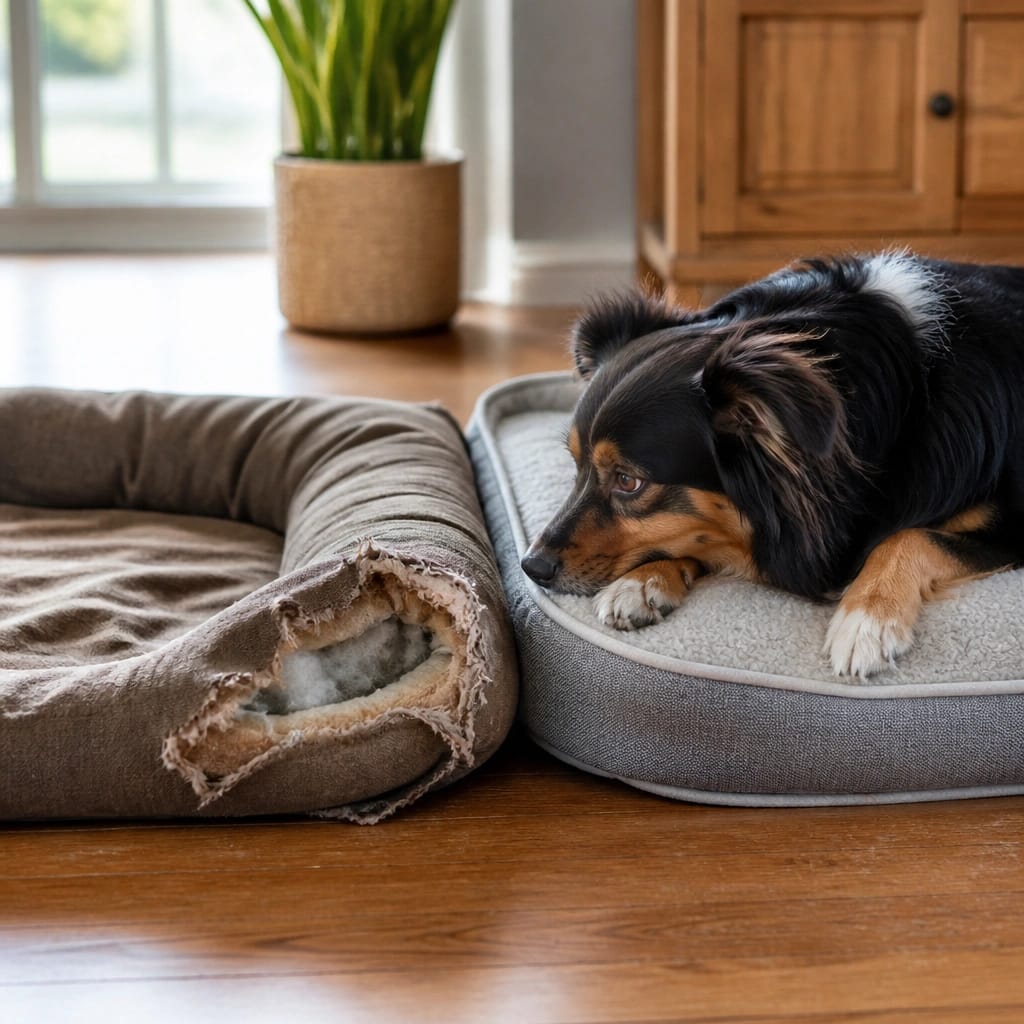
Small snags can be fixed. A single pulled thread doesn’t mean the bed is dead. You can trim the thread flush with the fabric and reinforce the spot with fabric glue.
This works for minor damage.
Replace the cover when the tear is longer than an inch or when stuffing starts escaping. A hole that size will only grow, especially with a digging dog. Continuing to use a bed with exposed filling risks ingestion.
If your dog chews or mouths the damaged area, swap it out immediately.
The bed frame and foam often outlast the cover. Many manufacturers sell replacement covers separately. That’s cheaper than buying a whole new bed.
Investing in a washable cover from the start makes maintenance easier and extends the bed’s life.
For heavy chewers, inspect the cover weekly. Look for loose threads at the corners and zipper ends. Catching a small problem early lets you patch it before it becomes a safety hazard.
Our guide on cleaning fabric covers can help keep the weave in good condition longer.
Frequently Asked Questions
What weave is best for a digger dog?
Ripstop weave with a denier of at least 600D. The grid pattern stops tears from spreading when claws catch the fabric. Twill weave is a decent second choice.
Is a higher thread count always better for durability?
Not exactly. Denier matters more than thread count. A 300 thread count with 150D threads is weaker than a 200 thread count with 600D threads.
Focus on denier first.
Can I repair a torn dog bed cover myself?
Yes, if the tear is small. Use fabric glue or an iron-on patch on the inside. For tears longer than an inch, replace the cover.
Sewing a large patch often creates new weak points.
How often should I check my dog bed’s fabric for wear?
Inspect it every few weeks if your dog scratches or chews. For calm dogs, a monthly check is enough. Look along the edges, corners, and zipper seams where stress is highest.
Does a waterproof coating affect the weave durability?
It can. Waterproof coatings add stiffness and reduce breathability. Some coatings crack over time, exposing the weave underneath.
A tightly woven fabric without coating often lasts longer than a coated loose weave.
What denier should I look for in a large breed bed?
Aim for 600D minimum. For dogs over 80 pounds or aggressive diggers, 1680D ripstop is the most durable option. Lower denier fabrics stretch and tear under heavy weight.
The Bottom Line on Weave and Durability
Fabric weave is the first line of defense for any dog bed. A tight, high-denier weave will outlast a loose ones by years. Match the weave to your dog’s behavior, not just your decor.
For diggers and heavy chewers, ripstop or high-denier twill is a smart investment. For calm, small dogs, a good plain weave is fine. Always check the seam construction and denier before buying.
Remember that even the strongest weave won’t fix a poorly constructed bed. Look for double stitching, reinforced zippers, and removable covers that you can wash. If you’re choosing between two beds at the same price, pick the one with the tougher weave every time.
Dogs aren’t gentle on their beds, but with the right fabric, their bed will be gentle on your wallet.
How Washing Affects Weave Longevity
Hot water and high heat degrade thread fibers over time. Machine washing on a gentle cycle with cold water preserves weave integrity longer. Air drying is safer than machine drying for any tightly woven cover.
Check the care label before you wash. Some ripstop fabrics can handle tumble drying on low. Others will shrink or warp, loosening the weave structure.
Weave and Temperature Regulation

Tight weaves trap more heat. That’s good for cold weather but can cause overheating in summer. Loose weaves breathe better but sacrifice durability.
For outdoor use in hot climates, a mid-weight twill weave balances airflow and strength. You can also use one of our cold weather beds for winter and a lighter cover in summer.
Zipper Quality and Weave Interaction
A strong weave means nothing if the zipper fails. Look for zippers with metal teeth and a covered flap that prevents fabric snagging. Cheap plastic zippers on a heavy weave cover will bind and break first.
Test the zipper action before buying. It should move smoothly without catching the surrounding fabric.
Fabric Weave and Allergen Resistance
Tighter weaves block more dander, dust, and pollen from penetrating the fill. Open weaves let particles pass through and accumulate inside. For allergy-prone dogs or owners, a high thread count twill or ripstop is a better choice than a loose plain weave.
Washable covers with tight weaves rinse clean more thoroughly. Loose weaves trap debris in the gaps between threads.
When Weave Alone Isn’t Enough
Some dogs will destroy any fabric regardless of weave. For extreme chewers, consider a bed with a chew-resistant outer layer or a reinforced bottom panel. The weave handles normal wear, but obsessive chewing needs additional protection.
If your dog has already destroyed multiple beds, look for a warranty that covers fabric damage. That safety net makes a high-denier bed a smarter investment.


