

Why Does My Dog Only Sleep on the Edge of the Bed?
If you’ve ever watched your dog shuffle to the very edge of their bed and flop down with half their body hanging off, you probably wondered why. It looks uncomfortable, but for many dogs, it’s completely normal. Why Does My Dog Only Sleep on the Edge of the Bed?
The short answer is that dogs often choose the edge for practical reasons: temperature control, joint relief, security, or simply because the bed itself isn’t the right size or firmness. It’s rarely a problem unless you spot signs of pain or anxiety.
In our research, dogs typically spend 8 to 10 hours per day sleeping as of 2026. That puts the bed’s fit and support at the centre of their comfort. Understanding why they prefer the edge comes down to observation and a few simple checks, which we’ll walk through step by step.
Dogs sleep on the edge of the bed to regulate body heat, relieve pressure on sore joints, or feel more secure. The edge offers cooler air and a quick escape route. It can also mean the bed is too small, too soft, or too warm. Most of the time it’s harmless. Watch for stiffness, limping, or restlessness, which may signal pain. If those appear, consult your veterinarian.

Common Reasons Behind Edge Sleeping Behavior
Dogs don’t pick the edge randomly. Several instincts and physical factors drive this choice. The table below summarizes the most common causes, which we’ll break down in detail.
| Reason | What It Looks Like | Typical Dogs |
|---|---|---|
| Overheating | Stretches out, pants, avoids centre | Thick coats, heavy breathers |
| Joint pain | Hesitates to settle, shifts often | Seniors, active breeds |
| Anxiety | Sleeps facing the door, ears alert | Rescue dogs, nervous pups |
| Denning instinct | Curls tight, prefers corners | Small breeds, burrowers |
| Bed too small | Half body hangs off often | Large dogs in undersized beds |
Temperature Regulation and Overheating
Dogs cool themselves mostly through their paws, ears, and belly. The edge of a bed gives them access to cooler floor air and better airflow around their body. Thick-coated breeds like Huskies, Golden Retrievers, and German Shepherds often push toward the boundary when the room runs warm.
If your dog lies stretched out with legs dangling, heat is the likely culprit. The fix is simple: lower the room temperature, switch to a cooling bed, or choose a bed with breathable fabric.
Joint Pain and Orthopedic Discomfort
Arthritis, hip dysplasia, and age-related stiffness make firm, flat bedding painful. Dogs with sore joints often avoid the thickest part of a soft bed because it lacks support. The edge, where the foam meets the floor, feels more stable and firmer.
Watch for slow rising, reluctance to climb onto the couch, or limping after naps. If you notice these, an orthopedic memory foam dog bed with proper density might help. But pain should always be evaluated by a vet first.
Anxiety and the Need for Security
Nervous dogs sleep with their back against something solid. The edge of a bed gives them an open escape path while still offering some cushion. You’ll often see them facing the door or window, ears twitching at every sound.
This is common in rescue dogs, puppies adjusting to a new home, or dogs that startle easily. A calming donut dog bed with raised bolsters can provide the security they seek without losing the open side.
Denning Instincts and Pack Behavior
Dogs descend from den-dwelling ancestors. Many still prefer a corner-like space where they can curl up and feel protected. The edge of a bed mimics that boundary, especially when the bed sits against a wall.
Small breeds and natural burrowers, like Terriers and Dachshunds, often gravitate to edges because they love digging and burrowing into tight spaces.
Habit and Personality
Some dogs simply prefer the edge. It’s not a medical issue or a training problem. Independent dogs, confident dogs, and dogs that run warm in general often just like the spot.
If your dog is healthy, eating well, and sleeping normally, there’s no reason to change anything.
Bed Size and Support Issues
Sometimes the bed is simply wrong. If your dog’s body hangs off the edge frequently, the bed is too small. A dog should be able to stretch out fully without any part of their body touching the floor.
Check our dog bed size chart by weight to make sure you haven’t undersized the bed. A bed that’s too soft can also cause the edge preference, as the middle provides no support.
How to Diagnose Your Dog’s Specific Reason
You don’t need to guess. A little observation over a few days will reveal the cause. Follow this simple decision tree.
Look at the Sleeping Position
Does your dog stretch out flat or curl into a tight ball? Stretching signals heat. Curling signals a need for security or cold.
If they sleep like a “loaf” with paws tucked but body on the edge, they’re likely just comfortable.
Check the Room Temperature
If the room is above 22°C (72°F), many dogs overheat at night. Move the bed away from radiators, vents, or direct sunlight. If your dog has a thick coat, consider a cooling mat or a bed with gel-infused foam.
Watch for Pain Signals
Pay attention when they wake up. If they’re stiff, slow to stand, or limp for the first few steps, joint pain is likely. If they whine when lying down or shift positions constantly during the night, that’s another red flag.
A dog that avoids the centre of a soft bed often does so because deep foam hurts their hips or spine.
Evaluate Recent Changes
Has anything changed in your home? A new pet, a move, a change in your work schedule, or even a new scent on the bed can trigger anxiety-driven edge sleeping. Dogs are creatures of habit.
If the behavior started suddenly, think about what shifted in their environment.
Test a Different Setup
Moving the bed to a cooler spot flat against the wall can tell you a lot. If your dog immediately settles in the middle, the original location or bed was the issue. If they still hover at the edge, try a firmer bed or a bolster dog bed to give them a headrest and security.
When to Talk to Your Vet
Most edge sleeping is harmless. But certain signs warrant a veterinary check.
Red Flags That Indicate Pain or Illness
Book a vet appointment if you notice any of these:
- Limping or stiffness after rest
- Whining or whimpering when lying down
- Reluctance to jump onto furniture
- Loss of appetite or energy
- Excessive panting at night
- Sudden change in sleeping habits
How to Describe the Behavior to Your Veterinarian
Tell your vet exactly where your dog sleeps, how often they shift positions, and whether you’ve noticed any other symptoms. Bring a short video if you can. Vets can’t observe your dog’s night-time behaviour in the clinic, so your description matters.
Per the American Veterinary Medical Association, early detection of arthritis and hip dysplasia improves treatment outcomes significantly.
Ruling Out Medical Causes Before Changing the Bed
Rule out pain before you spend money on a new bed. Treating the underlying issue is always more important than choosing different foam. If your vet clears your dog, then you can focus on comfort, size, and placement.
Choosing the Right Bed for an Edge Sleeper
If your dog is healthy and simply prefers the edge, a different bed might reduce the behavior. The goal is to make the entire surface as appealing as the edge.
Bed Size: Matching the Bed to Your Dog’s Measurements
Measure your dog from the tip of the nose to the base of the tail. Add 10 to 15 cm (4 to 6 inches) for sprawlers. That total is the minimum bed length you need.
A medium bed might fit your Cocker Spaniel nicely, but if they stretch out, they’ll gravitate to the edge. Our complete guide to dog beds covers measuring in detail.
Foam Type: Memory Foam vs. Polyfill vs. Cooling Gel
Memory foam supports joints and distributes weight evenly. Polyfill is soft but lacks support and flattens quickly. Cooling gel pulls heat away from the body.
If your dog sleeps on the edge to escape heat, a gel-infused or ventilated foam bed could solve the problem.
Bolster Beds vs. Flat Mats
Bolster beds have raised sides that act like a headrest and create a den-like feel. Dogs that sleep on the edge for security often do well with a cave hooded dog bed or one with three bolsters. Flat mats suit dogs that overheat, since they offer maximum airflow.
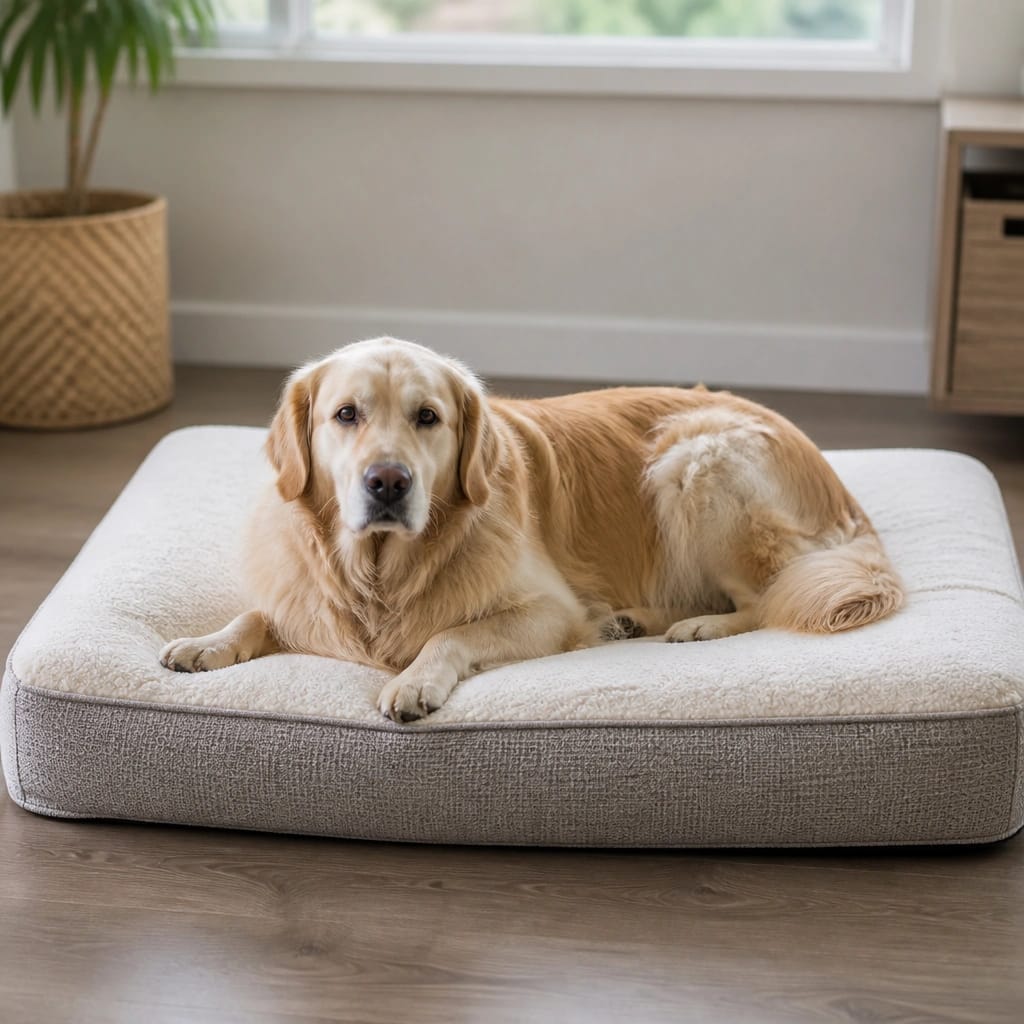
Cooling Beds for Hot Sleepers
If your dog pants at night and stretches along the edge, cooling is your priority. Look for beds with breathable mesh sides, cooling gel inserts, or elevated designs that allow air to circulate underneath. An elevated dog bed cot can be a great option for hot sleepers since it keeps the dog off the warm floor.
Orthopedic Beds for Senior Dogs
Senior dogs with joint issues need firm, high-density foam. The foam should be thick enough to prevent the dog from sinking to the floor. A depth of 8 to 10 cm (3 to 4 inches) is a typical starting point.
If your senior dog prefers the floor to the centre of their bed, the bed is too soft.
Washability and Durability Considerations
Dogs that sleep on edges often drool, shed, or bring dirt onto the exposed side. A removable, machine-washable cover saves you constant cleaning. Choose a waterproof dog bed if your dog drinks a lot, has accident issues, or spends time outdoors before sleeping.
Check that the cover zipper is reinforced, since seams fail first on many beds.
How to Train Your Dog to Sleep Fully on the Bed
Training works when you make the centre of the bed feel rewarding. Dogs don’t respond to force. They respond to treats, familiar scents, and a calm routine.
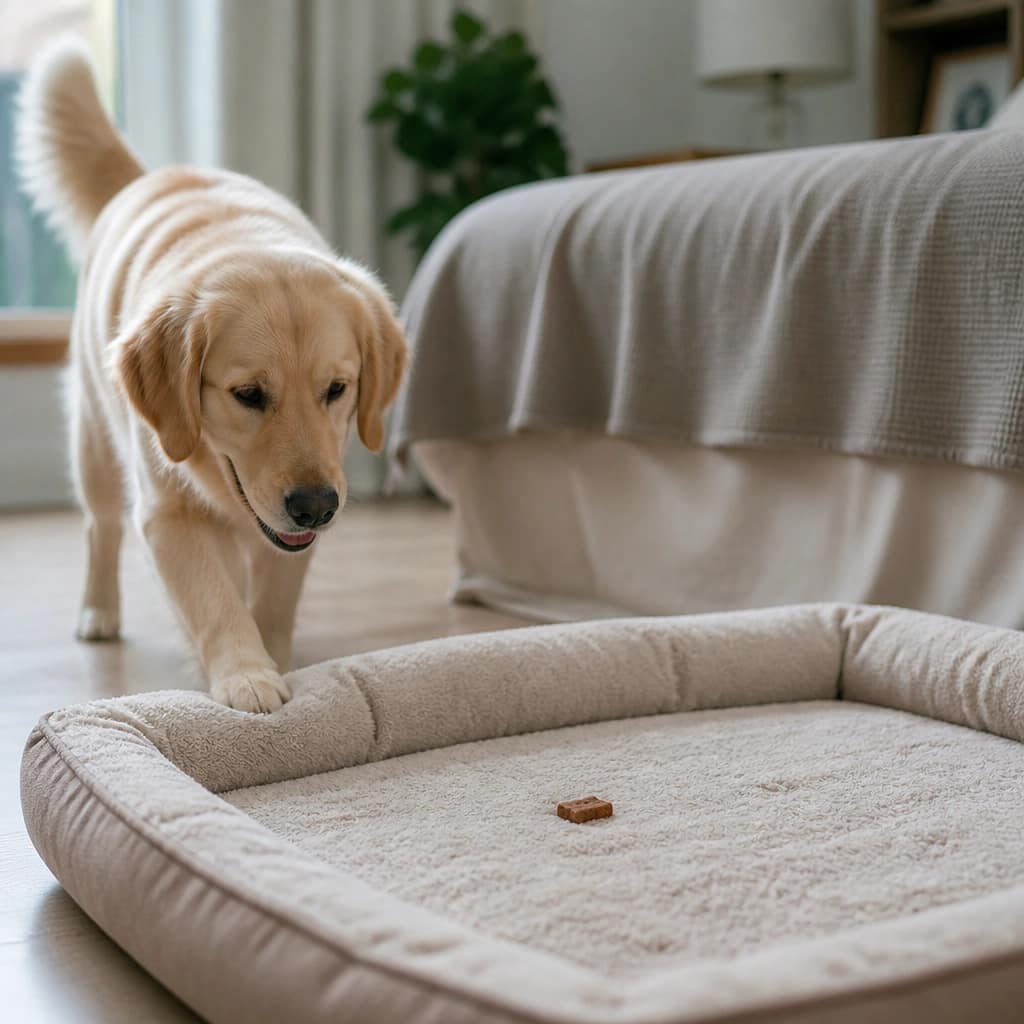
Introduce the Bed Gradually with Positive Reinforcement
Place a treat in the centre of the bed. Let your dog see it. When they step on the bed, say “yes” and give them a different treat.
Repeat this several times a day. The goal is to build a positive association with the space.
Do this for five to ten minutes daily. Dogs learn through repetition, not through one long session. Within a week, most dogs will voluntarily step onto the bed to check for treats.
Use Familiar Scents and Layering
Dogs are driven by smell. Add a blanket they already use and a shirt that carries your scent. The familiar smell makes the centre feel safer.
A cave hooded bed does this naturally, since the enclosed shape traps odours and creates a den-like atmosphere.
Place Treats and Toys to Encourage Center Sleeping
Drop treats across different parts of the bed, especially the middle. Encourage your dog to search them out. Kong toys, puzzle feeders, and chew treats work well too.
When your dog settles in the centre, reward them immediately. Consistency matters more than timing.
Adjust Bed Placement for Better Engagement
Move the bed closer to where you spend time. Dogs are social animals. If the bed sits in a quiet corner away from the family, many dogs will avoid it and sleep on the edge of your sofa instead.
Position the bed near your feet while you watch TV or work. The connection to your presence makes the bed more attractive.
Create a Consistent Bedtime Routine
Dogs thrive on structure. Walk, then settle, then sleep. Lead your dog to the bed, give a command like “bed” or “settle,” and reward them when they lie in the centre.
Over time, the routine becomes a cue. The Association of Professional Dog Trainers recommends keeping training sessions short and ending on a positive note.
Where to Place the Bed and How to Make It Cozy
Placement often matters more than the bed itself. A bed in the wrong spot will be ignored, no matter how comfortable it is.
Best Room Locations for Different Dog Personalities
Warm-sleeping dogs need cooler rooms with airflow. Anxious dogs need a spot against a wall, facing the room so they can see entry points. Social dogs need proximity to family activity.
Match the location to your dog’s temperament, not to your home’s decor.
Managing Room Temperature for Comfort
Keep the room between 18°C and 22°C (65°F to 72°F) for most dogs. Move beds away from radiators, air conditioning vents, and direct sunlight. If your dog still gravitates to the edge for coolness, a cooling mat on top of the bed can help without replacing the entire setup.
Adding Blankets, Pads, and Supportive Layers
Layering gives you flexibility. Start with the main bed, add a fleece blanket that’s easy to wash, and adjust thickness based on how much your dog sinks. For senior dogs, place a firm support pad underneath the bed to prevent sagging.
This reduces pressure on joints without making the bed too hot.
Avoiding Drafts, Noise, and High-Traffic Areas
Dogs sleep in cycles of about 20 minutes, and interruptions affect their sleep quality. Keep the bed away from doorways, hallway traffic, and appliances that make sudden noises. A quiet, consistent spot signals that it’s safe to settle deeply.
Common Mistakes to Avoid When Fixing Edge Sleeping
Some common missteps will make the problem worse, not better.
Assuming the Dog Is Just “Being Difficult”
Edge sleeping is rarely stubbornness. It’s usually tied to discomfort, temperature, or anxiety. Looking for the root cause before changing anything will save you time and money.
Pushing your dog into the middle of the bed without addressing the underlying reason will only create stress.
Buying a Bed That’s Too Small or Too Large
A bed that’s too small forces the dog to hang off the edge. A bed that’s too large can feel exposed and unsafe. Measure your dog from nose to tail base, then add 10 to 15 cm.
That’s the minimum length you need.
Ignoring Signs of Pain or Anxiety
If your dog limps, whines, or avoids the bed entirely, a new bed won’t fix it. Pain relief and behaviour support come first. Always consult your veterinarian before spending money on bedding for a dog showing discomfort.
Switching Beds Too Quickly Without Transition
Dogs bond to scent. A brand-new bed without any familiar smells is foreign territory. Start by placing your dog’s old blanket or a worn t-shirt on top of the new bed.
Let them investigate on their own terms. Forcing them onto the bed creates a negative association.
Forcing the Dog to Use the Bed
Never push, drag, or confine your dog onto the bed to “teach” them to use it. That teaches fear, not comfort. If they spook from a memory foam bed’s unfamiliar texture or an insulated cover’s retained heat, they’ll actively avoid it.
Let them choose to explore it at their own pace.
Frequently Asked Questions
Is It Normal for My Dog to Sleep on the Floor Instead of the Bed?
Yes, it’s common. Many dogs sleep on the floor when the bed is too warm, too soft, or placed somewhere they don’t feel comfortable. If your dog is healthy but prefers the floor, accept that choice, provided they don’t seem visibly uncomfortable.
Why Does My Dog Sleep on the Edge Even in a Large Bed?
The edge itself offers something the centre doesn’t. It could be cooler air, firmer support, or a sense of security with a quick escape route. In a large bed, the edge still provides these same benefits.
Can a Dog’s Sleeping Position Indicate Illness?
Sometimes it can. Stretching all four legs with panting may indicate overheating. Curling tightly while shivering might signal cold or pain.
Lying flat but refusing to settle could point to anxiety. If you notice a position change along with limping, whining, or a reduced appetite, call your vet. The American Veterinary Medical Association suggests that changes in sleeping routines are worth a conversation with your vet.
Should I Let My Dog Sleep on My Bed at All?
That’s a personal preference, not a health risk for most healthy adult dogs. If you have allergies, sleep issues, or a dog with mobility problems, it’s reasonable to keep them off the bed. For most dogs, sleeping near their owner actually has a calming effect.
How Often Should I Replace My Dog’s Bed?
Most dog beds last between one and two years with regular use. Memory foam usually breaks down faster for heavier dogs. Press the centre of the bed.
If it doesn’t bounce back or you can feel the floor through the foam, it’s time to replace it.
Final Decision Guide: What to Do About an Edge-Sleeping Dog
Here’s how to move forward based on what you’ve observed.
If your dog shows signs of pain, stiffness, or limping, book a vet visit first. Address the medical issue before you change anything about the bed.
If your dog seems healthy but avoids the centre of a soft bed, they likely need firmer support. Try a flat mat or a high-density foam option. If they still avoid the centre, the issue is more likely warmth or anxiety.
If your dog prefers the edge for cool airflow, lower the room temperature, switch to a mattress with cooling gel, or choose a bed with breathable mesh sides. If airflow is the problem, an elevated cot design allows air to circulate underneath and helps with heat regulation.
If your dog chooses the edge out of habit and seems perfectly comfortable, that’s okay. Not every sleeping preference needs fixing. A dog that’s eating well, sleeping normally, and showing no signs of discomfort is likely perfectly content.
Watch the behaviour but don’t force a change. After a few nights of observation, you’ll have a clear picture of what your dog needs. Most likely, a small adjustment to the bed or its placement will resolve the edge-sleeping habit.
If you’ve tried these options and your dog still prefers the edge, that’s completely normal. Allow your dog to choose what feels right, and continue to watch for any signs of pain or anxiety.
Not every sleeping preference needs fixing. A dog that’s eating well, sleeping normally, and showing no signs of discomfort is likely perfectly content. Watch the behavior but don’t force a change.
After a few nights of observation, you’ll know exactly what your dog needs. Most likely, a small adjustment to the bed or its placement will resolve the edge-sleeping habit. And if you’ve tried everything and your dog still prefers the edge?
That’s completely normal. Some dogs just like the boundary. Let them be comfortable.
Keep an eye on their health, keep the bed clean, and enjoy the fact that your dog trusts you enough to sleep near you at all.


