

Choosing a Bed for a Dog with Hip Dysplasia
Choosing a bed for a dog with hip dysplasia comes down to one thing: support. A flimsy cushion won’t help when your dog’s hip joints carry the weight of every step. The right bed reduces pressure on sore joints, improves sleep quality, and eases morning stiffness.
The wrong one makes the pain worse.
Manufacturer specifications typically recommend high-density memory foam rated at 4 to 5 pounds per cubic foot for dogs with joint issues. That works out to roughly 3 to 6 inches of solid foam, not the thin polyfill found in budget beds. As of 2026, most orthopedic dog beds claim this density, but the actual foam thickness and firmness vary widely.
Here’s what actually matters when you compare options.

Dogs with hip dysplasia need firm, thick memory foam for joint support. Look for a low-entry design that’s easy to get into. Pick a non-slip base and a washable cover. Choose a size that lets your dog stretch fully. Verify foam density rather than trusting the label.
Why Bed Choice Matters for Dogs with Hip Dysplasia
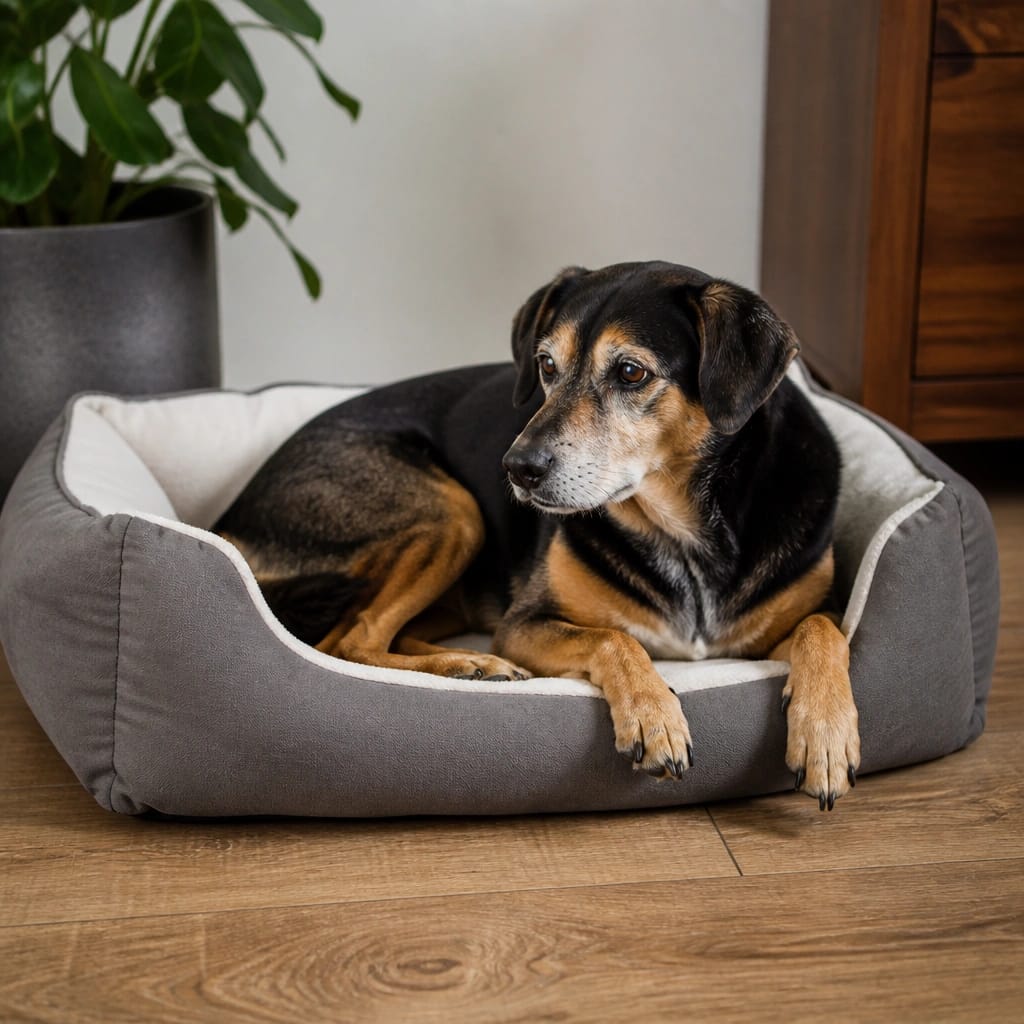
How Hip Dysplasia Affects Sleep and Comfort
Hip dysplasia causes the ball-and-socket joint to develop abnormally. The joint loosens, cartilage wears down, and inflammation builds. Your dog compensates by shifting weight to other joints, which creates new pain.
Sleeping on a hard surface presses directly into those inflamed joints. That cuts circulation and forces your dog to reposition constantly. That’s why many dysplastic dogs wake stiff and struggle to stand after a night on the floor.
The Dog Beds Complete Guide explains how sleep posture and surface selection work together.
The Difference Between Support and Softness
Soft isn’t the same as supportive. A plush bed that swallows your dog’s body offers no joint relief. What you want is a bed that contours to the hips while keeping the spine neutral.
High-density memory foam does that because it responds to body heat and pressure. It molds around the dog’s shape instead of flattening beneath it. A firm but contouring surface spreads the load across a larger area.
That’s exactly what veterinary guidance calls for.
What Makes a Bed Orthopedic: Foam Density and Thickness

Memory Foam vs. Polyfill vs. Egg-Crate Foam
Polyfill beds flatten within weeks. Egg-crate foam provides some cushion but no deep pressure relief. High-density memory foam is the only material that reliably supports a dog with hip dysplasia.
The key specification is foam density, not the word “orthopedic” printed on the label. A bed with certified 4-pound density will outperform a thicker polyfill bed every time. If you want a deeper look at the material itself, our Memory Foam Dog Bed breakdown covers the differences.
Recommended Foam Density and Thickness by Dog Weight
| Dog Weight | Minimum Foam Density | Recommended Thickness |
|---|---|---|
| Up to 25 lb | 4 lb/ft³ | 3 inches |
| 25–50 lb | 4 lb/ft³ | 4 inches |
| 50–75 lb | 4.5 lb/ft³ | 5 inches |
| 75+ lb | 5 lb/ft³ | 6 inches |
These numbers come from foam manufacturer specifications and orthopedic product documentation. If a bed won’t state its foam density, treat the orthopedic claim with caution.
Key Features to Look for in a Hip Dysplasia Bed
Low-Entry Design and Mobility Access
Dogs with hip dysplasia struggle to climb. A high-sided bed with thick bolsters creates a barrier they can’t manage. Flat or barely raised designs let your dog step in rather than jump.
If you must have a bolster bed, choose one with a low front cutout. The Orthopedic Foundation for Animals, which screens dogs for hip dysplasia, emphasizes reducing unnecessary joint strain as a core part of daily management.
Bolsters vs. Flat Mattress-Style Beds
Bolsters provide head support and a sense of security. But they can trap a dog with limited rear-leg strength. Flat mattress-style beds are safer for most dogs with hip dysplasia because they allow unrestricted stretching.
If your dog likes leaning against something while sleeping, place a firm pillow next to a flat bed. It achieves the same comfort without blocking exit. A simple Bolster Dog Bed with a low entrance can work, but only if your dog can step over it without struggling.
Non-Slip Base and Waterproof Liner
Getting up is hard enough without the bed sliding across the floor. A non-slip base keeps the bed steady while your dog pushes against it to stand.
A waterproof liner protects the foam from accidents and makes cleanup far easier. This matters because dogs with hip dysplasia often lose bladder control during deep sleep. If that becomes a pattern, a Waterproof Dog Bed is worth the upgrade.
Washable Covers and Hygiene
Look for a cover that zips off and goes in the washing machine. Allergens, fur, and odor accumulate quickly in a bed you can’t clean properly. Wash the cover weekly if your dog spends most of the day on it.
Measuring Your Dog for the Right Bed Size
Step-by-Step Measurement Guide
Start by measuring from the tip of the nose to the base of the tail. That’s the critical dimension. Then add 6 to 10 inches of extra space.
Your dog needs room to stretch without hanging off the edge.
For larger breeds, add up to 12 inches. A dog that measures 36 inches from nose to tail needs a bed that’s at least 42 inches long. Dogs with hip dysplasia often stretch out to relieve pressure, so round up rather than down.
Matching Bed Size to Breed and Sleeping Position
Dogs that sleep on their side need more length than dogs that curl into a ball. Side sleepers also need more foam depth because their hips carry the most pressure.
Large breeds with hip dysplasia typically do best in a rectangular or oval bed. Round beds force a curled posture, which isn’t ideal for joint relief. Our Dog Bed Size Chart By Weight is a solid starting point if you’re unsure where your dog falls.
Common Mistakes to Avoid When Buying a Bed
The biggest mistake is choosing a bed because it looks plush. Soft, fluffy beds flatten under your dog’s weight and offer zero support. Aggregated reviews show that dogs with hip dysplasia quickly avoid beds that don’t provide firm comfort.
Another mistake is ignoring foam density. If a bed won’t list its foam density or thickness, treat the orthopedic claim with suspicion. Manufacturer specs confirm that certified 4-pound density foam performs better than thicker polyfill in most cases.
Buying too small is also common. A cramped bed forces your dog into a curled position, which puts extra pressure on the hip joint. When in doubt, size up.
Special Considerations for Post-Surgical and Senior Dogs
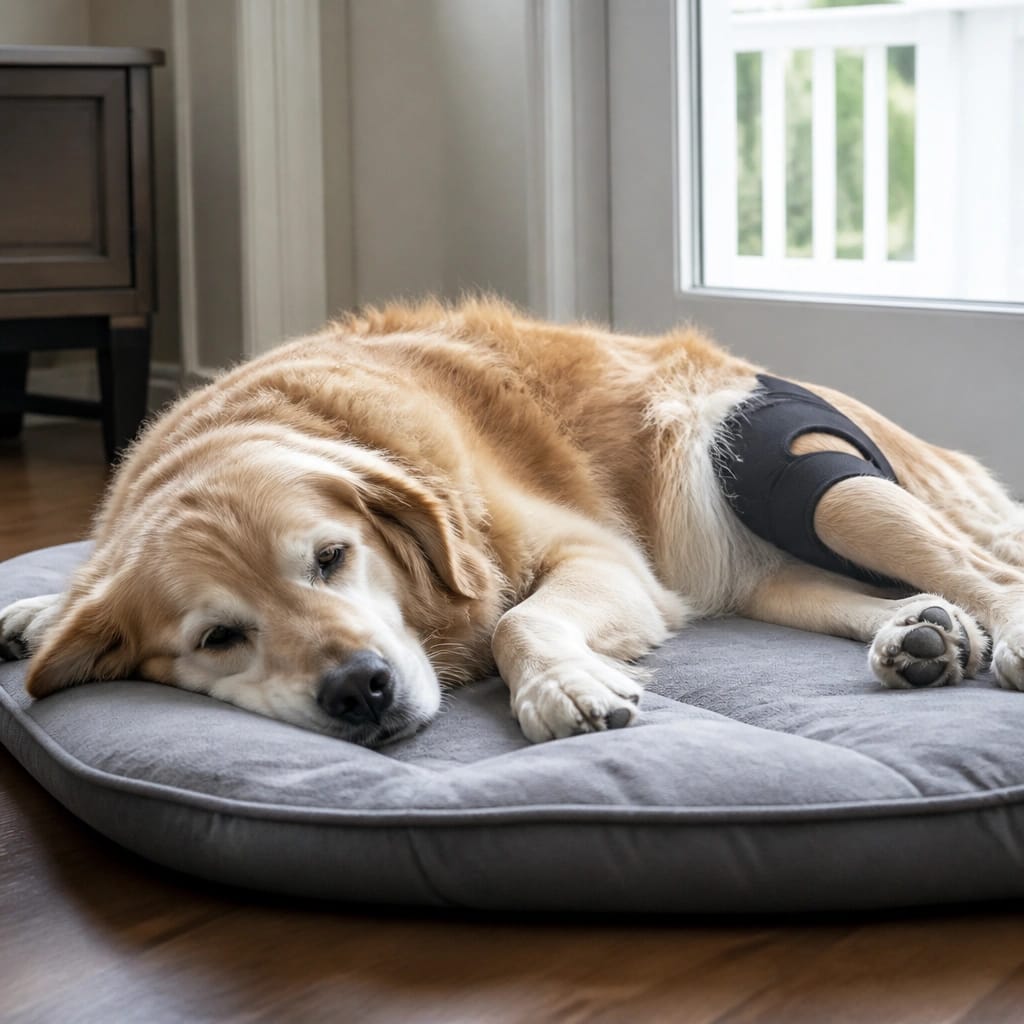
After hip surgery, your dog needs a flat, firm surface with minimal entrance height. A bed with raised sides becomes a barrier. Look for a low-profile design and consider adding a ramp or stairs nearby.
Post-surgical dogs also need waterproof protection. Drainage and licking create moisture that soaks into foam. A waterproof liner protects the core and gives you time to clean up.
For seniors with advanced stiffness, a heated option can ease joint pain. A Heated Dog Bed provides gentle warmth that reduces morning stiffness. Just make sure the bed includes a low-entry design and doesn’t overheat.
Placement, Temperature, and Seasonal Adjustments
Where you place the bed matters. Put it in a quiet, draft-free area away from hallways and doors. Your dog needs uninterrupted sleep, and cold drafts worsen joint pain.
Cold weather increases stiffness. If you live in a colder climate, add insulation or use a heated pad during winter months. You can also explore Dog Beds For Cold Weather Outdoor Winter Use if your dog spends time outside.
Hot weather calls for cooling fabrics or gel-infused foam. Overheating causes restlessness, which defeats the purpose of a supportive bed. Choose breathable covers and avoid heavy materials in summer.
Cleaning and Maintaining the Bed for Long-Term Support
Wash the cover weekly if your dog spends most of the day on it. Use a gentle cycle and air dry to prevent shrinking. Spot clean the foam core with mild soap and water, then let it dry fully before reassembling.
Rotate the bed every few weeks to prevent foam sagging. Check regularly for lumps or dimples. Most memory foam beds last 2 to 3 years before losing support.
If you notice your dog sleeping on the floor instead of the bed, that’s a red flag. The bed may have worn out. Our article on Why Does My Dog Sleep On The Floor Instead Of Their Bed explains when this signals a problem.
When to Consult a Veterinarian About Your Dog’s Hip Pain
A bed supports your dog’s joints, but it doesn’t treat the underlying condition. If your dog shows signs of significant pain, like whining, limping, or difficulty standing, see a veterinarian. According to the American Veterinary Medical Association, hip dysplasia often requires a combination of medication, physical therapy, and lifestyle adjustments.
When a bed alone isn’t enough, a vet may recommend dietary changes, joint supplements, or anti-inflammatory drugs. Never assume that a new bed will fix the problem. Hip dysplasia is progressive, and regular veterinary checkups are critical for managing pain.
Frequently Asked Questions
Should I choose a heated bed for my dog with hip dysplasia?
A heated bed can help when your dog has advanced arthritis or lives in a cold climate. The warmth reduces morning stiffness and improves blood flow. Just ensure the bed has a low-entry design and a thermostat to prevent overheating.
How often should I replace an orthopedic dog bed?
Most memory foam beds lose their support after 2 to 3 years. Check the foam regularly for lumps, dimples, or visible compression. If your dog starts avoiding the bed or sleeping on the floor, it’s time for a replacement.
Can a dog bed cure hip dysplasia?
No. A supportive bed manages pain but doesn’t treat the underlying joint condition. Hip dysplasia requires veterinary care, which may include medication, joint supplements, physical therapy, or surgery.
The bed is one piece of a larger management plan.
Conclusion
The right bed for a dog with hip dysplasia combines high-density memory foam, a low-entry design, and a non-slip base. Look for certified foam density and measure your dog carefully. Place the bed in a quiet, draft-free area and clean it regularly.
If your dog shows signs of pain beyond what a new bed can help, consult your veterinarian. Hip dysplasia is progressive. A good bed reduces discomfort, but a proper treatment plan is what truly protects your dog’s quality of life.


