

How Moving House Can Affect a Dog’s Sleep
Moving is chaos for you, and it’s pure confusion for your dog. How moving house can affect a dog’s sleep comes down to one simple fact: dogs anchor their sense of safety to routine and familiar scents, not to walls and addresses. Remove those anchors, and their bodies stay on high alert.
That makes deep, restful sleep nearly impossible.
Editorial review of veterinary behavior guidance consistently describes a “rule of threes” for relocation: around three days to decompress, three weeks to feel settled, and three months to fully bond with the new home. As of 2026, that timeline is still the working benchmark used by animal behavior consultants. Your job is to make that transition as smooth as possible, starting with understanding why the disruption happens.
Yes, most dogs experience some sleep disruption after a move. New smells, new sounds, and a vanished routine trigger a stress response that makes deep sleep hard. Most dogs adjust within a few days to three weeks. The key is keeping familiar routines, beds, and scents intact while gradually introducing the new space.
Why Moving House Disrupts a Dog’s Sleep (and How Long It Lasts)
Think about what a dog actually perceives when they walk into a new house: unfamiliar smells, strange sounds, and no history. Their brain interprets it as unknown territory, which triggers a stress response. Cortisol stays elevated, and cortisol directly interferes with falling asleep and staying asleep.
A dog’s sleep disruption after a move is normal, not a behavioral failure. New neighborhood noises and the absence of their own scent marks keep them restless. Some dogs pace, some whine, and others lie awake staring at the door.
Most adjust within the first week or two if you handle the transition correctly.
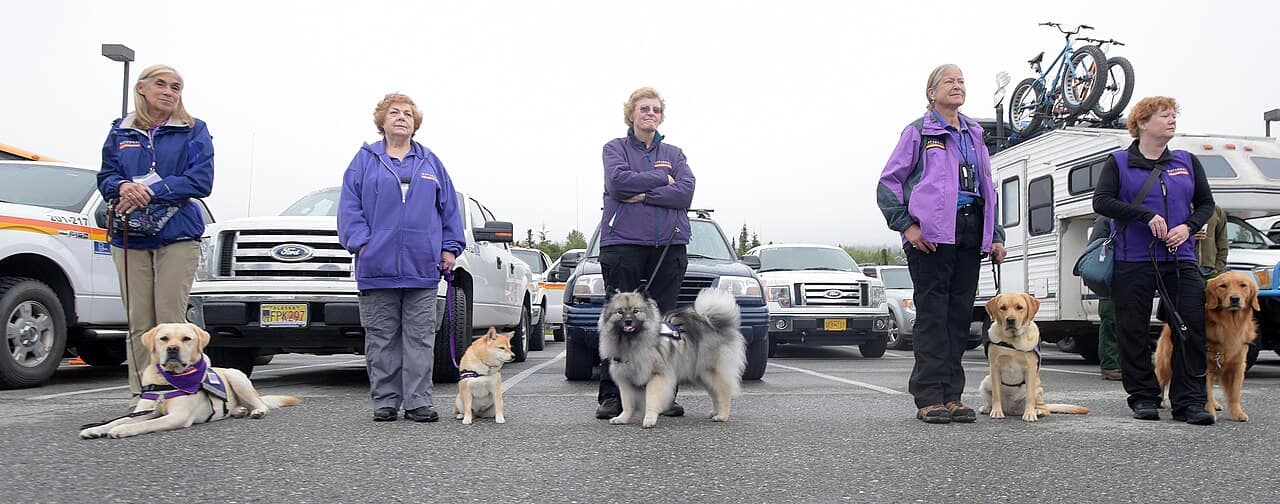
Image source: Wikimedia Commons / U.S. Department of Agriculture U.S. Forest Service/Alaska/USDA
The “rule of threes” is your best timeline gauge. Three days to decompress, three weeks to settle into a routine, and three months to feel truly bonded. Editorial review of guidance from veterinary specialists, including the American Veterinary Society of Animal Behavior, consistently supports this pace.
If your dog still isn’t sleeping through the night after three weeks, it’s time to look at what else might be going on.
Is Your Dog Struggling with Normal Stress or Something More?
Most sleep issues after a move are normal adjustment. But some dogs develop separation anxiety or a health-related sleep problem that needs a different approach.
Normal Adjustment vs. Separation Anxiety
The easiest way to tell the difference: a normal stressed dog settles once you’re home and a routine builds. A dog with separation anxiety panics specifically when you’re about to leave, and the distress continues even after you return. The table below outlines the key signs.
| Normal Stress | Separation Anxiety |
|---|---|
| Mild restlessness, occasional whining | Frantic barking, drooling, escape attempts |
| Settles when you’re around | Destructive behavior when left alone |
| Improves within a few days | Continues for weeks or worsens |
If you see destructive behavior, escape attempts, or constant drooling when left alone, treat it as more than just the move. Consult your veterinarian or a certified behaviorist. Dogs with anxiety often respond better to an anxiety-friendly bed shape once the behavioral plan is in place.
Age and Health Factors That Change the Picture
Puppies under a year may need extra bathroom trips at night, especially in an unfamiliar space. Senior dogs with cognitive decline can become more disoriented and anxious after a move. If your dog has slept poorly for weeks or shows signs of pain, rule out medical issues first.
The ASPCA’s behavioral resources also note that severe responses merit professional support.
How to Help Your Dog Sleep Better in a New Home: Step-by-Step
Before Moving Day: Keep Routines Familiar
- Keep feeding, walking, and bedtime times unchanged for the week before and after the move.
- Use the same bed and blankets, and don’t wash them right before the move. Familiar smells are your dog’s natural sleeping aid.
- Give your dog extra exercise during the day. A tired dog falls asleep faster.
First Nights: Setting Up the Sleep Space
- Set up a quiet, dedicated sleep corner before you unpack anything else.
- Keep the crate or bed in your bedroom for the first few nights if that matches their usual habit. Check crate bedding options to make the space inviting.
- Add white noise or a fan to mask unfamiliar sounds like traffic or neighborhood dogs.
- For anxious dogs, try a cave-style bed with a hood to create a safe, den-like feeling.
Daily Habits That Speed Up the Adjustment
- Walk the same route each morning for the first week so your dog can build a mental map.
- Let them sniff as much as they want. Scent exploration lowers stress hormones naturally.
- End the evening with a short training session and a quiet wind-down routine. Consistency signals that the new house is home.
Common Mistakes That Make Your Dog’s Sleep Worse
- Punishing nighttime whining. This raises stress instead of easing it. Your dog isn’t being stubborn; they’re overwhelmed.
- Changing feeding and sleep schedules right after the move. Routine is the strongest anchor you have.
- Letting your dog sleep in a different spot every night. Pick one place and stick with it.
- Washing their bed and blankets immediately, which strips away the familiar scents they rely on.
- Waiting too long to seek help when sleep problems persist. If it’s been three weeks, talk to your vet.
- Forgetting to clean up nighttime accidents properly. Lingering odors can trigger more accidents. Use enzyme-based cleaners to remove urine smells from a memory foam bed rather than masking them.
Frequently Asked Questions
How long does it take for a dog to adjust to a new house?
Most dogs settle within three days to three weeks. The rule of threes is a useful guide: three days to decompress, three weeks to learn routines, and three months to feel truly at home. If sleep hasn’t improved after three weeks, it’s worth digging deeper.
Should I sleep with my dog the first night after moving?
Only if that matches their normal sleeping arrangement. If they’re used to your bedroom, keep that routine. If they normally sleep in a crate, keep the crate in your room for a few nights, then gradually move it to its permanent spot.
Consistency matters more than proximity.
Can I give my dog melatonin to help them sleep?
Don’t give any supplement without asking your veterinarian first. Melatonin can help some anxious dogs, but the right dose depends on weight and health. A dose that works for one dog might make another lethargic or upset their stomach.
Always get professional guidance first.
When should I worry about my dog not sleeping after a move?
Worry when sleep problems continue past three weeks or when you see destructive behavior, panting, pacing, or loss of appetite. Those can signal separation anxiety or a medical issue. The earlier you involve your vet or a certified behaviorist, the faster things improve.


