

How to Choose a Dog Bed for a Heavy Dog Without Flattening?
Your 90-pound Labrador shouldn’t have to sleep on a bed that looks like a pancake by Tuesday. Figuring out how to choose a dog bed for a heavy dog without flattening comes down to three things: foam density, thickness, and the way your dog actually sleeps. Get those right, and the bed will still be supportive months after you buy it.
As of 2026, the most durable foam beds use high-density polyurethane foam rated at 4 pounds per cubic foot or higher. That number matters more than the word “orthopedic” printed on the tag. Here’s what actually causes the sagging, and what you can check before you spend another cent.
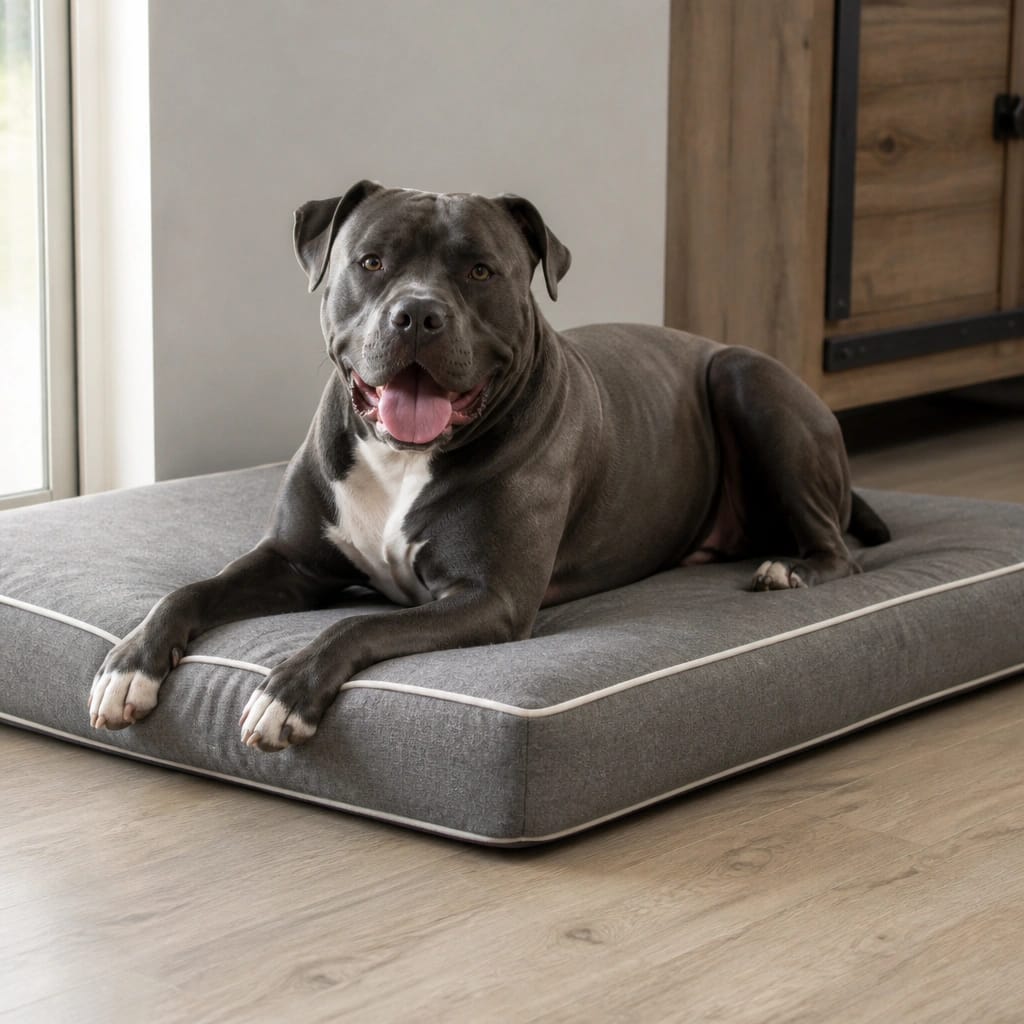
Why Heavy Dogs Flatten Beds
When a heavy dog lies down, the force concentrates through two small points: the hip and the elbow. That’s a lot of pressure for a thin slab of foam. If the foam is too soft or too thin, it compresses and never fully recovers.
Manufacturer specifications show that most budget beds use foam rated at just 1.5 to 2 pounds per cubic foot. That’s fine for a 20-pound dog, but it’s basically a Styrofoam slab under an 80-pound dog.
Here’s what commonly fails:
- Low-density foam (under 2 lb) flattens quickly under sustained weight.
- Thin mattresses (under 4 inches) bottom out against the floor.
- Bolsters stuffed with loose fiber lose their shape within months.
- Repeated digging and scratching breaks down the surface faster.
If your dog does the full dig-and-circle routine before lying down, that repeated pawing weakens the foam over time. A little nesting is natural, but persistent scratching might mean the bed is already uncomfortable.
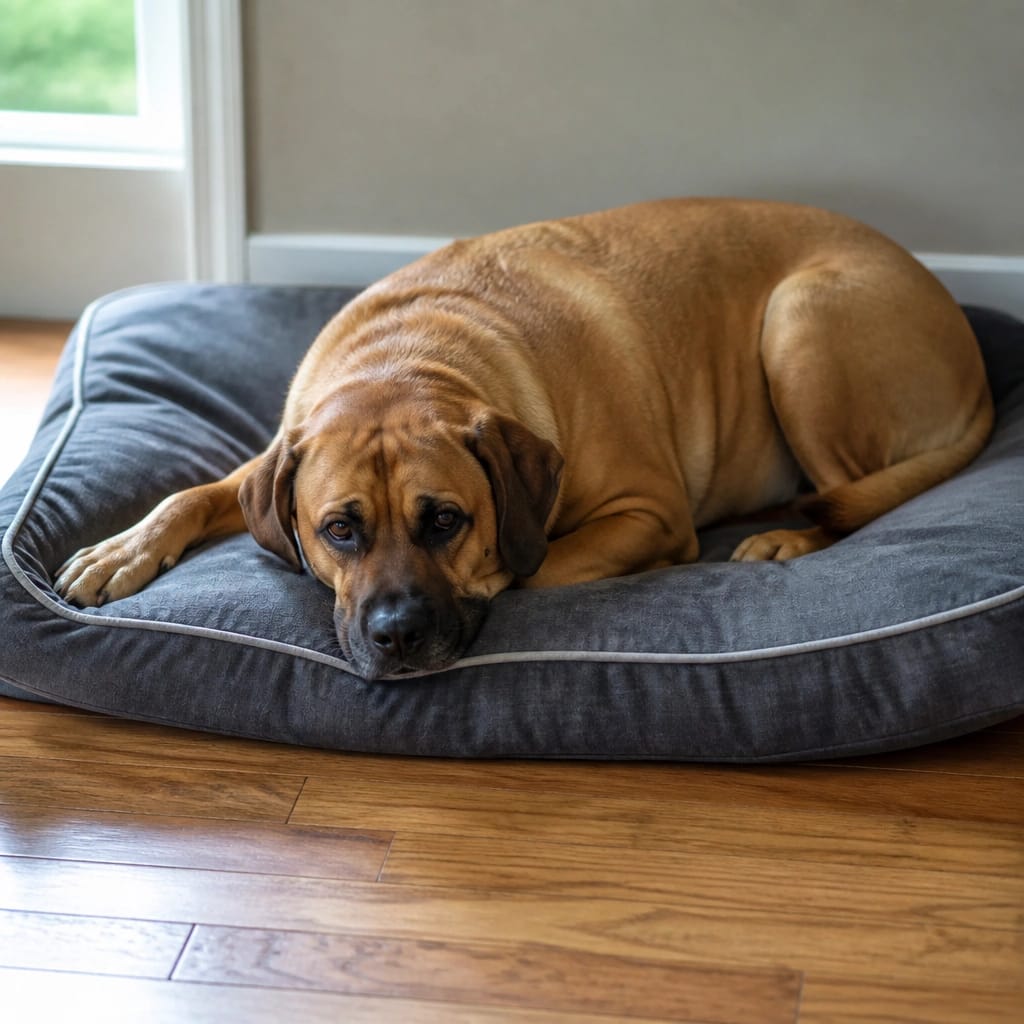
What to Look for Before You Even Look at Beds
Before you read a single review, check the construction. Memory foam molds to your dog’s body, but it can also trap heat and soften too much. High-density polyurethane foam gives firmer, longer-lasting support and bounces back faster.
Most quality beds use a combination of both.
Look for foam certified through the CertiPUR-US® program. That tells you the foam has been tested for emissions and is free from heavy metals, phthalates, and flame retardants. You want a bed your dog spends 12 hours a day on to be made from materials you’d trust.
Check the cover too. A thick woven fabric resists claw snags better than thin polyester. If your dog is older or prone to accidents, a waterproof inner liner protects the foam from becoming unsalvageable.
Chewers need a different kind of durability entirely. If your dog is a bed-destroyer, consider a chew-proof cover before anything else.
The 3 Numbers That Determine Whether a Bed Will Last
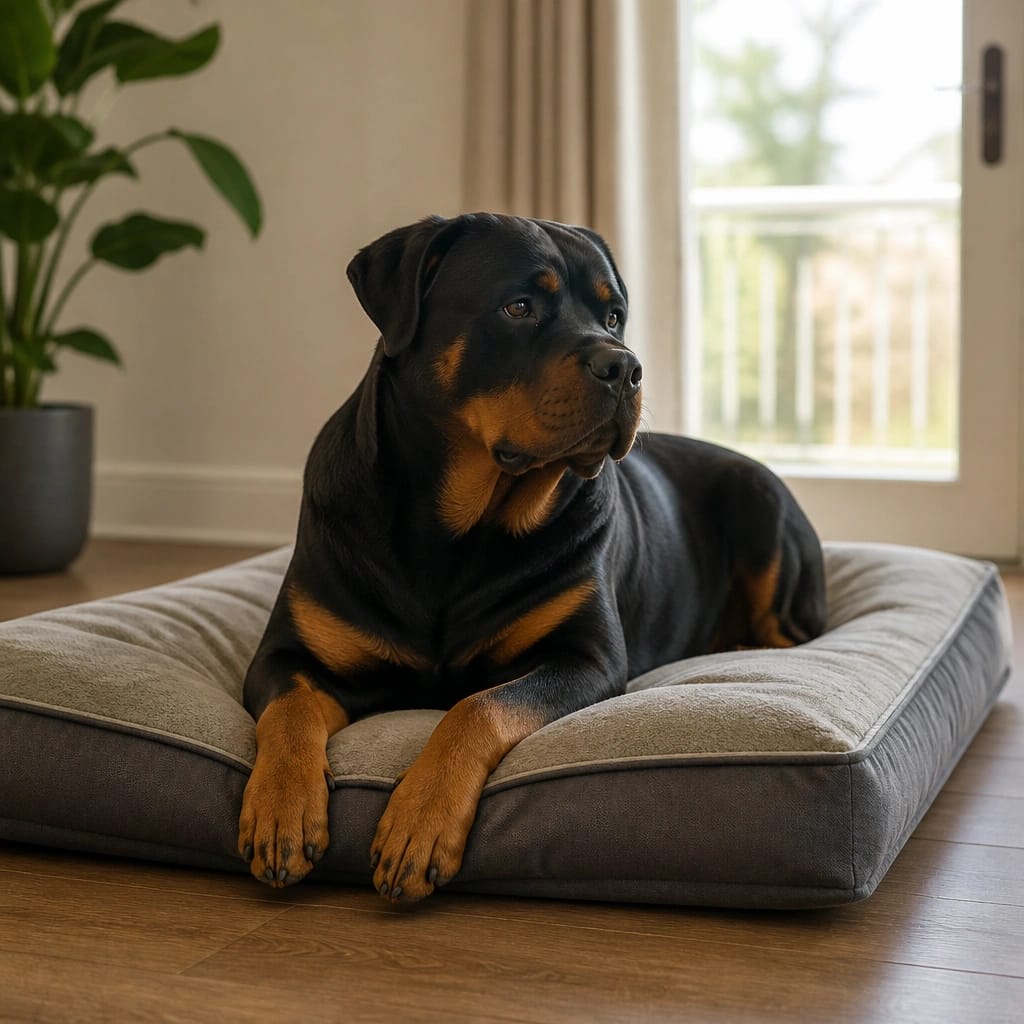
Three numbers tell you more than any marketing claim: foam density, thickness, and weight capacity. Here’s what each one means, and what a heavy dog actually needs.
| Number | What It Means | What Heavy Dogs Need |
|---|---|---|
| Foam density | Pounds per cubic foot. Higher means tighter foam. | 4 lb or higher for dogs over 70 lb |
| Thickness | The vertical depth of the sleeping surface | 6 inches minimum, 8 inches for giant breeds |
| Weight capacity | Maximum weight the bed is built to support | Look for 20–30 lb more than your dog’s weight |
If your dog weighs 90 pounds, don’t buy a bed rated for “up to 100 pounds.” That leaves almost no cushioning margin. Same goes for thickness. A 4-inch slab works for a 50-pound dog but bottoms out under a 120-pound mastiff.
Also remember that density and thickness are different. A thick but low-density bed still flattens. A dense but thin bed feels like concrete.
You need both. If you’re unsure about the footprint, our guide to matching the footprint to your dog’s build shows why surface area matters just as much as foam.
Mattress-Style vs. Bolster Beds: What’s the Right Trade-Off?
Flat, mattress-style beds are exactly what they sound like: a solid slab of foam with a removable cover. Bolster beds add raised edges on two or three sides, so they feel like a dog sofa. For heavy dogs, the flat mattress usually wins.
The reason is simple. A flat surface holds weight evenly. Bolsters are often stuffed with loose fiber or shredded foam, which means they compress and go limp within a few months under a heavy head or a body leaning against them.
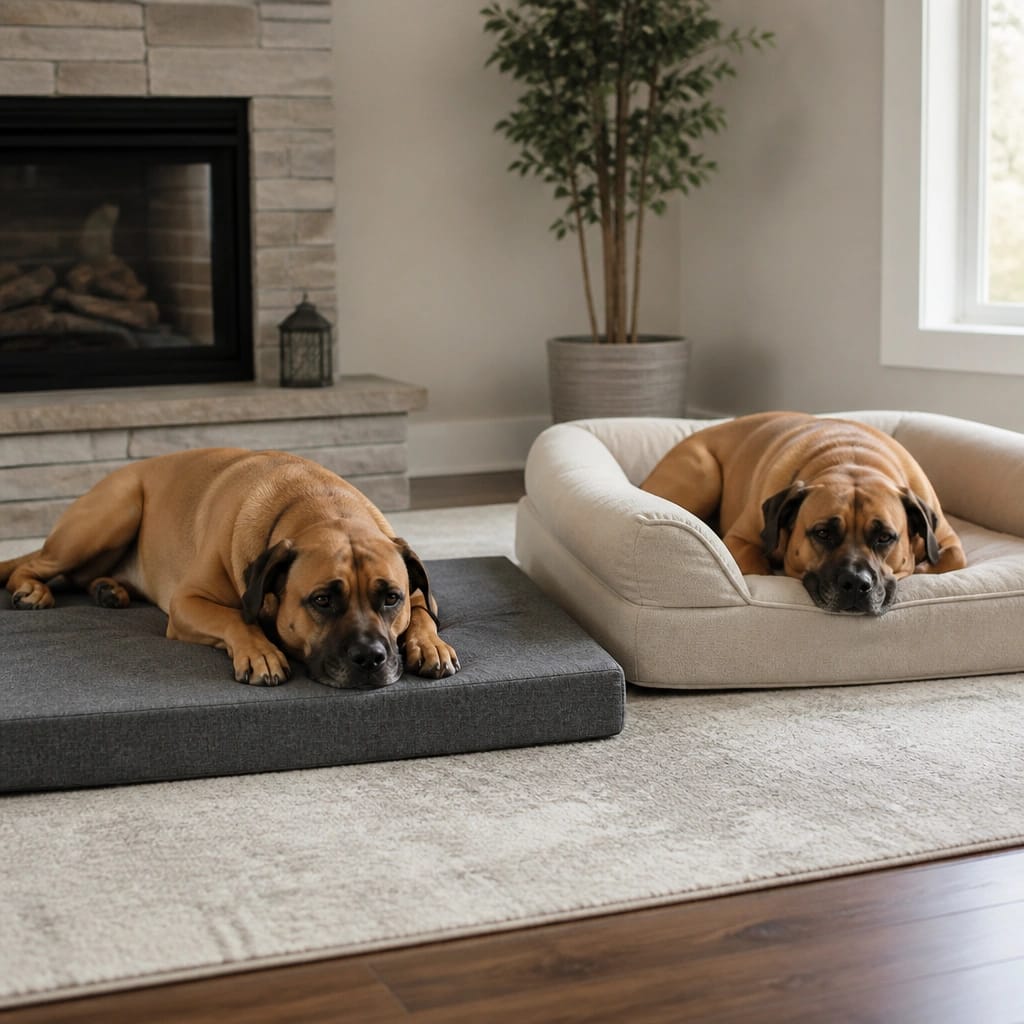
That’s not to say every heavy dog needs a flat bed. If your dog loves sleeping with their head propped on a raised edge, look for a bolster-style bed with a solid foam core in the sides. Some manufacturers now build bolsters that hold their shape far better than the loose-fill versions.
Raised-edge designs can work, as long as the sides are dense rather than fluffy.
How to Match the Bed to Your Dog’s Sleeping Position
Your dog’s sleeping position tells you exactly what the bed needs to do. Curled-up sleepers want something cozy and slightly soft, like a donut bed or a cave bed. Stretched-out sleepers need the longest flat surface you can find, because their hip and elbow pressure spreads across the foam.
Side sleepers and dogs who lie flat on their stomach benefit most from medium-firm support. All that weight presses down on one point, and a too-soft bed puts pressure on joints instead of relieving it. If your dog seems stiff getting up, it’s worth getting veterinary guidance before you assume a new bed will fix the problem.
If your dog sleeps right at the edge of their current bed instead of the middle, that’s often a sign the foam has flattened in the center. A dog that curls up might simply prefer the raised sides. Watch their habits for a week before you buy.
The right bed matches their favorite pattern, not just their weight.


