

How Long Does It Take a Dog to Accept a New Bed?
Most dogs accept a new bed within 1 to 7 days. Confident dogs may use it in 24 hours. Shy or senior dogs can take up to two weeks.
The right introduction makes a big difference. Patience and positive reinforcement are key.
You just bought your dog a new bed, and they’re ignoring it completely. How long does it take a dog to accept a new bed? It’s a frustrating moment, but it’s also completely normal.
Most dogs don’t automatically love a new sleeping spot the second you set it down.
Our research shows the typical acceptance window falls between 24 hours and two weeks. The exact timeline depends on your dog’s age, temperament, and past sleeping habits. The good news is you can speed things up significantly with the right approach.

The Typical Timeline: What Most Dog Owners Can Expect
The average dog will start using a new bed within three to five days. That’s the sweet spot for most owners. But the range is wider than you might think.
Here’s a quick breakdown of what we typically see:
| Dog Type | Typical Acceptance Time | Notes |
|---|---|---|
| Confident adult dog | 1 to 3 days | Often settles in quickly |
| Average adult dog | 3 to 7 days | Needs gentle encouragement |
| Senior dog | 5 to 14 days | Established habits take time |
| Rescue or anxious dog | 7 to 14+ days | Needs extra patience |
| Puppy | 1 to 4 days | Curious but may chew first |
These are general ranges, not guarantees. Some dogs surprise you and climb on within minutes. Others need a full two weeks plus some coaxing.
The key is watching your dog’s behavior and adjusting your approach.
Why Acceptance Time Varies: Key Factors That Speed Up or Slow Down the Process
Not all dogs react the same way to a new bed. Several factors determine whether your dog hops on immediately or treats it like a suspicious object.
Dog age and temperament. A confident, outgoing dog will explore a new bed on their own. A nervous or anxious dog needs more time to trust it. Senior dogs often have years of established sleeping habits, so they’re slower to adapt.
Previous sleeping experience. Dogs that have always slept on the floor or on your bed may not understand what a dog bed is for. They need to learn the concept. Rescue dogs with unknown histories may associate certain textures or smells with negative experiences.
Bed type and material. A flat mat is less intimidating than a plush donut bed with high bolsters. Some dogs prefer firm surfaces. Others want to sink into something soft.
Matching the bed to your dog’s sleeping style matters a lot. If you’re unsure about the right fit, our dog bed size chart by weight can help you narrow it down.
Home environment and routine. A calm, consistent environment helps dogs adjust faster. If your household is busy or noisy, your dog may need more quiet time to explore the new bed. The location also matters.
Placing the bed in a familiar spot where your dog already likes to sleep makes a huge difference.

The Decision Tree: Find Your Dog’s Likely Acceptance Window
Use this simple decision tree to estimate your dog’s timeline. Start with your dog’s personality and work through the options.
If your dog is confident and food-motivated:
Expect acceptance in 1 to 3 days. These dogs explore new things quickly. Place treats on the bed and praise them when they step on it.
They’ll figure it out fast.
If your dog is shy or anxious:
Plan for 5 to 14 days. Go slow. Place the bed in a quiet corner where they feel safe.
Use a familiar blanket or toy on top. Don’t force them. Let them approach on their own schedule.
For dogs with noise sensitivity, a calming donut dog bed can provide a sense of security.
If your dog is a senior with established habits:
Expect 7 to 14 days or longer. Senior dogs are creatures of habit. An orthopedic bed is often the best choice because it offers joint support.
Place it near their old sleeping spot. Be patient and consistent.
If your dog is a rescue with unknown history:
Allow 7 to 14 days minimum. These dogs may have had negative experiences. Give them space and time.
Use scent familiarization to build trust. Don’t rush the process.
If your dog is a puppy:
Expect 1 to 4 days. Puppies are curious and adaptable. Watch for chewing, though.
Make sure the bed is made from durable materials. And remember that what size bed a puppy needs vs an adult dog can be very different.
Step-by-Step Workflow for Introducing a New Bed
Follow these steps to give your dog the best chance of accepting their new bed quickly.
Step 1: Choose the right bed size and type. Measure your dog from nose to tail while they’re sleeping in their preferred position. Add 6 to 8 inches for stretching room. Pick a bed that matches their sleeping style.
Curlers like donut beds. Sprawlers need flat, open space.
Step 2: Remove the factory smell. New beds come with a strong manufacturing odor. Unpack the bed and let it air out for 24 to 48 hours. Wash the cover if it’s removable.
Dogs have sensitive noses, and unfamiliar smells can put them off.
Step 3: Place the bed in a familiar location. Put the bed where your dog already likes to sleep. Near your bed, in the living room, or in their crate. If you’re not sure about the best spot, our guide on where to place a dog bed covers the best options for different rooms.
Step 4: Use scent transfer. Rub a cloth or towel on your dog’s fur and then on the bed. You can also put a worn piece of your clothing on the bed. Familiar scents help your dog recognize the bed as their own space.
Step 5: Use positive reinforcement. Toss treats onto the bed. Praise your dog whenever they step on it or sniff it. Use a command like “bed” or “place” and reward them when they comply.
Keep sessions short about 5 to 10 minutes. Do this two to three times a day.
Step 6: Gradually increase time on the bed. Start with short periods. Let your dog get on and off freely. Over several days, encourage them to stay a little longer.
You can use a chew toy or a stuffed Kong to keep them occupied on the bed.
Step 7: Don’t force it. Never pick your dog up and place them on the bed. That creates negative associations. Let them choose to use it on their own terms.
If your dog seems anxious, take a step back and give them more time.
If your dog starts to dig or scratch at the bed, that’s normal nesting behavior. It actually helps them get comfortable. But if the scratching becomes excessive, check our article on why dogs dig at their bed for more insight.
Common Mistakes That Delay Acceptance
Most owners slow down the process without realizing it. Here are the biggest mistakes to avoid.
Rushing the introduction. The number one error. You want your dog to love their new bed immediately. But pushing them creates stress and resistance.
Let them approach at their own pace.
Forcing your dog onto the bed. Picking your dog up and placing them on the bed is tempting. Don’t do it. It builds negative associations.
Your dog needs to choose the bed willingly.
Choosing the wrong bed type. A flat mat works for a sprawler but not a burrower. A donut bed confuses a dog that likes to stretch out. Match the bed to your dog’s natural sleeping position.
If your dog likes to curl up in tight spaces, a bolster dog bed or cave-style bed might work better than an open mat.
Ignoring the dog’s sleeping preferences. Some dogs run hot. Others get cold easily. A memory foam bed traps heat.
A cooling bed or elevated cot might be better for a dog that overheats. Pay attention to where your dog already sleeps. That tells you what they need.
Not washing the bed first. That new bed smell is strong to a human nose. To a dog, it’s overwhelming. Always air out or wash the bed before introducing it.

Troubleshooting: What to Do When Your Dog Still Refuses
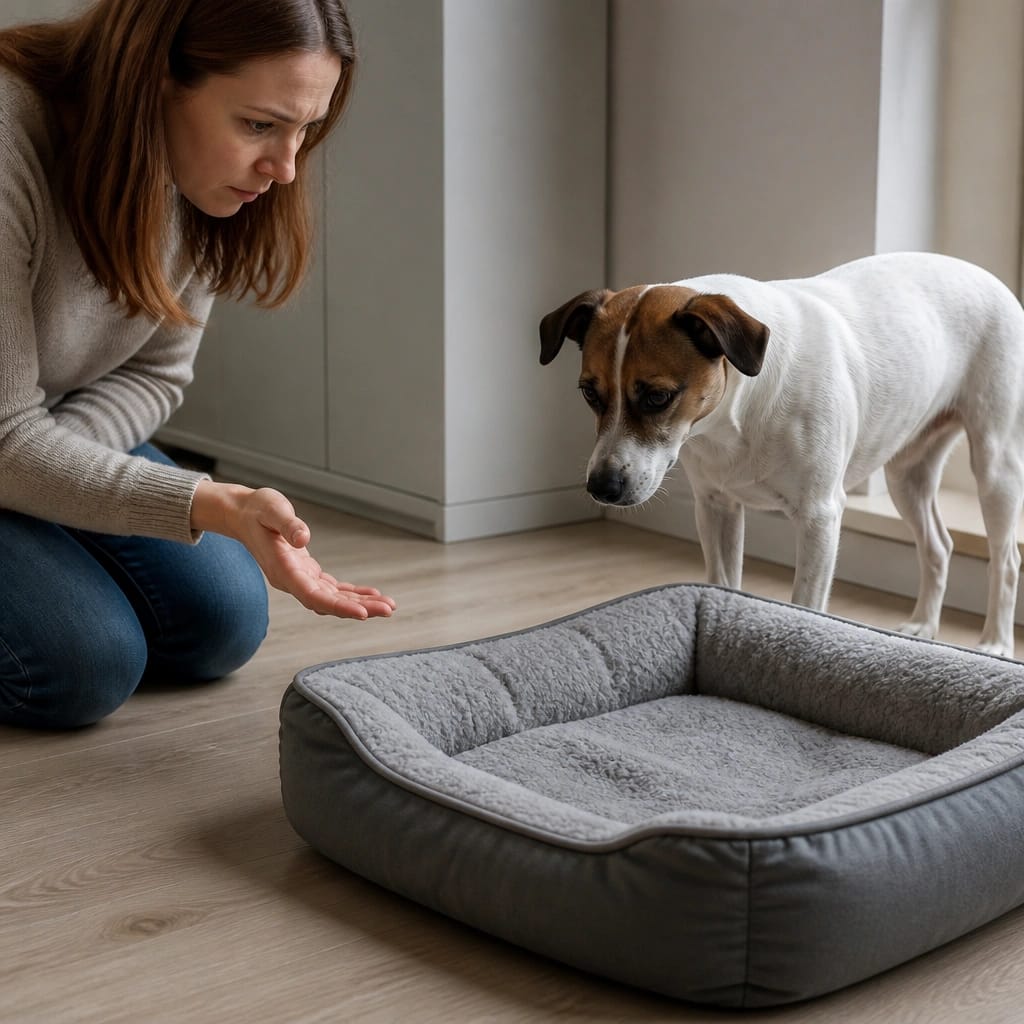
Sometimes you do everything right and your dog still won’t use the bed. Try these fixes.
Change the location. Move the bed to a different spot. Some dogs prefer being near you. Others want a quiet corner.
Experiment with two or three locations over several days.
Add a familiar item. Place a blanket or towel that smells like you or your dog on top of the bed. The familiar scent can make the new bed feel safer.
Try a different bed type. If your dog ignores a plush bed, they might prefer a firm mat. If they avoid a flat bed, they might want a cave or donut style. Some dogs simply don’t like certain textures.
If you’re dealing with a persistent chewer, consider chew proof materials before investing in a replacement.
Use high-value treats. Save special treats just for bed training. Cheese, chicken, or freeze-dried liver can work better than regular kibble. Reward every positive interaction with the bed.
Check for underlying issues. If your dog seems painful or avoids lying down altogether, they might have a joint issue. Senior dogs sometimes prefer hard floors because they’re easier to get up from. An orthopedic bed with a firm surface can help.
If the problem persists, consult your vet to rule out medical causes.
Special Situations: Puppies, Senior Dogs, and Rescue Dogs
Puppies accept new beds quickly, but they also test them with their teeth. Supervise the first few days. If your puppy chews the bed, redirect them to an appropriate chew toy.
Choose a bed with a durable, washable cover. Accidents happen, so a waterproof dog bed is a smart investment for the first year.
Senior dogs need extra patience. They’ve slept in the same spot for years. A new bed disrupts their routine.
Place the bed near their old sleeping area. Use a familiar blanket. Consider an orthopedic bed with memory foam to support aging joints.
If your senior dog has arthritis, a heated dog bed can provide additional comfort during colder months.
Rescue dogs may have trauma or negative associations with certain objects. Go very slow. Let them explore the bed on their own time.
Don’t make eye contact or hover. Just leave the bed in their space and let them approach when they feel safe. Scent transfer is especially important for these dogs.
When to Try a Different Bed Type Instead
If your dog still refuses after two weeks of consistent effort, the bed itself might be the problem. Some dogs simply don’t like certain styles.
A dog that sleeps on the floor instead of their bed might prefer a firmer surface. A dog that pushes their bed around might want a heavier, non-slip option. A dog that burrows under blankets might love a cave hooded dog bed.
Also consider the climate. In summer, a cooling bed or elevated cot might be more appealing. In winter, a self-warming or fleece bed provides extra coziness.
Our guide on dog beds for cold weather outdoor use covers options for colder environments.
If your dog consistently chooses your bed over their own, that’s a different issue. We cover that in our article on why dogs sleep on your bed instead of their own.
Frequently Asked Questions
How long does it take a puppy to accept a new bed?
Most puppies accept a new bed within 1 to 4 days. They’re naturally curious and adaptable. The bigger challenge is preventing chewing.
Supervise closely and provide appropriate chew toys as alternatives.
What if my dog never uses their new bed?
Some dogs take longer than others. Try moving the bed to a different location, adding a familiar blanket, or switching to a different bed type. If your dog has a medical condition like arthritis, consult your vet for guidance on supportive bedding.
Should I wash a new dog bed before using it?
Yes, if the cover is removable. Washing removes factory smells and manufacturing residues. If you can’t wash the whole bed, let it air out for 24 to 48 hours in a well-ventilated area.
Why does my dog scratch their new bed before lying down?
That’s normal nesting behavior. Dogs scratch to arrange the surface and make it comfortable. It’s instinctual.
If the scratching becomes destructive, check the bed material and consider a more durable option.
Can I use treats to help my dog accept a new bed?
Absolutely. Positive reinforcement is the most effective method. Toss treats onto the bed, praise your dog when they step on it, and gradually increase the time they spend there.
High-value treats work best.
How do I help a rescue dog accept a new bed?
Go slow. Use scent transfer by rubbing a familiar cloth on the bed. Place the bed in a quiet, safe location.
Let the dog approach on their own schedule. Don’t force interaction. Patience is the most important tool.
Quick Decision Guide: Your Dog’s Likely Timeline at a Glance
Here’s the bottom line. Most dogs accept a new bed within a week. Confident, food-motivated dogs often take 1 to 3 days.
Shy or anxious dogs need 5 to 14 days. Senior dogs with fixed routines can take up to two weeks.
The fastest path to success is simple. Choose the right bed type for your dog’s sleeping style. Wash or air it out first.
Place it in a familiar spot. Use treats and praise. Be patient.
If your dog still refuses after two weeks, try a different bed style or location. And if you’re dealing with a dog that prefers your bed, the floor, or the edge of your bed, we have guides for those situations too. The right bed is out there.
Sometimes it just takes a little detective work to find it.


