

Dog Beds on Carpet: Benefits and Problems
If you own a dog and your home has carpet, you’ve probably noticed that not every bed works the same way on that surface. Dog Beds on Carpet: Benefits and Problems is a topic that comes up often because the floor underneath changes everything about how a bed performs, from grip to cleanliness to overall comfort. The right combination can give your dog a great sleeping spot and protect your carpet at the same time.
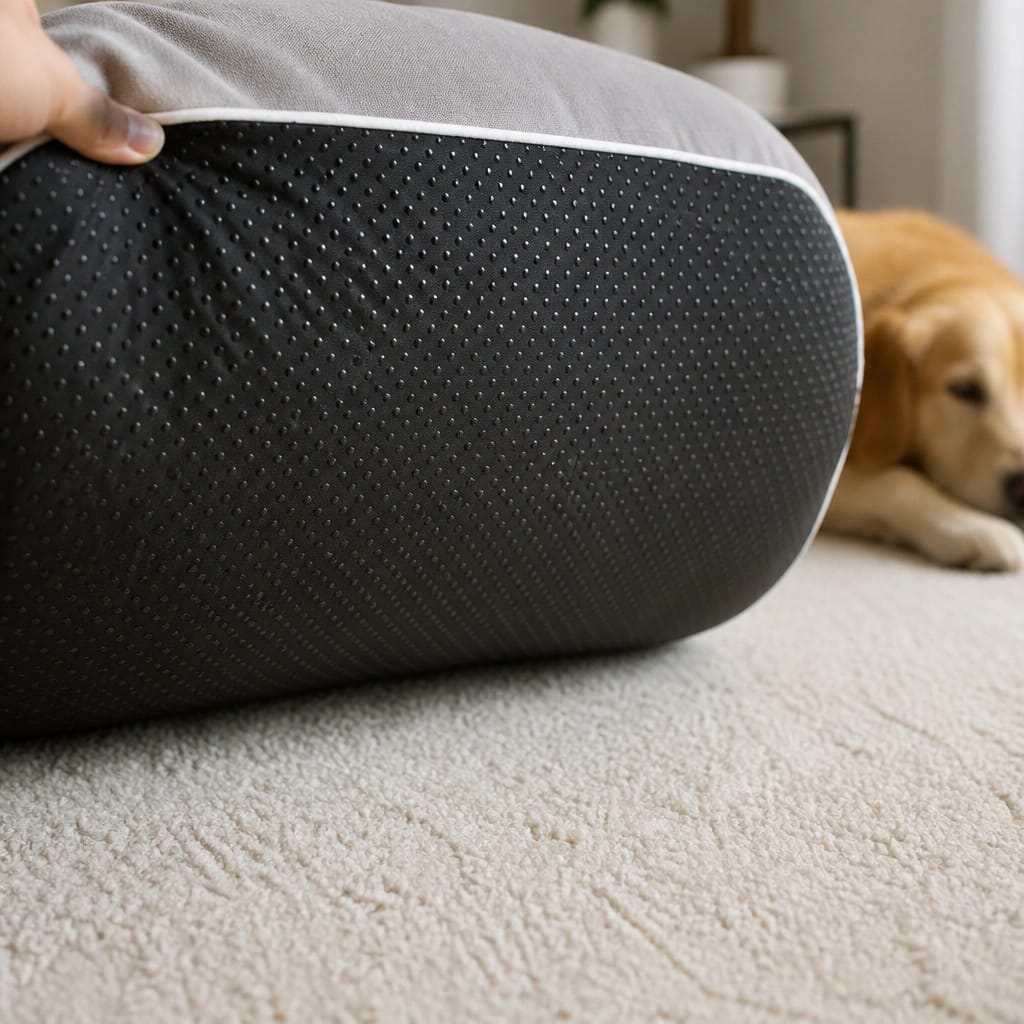
Per manufacturer specifications, non-slip backing on dog beds is typically tested on low-pile carpet and hard floors. On high-pile or plush carpet, that same backing often fails to grip. Let’s walk through what actually works and what doesn’t.
A dog bed on carpet can provide extra cushioning and warmth, but it also introduces issues like sliding and moisture buildup. The carpet’s pile height is the biggest factor in whether a bed stays put. Low-pile carpet works well with most beds that have non-slip backing. High-pile carpet often requires a heavier bed or a rug pad underneath. Choosing the right bed for your specific carpet type prevents most common problems.
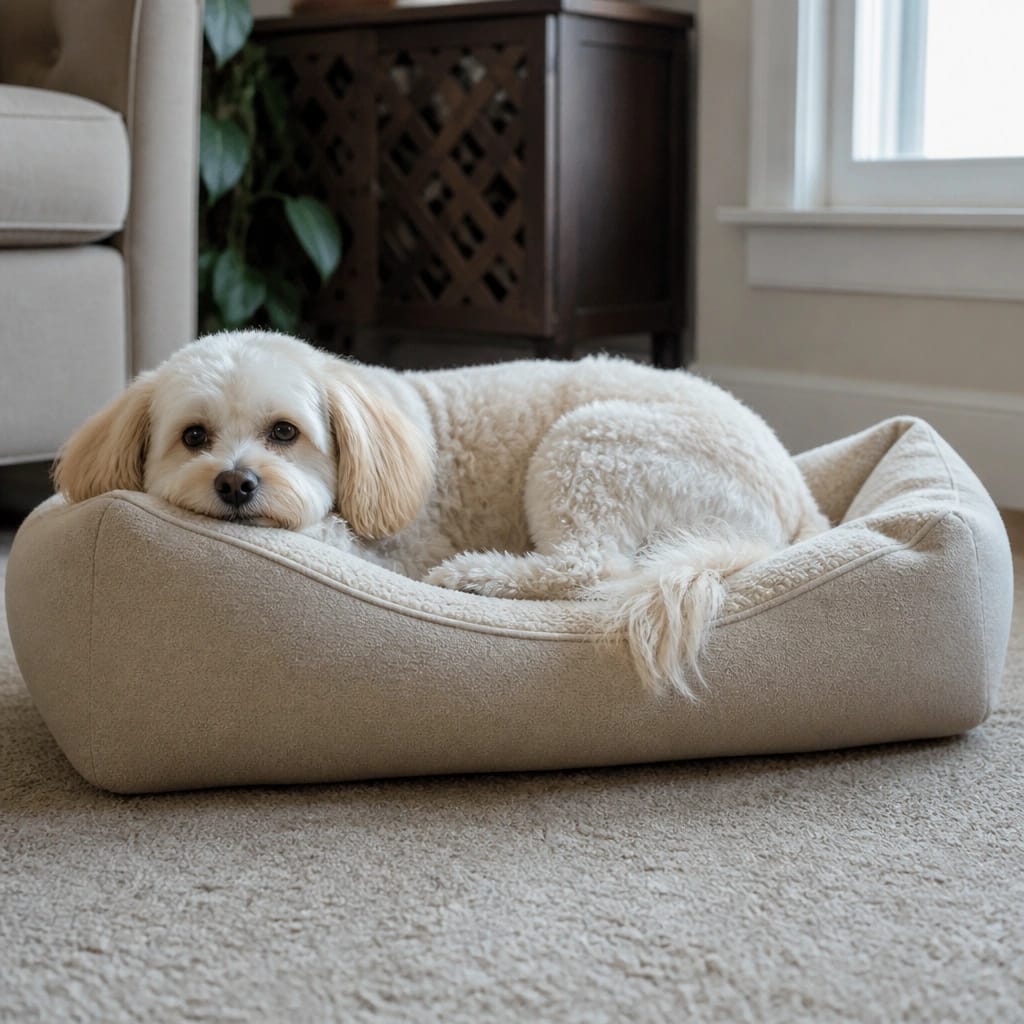
The Real Problem with Dog Beds on Carpet
The core issue is that carpet is a dynamic surface. It compresses under weight, shifts with movement, and traps moisture. When your dog jumps onto the bed, the carpet underneath compresses.
If the bed lacks adequate grip, it slides with every shift.
Over time, this creates uneven wear on both the bed and the carpet. The foam can lose its shape faster, and the carpet fibers can become matted in one spot.
Moisture is another hidden problem. If your dog drools, spills water, or has accidents, that moisture seeps through the bed and into the carpet fibers. Without airflow underneath, it can lead to odor or even mold growth.
Here is the simple decision rule: If you have low-pile carpet (under 1/4 inch), most beds with non-slip backing will work. If you have high-pile carpet (over 1/2 inch), you need a heavier bed or a flat base that won’t sink in.
Why Carpet Changes Everything
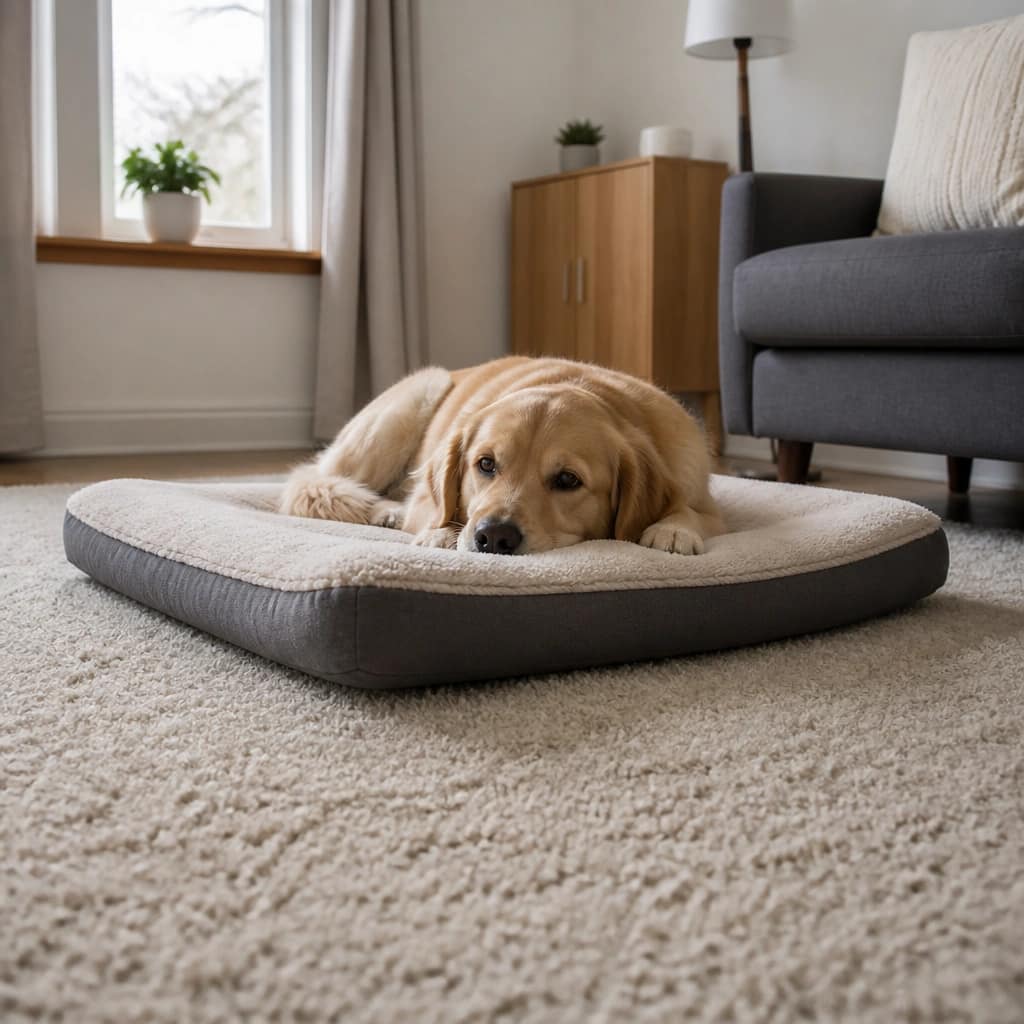
Carpet is fundamentally different from hard floors in three ways. It compresses, it insulates, and it traps material.
Hard floors are rigid and easy to clean. Carpet gives under pressure, which changes how a bed’s foam performs. A memory foam bed that feels firm on tile will feel noticeably softer on carpet because the carpet adds extra give.
That is not necessarily bad, but it does change the support profile.
For owners of breeds prone to joint issues, this can actually be a positive. The extra cushioning means less pressure on elbows and hips. You can read more about choosing the right support for specific breeds to see how carpet changes the equation.
Carpet also provides insulation. In winter, a bed on carpet stays warmer than one on a cold floor. In summer, it can trap heat.
If your dog tends to overheat, you might want a thinner bed on carpet to avoid excessive warmth.
Benefits You Actually Get
Putting a dog bed on carpet has real advantages beyond just comfort. Your dog gets the combined benefit of foam support and carpet padding underneath. For senior dogs, that extra layer can make a noticeable difference in how easily they get up and down.
Your carpet also benefits. A bed protects the fibers underneath from dirt, drool, and daily wear. It is much easier to throw a washable bed cover in the laundry than to deep-clean carpet.
For owners dealing with accidents, a waterproof bed adds an extra layer of protection.
During cold months, the carpet provides insulation from the ground. This is especially helpful for short-haired breeds or dogs that sleep in drafty rooms. The bed traps your dog’s body heat better than it would on a hard floor.
Another benefit is noise reduction. A bed on carpet stays quiet when your dog shifts positions. On hard floors, some beds slide and make scratching sounds that can wake you up at night.
Problems You Shouldn’t Ignore
Moisture buildup is the biggest hidden issue. When a bed sits on carpet for weeks without being moved, the area underneath stays damp. If your dog has accidents or spills water, the carpet can develop mold or mildew.
Regular inspection is essential. Lift the bed at least once a week and check for dampness.
Sliding is another problem, especially for active dogs. If your dog likes to scratch or circle before lying down, the bed can shift several inches. On high-pile carpet, even a heavy bed might move.
This is a common reason why owners give up on dog beds entirely. If your dog digs or scratches at their bed, you will want a bed with a grippy base.
Cleaning becomes harder as well. You cannot simply sweep underneath a bed on carpet. You have to lift the bed to vacuum, and many owners do not do that often enough.
Hair and dirt accumulate underneath, which can attract pests and cause odors.
Finally, carpet can trap heat. In summer, a bed on carpet may retain too much warmth for some dogs. If your dog is panting or avoiding the bed entirely, consider switching to a thinner bed or moving it to a cooler area.
How to Choose the Right Bed for Your Carpet
Start with your carpet type. This is the single most important factor.
- Low-pile carpet (commercial, berber, tight loops): Look for a bed with a rubber or silicone non-slip backing. Most beds grip this surface well.
- Medium-pile carpet: A bed with a textured bottom or a rug pad underneath works best. Some beds with smooth fabric bottoms will slide.
- High-pile carpet (plush, shag, thick cut pile): Avoid beds with smooth bottoms. Choose a heavier bed with a flat base. A crate pad or a flat mat often works better than a thick bolster bed.
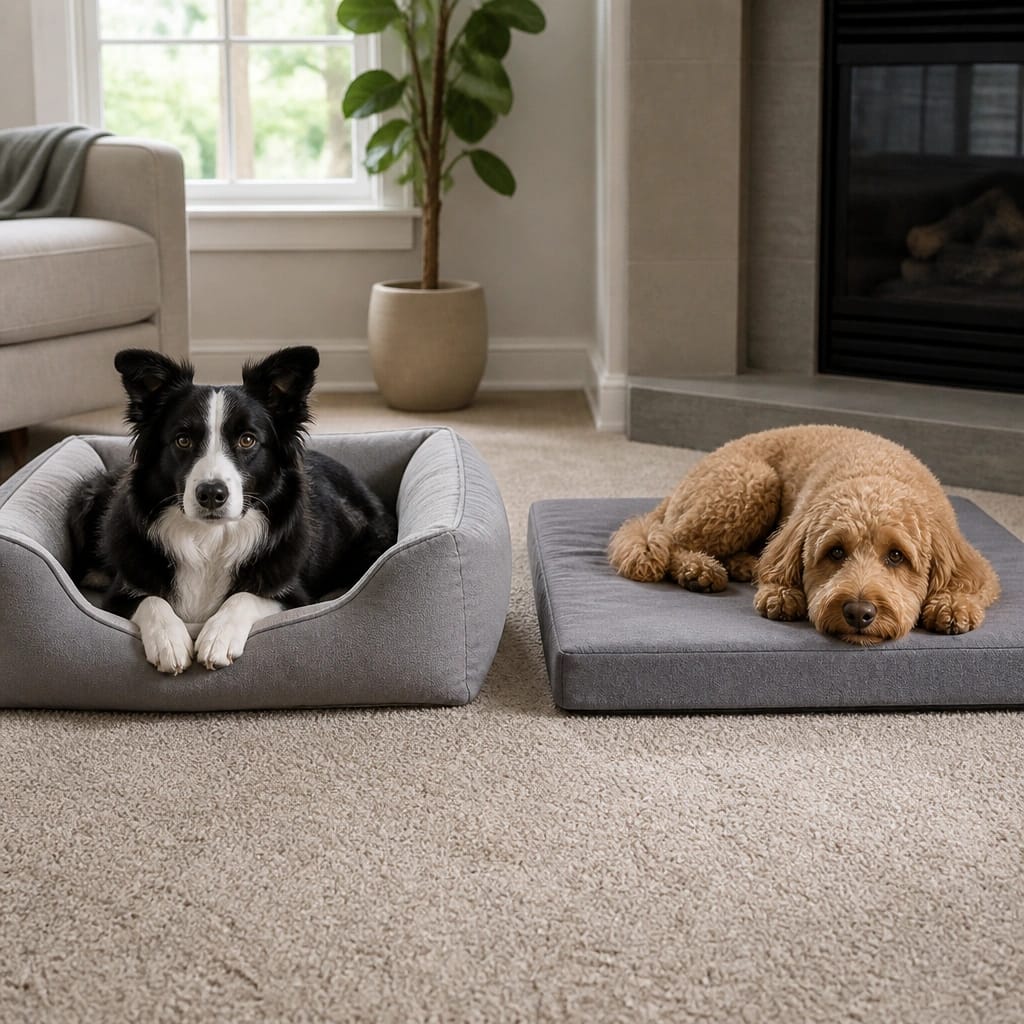
Bed shape also matters. Bolster beds have more surface area and tend to stay put better than flat mats. Donut or round beds can shift more easily because they are symmetrical and have less friction per square inch.
Weight is a factor. A heavier bed is less likely to slide. Look for beds with dense foam cores rather than lightweight polyfill.
If your dog is heavy, a bed with a thick foam base will stay in place better than a thin one.
If your dog is prone to accidents or drools heavily, a waterproof liner is essential. It protects both the bed foam and the carpet underneath. Without it, moisture can soak through and damage the carpet pad.
Common Mistakes Dog Owners Make
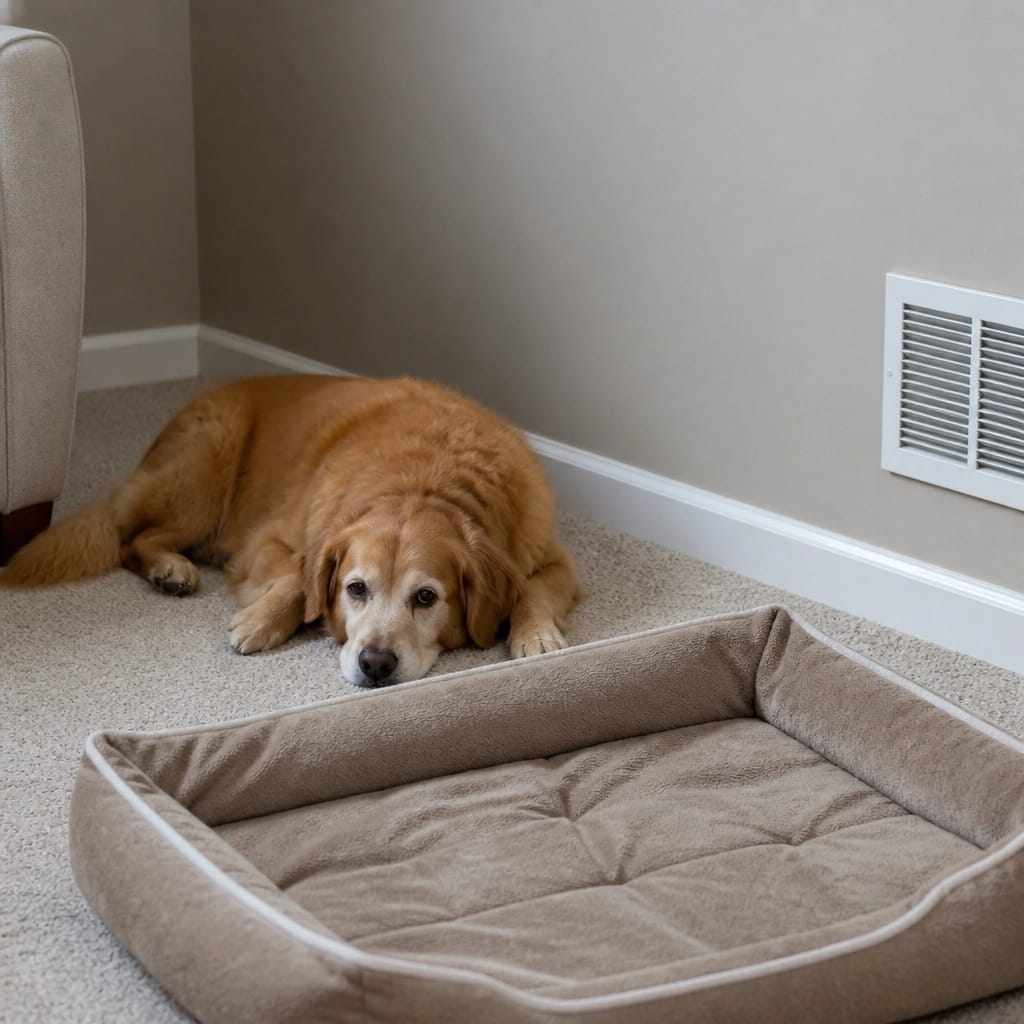
The biggest mistake is ignoring carpet pile height. People buy a bed based on the dog’s size and never check how the bed interacts with the floor. A bed that works fine on tile can slide uncontrollably on plush carpet.
Another mistake is skipping the rug pad. If your bed slides on high-pile carpet, a thin rubber rug pad underneath solves the problem. It adds grip without changing the bed’s feel.
Many owners also forget to lift the bed regularly. Carpet traps moisture and dirt. If you do not check underneath, you might not notice mold or odors until they become a serious problem.
Move the bed at least once a week and vacuum the area.
Quick Decision Guide: Which Bed Is Right for Your Situation?
| Your Carpet Type | Best Bed Feature | What to Avoid |
|---|---|---|
| Low-pile (under 1/4 inch) | Non-slip rubber backing | Smooth fabric bottoms |
| Medium-pile (1/4 to 1/2 inch) | Heavy bed with textured base | Lightweight polyfill beds |
| High-pile (over 1/2 inch) | Rug pad underneath plus flat base | Bolster beds with smooth bottoms |
If your dog is a digger or a scratcher, choose a bed with a flat, heavy base. A donut-style bed can work, but only if it has a non-slip bottom. If your dog is older, prioritize foam thickness over grip.
The carpet already provides cushioning, so a 4-inch thick foam bed is usually enough.
Frequently Asked Questions
Will a dog bed ruin my carpet?
Not if you maintain it properly. Lift the bed weekly, vacuum underneath, and use a waterproof liner. Over time, constant pressure from a heavy bed can flatten carpet fibers.
Rotating the bed every few months helps distribute wear evenly.
How do I stop my dog’s bed from sliding on carpet?
Check the bed’s bottom first. If it has a smooth fabric base, place a rubber rug pad underneath. You can also buy non-slip mesh pads sold for area rugs.
For high-pile carpet, a heavy bed with dense foam stays put better than a lightweight one.
Can I put a dog bed directly on carpet without anything underneath?
Yes, but you should check the underside regularly. Moisture can get trapped between the bed and the carpet. If your dog has accidents or drools heavily, use a waterproof protector.
The Carpet and Rug Institute recommends keeping the area clean and dry to prevent mold.
What type of dog bed is best for carpeted floors?
A flat orthopedic bed with a non-slip rubber bottom works best on most carpet types. Bolster beds are fine on low-pile carpet but may shift on plush surfaces. If your dog likes to burrow, a cave-style bed with a flat base is a good option.
Should I get a bigger bed for carpet?
Size matters less than the base. A bed that fits your dog’s sleeping position is more important than going oversized. If you need help measuring, check our size chart by weight for guidance.
Final Verdict: Should You Put a Dog Bed on Carpet?
Yes, with the right setup. The benefits of extra cushioning, warmth, and carpet protection outweigh the downsides. The key is matching the bed to your carpet type and maintaining the area underneath.
If you have low-pile carpet, almost any bed with a non-slip bottom works. If you have high-pile carpet, add a rug pad and choose a heavier bed. Check under the bed weekly for moisture and dirt.
Do that, and your dog gets a comfortable spot that stays clean and stable.


