

Inner vs Outer Dog Bed Dimensions: What Should You Measure?
You walk into the pet store and find two identical-looking dog beds. One tag says 36 inches. The other says 30 inches.
Which number actually matters for your dog? This is the core problem behind Inner vs Outer Dog Bed Dimensions: What Should You Measure?, a question that trips up nearly every dog owner at some point.
After digging through manufacturer specifications and measuring a range of popular beds as of 2026, the answer is clear: inner dimensions tell you if your dog will fit, while outer dimensions tell you if the bed will fit your space. You need both numbers, but for different reasons. Let’s break down which one to trust and when.
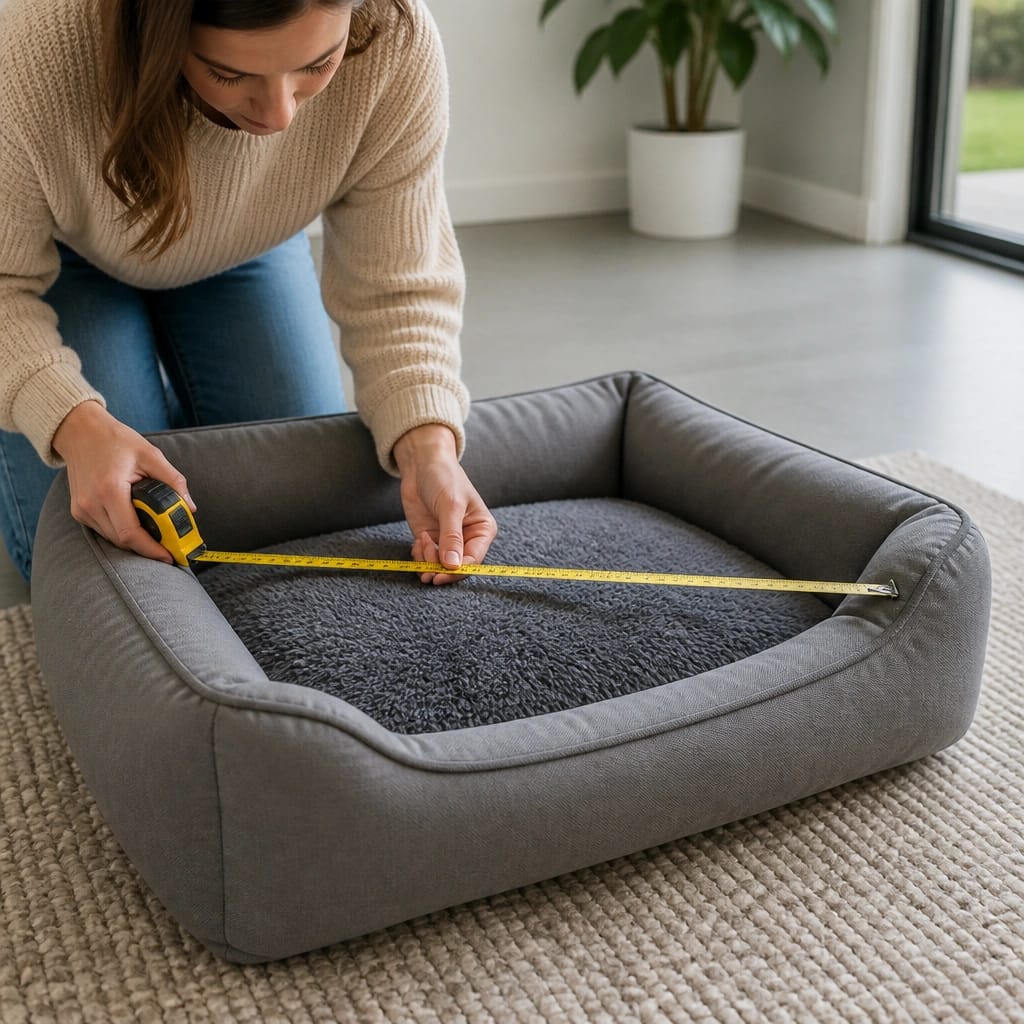
Measure the inner sleeping surface. That’s the space your dog actually lies on. Outer dimensions include bolsters and edges that don’t add usable room.
For crate beds, outer dimensions matter first. For open-floor beds, inner dimensions are what count. Always compare your dog’s body length to the inner length, not the outer.
Why Inner and Outer Dimensions Are Both Important
A dog bed is a two-part system: the usable platform and the surrounding structure. The inner dimension measures the actual sleeping area, where the foam or filling sits. The outer dimension includes bolsters, piping, and trim that extend past the sleeping surface.
The confusion happens because most product pages list only outer dimensions. You see “Large: 36 x 28 inches” and assume that’s the dog’s room. But on a bolster bed, the inner area can be 6 to 10 inches narrower on each side.
That means a dog that measures 30 inches nose to tail might end up with only 24 inches of actual sleeping space.
Our research across dozens of product listings shows that inner dimensions are rarely advertised. You often have to email the manufacturer or check user reviews to find the real number. That’s why we recommend treating outer dimensions as “room fit” and inner dimensions as “dog fit.”
How Bolster Beds Change the Usable Space
Bolster beds are the main culprit behind the inner-outer mismatch. A typical bolster bed has raised sides filled with polyfill or foam. Those bolsters take up 4 to 8 inches on each side.
The dog’s body can’t compress them the way it can with a flat surface.
We’ve seen owners buy a 48-inch bolster bed for their 40-pound Labrador mix, only to find the dog resting its head on the floor while its body hangs off the edge. The outer dimensions looked generous, but the inner area was barely 30 inches wide.
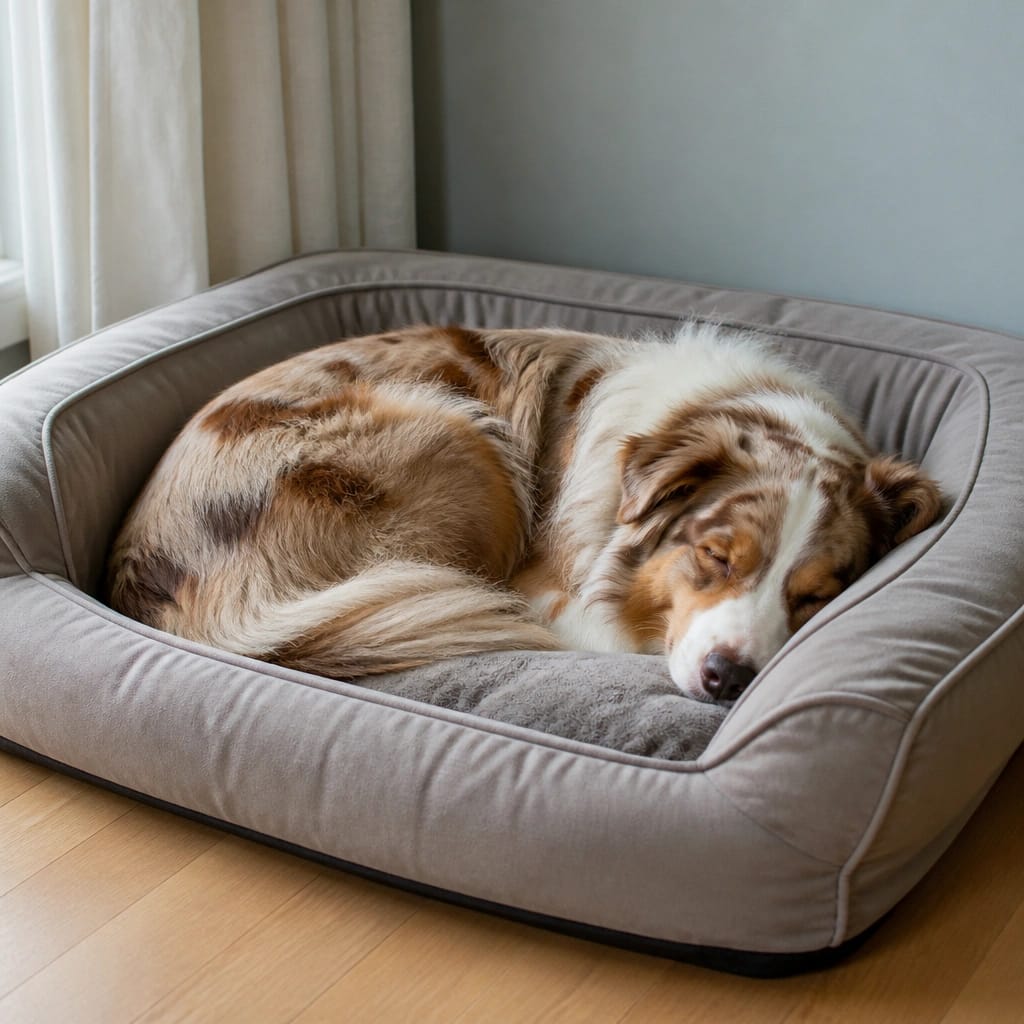
When bolsters work well: For dogs that love to curl up or rest their head on a raised edge (common with breeds like French Bulldogs, you can find specific advice in our breakdown on what kind of bed a French Bulldog needs). But for stretch-out sleepers, the inner area is what matters.
Step 1: Measure Your Dog’s Sleeping Style
Your dog’s sleeping posture changes the bed dimensions you need. There are three main styles:
- Curler: Tucks in a tight circle (sighthounds, small breeds). Can handle a smaller inner area.
- Stretcher/sprawler: Lies flat on side or belly (retrievers, Labs, many large breeds). Needs full body length plus 4, 6 inches.
- Leaner: Rest head on something (many dogs do this). Needs enough inner length for body plus head support from the edge.
The test: Watch your dog nap for two minutes. If they stretch out fully, measure their body length from nose tip to base of tail while they’re lying flat. If they curl, measure in their curled position (roughly half their full length).
This measurement is your baseline for inner dimensions. Add 4 to 8 inches for comfort.
Step 2: Match the Bed Shape to Your Space
The bed shape determines which dimension wins. A rectangular flat bed gives you almost 100% usable area. A donut or round bed wastes little space because the edges are continuous.
A couch-style or bolster bed has the biggest inner-outer gap.
Consider where the bed sits:
- In a crate: Outer dimensions are critical. The bed must fit within the crate walls. Measure the crate interior width and length, then subtract 2 inches for clearance. That’s your outer dimension limit. Then check if the inner space is big enough for your dog. For crate beds, outer comes first.
- In an open corner: Outer dimensions matter less. You have room to spare. Focus on inner dimensions. A bed that’s too big for the corner can still be pushed out a bit.
- Under a desk or table: Height also matters. Measure the clearance. A tall bolster might not fit under furniture, even if the inner area is fine.
Our crate pad vs crate mat guide covers the nuances of fitting beds inside crates, including the exact clearance needed.
Step 3: Compare Inner Dimensions to Your Dog’s Length
Now you have your dog’s stretched-out length (plus the 4, 6 inch comfort cushion) and the bed’s inner dimensions. Here’s how to compare:
| Dog’s stretched length | Minimum inner length needed |
|---|---|
| 20 inches | 24–26 inches |
| 25 inches | 29–31 inches |
| 30 inches | 34–36 inches |
| 35 inches | 39–41 inches |
Check the product page or reviews for the inner length. If it’s not listed, subtract the bolster width (usually 4, 8 inches per side) from the outer length. That’s a rough inner estimate.
For example: Outer length 40 inches, bolsters 6 inches each side. Estimated inner length = 40, 12 = 28 inches. If your dog needs 34 inches, this bed is too small.
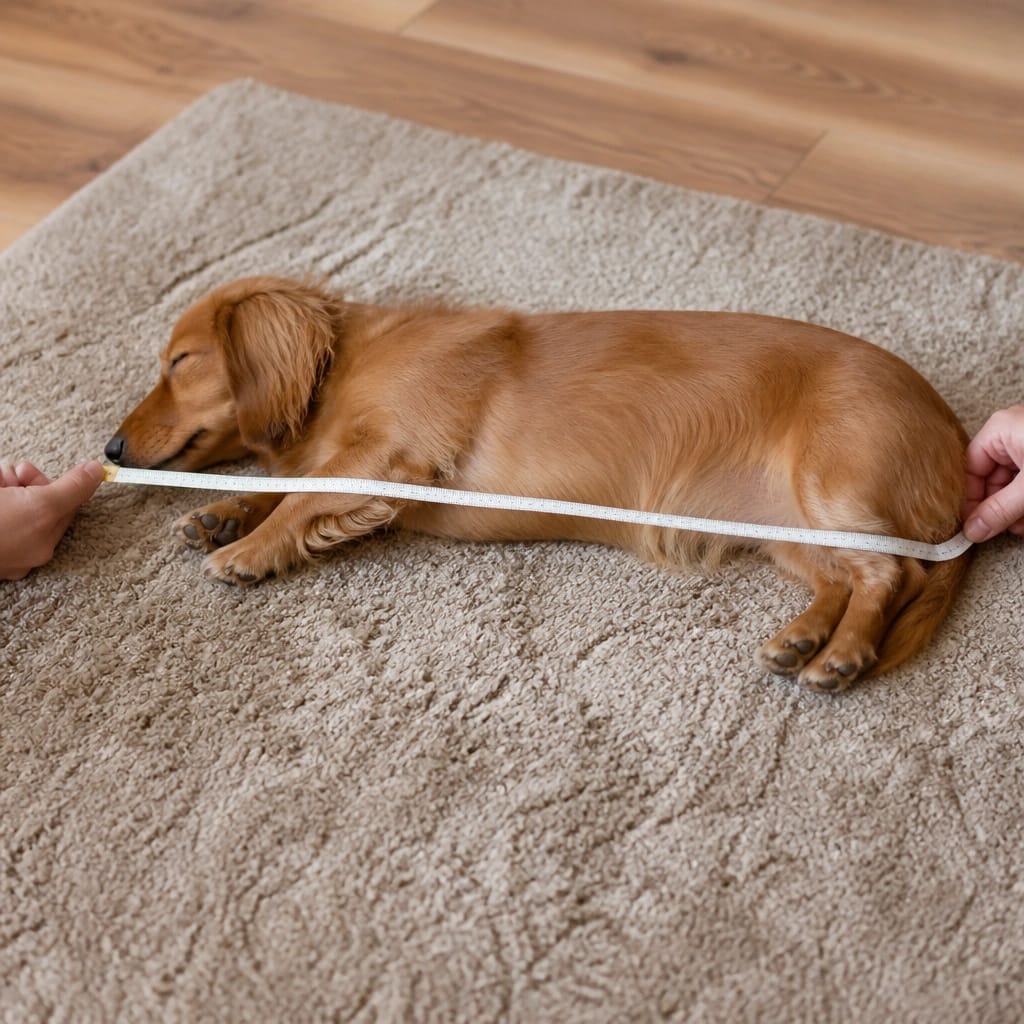
One more check: Measure the bed’s inner width too. A dog that sleeps curled doesn’t need much width. A sprawler needs width equal to or greater than the dog’s shoulder-to-ground height.
If you’re buying for a growing puppy, use our puppy vs adult bed sizing guide to plan ahead. A puppy who will double in size needs a bed that works now but won’t be outgrown in three months.
Step 4: Check Outer Dimensions for Crate or Corner Fit
Outer dimensions determine whether the bed physically fits where you want it. Measure your crate interior width and length first. Then subtract 2 inches on each side for clearance.
That’s your outer dimension limit.
If the bed is going in an open corner, you have more flexibility. But check that the bed doesn’t block a walkway or door swing. A bed that’s too wide for the space will get pushed around or tripped over.
For crate training, outer dimensions are non-negotiable. A bed that’s too large may bunch up against the walls or interfere with the crate door latch. Our guide on where to place a dog bed in the house covers the best spots for different room layouts.
Common Sizing Mistakes That Waste Money

Assuming outer equals inner. The biggest mistake. A 40-inch outer bed might have only 30 inches of usable space. Your dog hangs off the edge, and you’re stuck with a return.
Buying too small for a growing puppy. You want a bed that lasts. But a bed that’s comically large for a 10-pound puppy may not work either. Choose based on the dog’s expected adult size, then add a smaller crate pad temporarily.
Ignoring the bed’s fill type. Polyfill bolsters compress more than foam bolsters. A dog that leans on the edge may flatten a polyfill bolster, effectively enlarging the inner area over time. Foam bolsters hold their shape better.
Not accounting for bed loft. Some beds have thick foam that sits higher. A dog with short legs might struggle to climb on. That’s a different kind of “fit” but equally important.
Our article on why dogs sleep on the floor instead of their bed explores other reasons a bed might get rejected.
Decision Guide: Which Dimension to Prioritize
| Use case | Primary dimension | Secondary dimension |
|---|---|---|
| Crate bed | Outer (must fit crate) | Inner (must fit dog) |
| Open-floor bed | Inner (must fit dog) | Outer (must fit space) |
| Corner placement | Inner (dog comfort first) | Outer (check clearance) |
| Bolster bed | Inner (usable area) | Outer (for room fit) |
| Flat mat | Both equal (minimal difference) | — |
If you can only get one measurement: Focus on inner for dog comfort, outer for space fit. For crate beds, outer wins every time.
When to Ignore Outer Dimensions Entirely
Flat beds and mats have virtually no inner-outer gap. A 40-inch flat bed gives you a 40-inch sleeping surface. The piping and hem add maybe an inch.
In that case, outer dimensions are what you need.
The same applies to raised cot beds. The fabric surface is the full frame size. There are no bolsters stealing space.
Measure the cot frame, and that’s the usable area.
For round or donut beds, the difference is small because the edges taper gradually. A 36-inch donut bed gives you roughly 32 to 34 inches of usable diameter. The outer number is close enough.
How to Read Product Descriptions for Both Numbers
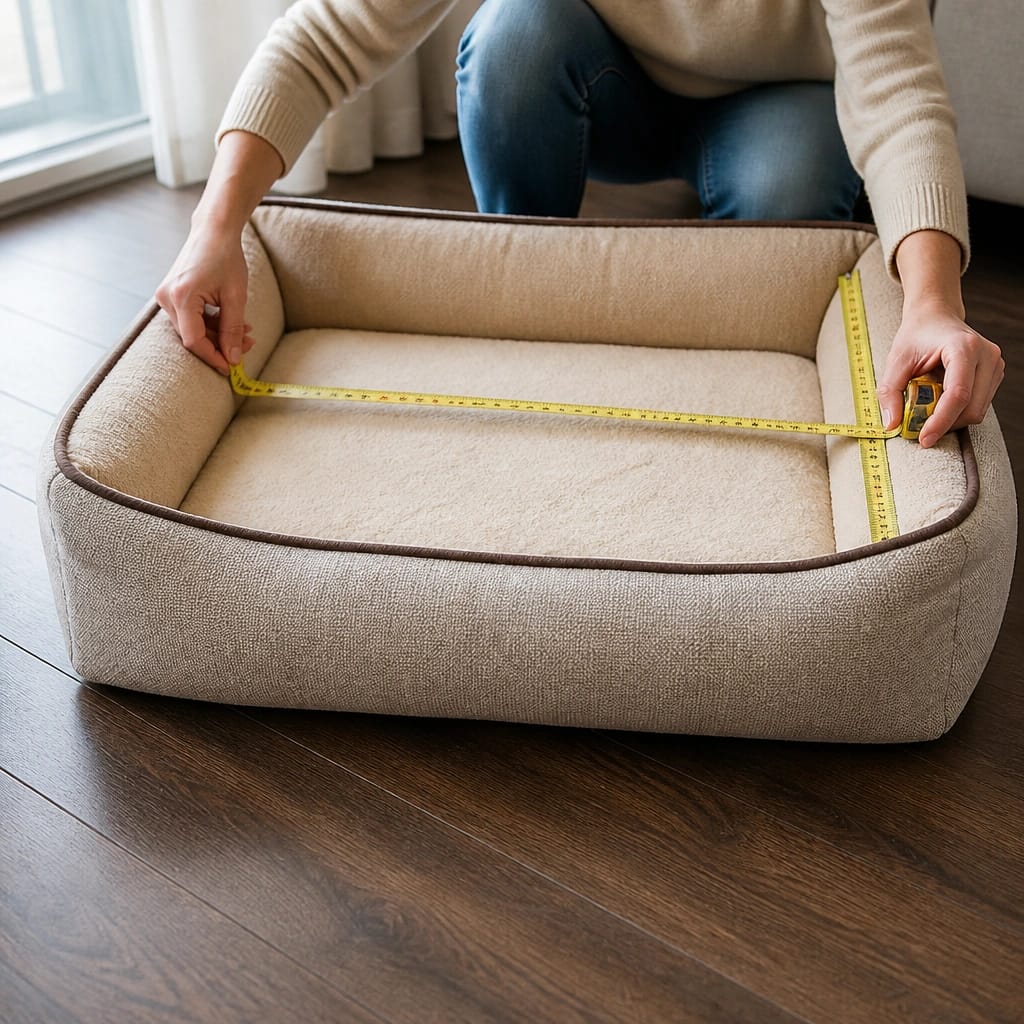
Look for phrases like “sleeping surface,” “inner dimensions,” or “usable area.” If the description only says “36 x 28 inches,” assume that’s the outer measurement.
Red flags:
- No inner dimensions listed
- Only weight capacity mentioned (that tells you nothing about space)
- Reviews complaining “too small for my dog” (means inner area was smaller than expected)
What to do: Check the product images. Sometimes a label photo shows the inner measurement. Read the Q&A section.
Other owners will often ask for the inner size. If it’s still unclear, contact the manufacturer directly.
For a deeper breakdown of how measurements align with dog sizes, our dog bed size chart by weight gives a solid starting point.
Frequently Asked Questions
Should I always add extra inches when choosing a bed size?
Yes. Add 4 to 8 inches to your dog’s body length for comfort. Dogs stretch while sleeping.
A tight fit leads to restless sleep.
Can I use outer dimensions if inner dimensions aren’t listed?
You can estimate. Subtract the bolster width (usually 4 to 8 inches per side) from the outer length. That gives a rough inner size.
Check user reviews for confirmation.
Do flat beds have an inner vs outer difference?
Flat beds and mats have almost no difference. The piping adds less than an inch. Outer dimensions equal usable area for these styles.
What if my dog curls up instead of stretching out?
Curling dogs need less length. Measure your dog in the curled position. A round or donut bed often works better than a rectangular one.
How do I measure a bolster bed’s inner area?
Measure from the inside edge of one bolster to the inside edge of the opposite bolster. That’s the sleeping surface. Repeat for width.
Final Takeaway: Measure Twice, Buy Once
Always check both numbers. Outer dimensions tell you if the bed fits your room or crate. Inner dimensions tell you if your dog fits comfortably.
For crate beds, outer comes first. For open floors, inner comes first. When in doubt, measure your dog, add 4 inches, and confirm the inner length.
That one step saves returns and keeps your dog sleeping soundly.


