

How to Choose Bedding for a Dog With Reduced Mobility
Choose a bed with high-density orthopedic foam. Look for a minimum 4-inch thickness for medium to large dogs. Waterproof protection is essential for incontinence. A non-slip bottom prevents dangerous falls. Measure your dog from nose to tail base for the right size.
Watching your dog struggle to get up from a nap or wince when they lie down is heartbreaking. If you’re wondering how to choose bedding for a dog with reduced mobility, the answer comes down to three things: support, accessibility, and safety. The right bed can ease their pain and improve their quality of life.
According to the American Veterinary Medical Association, over 20% of dogs develop arthritis, and that number climbs to 80% in senior dogs. A properly supportive bed can reduce morning stiffness and help your dog rest more deeply. Let’s walk through exactly what to look for.
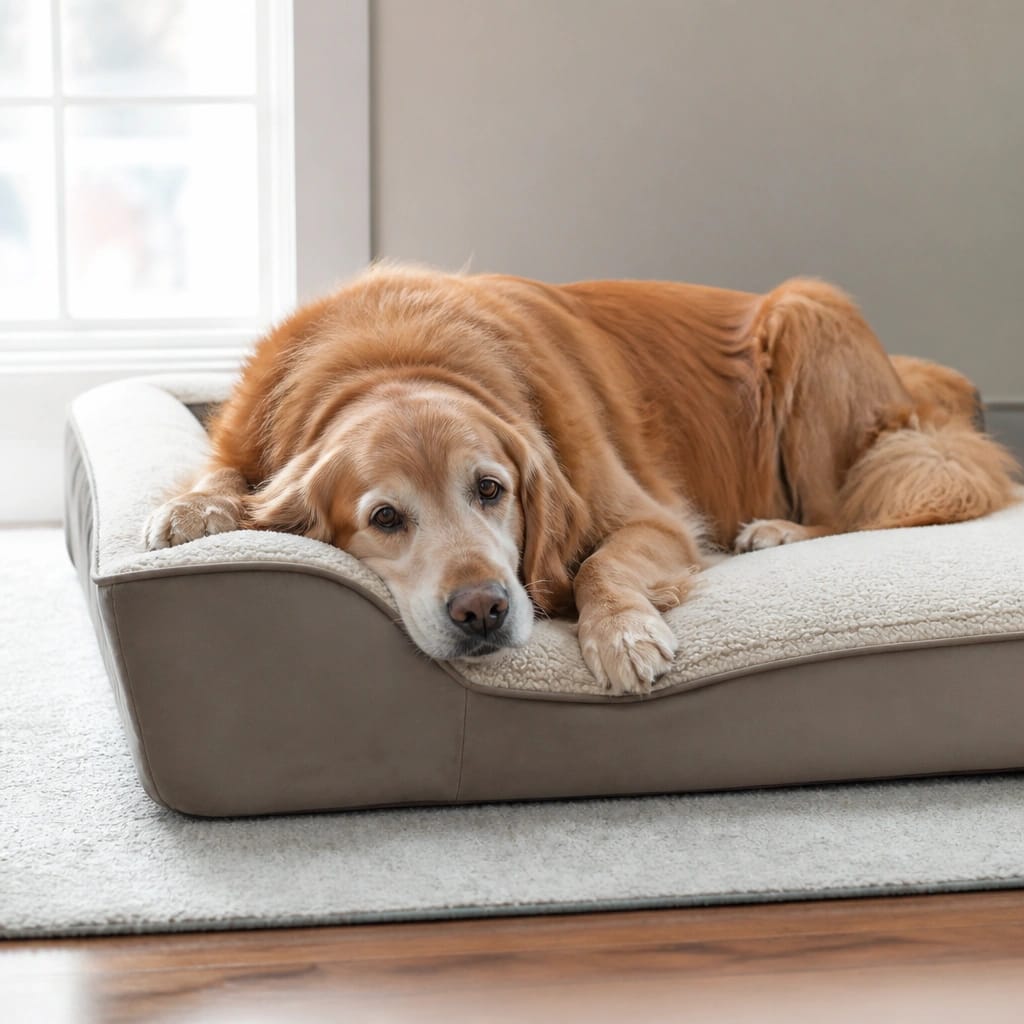
Why Your Dog’s Bed Matters More Than Ever
A standard dog bed with thin polyfill just doesn’t work for a dog with mobility issues. When your dog lies down, their body weight presses into the surface. If the bed lacks support, pressure builds on bony points like elbows and hips.
Over time, that leads to pressure sores and worse joint pain.
A supportive bed does the opposite. It distributes weight evenly, reduces pressure on sore joints, and makes it easier for your dog to shift positions during the night. Better sleep means less stiffness in the morning and better mobility throughout the day.
Think about your own bed. If you woke up with a sore back every morning, you would change your mattress. Your dog deserves the same consideration.
If your dog has started avoiding their bed, that is a red flag. They might be telling you the surface is too hard, too soft, or too painful. Some dogs even prefer a hard floor because it feels more stable.
If that sounds familiar, you might want to understand why dogs sleep on the floor instead of their bed.
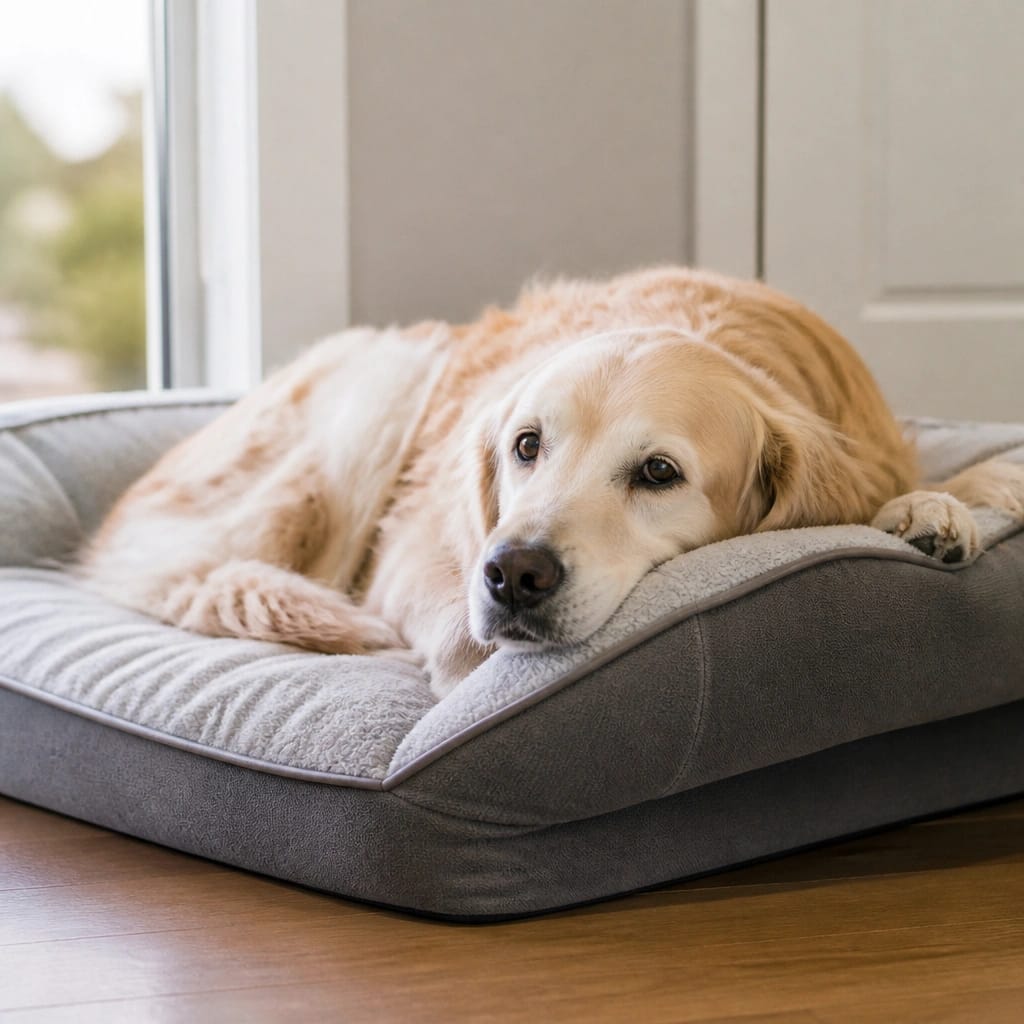
What Makes a Bed “Supportive” for a Mobility-Impaired Dog
Support is not the same as softness. In fact, too soft can be worse than too hard. Your dog’s bed needs to hold their body in a neutral position, keeping the spine aligned and reducing pressure on hips and shoulders.
The magic is in the foam. High-density orthopedic foam, often called “corking” foam, resists bottoming out under your dog’s weight. It molds to their body shape but does not sink to the floor.
This is different from cheap memory foam that loses its shape after a few months.
Per CertiPUR-US testing standards, quality foam should maintain at least 80% of its original height after years of use. That is a benchmark worth looking for.
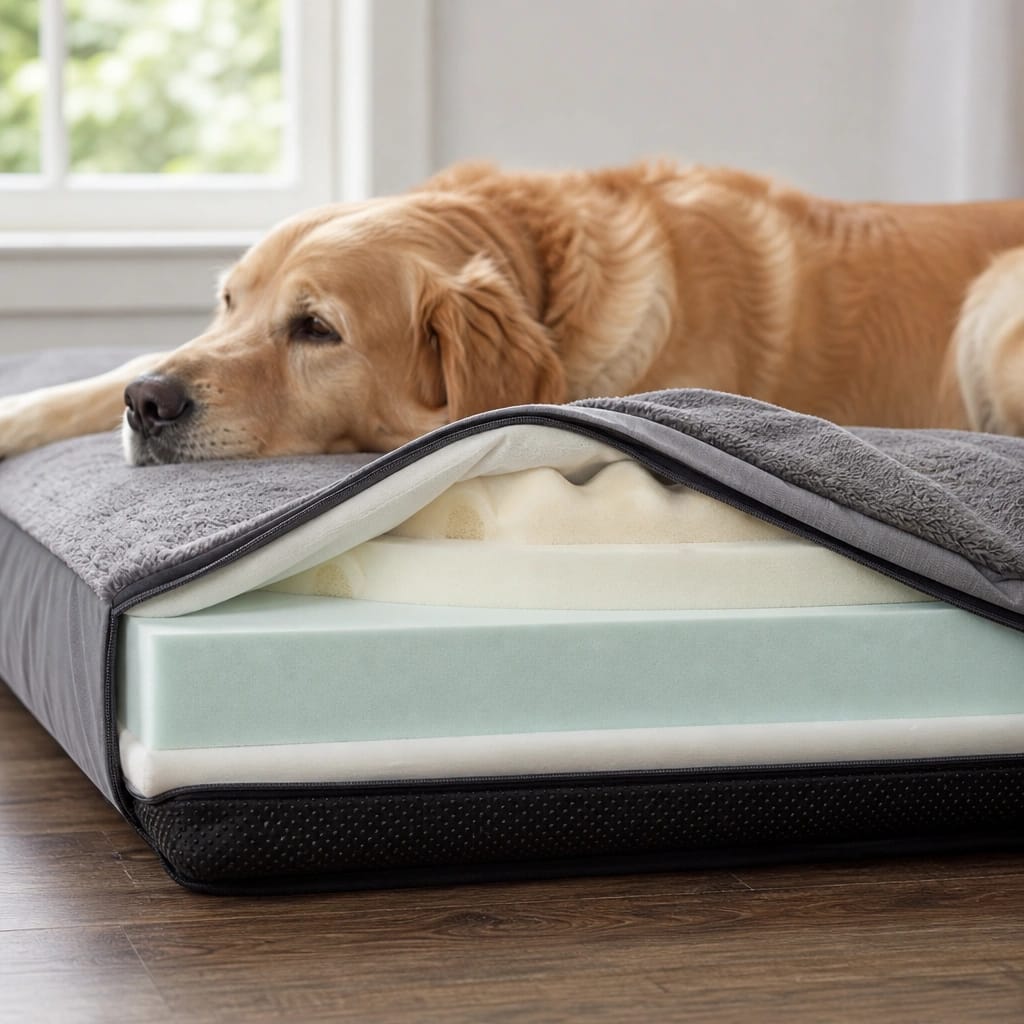
Foam density matters too. It is measured in pounds per cubic foot. For a mobility-impaired dog, look for foam with a density of 2.5 pounds or higher.
Lower density foam will sag and lose support quickly, often within a year.
Key Features That Actually Make a Difference
Not all orthopedic beds are the same. Here are the features that matter most for a dog with limited mobility.
| Feature | What to Look For | Why It Matters |
|---|---|---|
| Foam Density | Minimum 2.5 lb per cubic foot | Prevents sagging and maintains support |
| Foam Thickness | 4 to 6 inches for medium to large dogs | Keeps joints off the hard floor |
| Waterproof Layer | Sealed liner between cover and foam | Protects foam from urine and accidents |
| Non-Slip Bottom | Rubberized or textured fabric | Prevents sliding on hardwood or tile |
| Bed Height | Low profile (4 to 6 inches) or ramp access | Makes getting in and out easier |
Foam Density and Thickness
Foam density is the single most important factor. A 2.5-pound density foam will support a 70-pound dog without bottoming out. Thicker foam, at least 4 inches, ensures your dog’s joints do not press against the floor underneath.
Waterproof Protection
Dogs with reduced mobility often have accidents. They cannot get up in time or control their bladder as well as they used to. A waterproof liner between the cover and the foam is essential.
It prevents urine from soaking into the foam, which ruins the bed and creates odors. Look for a waterproof dog bed with a sealed liner, not just a water-resistant cover.
Non-Slip Base
Dogs with weak legs struggle to push themselves up on a slippery surface. A bed with a non-slip bottom gives them traction. This is especially important on hardwood or tile floors.
Some beds use a rubberized coating, while others use a textured fabric. Both work, but rubberized coatings last longer.
Bed Height and Entry
The height of the bed matters a lot. A bed that is too tall forces your dog to climb or jump, which can cause falls. A bed that is too low makes it hard to stand up.
For most dogs, a bed height of 4 to 6 inches works well. For dogs with severe weakness, consider a bed with a ramp or a very low profile.
Matching the Bed to Your Dog’s Specific Condition
The right bed depends on your dog’s specific condition. A dog with arthritis needs different support than a dog recovering from spinal surgery.
| Condition | Recommended Features | Key Considerations |
|---|---|---|
| Arthritis and Hip Dysplasia | High-density foam, 4 to 6 inches thick, heated option | Warmth helps stiff joints; avoid bolsters that restrict movement |
| IVDD and Spinal Issues | Firm, flat orthopedic foam, no bolsters | Spinal alignment is critical; soft beds can worsen pain |
| Post-Surgery Recovery | Waterproof liner, low profile, non-slip base | Hygiene is essential; easy entry prevents re-injury |
| Paralysis or Severe Weakness | Very low profile, waterproof, non-slip, easy to clean | Dog may need to drag themselves in; bed must be accessible |
Arthritis and Hip Dysplasia
Dogs with arthritis need a bed that cradles their joints without sinking. High-density foam with a thickness of 4 to 6 inches works best. A heated dog bed can also help.
Warmth increases blood flow to stiff joints and reduces pain. Skip the bolsters. They can force your dog into an awkward position.
IVDD and Spinal Issues
For dogs with intervertebral disc disease, spinal alignment is everything. A firm, flat orthopedic bed supports the spine without creating pressure points. Avoid beds with bolsters or raised edges.
They can twist the spine and cause more pain. The foam should be firm enough that your dog’s body does not sink into a U-shape.
Post-Surgery Recovery
After surgery, your dog needs a clean, accessible, and supportive bed. A waterproof liner is non-negotiable. The bed should be low enough that your dog can step in without jumping.
A non-slip bottom prevents sliding during recovery. Some owners use a crate pad instead of a full bed, which is easier to clean and replace.
Paralysis or Severe Weakness
For dogs that cannot stand or walk, the bed needs to be as accessible as possible. A very low profile, almost flat, works best. Waterproof protection is essential.
The cover should be removable and machine washable. Some owners use a crib mattress covered with a waterproof sheet.
How to Measure Your Dog for the Right Bed Size
Getting the right size is just as important as getting the right foam. A bed that is too small cannot support your dog’s body properly. A bed that is too large does not provide enough warmth or security.
Here is how to measure your dog:
- Measure from nose to base of tail. Do not include the tail. This is your dog’s body length.
- Add 6 to 12 inches. This gives your dog room to stretch out without hanging off the edge.
- Check the dog’s height. Measure from the floor to the top of the shoulders. This helps determine the right bed height.
For a quick reference, use our size chart by weight. It breaks down the right bed size for every breed.
| Dog Weight | Recommended Bed Size | Minimum Foam Thickness |
|---|---|---|
| Up to 25 lbs | 24 x 18 inches | 3 inches |
| 25 to 50 lbs | 30 x 24 inches | 4 inches |
| 50 to 75 lbs | 36 x 28 inches | 4 inches |
| 75 to 100 lbs | 42 x 32 inches | 5 inches |
| 100+ lbs | 48 x 36 inches | 6 inches |
These measurements are approximate. If your dog is long-bodied, like a Dachshund, go up a size. If your dog is short and stocky, like a Bulldog, focus on width and foam density.
Flat Bed vs. Bolster Bed: Which One Works Better?
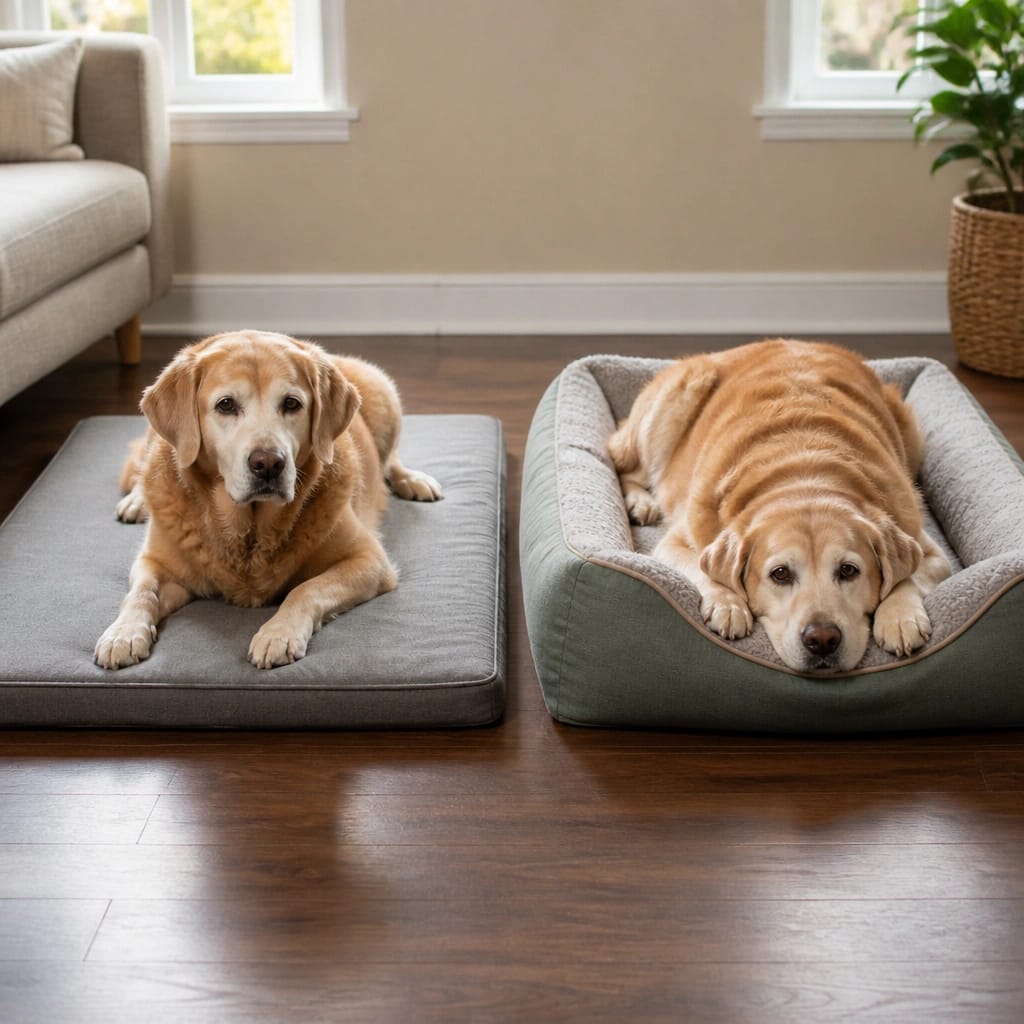
For most dogs with reduced mobility, a flat bed works better than a bolster bed. Bolsters create a barrier your dog has to step over or bump into. That can cause stumbling and falls.
A flat bed gives your dog an unobstructed path in and out. It also lets them stretch out fully, which is important for joint alignment. Some dogs like the security of a bolster to rest their head on.
In that case, choose a bed with low, firm bolsters rather than tall, plush ones.
Common Mistakes Owners Make When Choosing a Bed
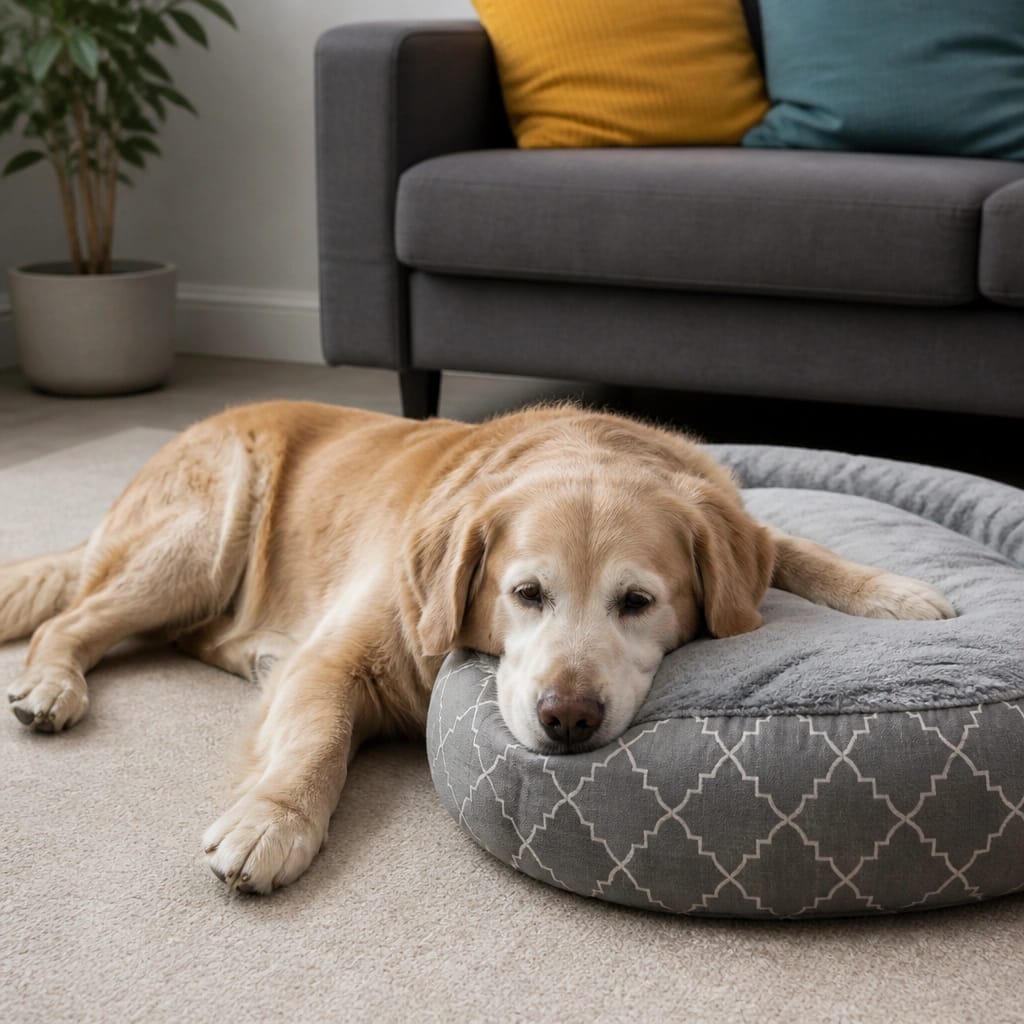
The biggest mistake is buying a bed that is too soft. A plush, fluffy bed looks comfortable but does not support sore joints. Your dog sinks in and struggles to get up.
Another common mistake is ignoring the bed’s location. Placing the bed in a high-traffic area can stress your dog out. They need a quiet, safe spot.
Our guide on where to place a dog bed covers this in detail.
Skipping the waterproof liner is a costly error. Once urine soaks into the foam, the bed is ruined. The smell is nearly impossible to remove.
Safety Considerations for Dogs With Limited Mobility
Safety starts with the bed’s location. Place it on a non-slip surface like carpet or a rug. Avoid hardwood or tile floors, even with a non-slip bed.
A small rug under the bed adds extra traction.
Check the bed for choking hazards. Zip pulls, tags, and loose seams can be dangerous if your dog chews. Choose a bed with covered zippers and reinforced stitching.
Never use a heated bed without supervision. Some dogs with reduced mobility cannot feel heat properly. They may burn themselves without realizing it.
Always follow the manufacturer’s safety guidelines.
When to Talk to Your Veterinarian
A supportive bed helps, but it is not a replacement for medical care. If your dog is showing signs of pain, stiffness, or difficulty walking, talk to your vet.
They can prescribe pain medication, anti-inflammatories, or joint supplements. They may also recommend physical therapy or acupuncture. Your vet can also help you choose the right bed for your dog’s specific condition.
If your dog’s mobility is getting worse quickly, it could be a sign of something serious. Do not wait. Get them checked out.
Frequently Asked Questions
How thick should a dog bed be for a dog with arthritis?
At least 4 inches for medium to large dogs. The foam should be dense enough that your dog’s joints do not press through to the floor. For very large dogs, 5 to 6 inches is better.
Should I get a heated bed for my arthritic dog?
Yes, but only with supervision. Heat increases blood flow and reduces stiffness. Look for a low-wattage bed with automatic shutoff.
Check with your vet first.
Can a dog bed make hip dysplasia worse?
A bad bed can. A bed that is too soft or too thin allows your dog’s hips to sink into an awkward position. A high-density orthopedic bed supports the hips and keeps them aligned.
How often should I replace my dog’s orthopedic bed?
Every 2 to 3 years. Foam loses its density over time. If you notice sagging, your dog sleeping on the floor, or increased stiffness, it is time for a new bed.
Is a memory foam bed the same as an orthopedic bed?
Not always. True orthopedic beds use high-density foam that supports body weight. Some memory foam beds are too soft.
Look for foam with a density of 2.5 pounds or higher.
Quick Reference Guide: Choosing the Right Bed for Your Dog
Here is a simple checklist to follow when shopping for a bed for a dog with reduced mobility.
| Decision Point | What to Choose |
|---|---|
| Foam type | High-density orthopedic foam, 2.5 lb density or higher |
| Foam thickness | 4 inches minimum for dogs over 25 lbs |
| Cover | Removable, machine washable |
| Waterproofing | Sealed liner between cover and foam |
| Bottom | Non-slip rubberized base |
| Style | Flat bed over bolster bed for most cases |
| Height | 4 to 6 inches or low profile for severe weakness |
Start with these criteria. Measure your dog first. Check with your vet if you are unsure about their specific condition.
A good bed will not fix everything, but it will make a real difference in your dog’s comfort and quality of life.


