

Why Does My Dog Sleep Beside Their Bed Instead of on It?
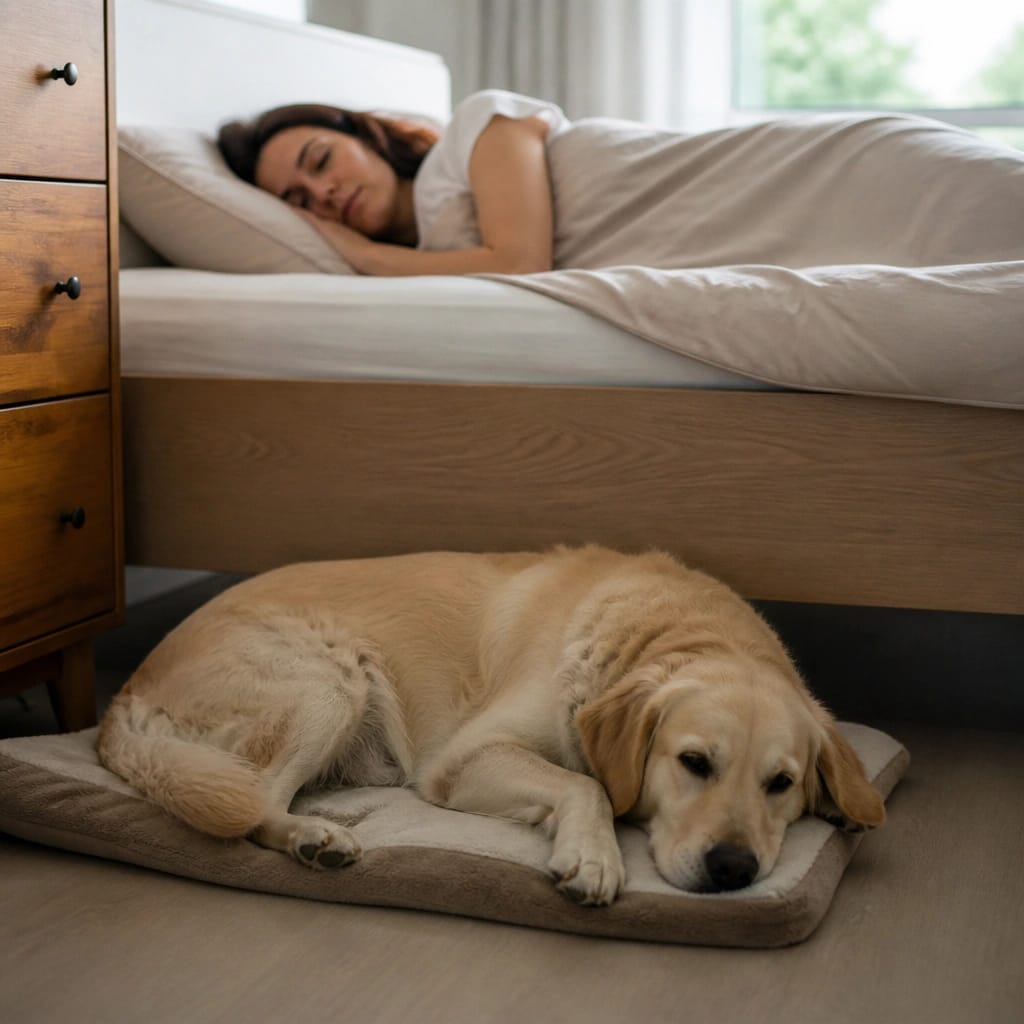
You look down and there he is. Your dog, sprawled out on the bare floor an inch from a perfectly good bed. The bed you researched.
The bed you spent real money on. And he chooses the hard, cold floor every single time.
It’s frustrating, sure. But it’s also a clue. Your dog isn’t being stubborn or ungrateful.
He’s telling you something about comfort, temperature, or habit that you just haven’t translated yet. As of 2026, the most common reasons fall into four clear categories, and once you know which one fits your dog, the fix is usually simple.
Your dog sleeps beside the bed when the bed itself doesn’t meet their needs. The floor might feel cooler, more stable, or simply more familiar. Temperature, bed size, material, or location usually cause the rejection.
Most dogs will use a bed once the underlying mismatch is corrected.
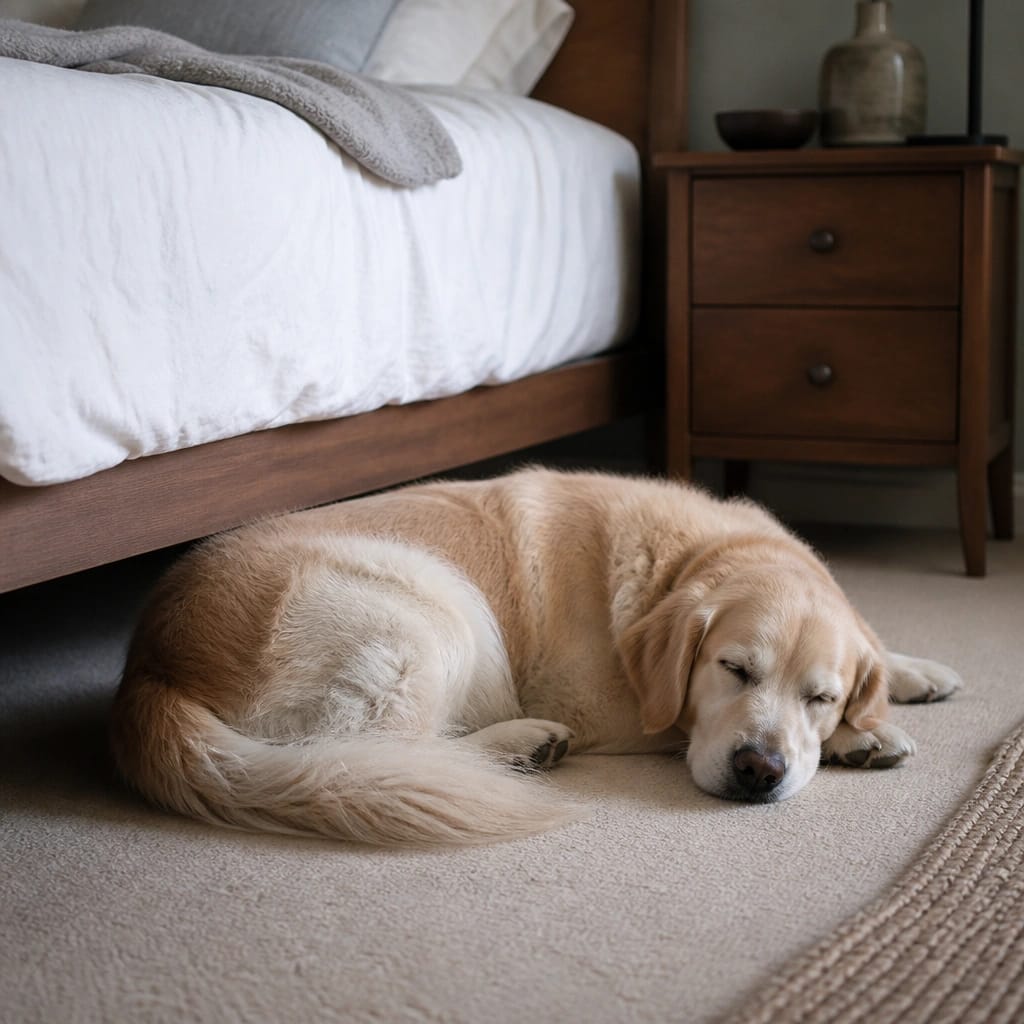
Image source: Wikimedia Commons / Wikimedia Commons contributor (CC BY)
What Your Dog’s Sleeping Position Tells You
Before you change anything, take a good look at how your dog is lying on that floor. The position gives you the first big clue.
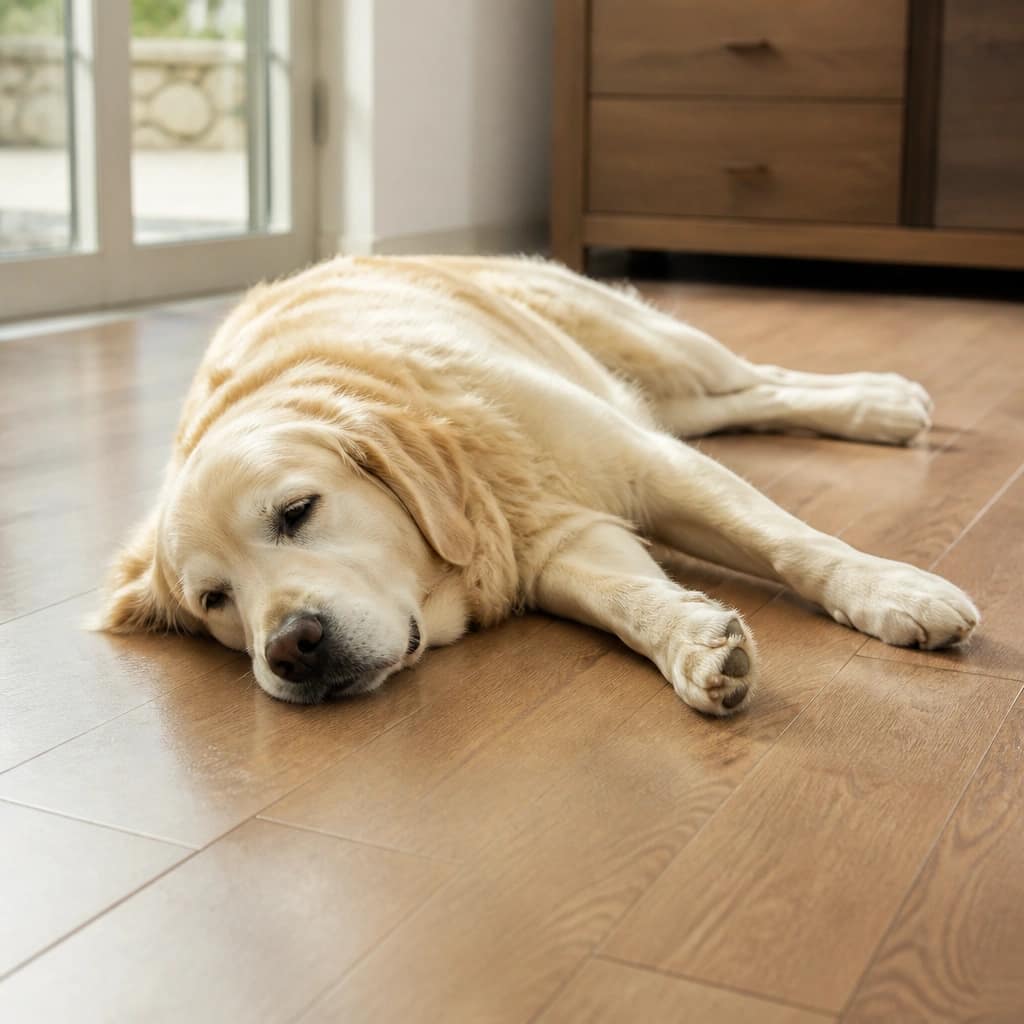
If your dog is stretched out flat on their side with legs extended, they’re likely too warm. That pose maximizes skin contact with the cool floor. If they’re curled into a tight ball with their nose tucked under their tail, they’re chilly and conserving body heat.
A tight curl on the floor usually means the bed isn’t warm or supportive enough, or the room is drafty.
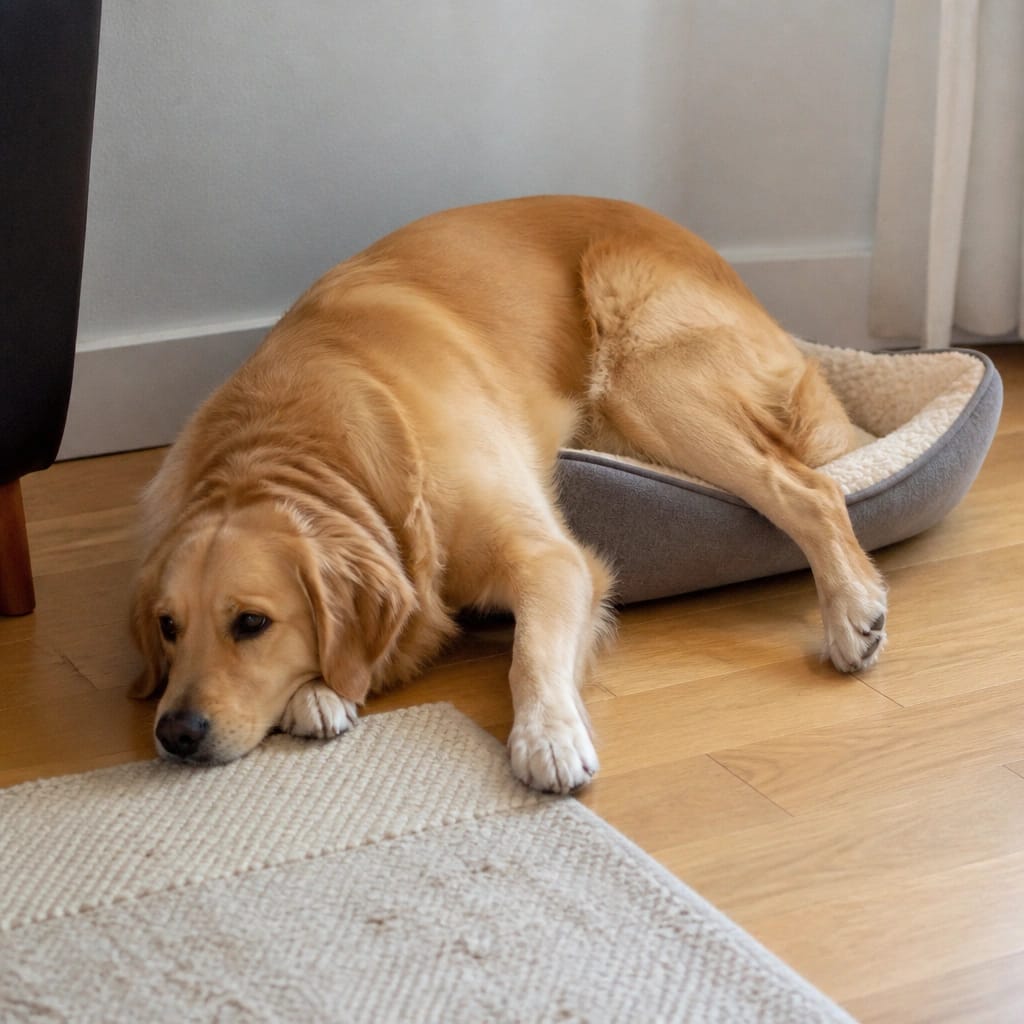
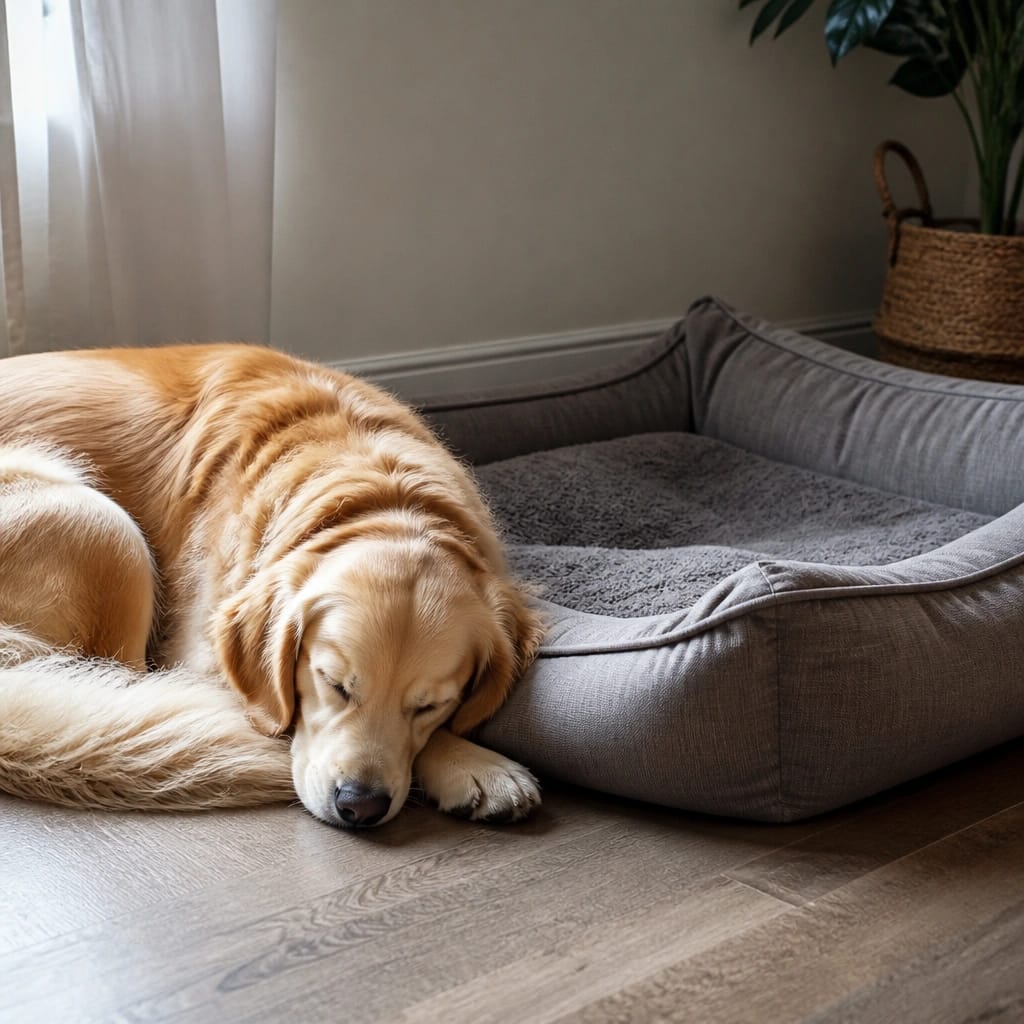
The dog that rests their chin on the edge of the bed but keeps their body on the floor is often testing the bed’s height or firmness. They want to be on it but can’t quite get comfortable.
Branch 1: It’s a Temperature Thing
Temperature is the number one reason dogs reject a bed. Their body runs a few degrees warmer than yours, and they have fewer sweat glands to regulate heat. A plush, fluffy bed traps body heat fast.
If your dog sleeps stretched out on tile, hardwood, or linoleum, they’re using the floor as a cooling pad. This is especially common in warm weather or for breeds with thick coats. Huskies, Golden Retrievers, and German Shepherds often prefer cool surfaces even in moderate temperatures.
On the flip side, short-haired breeds like Greyhounds, Chihuahuas, and French Bulldogs can get cold easily. If your dog curls up tightly on the floor beside the bed, they may be avoiding a bed that feels too drafty or a room that’s cooler than they like.
Signs Your Dog Is Too Warm
- Panting while resting
- Seeking out tile or concrete
- Sleeping spread-eagled on their belly or side
- Pushing the bed away with their nose
Signs Your Dog Is Too Cold
- Curling into a tight ball with legs tucked
- Shivering or trembling
- Nestling against your feet or a warm vent
- Avoiding breezy areas
Quick Fixes for Temperature Issues
| Problem | Quick Fix |
|---|---|
| Dog is too warm | Swap to a cooling bed or raised cot. Move the bed to a cooler room area. |
| Dog is too cold | Add a heated dog bed or fleece blanket. Move the bed away from drafty windows. |
| Seasonal shift | Rotate between a plush winter bed and a breathable summer bed. |
A raised cot bed allows air to circulate underneath, which helps with both overheating and feeling stuck in a warm bed. If your dog has been sleeping on the floor for temperature reasons, offering a bed that breathes often solves it overnight.
Branch 2: The Bed Itself Is the Problem
Sometimes the bed just doesn’t work for your dog. The reasons fall into a few predictable categories, and most owners overlook at least one.
Size Doesn’t Fit
A bed that’s too small is the most overlooked cause. Dogs need room to stretch out fully. If your dog’s legs hang off the edge when they sprawl, they will choose the floor where they can extend completely.
Measure your dog from the tip of their nose to the base of their tail while they’re standing. Add 6 to 12 inches to get the minimum bed length. Check your bed against that measurement.
Many off-the-shelf beds run small, especially for medium and large breeds.
Our dog bed size chart by weight can help you match your dog’s actual measurements to the right size.
Wrong Firmness or Material
Some dogs sink too deep into plush beds and feel trapped. Others find firm orthopedic beds too hard. If your dog steps onto the bed, circles, and then steps off to lie on the floor, the texture or support level is wrong.
Puppies and young dogs often prefer a firmer, flatter surface. Senior dogs with joint pain need pressure relief but may avoid a bed that’s too soft to get in and out of easily. The right bed for each life stage changes.
Check our advice on what size bed a puppy needs vs an adult dog for guidance.
Bed Is New or Has a Strange Smell
New beds can smell like factory chemicals, plastic packaging, or strong detergent. Dogs have an incredible sense of smell and may avoid the bed until it airs out.
Let a new bed sit in a well-ventilated room for 24 to 48 hours before introducing it. Wash removable covers with unscented detergent. Placing a blanket that already smells like your dog or you on the new bed can speed up acceptance.
Bolsters Are in the Way
Bolster beds look cozy but some dogs dislike having a rim around them. Large breeds especially may find bolsters obstructive when they want to stretch their neck or legs over the edge. If your dog rests their head on the bolster but keeps their body on the floor, try a flat cushion bed instead.
Our guide to bolster dog beds explains which dogs tend to love them and which ones don’t.
Branch 3: Floor Feels Better Right Now
Sometimes the floor genuinely offers something the bed can’t. Texture and stability matter more than most owners realize.
Cooling Effect of Tile or Hardwood
Tile and hardwood conduct heat away from the body faster than fabric does. For a warm dog, that’s a feature, not a bug. If your dog chooses a specific spot on a tile floor over the bed every time, the bed is likely retaining too much heat.
Carpet Gives Better Grip
Dogs that slip on hardwood floors often prefer carpet because it gives them traction. If your dog’s bed sits on a slippery surface and the bed itself slides when they step on it, they may move to the carpet for stability. A non-slip pad under the bed fixes this.
Why Dogs Sometimes Choose a Rug Over a Bed
A rug is firmer and cooler than most beds. Some dogs simply prefer that feel. Our article on why dogs sleep on the floor instead of their bed digs deeper into this preference and how to work with it.
Branch 4: It’s a Habit or Comfort Issue
Some dogs avoid the bed for reasons that have nothing to do with temperature or size. The issue is psychological or environmental.
The Bed Is in a Bad Spot
Location matters. If the bed is in a high-traffic area, near a noisy appliance, or too close to a drafty window, your dog may prefer a quieter or more secure spot on the floor. Move the bed to where your dog naturally chooses to sleep for a few nights and see if they use it.
Our guide on where to place a dog’s bed in the house covers the best spots for different personality types.
Your Dog Hasn’t Learned to Trust the Bed
Some dogs, especially rescues or puppies, need time to accept a new sleeping surface. Lay treats on the bed. Sit next to it while your dog relaxes.
Never force them onto it. Positive association builds trust faster than any other method.
Separation Anxiety or Stress
A dog that sleeps beside the bed instead of on it may be seeking proximity to you. The floor spot is close enough to feel your presence but not so close that the bed creates a barrier. For anxious dogs, the bed can feel isolating.
Placing the bed right next to your own bed or adding a worn piece of your clothing to it can help.
Age and Mobility Changes
Senior dogs or dogs with arthritis sometimes struggle to step onto a thick bed. The floor is easier to access. A low-profile orthopedic bed with a non-slip base makes a big difference.
Watch for stiffness when your dog gets up from the floor a sign their joints need better support.
If you notice your dog hesitating before climbing onto their bed or wincing when they stand up, a trip to the vet is worth scheduling. Joint pain changes how dogs behave around their sleeping spaces.
How to Diagnose Which Branch Applies to Your Dog
You don’t need to guess. Run through this simple process over the next two days.
A Simple 3-Question Test
- Where exactly is your dog sleeping beside the bed?
, On tile or hardwood? → Likely Branch 1 (temperature) or Branch 3 (floor preference).
, On carpet? → Likely Branch 2 (bed issue) or Branch 4 (habit/comfort).
- What position is your dog in?
, Stretched out flat? → Too warm.
, Curled tight? → Too cold or seeking security.
, Chin on the bed, body on floor? → Testing the bed or bolsters in the way.
- How does your dog behave around the bed during the day?
, Avoids it completely? → Texture, smell, or size issue.
, Sleeps on it sometimes but not at night? → Temperature or location issue.
, Only sleeps beside it when you’re in the room? → Proximity or anxiety.
What to Look for During 48 Hours of Observation
Spend two full days watching without changing anything. Note when your dog chooses the floor versus the bed. Track the room temperature at different times of day.
See if the behavior changes when you move the bed to a different spot for a few hours. These small observations tell you more than any internet search can.
Common Mistakes Owners Make When Trying to Fix This
The biggest mistake is buying a new bed without knowing why the old one failed. You end up with two unused beds and a dog still on the floor.
Other common errors include:
- Forcing the dog onto the bed and scolding them when they leave.
- Washing the bed with heavily scented detergent that puts the dog off.
- Placing the bed in a noisy or bright area.
- Ignoring seasonal changes. A bed that worked in winter can feel stifling in summer.
- Assuming all dogs want the same bed type. Some dogs genuinely prefer a flat mat over a plush donut bed.
If your dog chews or scratches at their bed before rejecting it, check our article on why dogs dig or scratch at their bed before lying down. The behavior often points to a specific fix.
When to See a Vet About This Behavior
Most cases of bed rejection are behavioral or environmental, not medical. But there are exceptions.
See a vet if your dog:
- Suddenly stops using a bed they previously loved.
- Shows signs of pain when getting up or lying down.
- Limps or favors one leg.
- Whines or seems restless at night.
- Has visible swelling or stiffness in their joints.
Sudden changes in sleeping behavior can indicate arthritis, hip dysplasia, or other orthopedic issues. A vet can rule out medical causes before you start troubleshooting the bed itself. For dogs with diagnosed joint problems, an orthopedic bed with proper support makes a meaningful difference.
What to Try First Based on Your Dog’s Specific Situation
Here is a quick decision guide based on the most common scenarios.
| If your dog… | Try this first |
|---|---|
| Sleeps stretched on tile | Switch to a cooling cot or move the bed to a carpeted area |
| Curls tightly on carpet | Add a fleece blanket or heated pad to the bed |
| Leaves the bed at night but uses it during the day | Move the bed closer to your own sleeping area |
| Steps on the bed then steps off | Check the bed size and firmness level |
| Only does this in summer | Swap to a breathable, low-profile bed until temperatures drop |
| Is a new rescue or puppy | Give them time and use treats to build positive association |
Most dogs will start using their bed within a week once you match the solution to the real reason. Watch their body language, trust what you observe, and adjust from there. Your dog isn’t trying to frustrate you.
They’re just trying to get comfortable in the only way they know how.
Frequently Asked Questions
Why does my dog sleep on the floor right next to their bed?
The most common reasons are temperature regulation, bed size, or a preference for the floor’s texture. Dogs that stretch out on tile are usually too warm. Dogs that curl up tight are often too cold or seeking security.
Observing their sleeping position tells you which one it is.
How can I get my dog to use their bed instead of the floor?
Start by identifying why they’re avoiding it. Measure the bed against your dog’s full body length. Check if the room temperature or floor material is part of the issue.
Place a familiar blanket or worn clothing on the bed. Use treats and praise to build a positive association. Never force them onto it.
Is it bad for my dog to sleep on the floor instead of their bed?
Hard floors lack cushioning for joints, especially in senior dogs or large breeds. Long-term sleeping on tile or hardwood can contribute to pressure sores and joint stiffness. A supportive bed is better for their health, but a dog that chooses the floor is usually trying to solve a comfort problem that the bed isn’t addressing.
Why does my dog sometimes sleep on their bed and sometimes on the floor?
Seasonal temperature changes often cause this. A bed that feels cozy in winter can trap heat in summer. Your dog may also shift positions throughout the night, alternating between a soft surface and a cool floor.
This pattern is normal and doesn’t necessarily mean the bed is wrong.
Does my dog need a pillow to sleep comfortably?
Some dogs enjoy resting their head on a raised surface, but not all do. Dogs that sleep curled up tend to prefer a bed with bolsters or a donut shape. Dogs that sprawl flat may find pillows obstructive.
Our article on whether dogs need a pillow covers the signs to look for.
Should I throw away the bed if my dog won’t use it?
Not yet. Try moving the bed to a different location first. Wash the cover with unscented detergent.
Swap the bed type if you’ve ruled out location and cleanliness. Many owners find that a simple change like switching from a high-sided bed to a flat mat or from a soft bed to a firmer one gets their dog using it again.
The Role of Bed Placement in Your Dog’s Choice
Where the bed sits matters more than most owners realize. A bed tucked in a corner feels secure to some dogs and trapping to others. A bed in the middle of a room feels exposed.
Watch where your dog chooses to rest during the day and move the bed to that spot.
Dogs that sleep beside their owner’s bed at night may simply want proximity. Placing their bed right next to yours often solves this. Distance matters more than the bed itself for dogs that value closeness over comfort.
When a New Bed Makes Sense
Sometimes the current bed is beyond fixing. If you’ve tried relocating it, washing it, and airing it out with no success, a different style may be needed.
Dogs that sprawl on their belly prefer flat cushion beds or cots without bolsters. Dogs that curl up tend to like donut beds or nests with raised edges. Senior dogs benefit from low-entry orthopedic beds that are easy to step onto.
Matching the bed style to your dog’s natural sleeping position is the most reliable way to get them off the floor.
Long-Term Solutions for Bed Usage
Once your dog starts using their bed consistently, keep it working. Wash the cover monthly with unscented detergent. Rotate the bed to prevent uneven wear.
Replace it when the filling stops bouncing back.
Seasonal rotation also helps. A plush bed for winter and a breathable cot for summer gives your dog the right surface year-round. Dogs that have this option rarely abandon their bed for the floor.
When to Accept the Floor
Some dogs simply prefer the floor. If you’ve addressed temperature, size, location, and health concerns and your dog still sleeps beside the bed, it may be a personal preference.
In that case, make the floor safer. Add a non-slip rug or mat in their chosen spot. Keep the area clean and draft-free.
You can still offer the bed as an option without forcing it. Many dogs eventually use their bed more as they age and their joints need more cushioning.
The Takeaway
Your dog sleeps beside their bed because something about it doesn’t work for them. Find the reason, fix it, and most dogs will switch back within days. Watch their body language, trust the process, and remember that they aren’t being difficult.
They’re just trying to get comfortable in the only way they know how.


