

How to Choose a Foldable Dog Bed
If you’re trying to figure out how to choose a foldable dog bed, you’ve probably realized it’s not as simple as grabbing the first one you see. Foldable beds come in different shapes, fills, and support levels, and the wrong pick can leave your dog uncomfortable or the bed flat in a few months. The key is matching the bed to your dog’s size, sleeping style, and where you plan to use it.
Manufacturer data shows that most foldable beds use one of three foam types: polyurethane foam, shredded memory foam, or fiber fill. Each behaves differently under pressure and after repeated folding. That matters a lot when your dog curls up on it every night.
Let’s walk through what to look for.
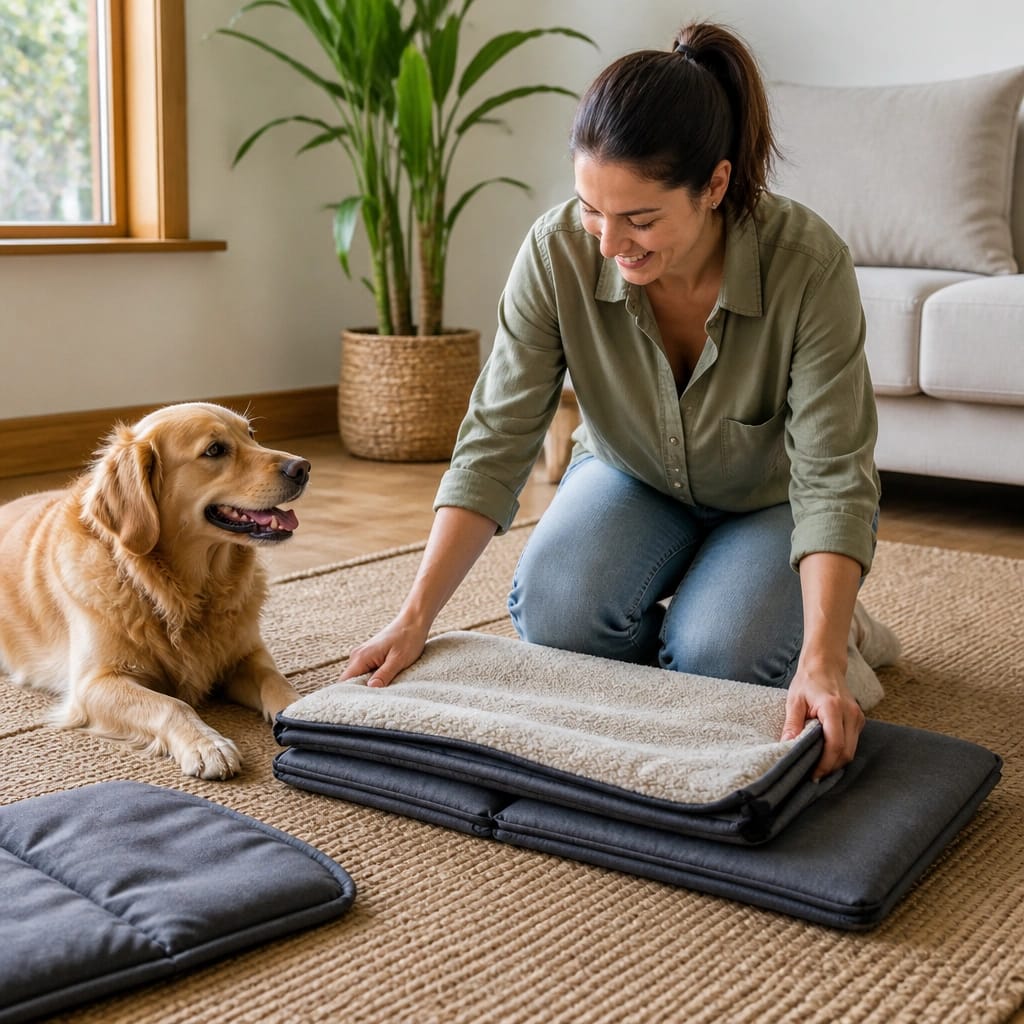
Choose a foldable dog bed by measuring your dog’s length. Add four to six inches for stretch room. Match the foam to your dog’s weight and age.
Pick a washable, durable cover. Confirm the folded size fits your storage or travel space.
What Exactly Is a Foldable Dog Bed (and Who Needs One)
A foldable dog bed is a sleeping surface designed to collapse flat or roll up for easy storage and transport. Unlike a standard orthopedic bed that keeps its shape permanently, these beds let you stash them under a couch, in a car trunk, or inside a crate when not in use.
Who needs one? Anyone with limited space, frequent travelers, RV owners, or people who use a crate and want a comfortable pad that doesn’t take over the room. They’re also handy for multi-dog households where you want to stack beds when guests arrive.
If your dog sleeps in different rooms throughout the day, a foldable bed is easy to move around.
Size Matters: Finding the Right Fit for Your Dog
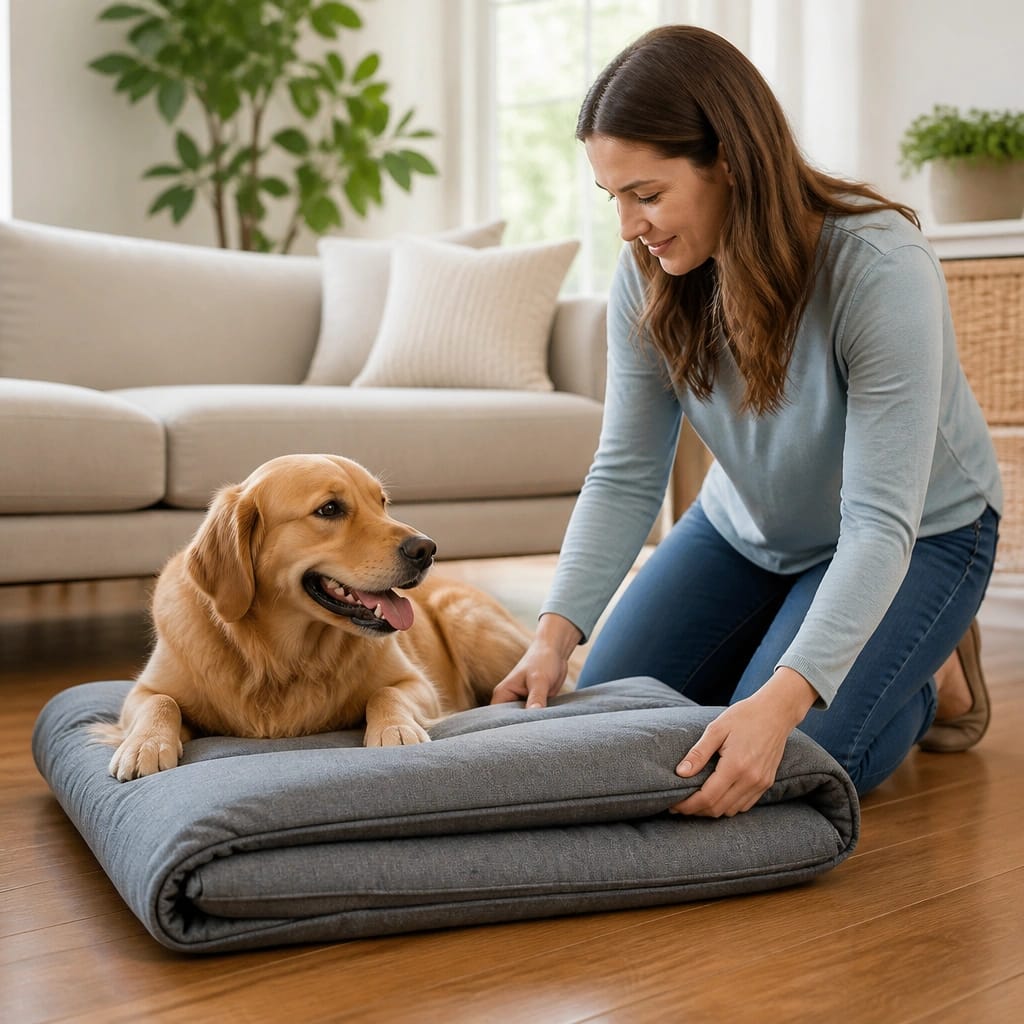
Size is the single most common mistake people make. They look at the folded dimensions and forget the unfolded ones matter more.
Measuring Your Dog Correctly
Measure your dog from the tip of the nose to the base of the tail while they’re standing. That’s their body length. Then add 4 to 6 inches.
That’s the minimum bed length you need. For example, a dog with a 20‑inch body needs a bed at least 24 inches long. If your dog likes to stretch out, add 8 inches.
Width is simpler. Measure your dog’s height from floor to the top of their shoulder while standing. That gives you the minimum width.
A dog that curls up can fit on a narrower bed, but a full‑length stretcher needs the full space.
Matching Bed Size to Crate or Travel Space
If the bed goes inside a crate, measure the crate interior length and width first. The bed should fit snugly without curling up at the edges. For car or hotel use, measure the floor space where the bed will sit.
A bed that’s too large defeats the portability purpose. Check the folded size too, it needs to fit in your suitcase, trunk, or backpack.
Material Matters: Foam, Fabric, and Fill

Image source: Openverse / USDAgov (PDM 1.0)
The material determines how long the bed lasts and how comfortable your dog stays.
Foam Types and What They Mean for Support
Three main fills show up in foldable beds:
- Polyurethane foam, most common, lightweight, affordable. Good for dogs under 40 pounds or occasional use. It compresses faster over time.
- Memory foam (often shredded), better support for heavier dogs or seniors. Shredded memory foam is more flexible for folding than solid slabs.
- Fiber fill, soft and lightweight, but offers zero joint support. Best as a blanket or crate liner, not for daily sleeping.
Look for CertiPUR‑US certified foam. That label means the foam has low volatile organic compound (VOC) emissions and no heavy metals, safer for your dog, especially if they like to dig or nest on the bed.
Cover Fabrics: Durability, Comfort, and Cleanability
The cover takes the most abuse. Microfiber is soft and dries fast. Canvas and Oxford nylon are tougher and resist snags.
Fleece is cozy but traps hair and stains. Cotton canvas breathes well for warmer climates.
Make sure the cover is removable and machine‑washable. No exceptions. Your dog’s bed will collect dirt, drool, and hair.
A removable zippered cover keeps the foam clean. Check that the zipper is sturdy, cheap zippers fail after a few washes.
Waterproof Liners and Non-Slip Bases
If your dog is prone to accidents or drinks water on the bed, a waterproof liner inside the cover is a lifesaver. Many foldable beds now include a waterproof layer between the fabric and foam. For hard floors, look for a non‑slip base with rubber dots or silicone grip.
That keeps the bed from sliding when your dog jumps on or off.
Support and Comfort: When a Thin Bed Just Won’t Cut It
Not every dog needs thick orthopedic foam. But many do. The right level of support depends on your dog’s age, weight, and sleeping habits.
A general rule: if your dog is over 40 pounds or older than seven years, choose a bed with at least 3 inches of foam. Thinner beds (1, 2 inches) bottom out quickly under heavier dogs, leaving the hip bones pressing against the floor. That can lead to joint stiffness or reluctance to lie down.
Puppies and small dogs under 20 pounds do fine with 2‑inch foam. They don’t put enough weight on it to cause pressure points. But even then, a thicker foam pad will last longer before it sags.
Watch your dog’s sleeping position too. A dog that sprawls out with legs extended needs a longer, flatter surface, avoid bolsters that fold up on the sides. A curler or burrower might prefer a bed with raised edges, but many foldable beds sacrifice bolsters for portability.
If your dog loves to rest their head on something, look for a foldable bed with a removable bolster or consider a donut‑style bed instead.
Crate or Travel? Matching the Bed to the Use Case
The same bed doesn’t work for every situation. Think about where and how often you’ll use it.
For Crate Training and Day-to-Day Use
A crate pad needs to fit snugly inside the crate with no overhang. Foldable beds work well here because you can take them out for washing. Opt for a mat‑style pad with a non‑slip bottom so it stays put.
Avoid beds with thick bolsters that crowd the crate space. Many owners find that a crate pad with a machine‑washable cover is the most practical choice.
For Road Trips, Camping, and Hotel Stays
Portability becomes the priority. Look for a bed that folds into a compact rectangle or rolls up with a carry handle. Weight matters, keep it under five pounds if you’re carrying it far.
A waterproof base is essential for outdoor use. If you’re traveling to cold climates, a self‑warming fleece top adds comfort without needing electricity.
For Small Spaces and Apartment Living
When floor space is at a premium, a foldable bed that slides under the sofa or stands upright in a closet is perfect. Choose a bed with a flat fold (no bulky bolsters) so it stacks easily. If you have multiple dogs, stackable beds save even more room.
One more consideration: if your dog is a heavy chewer, standard fabric covers won’t last. Check out chew‑proof materials before buying. A damaged cover can expose foam, creating a choking hazard.
Common Mistakes People Make When Choosing a Foldable Dog Bed
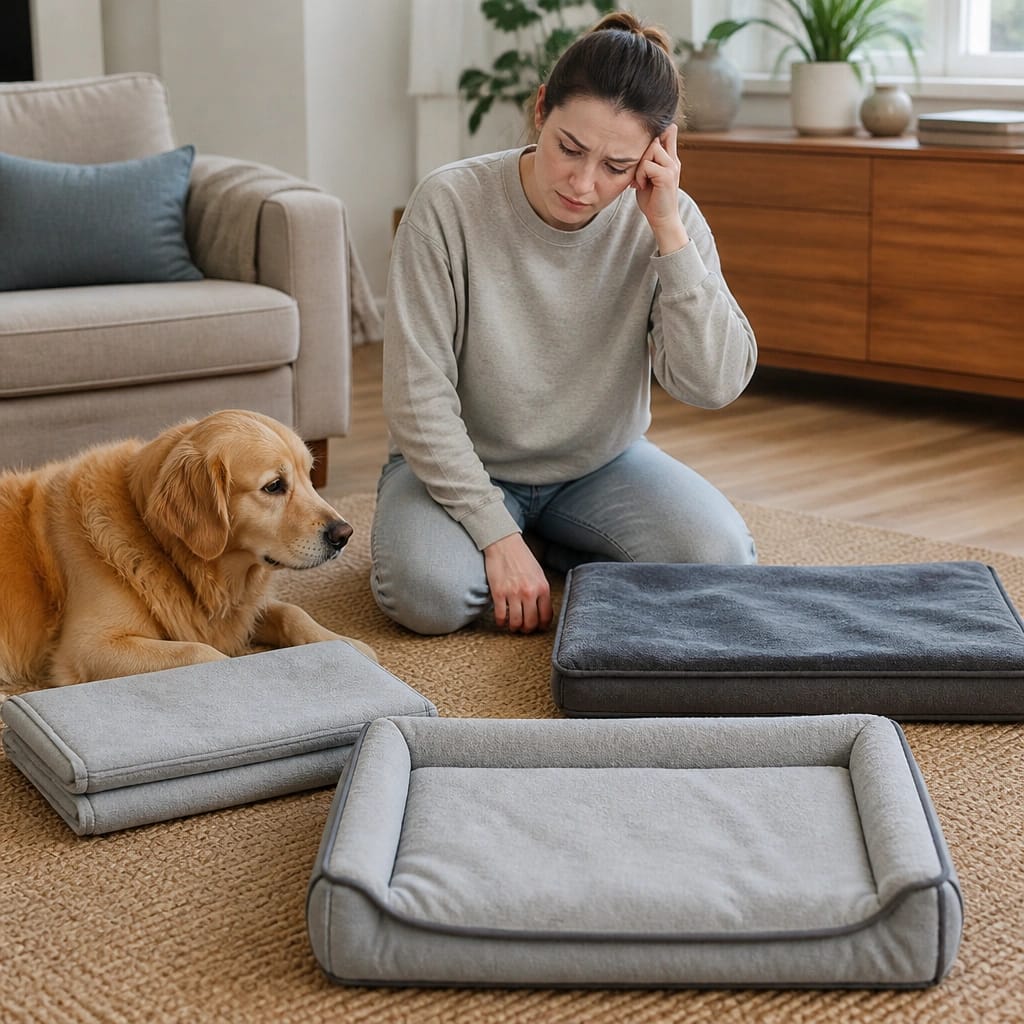
Buying Based on Folded Size Instead of Unfolded Size
The folded size is what makes it portable. But the unfolded size is what your dog sleeps on. Many people grab a small folded bed and end up with a mat their dog hangs off.
Always check the unfolded length first.
Ignoring Your Dog’s Sleeping Position
A stretched-out sleeper needs a long flat surface. A curler can manage a shorter bed. If your dog sprawls, add 8 inches to their body length instead of 4.
A bed that’s too short will be ignored in favor of the floor.
Overlooking Washability and Zipper Quality
A non-removable cover is a dealbreaker. You’ll be hand-washing the whole bed within weeks. Check the zipper too.
Cheap plastic zippers fail fast. Look for metal or heavy-duty nylon zippers with a protective flap.
The Decision Guide: Which Foldable Bed for Your Dog?
For Puppies
Puppies grow fast. Choose a budget-friendly fiber fill or thin polyurethane bed. It will likely be replaced in a year.
Focus on washability and chew resistance. A waterproof liner is essential for accidents.
For Senior Dogs
Senior dogs need joint support. Pick a foldable bed with at least 3 inches of memory foam or high-density foam. Look for CertiPUR-US certification.
A non-slip bottom prevents falls when they get up.
For Heavy Chewers
Standard fabric covers won’t last. Choose a bed with a chew-resistant cover made from ballistic nylon or canvas. Avoid exposed zippers and tags.
Monitor the bed for damage regularly.
For Hot and Cold Climates
Hot climates call for mesh or cotton canvas covers that breathe. Cold climates work well with fleece or self-warming tops. Avoid foam that traps heat for brachycephalic breeds like Bulldogs or Pugs.
How to Care for Your Foldable Dog Bed (So It Lasts)
Remove the cover and machine wash it on a gentle cycle with cold water. Air dry or tumble dry on low. Never use bleach or fabric softener.
They damage the waterproof layer and break down foam.
Let the foam air out completely before putting the cover back on. Moisture trapped inside leads to mold and odors. Rotate the bed every few months to prevent uneven sagging.
Store it flat or rolled in a cool dry place when not in use.
Frequently Asked Questions
How long does a foldable dog bed take to expand?
Most compressed foam beds need 24 to 48 hours to fully expand. Unfold it immediately. Fluff the foam by hand to speed up the process.
Can I put a foldable dog bed in the washing machine?
Only the removable cover goes in the machine. The foam inside should never be machine washed. Spot clean the foam with mild soap and water.
Let it dry completely.
What is the best foam thickness for a foldable dog bed?
For dogs under 40 pounds, 2 inches is enough. For dogs over 40 pounds or seniors, 3 to 4 inches provides better support.
Are foldable dog beds good for crates?
Yes, they fit well in crates because they are thin enough to fold at the edges. Measure the crate interior first. A snug fit prevents bunching.
How do I stop my dog from chewing the bed?
Choose a bed with a chew-resistant cover. Provide appropriate chew toys. If the behavior continues, check our guide on chew-proof materials for more durable options.
Final Takeaway
The right foldable dog bed comes down to three things. Measure your dog correctly. Match the foam to their weight and age.
And pick a washable cover that fits your lifestyle. Whether you need a bed for crate training, travel, or small space living, the same rules apply. Start with the dog.
Everything else follows.


