

How to Insulate a Dog Bed From a Cold Floor
If your dog’s bed sits on a cold floor, your dog is losing body heat through the bottom. The bed itself may feel warm, but the floor underneath is pulling heat away. That’s why you need to know how to insulate a dog bed from a cold floor.
The fix is simpler than most owners think, and it doesn’t always require buying a new bed.
A standard foam bed provides almost no thermal barrier on its own. Per industry testing, a 2-inch memory foam mattress has an R-value around 1.5, just enough to slow heat loss slightly. The floor temperature can be 10 to 15 degrees colder than the room air.
That difference matters for your dog’s comfort and joint health, especially as of 2026 when more homes are built with concrete subfloors that stay cold year-round. Let’s start with why this happens.
The best way to insulate a dog bed from a cold floor is to add a separate thermal barrier underneath. Use closed-cell foam, reflective insulation, or a thick wool blanket. Place the barrier directly under the bed, not inside it. For concrete or tile, use a 1-inch layer of rigid foam. For hardwood, a felt pad or rubber mat may be enough. The goal is to interrupt the cold path between floor and bed.
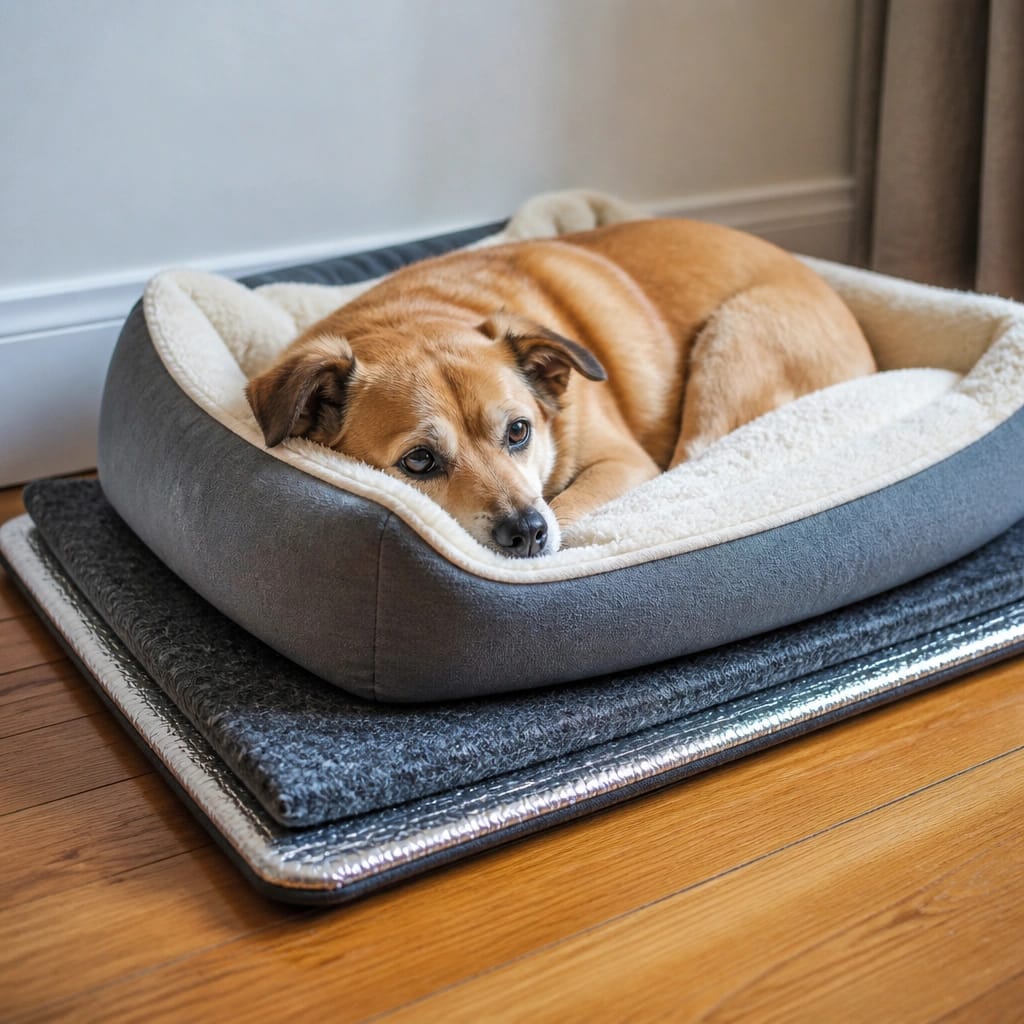
The Problem: Why Your Dog’s Bed Feels Cold Even Indoors
You put a thick bed down, but your dog still curls up tight or shivers. Maybe they avoid the bed entirely and choose the carpet instead. That’s because the floor is conducting heat away from their body faster than the bed can trap it.
The issue is conduction. Heat moves from warm areas to cold areas. Your dog’s body warms the top of the bed, but the cold floor pulls that heat down through the foam and out the bottom.
The bed becomes a heat bridge, not a heat barrier.
This is especially common on concrete, tile, and stone floors. These materials are dense and conductive. They stay cold even when the room feels warm.
A dog loses body heat through the belly and joints faster than through the back. That’s why a cold floor affects their sleep quality and can make morning stiffness worse.
If you’re wondering why your dog seems restless at night or why they dig and scratch at their bedding before lying down, the cold floor underneath might be the real cause. It’s worth checking before you assume it’s a behavioral issue.

How Cold Floors Steal Heat: The Simple Physics of Conduction
Conduction is the direct transfer of heat through physical contact. When your dog lies down, their body heat moves into the bed. That heat then travels through the bed material and into the floor.
The rate of heat loss depends on the floor material and the bed’s insulation value.
Concrete and tile are the worst offenders. They have high thermal conductivity. Wood is better, but it still conducts heat away faster than air.
Carpet is a decent insulator on its own, but if the carpet is thin or the subfloor is uninsulated, the cold still comes through.
Here’s how different floor materials compare in terms of coldness:
| Floor Material | Relative Coldness | Best Insulation Approach |
|---|---|---|
| Concrete (basement/garage) | Very cold | 1-2 inch rigid foam or reflective barrier |
| Tile or stone | Cold | 1 inch closed-cell foam + non-slip pad |
| Hardwood or laminate | Moderately cold | Felt pad or thick blanket |
| Vinyl/LVP | Cool | 1/2 inch foam pad or yoga mat |
| Carpet over concrete | Slightly cool | Extra layer of fleece or wool |
The key is to break the direct path between the dog and the cold floor. Every inch of insulation you add increases the thermal resistance. Even a quarter-inch of closed-cell foam can make a noticeable difference.
What to Look For Before You Start: Floor Type, Dog Size, and Climate
Not every dog needs the same insulation strategy. You need to consider three main factors before choosing a method.
Floor type is the most important. Concrete and tile need more insulation than wood or carpet. If you’re on a concrete slab in a basement, you’re dealing with the coldest possible surface.
If you’re on a hardwood floor over a heated room, the problem is much smaller.
Dog size and weight determine how much the bed compresses. A 70-pound Labrador will flatten a 2-inch foam bed much more than a 10-pound Chihuahua. When the bed compresses, the insulation layer also gets thinner.
Thicker foam or a stiffer insulating layer is needed for larger dogs.
Climate and location matter too. If you live in a cold climate and the bed is on an exterior wall, the floor will be colder than in a warm climate. Seasonal changes also affect the floor temperature.
What works in summer may not be enough in winter.
A good starting point is to place your hand on the floor where the bed sits. Leave it there for 30 seconds. If it feels cold to your hand, it’s cold for your dog.
If the floor feels warm, you may only need a thin barrier.
Decision Branch 1: Is Your Dog Sleeping on a Concrete, Tile, or Stone Floor?
This is the most common scenario for insulation problems. If your dog’s bed is on concrete, tile, or stone, you need a real thermal barrier. A thin blanket or a cotton bed liner won’t do much.
Concrete floors in basements, garages, or on ground level are the worst. The slab stays cold year-round. You need at least 1 inch of rigid closed-cell foam under the bed.
A reflective insulation panel (like the kind used for water heaters) works well because it blocks both conduction and some radiant heat.
Tile and stone floors are also very conductive. They feel cold to the touch and stay cold even in summer. A 1-inch closed-cell foam mat or a thick rubber stall mat works well.
Some owners use a yoga mat cut to size. It’s a cheap and effective solution.
The best approach for these surfaces
- Use a separate insulation layer under the bed, not inside it.
- Choose a moisture-resistant material. Concrete can wick moisture, and a damp barrier will mildew.
- Ensure the barrier is non-slip. A foam board on tile can slide easily. Add a rubber mat or non-slip rug pad between the foam and the bed.
If your dog is on concrete or tile, do not rely on the bed alone. The foam in most dog beds is not thick enough to block the cold. You need a dedicated insulation layer.
Decision Branch 2: Does Your Dog Have a Framed or Elevated Bed?
Elevated beds are a different case. They have a fabric or mesh surface suspended on a frame. Air flows underneath, which can actually help in summer but hurts in winter.
If your dog has an elevated bed on a cold floor, the air gap underneath provides some insulation. Still, cold air circulates beneath the bed and can make the surface feel cold. The best fix is to block the airflow.
Place a solid foam board or a thick blanket under the elevated bed, filling the space between the frame and the floor. This traps a layer of still air, which is a good insulator.
For framed beds with a solid base (like a sofa-style bed or a bed with a wooden frame), the insulation goes under the entire frame. The same principles apply, but you need a larger barrier. A wool blanket or a thick felt pad works well for these.
Elevated beds are not ideal for cold floors. If your dog is older or has joint issues, the airflow underneath can make them uncomfortable. Consider switching to a solid floor bed with an insulation layer underneath. Your dog will feel warmer, and their joints will thank you.
If you’re using a crate pad or a crate mat, the same logic applies. The pad sits on the crate floor, which can be cold plastic or metal. An insulation layer under the pad, or a thicker pad with a built-in foam base, helps.
Decision Branch 3: Is Your Dog a Senior, Short-Haired, or Small Breed?
These dogs feel the cold more than others. Senior dogs have slower circulation and thinner body fat. Short-haired breeds like Greyhounds, Dobermans, and Chihuahuas lack a dense undercoat.
Small breeds have a higher surface area to volume ratio, so they lose heat faster.
If your dog fits any of these categories, the insulation layer needs to be thicker. A 1-inch foam barrier is the minimum. For seniors with joint stiffness, consider a heated bed or a self-warming pad on top of the insulation layer.
The extra warmth helps with morning mobility and overall comfort.
For small breeds, the insulation must also be soft. Thin foam or a hard barrier can be uncomfortable. A fleece blanket over a closed-cell foam pad works well.
It gives them both warmth and a soft surface.
The Two Main Insulation Strategies: Under-Bed Barrier vs. Built-In Layer
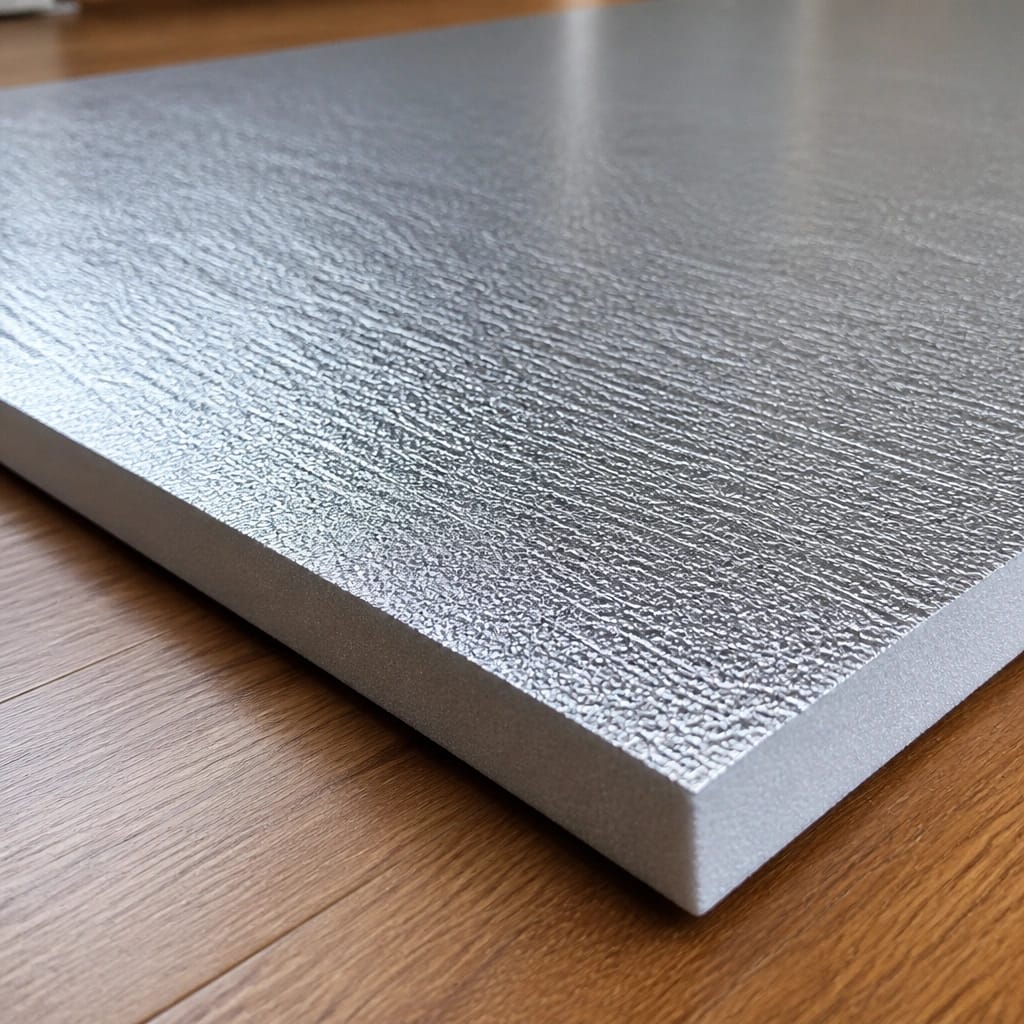
You have two basic approaches. The simplest is an under-bed barrier. You place a separate insulating material directly under the dog bed.
The second is a built-in layer, where you modify the bed itself by adding foam or reflective material inside the cover.
The under-bed barrier is the better choice for most owners. It’s easy to remove, clean, or replace. You can swap it seasonally without buying a new bed.
It also protects the bed from moisture wicking up from the floor.
The built-in layer works well for crate mats or thin beds that don’t have much room underneath. You cut a piece of foam to fit inside the existing cover. This keeps everything in one piece, which is useful for travel or small spaces.
Step-by-Step: How to Add an Insulation Layer Under an Existing Bed
Measure the bed first. The insulation layer should be the same size or slightly larger. Cut the material to match.
Place the insulation on the floor where the bed normally sits. Add a non-slip rug pad on top if the floor is smooth. Then put the bed on top of the insulation.
Check that the bed doesn’t slide. A good test is to push the bed gently with your foot. If it moves, add a non-slip mat between the insulation and the floor.
For concrete floors, add a moisture barrier first. A thin plastic sheet or a waterproof tarp prevents condensation from reaching the bed. This is especially important for dog beds that sit overnight.
Step-by-Step: How to Insulate a Crate Mat or Thin Bed
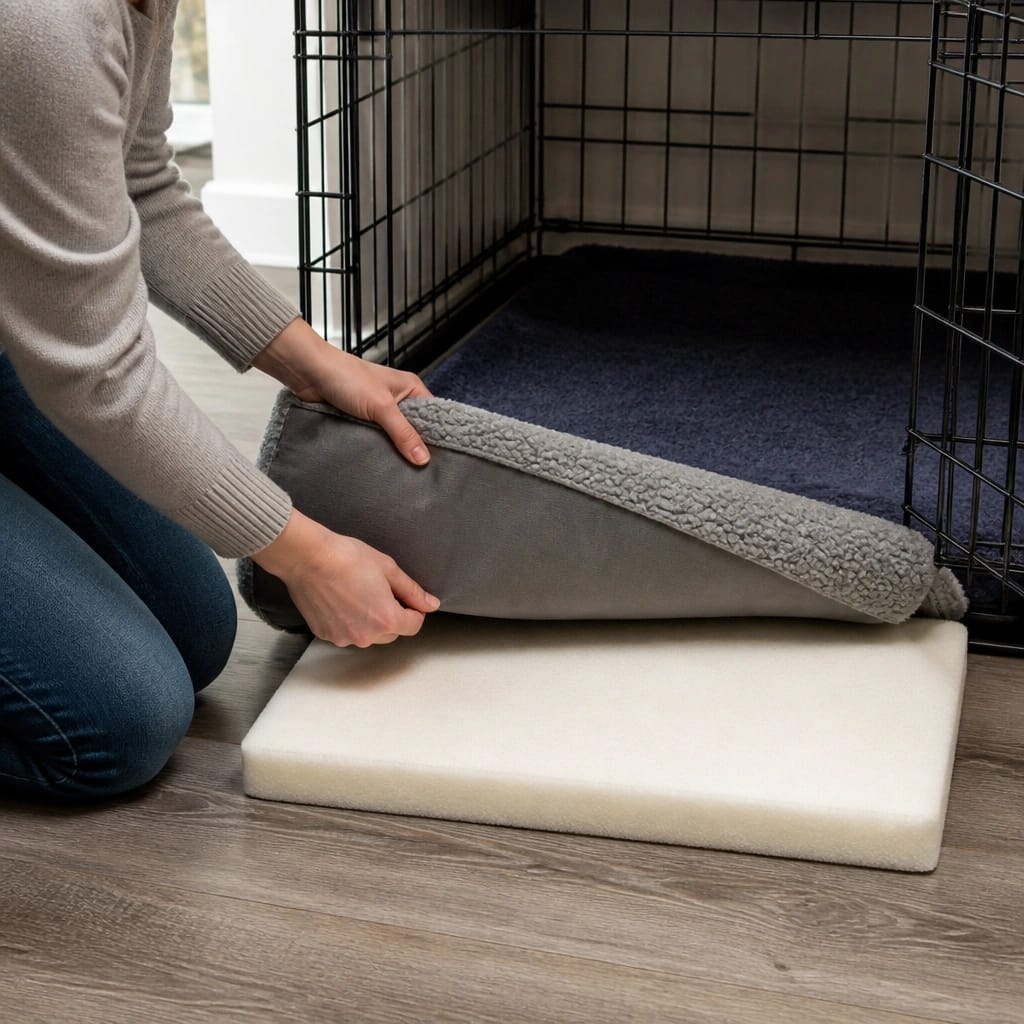
Crate mats are thin by design. They don’t have much foam to work with. The best fix is to add a rigid foam panel underneath the crate itself.
If the crate is on a hard floor, place a 1-inch closed-cell foam board under the entire crate. The foam supports the weight and blocks the cold. Then put the mat inside the crate as usual.
For thin beds that sit directly on the floor without a crate, open the cover if possible. Insert a layer of closed-cell foam or a reflective insulation sheet inside. Close the zipper and test for comfort.
The foam should be firm enough not to compress fully under the dog’s weight.
DIY Insulation Materials That Actually Work (and What to Avoid)
The best DIY materials are closed-cell foam mats, reflective insulation panels, and thick wool blankets. A yoga mat cut to size works as a cheap insulator. A moving blanket is another option for temporary use.
Avoid cotton or thin fleece. They compress too easily and offer almost no thermal resistance. Avoid open-cell foam sponges or upholstery foam.
They absorb moisture and can mildew.
Stall mats (rubber mats used in horse stalls) are excellent for garages or outdoor kennels. They are thick, durable, and non-slip. The only downside is they are heavy and hard to cut.
If you use a reflective insulation panel, put the shiny side facing up toward the bed. This reflects some of the dog’s body heat back up. It also blocks the cold coming from the floor.
Common Mistakes That Ruin the Insulation
The biggest mistake is using a material that compresses too much. Cotton blankets, thin fleece, and old towels feel warm to the touch. But under your dog’s weight, they flatten to almost nothing.
The cold floor comes right through.
Another common error is forgetting moisture. Concrete floors wick moisture upward. If you put foam directly on concrete without a vapor barrier, the foam absorbs water.
It becomes heavy, cold, and grows mildew. A thin plastic sheet or waterproof tarp between the foam and the concrete fixes this.
Skipping the non-slip layer is also a problem. A rigid foam board on tile or hardwood slides easily. Your dog steps on the bed, and the whole thing shifts.
Add a rubber mat or a non-slip rug pad underneath the insulation layer.
How to Test If Your Insulation Is Working
Check with your hand first. Place your palm on the bed surface where your dog sleeps. Leave it for 30 seconds.
If the surface feels warm, the insulation is working. If it feels cool or neutral, the cold is still coming through.
Look at your dog’s behavior. A dog that curls up tightly, tucks their paws, or shivers on the bed is still cold. If they stretch out flat and sleep deeply, the insulation is doing its job.
Check the bottom of the bed after 24 hours. Lift the bed and feel the undersurface. If it feels damp or cold, you need more insulation or a moisture barrier.
A dry, warm underside means the system is working well.
When a Heated Bed or Self-Warming Pad Makes More Sense
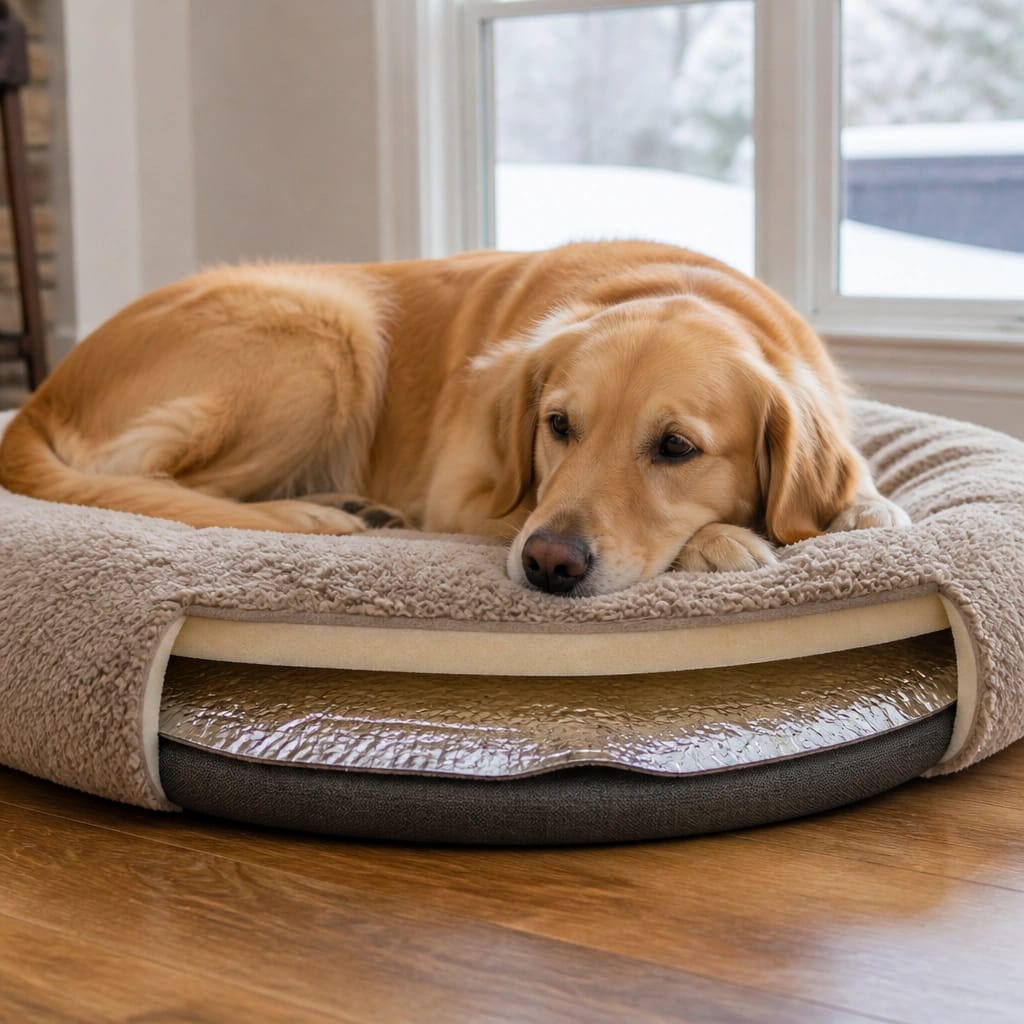
Sometimes passive insulation is not enough. If your dog is a senior with arthritis, a short-haired breed in a cold climate, or a thin dog that loses heat fast, a heated bed adds active warmth. The same applies if the floor is uninsulated concrete in a garage or basement.
A heated bed provides consistent warmth from below. This helps with joint stiffness and circulation. Many have thermostats that keep the temperature safe.
Always check the manufacturer’s safety guidelines for chew resistance and auto shutoff.
Self-warming pads use reflective material to bounce the dog’s body heat back. They don’t use electricity. They work well for mild cold but not for extreme temperatures.
For very cold floors, a heated bed combined with an insulation layer is the best approach.
If you’re unsure, consider a heated bed for your older dog or one that has joint issues. Just make sure the bed has a chew-resistant cord and is placed on a flat, stable surface.
Quick Decision Guide: Which Method Fits Your Situation
| Your Situation | Best Method | Material |
|---|---|---|
| Concrete floor, any dog | Rigid foam barrier + moisture barrier | 1-2 inch closed-cell foam |
| Tile floor, small dog | Thin foam pad + fleece cover | 1 inch yoga mat or foam |
| Hardwood floor, large dog | Felt pad or thick blanket | 1/2 inch felt or wool |
| Elevated bed, cold room | Solid foam board underneath | 1 inch rigid foam |
| Senior or arthritic dog | Heated bed + insulation layer | Electric heated bed |
| Crate on cold floor | Foam panel under crate | 1 inch closed-cell foam |
| Outdoor kennel or garage | Thick stall mat + heated pad | Rubber stall mat + heated bed |
Frequently Asked Questions
Can I use a regular blanket under the dog bed?
A thin blanket does very little. It compresses under the weight of the bed and the dog. Use at least 1 inch of closed-cell foam or a thick wool blanket for real insulation.
Will a heated bed work on a concrete floor?
Yes, but it needs an insulation layer underneath. Without it, the heat escapes into the cold concrete. Place a foam board or reflective panel between the heated bed and the floor.
How thick should the insulation layer be?
For concrete or tile, use 1 to 2 inches. For wood or carpet, 1/2 to 1 inch is enough. Thicker is better for larger dogs that compress the material more.
What is the best material for insulating a dog bed?
Closed-cell foam is the best balance of cost, weight, and performance. Reflective insulation panels work well for concrete. Wool blankets are a good natural option for wood floors.
Can I put insulation inside the bed cover?
Yes, if the cover has a zipper. Cut a piece of closed-cell foam or reflective insulation to fit. This works well for crate mats and thin beds.
Just make sure it doesn’t shift around.
Do I need a vapor barrier under the insulation?
Yes, on concrete floors. Concrete wicks moisture. A thin plastic sheet or waterproof tarp under the foam prevents mold and keeps the insulation dry.
Final Word: Get the Cold Off the Floor First
The cold floor is the real problem, not the bed itself. Adding an insulation layer underneath is the most effective fix. It’s cheap, easy, and works for almost any dog.
Start with your floor type. Then match the insulation material to your dog’s size and age. Test it with your hand and watch your dog’s behavior.
If they sleep flat and warm, you’ve solved it.
If your dog still avoids the bed or curls up tightly, add more insulation or consider a heated option. The goal is simple: break the cold path between the floor and your dog. Do that, and they’ll sleep better, move better, and feel better.


