

How to Tell If a Dog Bed Is Poorly Constructed?
You’ve probably bought a dog bed that looked great in the store, only to have it flatten out or split at the seams within a few months. Knowing how to tell if a dog bed is poorly constructed saves you money and spares your dog an uncomfortable night’s sleep. The difference between a bed that lasts two years and one that fails in two months comes down to a handful of specific build details you can spot without any special tools.
In our research, the most common failure points are the same across dozens of brands: weak seams, cheap zippers, and foam that loses its shape after the first few washes. As of 2026, many budget beds still use single-stitched seams and low-density foam that manufacturers themselves rate for light use only. Once you know what to look for, you can separate the well-built beds from the disposable ones in about 60 seconds.
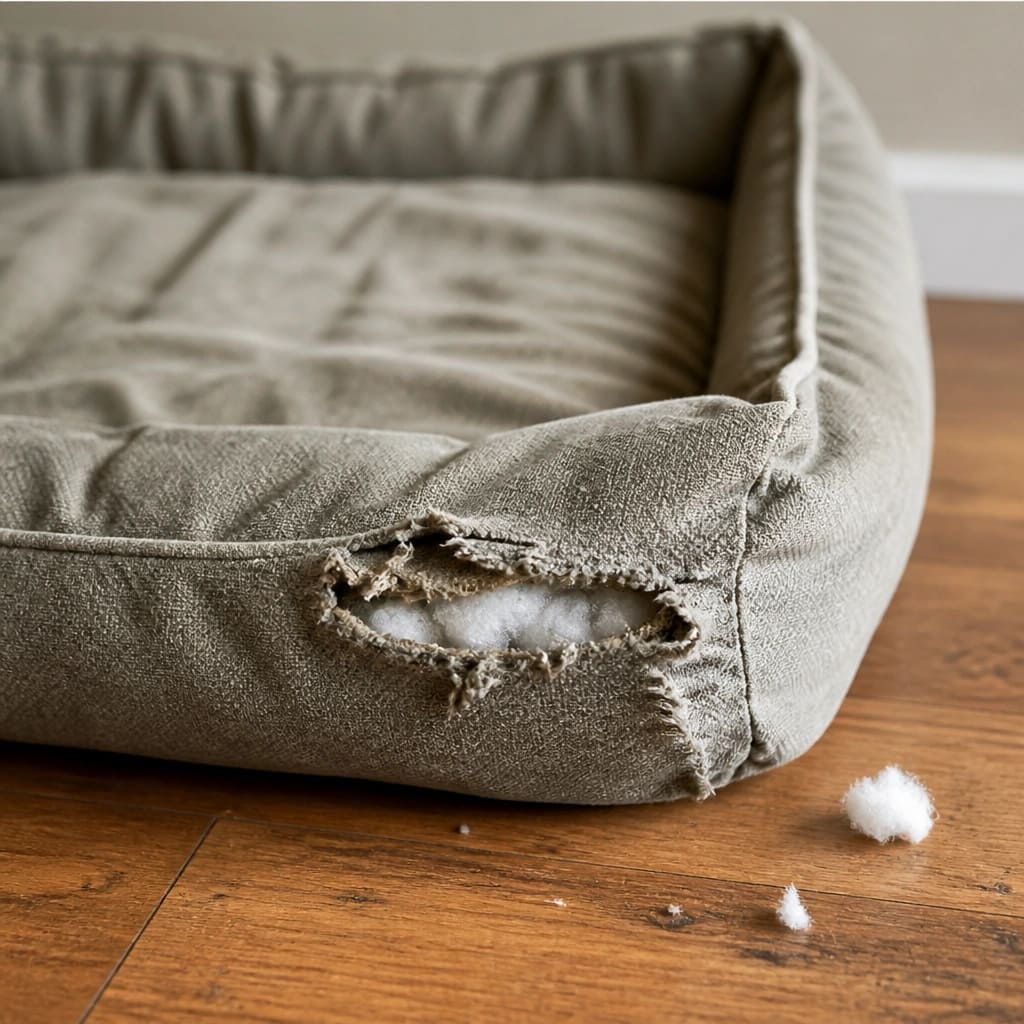
Why So Many Dog Beds Fall Apart Within Months
Most poorly constructed dog beds share the same root problem: corners cut during manufacturing. A bed is essentially a fabric envelope filled with foam or fiber, held together by stitching and a zipper. If any one of those three elements is cheap, the whole bed fails fast.
Cheap beds use low-denier fabric that feels soft but tears easily under a dog’s claws. They pair it with single-needle stitching that pops the first time a dog digs or circles before lying down. The zipper is often a lightweight plastic model that jams after a few washes or breaks entirely when the cover is stretched during removal.
The fill matters just as much. Budget beds commonly use shredded poly-fill or what the industry calls “rebond” foam made from glued-together scraps. Both compress quickly under a heavy dog.
Within weeks, the bed develops thin spots and lumps that make it uncomfortable. A bed that looks plush on day one can feel like a flattened pancake by day thirty.

The Quickest Way to Spot a Poorly Built Dog Bed
You can assess a bed’s construction in under a minute without opening the package. Start with the seams. Pinch the fabric along a stitched edge and pull in opposite directions.
If you see light between the stitches, the thread tension is too loose or the stitch count per inch is too low. Quality beds typically use 8 to 12 stitches per inch. Anything under 6 is a red flag.
Next, check the zipper. Run your finger along the zipper track from end to end. A recessed zipper that sits under a fabric flap is far more durable than an exposed one.
Exposed zippers catch on washing machine drums, snag on carpet, and get chewed by dogs. Also check whether the zipper pull is metal or plastic. Metal lasts longer and is harder for a determined chewer to destroy.
Finally, lift the bed and squeeze a corner of the foam through the fabric. Good foam springs back immediately when you release pressure. If the foam stays compressed or takes several seconds to regain its shape, it has low density and will flatten fast.
Manufacturers often conceal low-density foam with thick quilting on the cover, so always test the foam itself rather than judging by the surface feel.
What a Quality Cover Looks Like: Fabric, Stitching, and Zippers
The cover is the first thing to wear out on any dog bed. Quality covers use high-denier fabrics like Oxford cloth, canvas, or microfiber, typically rated at 300 denier or higher. These fabrics resist tearing and pilling.
Cheap covers use thin cotton-polyester blends that look fine new but develop pills, snags, and holes within weeks of regular use.
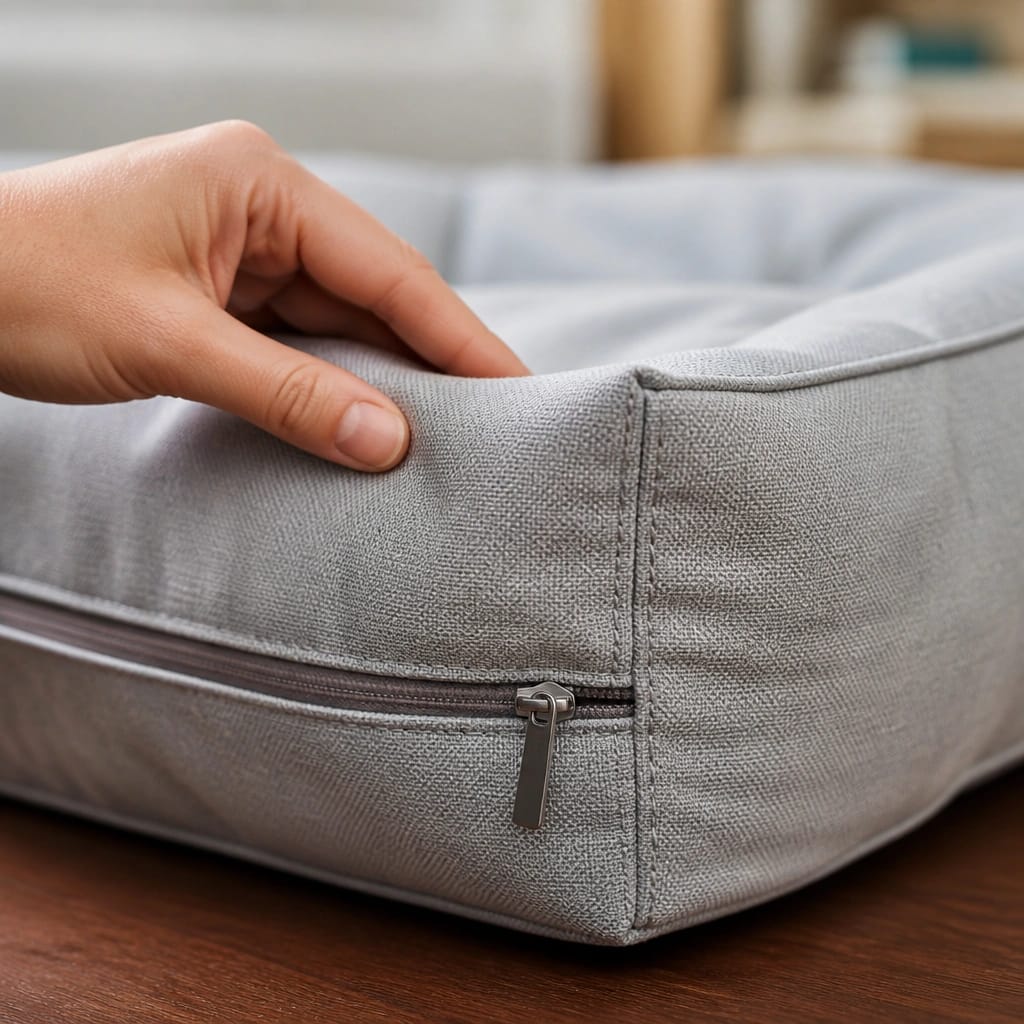
Stitching quality is equally important. Look for double-stitched or triple-stitched seams, especially at stress points like corners and along the bolster where the sides meet the base. Double stitching means two parallel lines of thread reinforce each other if one breaks.
Single stitching is faster and cheaper for manufacturers, but it fails faster under a heavy dog shifting around at night.
How to Test Seam Strength in Seconds
Here is a simple test that takes ten seconds. Grasp the fabric on either side of a seam and pull firmly in opposite directions. A well-constructed seam holds tight with no visible gap between the threads.
A weak seam stretches apart slightly, showing the thread or even the raw edge of the fabric. Do this test at multiple spots, especially along the seams and at the corners.
Also check the seam allowances. The fabric edge inside the seam should extend at least half an inch past the stitching. Narrow seam allowances of a quarter inch or less are a sign of cost cutting.
They separate more easily under tension because there is less fabric for the thread to grip.
Zipper Quality: The Silent Dealbreaker
Zipper failure is one of the most common reasons owners throw away an otherwise usable bed. A broken zipper usually means the whole bed is trashed unless the cover is replaceable. Here is what separates a durable zipper from a cheap one.
A recessed zipper is protected by a fabric flap that hides it from teeth and washing machine agitators. An exposed zipper has no such protection and sits directly on the outer surface. Exposed zippers also collect hair and debris, which jams the teeth over time.
The best zippers use metal teeth and a branded pull tab from a known manufacturer like YKK. If the zipper is plastic and unbranded, expect it to fail sooner.
Replaceable covers are a huge advantage. Beds with fully removable covers let you replace the cover alone if the zipper breaks, keeping the foam intact. Beds with permanently attached covers require total replacement when any part fails.
Always check whether the zipper is accessible and whether replacement covers are sold separately.
Inside the Bed: Foam and Fill That Don’t Hold Up
The foam or fill inside the bed determines how long it stays comfortable. Most poorly constructed beds use low-density foam that compresses permanently under the dog’s weight. The result is a bed that looks okay on the outside but offers almost no support or cushioning.

Foam Density and Rebound Test
Foam density is measured in pounds per cubic foot. Higher density means more foam material in the same volume, which translates to better support and longer life. For most dogs, a density of at least 1.8 pounds per cubic foot is adequate.
Beds marketed as “premium” or “orthopedic” typically use 2.5 to 4 pounds per cubic foot.
You can estimate density without a spec sheet. Press your palm into the center of the bed and hold for five seconds. Release and watch.
Foam that springs back to its original shape in under two seconds has good density. Foam that leaves a visible dent for ten seconds or more is low density and will flatten quickly. The same test works on bolsters and side walls.
Why Fill Shifts, Clumps, and Collapses
Beds filled with shredded foam or polyester fiberfill have a different failure mode. Instead of compressing, the filling shifts inside the cover. Over time, the dog’s weight pushes filling toward the edges, leaving the center thin and lumpy.
Manufacturers sometimes add internal baffles or quilted channels to keep fill in place. Beds without these features develop thin spots within weeks.
Solid foam cores are more stable than shredded fill, but they can still fail if the foam is low density or if the core is made from multiple glued pieces. Rebond foam, which is made from compressed scraps, separates at the glue lines after a few months of heavy use. A single-piece polyurethane foam core is the most durable option for medium to large dogs.
Hidden Weak Points: Bolsters, Corners, and the Bottom Base
Even a bed with good fabric and foam can fail at less obvious points. Bolsters are a common weak link. A bolster is the raised edge around the bed that dogs rest their heads on.
Cheap bolsters use the same low-density fill as the base, so they flatten quickly and lose their shape. Quality bolsters have separate internal foam inserts that are denser than the base fill and hold their structure longer.
Corners are another stress point. When dogs circle before lying down, their claws dig into the corners. If the corner seams are single-stitched, they often pop first.
More durable beds reinforce corners with extra stitching, bar tacks, or fabric gussets.
The bottom base matters more than most owners realize. A thin or slippery bottom shifts on hard floors, causing the bed to slide under the dog. Quality beds have a non-slip bottom made from a rubberized or suede-like material.
Some use a separate non-slip pad underneath. If the bed slides when you push it on a hard floor, the bottom construction is too smooth for safety, especially for older dogs with hip or joint problems.
Check the waterproof liner if the bed has one. Some beds include a waterproof membrane between the cover and the foam. Cheap liners crack after repeated washing or lose their waterproofing within months.
A durable liner should feel flexible, not stiff or crinkly, and should be sewn into the cover rather than just placed loose on top of the foam.
Step-by-Step: How to Inspect a Dog Bed Before You Buy
Run this 60-second checklist before you commit:
- Pinch the seams and pull. Gaps or visible thread mean weak stitching.
- Run the zipper end to end. A recessed track lasts longer.
- Press the foam for five seconds. It should spring back fast.
- Push the bed on a hard floor. The base should grip, not slide.
- Skip beds with strong chemical smells. They point to low-grade materials.
Decision Guide: Should You Buy, Return, or Keep This Bed?
Use these if/then rules to make the call:
- Fails three or more checks: return it or skip the purchase.
- Fails only the zipper: repairable if the cover is replaceable.
- Passes everything but smells strong: air it out for 48 hours first.
- Had a similar bed flatten fast before: choose higher foam density this time.
Common Red Flags in the First 30 Days of Use
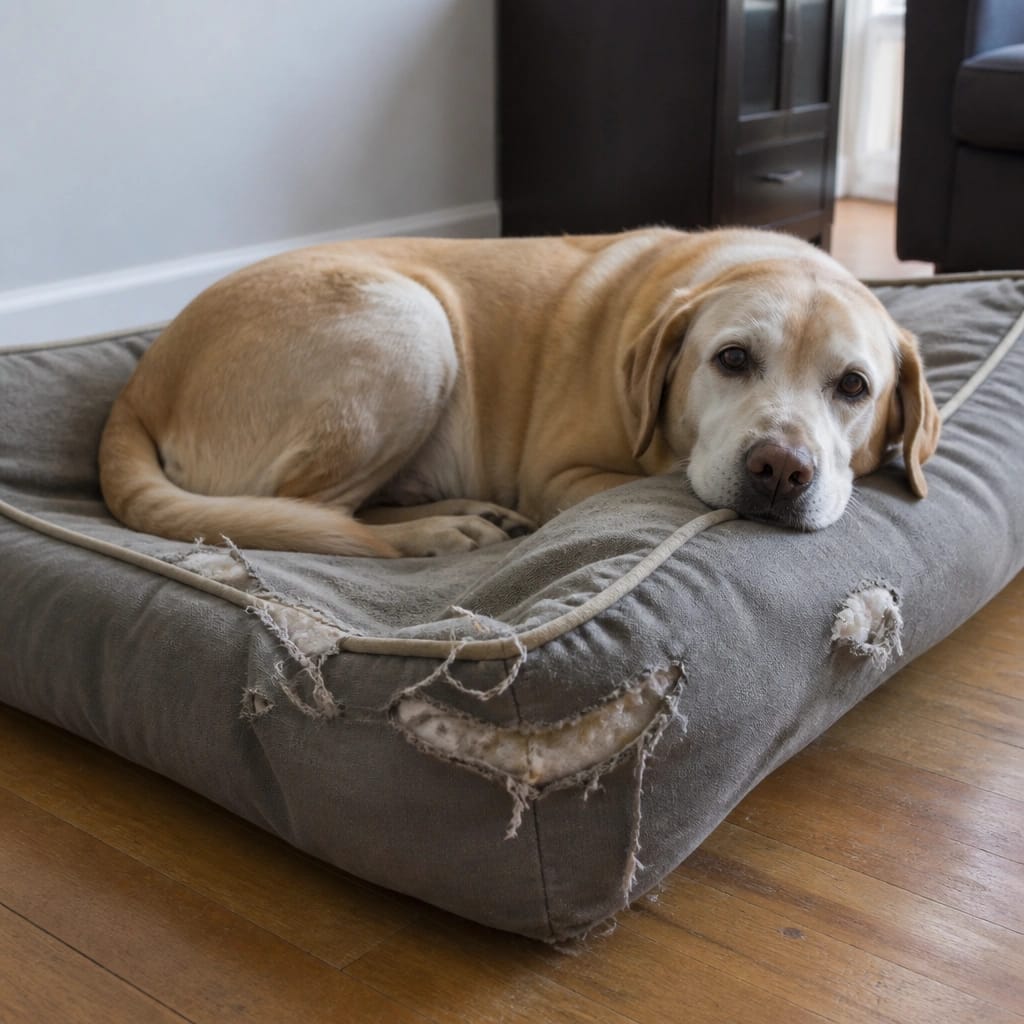
Watch for these early warning signs:
- Foam that flattens and never regains its shape.
- Popped seams or loose threads along the corners.
- Zipper that jams or skips teeth.
- Cover that pills, snags, or tears at the edges.
- Fill that shifts to the sides, leaving a thin middle.
Mistakes Owners Make When Judging Durability
Don’t trust how plush the surface feels. Soft fabric can hide thin, low-density foam. And don’t assume a higher price means better construction.
Some premium beds use the same cheap seams and fill as budget models. Always inspect the build details, never just the tag.
When to Repair a Dog Bed vs. Throw It Away
Repair the bed if the foam is still firm and the cover is replaceable. A new zipper or cover fixes most outer damage. Throw the bed away once the foam flattens or the seams collapse structurally.
No cover can fix a core that has lost its support.
How to Shop on a Budget Without Buying Junk
Cheap doesn’t have to mean disposable. Skip the brand markup and look for solid foam cores, double-stitched seams, and covered zippers. Simple flat designs like crate pads and mats often outlast bulky bolster beds at half the price.
Put your money into foam density, not fabric patterns. You can always add a washable cover later without much added cost.
FAQs About Dog Bed Construction
What stitch count should a quality dog bed have?
Look for 8 to 12 stitches per inch. Anything under 6 means the seams will likely fail under heavy use.
How long should a well-made dog bed last?
With normal use, expect 2 to 3 years. High-density foam and reinforced stitching extend that lifespan.
Can a poorly constructed bed harm my dog?
Yes. Flattened fill creates pressure points on joints. The AVMA notes that supportive bedding matters for canine joint health.
Torn seams also expose fill that dogs can chew and swallow.
Is a bolster bed better than a flat mat?
Not always. Bolsters add comfort but add more seams and zippers that can fail. Flat mats are simpler and often more durable.
The Bottom Line: What a Well-Constructed Dog Bed Should Feel Like
A solid bed feels dense and firm, not pillowy. Pull the seams and they hold. Run the zipper and it glides.
Dogs that dig and scratch before lying down need even stronger seams.
If you wouldn’t trust that foam under your own body, don’t trust it under your dog.


