

What Is a Memory Foam Dog Bed? How It Works
If your dog struggles to settle on a hard floor or seems stiff after napping, a memory foam dog bed might be worth understanding before you buy one. What is a memory foam dog bed? It’s a dog bed built with viscoelastic foam that softens under body heat and molds to your dog’s shape instead of just cushioning them.
That’s different from a regular foam or fiberfill bed, which mostly just adds padding without actually contouring. In our research, the way memory foam responds to weight and warmth is what separates it from standard dog bedding, and that’s exactly what this guide breaks down.
A memory foam dog bed uses viscoelastic foam that softens with body heat. It molds around your dog’s joints and shape. This spreads weight more evenly than regular foam.
It’s often used for senior dogs and larger breeds. The foam slowly returns to its original shape after use.
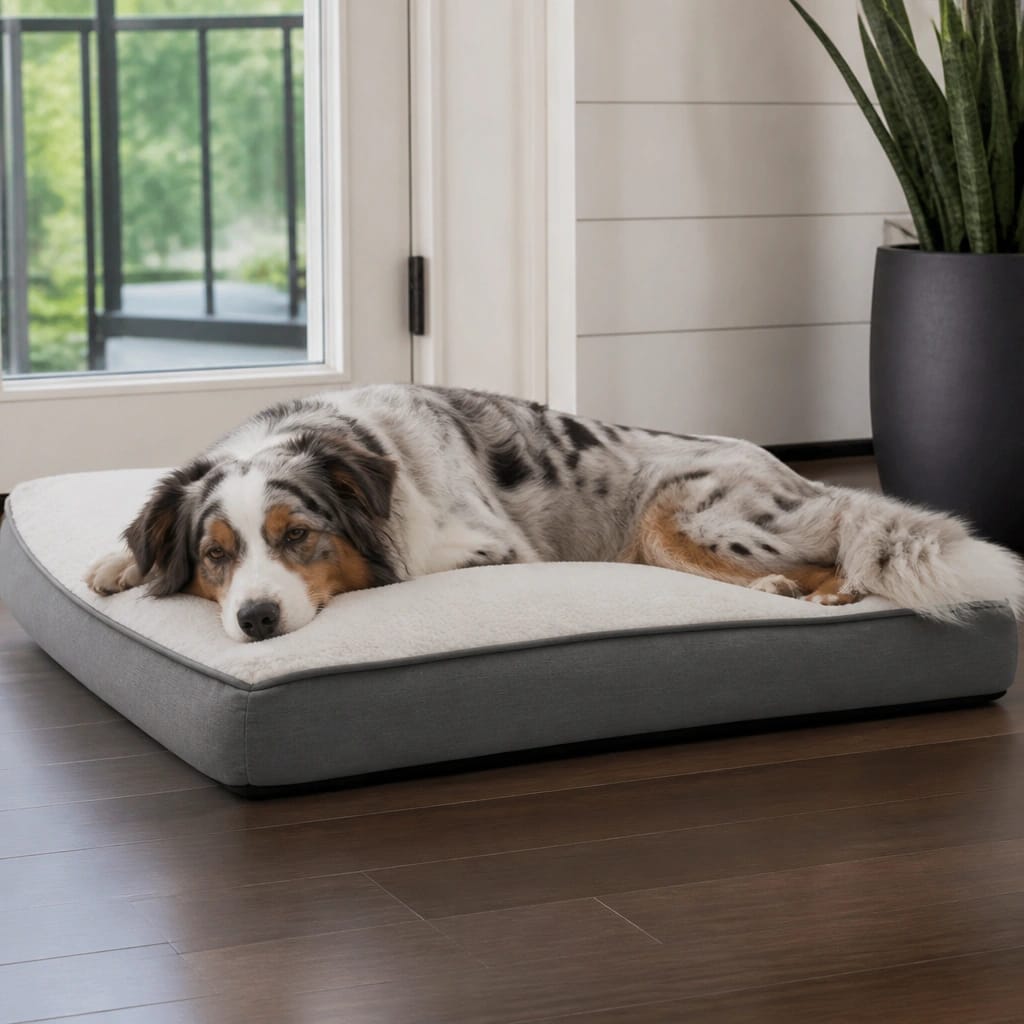
What a Memory Foam Dog Bed Actually Is
A memory foam dog bed is a bed built around viscoelastic polyurethane foam, the same material used in human mattresses and pillows. This foam reacts to heat and pressure instead of just bouncing back like regular cushioning.
Not every bed labeled “orthopedic” contains true memory foam. Some use standard foam with a supportive shape but none of the heat-responsive contouring that defines real memory foam.
Manufacturer specifications typically describe this foam using two numbers: density (measured in pounds per cubic foot) and firmness, often shown as an ILD rating. Higher density usually means the foam holds its shape longer under a dog’s weight.
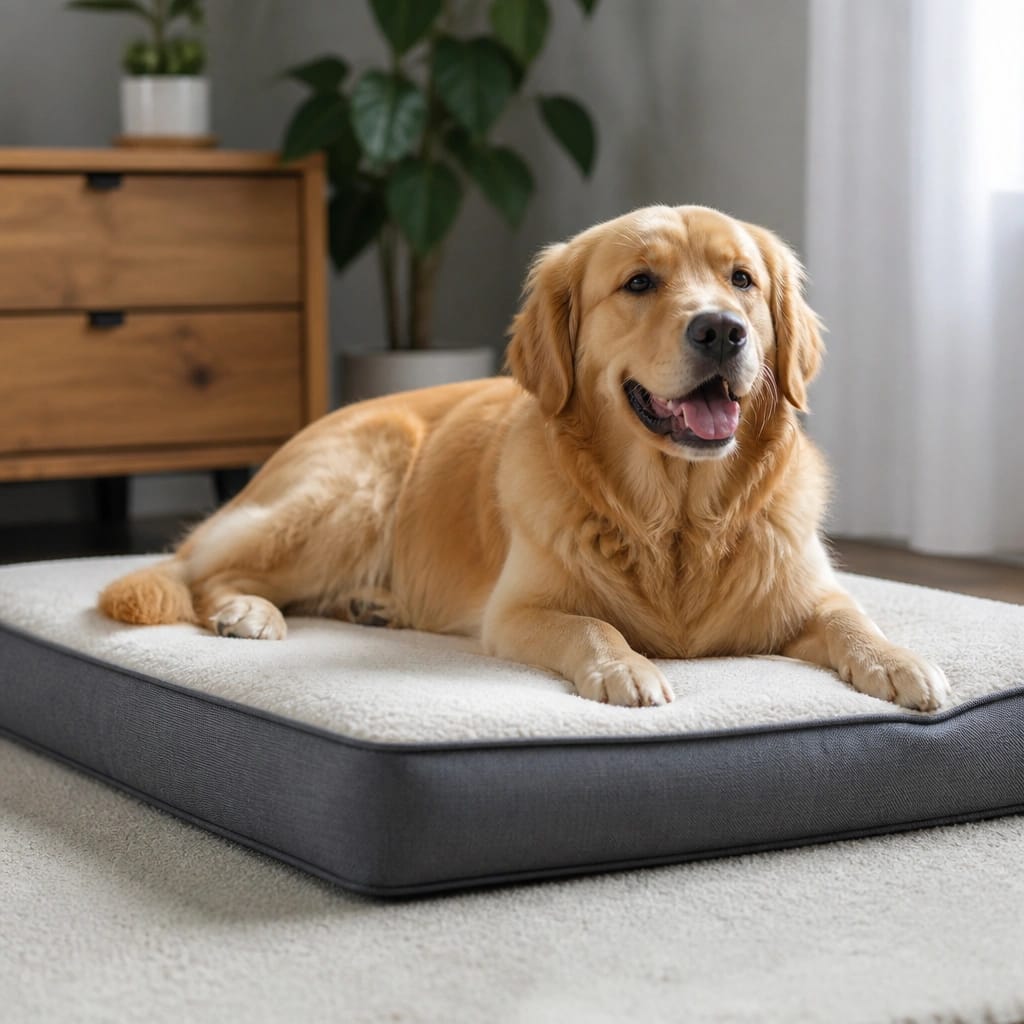
How Memory Foam Reacts to Your Dog’s Body Heat and Weight
Memory foam softens when it senses warmth and pressure together. Your dog’s body heat lowers the foam’s resistance right where they’re lying, so it slowly sinks and wraps around their shape.
That’s why memory foam feels different from a firm cushion. Instead of pushing back immediately, it gives way gradually, then holds that shape for a few seconds after your dog moves.
This slow recovery is called viscoelasticity. It’s the reason memory foam spreads weight across a wider surface instead of concentrating it on the hips, shoulders, or elbows.
One trade-off: that same heat-trapping behavior makes memory foam run warmer than standard foam. For dogs that already overheat easily, this is worth factoring in before buying, and it connects to broader dog sleeping behavior patterns that affect bed choice overall.
What’s Inside a Memory Foam Dog Bed
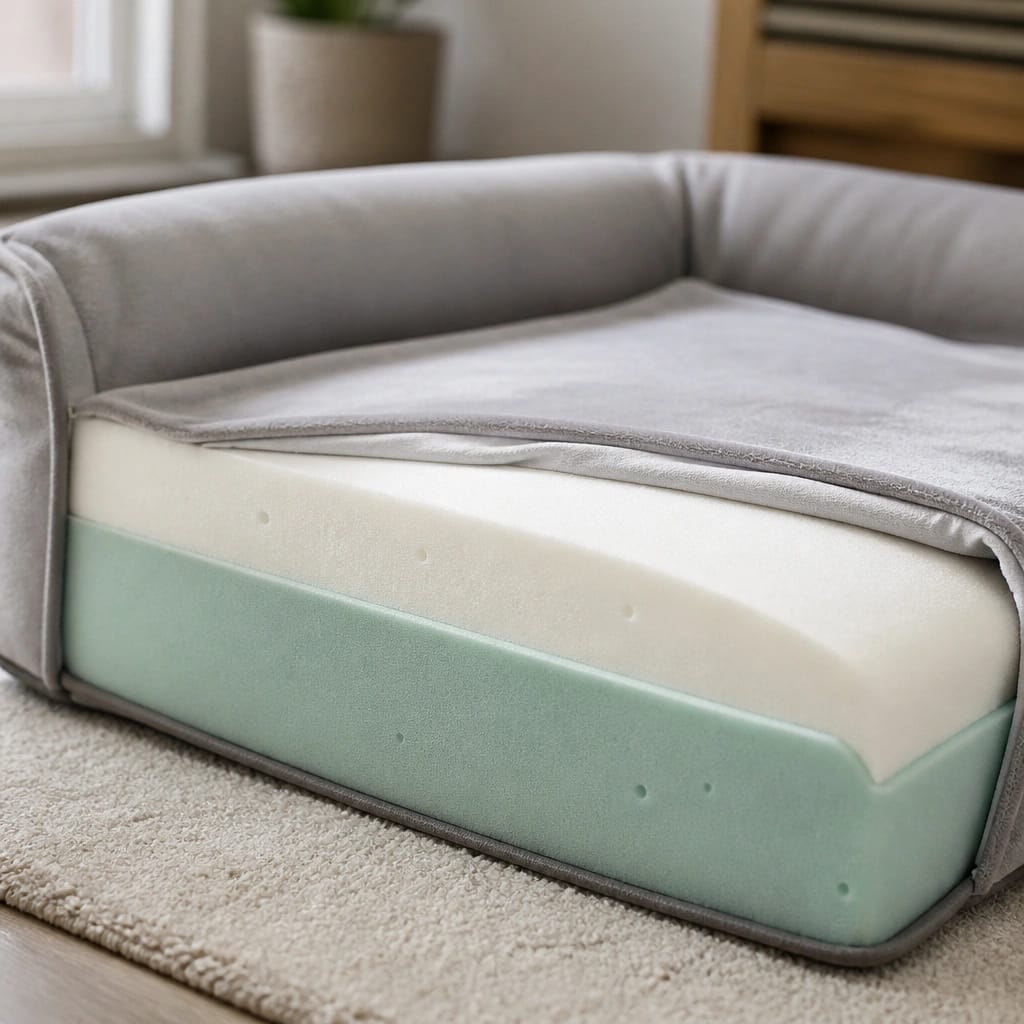
Most memory foam dog beds aren’t made of a single foam block. They’re layered, and each layer does a different job.
Foam Density and Firmness
Density determines how long the foam supports weight before it starts to flatten. Low-density foam (often under 3 lbs per cubic foot) tends to break down faster under a large dog’s regular use.
Support Base Layer vs. Memory Foam Top Layer
Quality beds use a firmer support base underneath a softer memory foam top layer. The base resists sagging, while the top layer handles the contouring.
| Layer | Purpose | Typical Feel |
|---|---|---|
| Base foam | Holds overall shape, resists sagging | Firm |
| Memory foam top | Contours to body, relieves pressure | Soft, slow-responding |
| Cover/liner | Protects foam, adds washability | Varies by fabric |
Cover, Liner, and Base Materials
Covers are usually removable and machine washable, while some beds add a waterproof liner between the cover and the foam itself. This liner protects the foam core from moisture damage, which matters since foam itself generally isn’t washable.
Some manufacturers certify their foam through independent testing programs like CertiPUR-US, which checks for harmful chemicals and emissions in foam products.
Memory Foam vs. Egg-Crate Foam vs. Standard Fiberfill
These three materials get confused often, but they behave very differently under a dog’s weight.
| Material | How It Responds to Weight | Best Suited For |
|---|---|---|
| Memory foam | Softens with heat, contours slowly | Senior dogs, joint support |
| Egg-crate foam | Bounces back quickly, less contouring | Light to medium dogs, budget beds |
| Fiberfill/polyester | Compresses and shifts, no real support | Puppies, short-term use |
Egg-crate foam has a ridged, bumpy surface that looks similar to memory foam but recovers its shape almost instantly. It doesn’t trap heat or contour the way true memory foam does.
Fiberfill is the loosest option. It’s comfortable at first but tends to clump and lose loft within months, especially under a heavier dog.
Signs You’re Looking at Real Memory Foam (Not a Look-Alike)
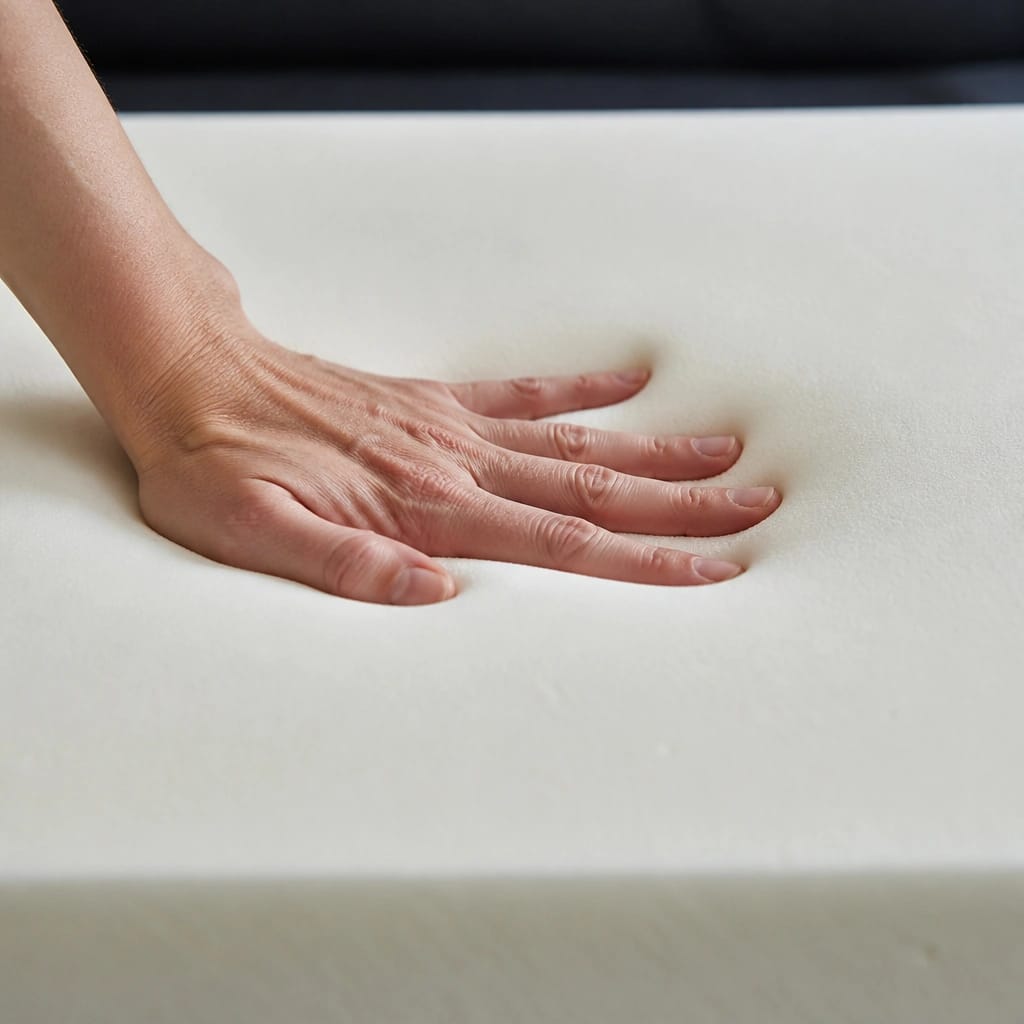
Press your palm into the foam and hold it for a few seconds. Real memory foam should slowly sink under that pressure, then take a few seconds to spring back once you lift your hand.
Standard foam or egg-crate foam bounces back almost instantly. If a bed labeled “memory foam” recovers its shape right away, that’s a sign it’s using a cheaper substitute foam instead.
Check the product listing for a density number too. Manufacturer specs that skip density entirely, or list it far below 3 lbs per cubic foot, often signal a thin memory foam layer sitting over a low-quality base.
Why Vets and Owners Recommend Memory Foam for Certain Dogs
Vets often bring up memory foam when a dog shows stiffness getting up from hard floors. The even weight distribution takes pressure off hips and elbows during rest.
That’s comfort support, not medical treatment. A memory foam bed doesn’t treat arthritis or joint disease, and any real mobility issue still needs a vet’s diagnosis.
Owners of aging dogs report fewer signs of restlessness at night after switching to memory foam. That lines up with how the foam reduces pressure points compared to flat cushioning, something worth considering alongside general dog sleeping behavior changes as dogs age.
Who Actually Benefits Most from a Memory Foam Bed
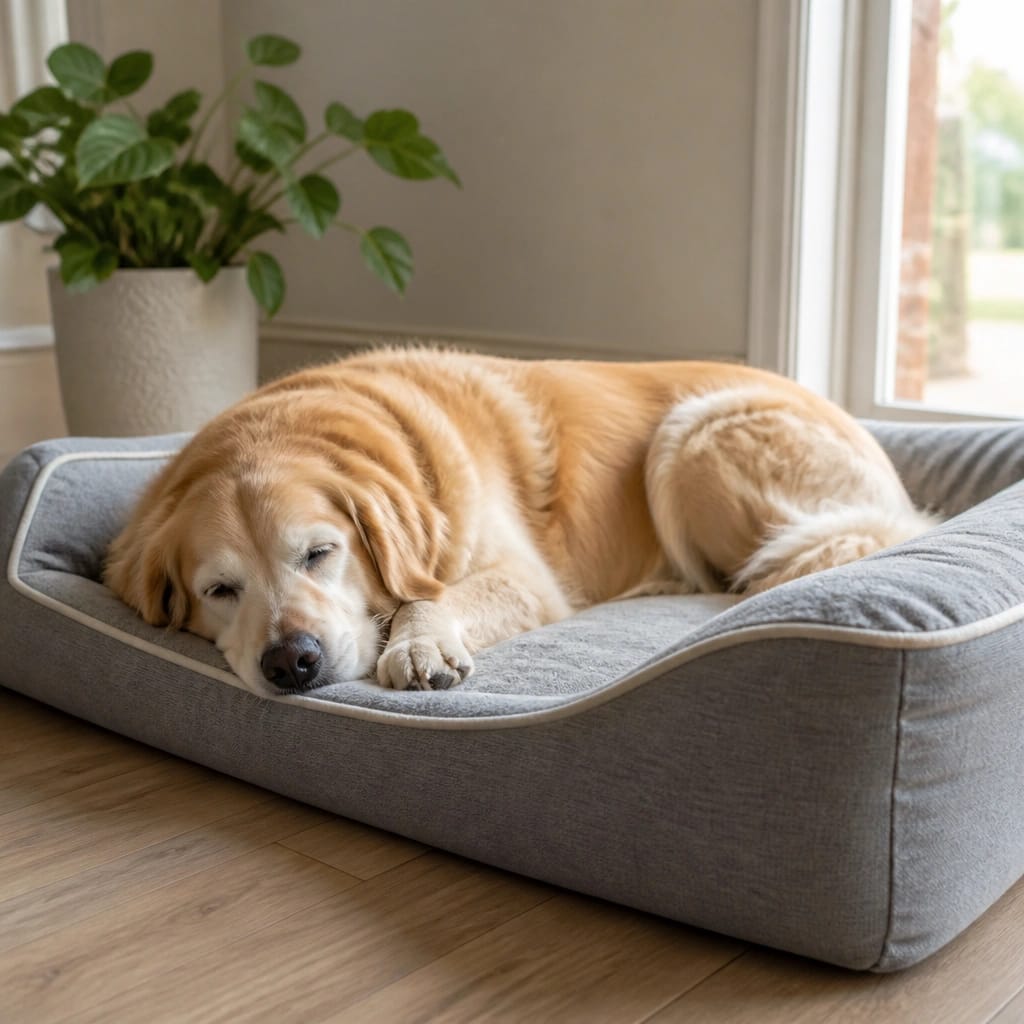
Senior dogs benefit the most, since aging joints respond well to even pressure support. Large and giant breeds also gain more from memory foam because their weight compresses standard foam faster.
Dogs that sleep stretched out flat get more contouring benefit than dogs who curl into a tight ball. A curled-up sleeper puts less surface area on the foam, so the effect is less noticeable.
Puppies and light-bodied small dogs usually don’t need memory foam. Standard foam or fiberfill holds up fine at lower body weights.
Where Memory Foam Falls Short
Memory foam isn’t the right fit for every dog or every home. A few limitations show up consistently across manufacturer specs and aggregate reviews.
- Heat retention: memory foam traps warmth, which can bother dogs in hot climates or dogs that already run warm.
- Cost: true memory foam beds cost more than fiberfill beds due to the foam manufacturing process.
- Chewing risk: dogs that chew or dig at bedding can tear into the foam core, creating an ingestion hazard.
If your dog is a heavy chewer, a memory foam bed without a reinforced cover probably isn’t worth the risk.
Common Mistakes When Choosing or Using a Memory Foam Bed
Buying by weight alone is the most common mistake. A 60 lb dog that sprawls flat needs more usable surface than a 60 lb dog that curls up tight.
Another mistake is ignoring firmness specs entirely. A bed with no listed density or ILD rating often means a thin memory foam layer over cheap base foam.
Skipping the liner check causes problems too. Without a waterproof liner, spills and accidents soak straight into the foam core and are nearly impossible to fully clean out.
Buyers also assume every “orthopedic” label means real memory foam. As covered earlier, that’s not always true, and it’s worth pressing your palm into the foam before trusting the label.
How to Tell If the Foam Is Breaking Down or Losing Support
Check for a permanent dip where your dog usually lies. If the foam stays sunken even when your dog isn’t on it, the foam has lost its recovery ability.
Press into that spot and time the rebound. Healthy memory foam takes a few seconds to spring back. Foam that’s broken down either springs back instantly, like flattened fiberfill, or doesn’t spring back at all.
Most memory foam dog beds hold their support for a year or more with regular use, though this varies by density and your dog’s weight. Once the base layer flattens permanently, replacing the bed is more practical than trying to fix it, similar to how you’d approach worn bedding covered in our dog sleeping behavior resources.
Caring for a Memory Foam Dog Bed Long-Term
Wash the cover every one to two weeks using the manufacturer’s care label. Spot-clean the foam core itself, since soaking it can trap moisture inside.
Air out the bed occasionally in a dry room. This helps prevent musty odors from building up in the foam.
Frequently Asked Questions
Do memory foam dog beds get hot?
Yes, memory foam retains more heat than standard foam. Dogs that overheat easily may do better with a cooling gel-infused version or a breathable cover.
How long do memory foam dog beds last?
Most hold their support for a year or more with regular use. Lifespan depends on foam density and your dog’s weight.
Are memory foam dog beds safe for puppies?
They’re safe, but not necessary. Puppies are lighter and don’t need the extra pressure support yet.
Final Takeaway: Is a Memory Foam Bed Right for Your Dog
If your dog is a senior, a large breed, or shows stiffness after resting, memory foam is worth it. Check the density spec before buying, per CertiPUR-US certification standards, and skip it if your dog chews bedding aggressively.


