

Should a Dog Bed Be in a Quiet or Busy Part of the House?
The answer depends entirely on your dog. Quiet spots suit anxious or easily startled dogs. Busy areas work for social dogs who want to be near you.
Most dogs benefit from having a bed in both locations. This lets them choose where they feel most comfortable.
Should a dog bed be in a quiet or busy part of the house? That depends on your dog’s personality, age, and daily needs. The right spot can mean the difference between deep, restful sleep and constant restlessness.
Adult dogs sleep 12 to 14 hours a day, and puppies or seniors need even more. As of 2026, canine behavior research confirms that sleep quality directly affects a dog’s mood, health, and behavior. Understanding your dog’s preferences is the first step to finding the perfect spot.

Why Location Matters for Your Dog’s Sleep
Dogs are creatures of habit. Where they sleep shapes how well they sleep and how they feel during the day.
A bed in a high-traffic area can keep a nervous dog on edge. The constant sound of footsteps, voices, and doors opening can prevent them from reaching deep sleep. Over time, that adds up to a tired, irritable dog.
On the other hand, a bed tucked away in a quiet corner can feel isolating for a social dog. Dogs evolved as pack animals. Many want to be near their people, even when resting.
The right location supports your dog’s natural sleep cycle. It also helps with behavior. A well-rested dog is calmer, more trainable, and less likely to develop anxiety-related habits.
For more on how placement affects your dog’s rest, our guide on where you place their bed covers the full picture.
What a Quiet Spot Looks Like (and When It Helps)
A quiet spot is a low-traffic area with minimal noise and visual distractions. Think of a corner in a bedroom, a home office, or a spare room. The space should feel safe and calm.

These locations work best for:
- Anxious dogs who startle easily at sounds or sudden movement
- Senior dogs who need uninterrupted sleep for joint recovery
- Dogs with noise phobias who react to doorbells, traffic, or loud appliances
- Puppies who are still learning to settle and may need a nap zone away from household chaos
Quiet doesn’t mean isolated. The dog should still be able to see or hear you from a distance. A bed placed in a bedroom corner, for example, gives them privacy without cutting them off from the family.
Calmer breeds and dogs that are naturally independent often prefer these spots. If your dog regularly retreats to a quiet room on their own, they’re telling you what they need.
For dogs with anxiety, a bed with high sides can make a quiet spot feel even safer. Our guide on dogs with noise sensitivity explains how the right bed design supports a calm environment.
What a Busy Spot Looks Like (and When It Works)
A busy spot is a central area where the family spends most of their time. The living room, the kitchen nook, or a home office are all common choices. These locations have foot traffic, conversation, and general household activity.
Busy spots work best for:
- Social dogs who want to be part of the action
- Velcro dogs that follow you from room to room
- Puppies during house training, since they need to be near you to signal when they need to go out
- Dogs who get anxious when left alone in another room
A bed in a busy area lets your dog rest while still monitoring their surroundings. That’s important for breeds that were developed to watch over the home or family.
The key is to place the bed slightly out of the main walking path. A corner of the living room, near the sofa but away from the door, gives them a front-row seat without being stepped on.
If your dog constantly moves their bed or drags it closer to you, they prefer to be close. Dogs that prefer to be close to you are telling you the quiet corner isn’t working.
The Decision Tree: Quiet or Busy Based on Your Dog
Use these questions to decide where to start.
Does Your Dog Need a Quiet Retreat?
Choose a quiet spot if your dog:
- Startles at the doorbell, vacuum, or loud noises
- Hides under furniture during busy times
- Is a senior dog with arthritis or hearing loss
- Struggles to settle down and pace before sleeping
- Seems tired or irritable after a day in a busy area
A quiet spot gives these dogs the calm they need to actually rest. Without it, they stay in a low-grade state of alert that prevents deep sleep.
Does Your Dog Thrive in the Middle of Things?
Choose a busy spot if your dog:
- Follows you from room to room
- Whines or barks when left in another room
- Seems restless or anxious when separated from the family
- Is a young, social breed that wants to be involved
- Is still being house trained and needs supervision
These dogs feel safer when they can see you. A busy spot lets them rest without feeling abandoned.
Still unsure? Start with the spot that matches your dog’s personality. If it doesn’t work, you can always adjust.
Some dogs benefit from different sleeping surfaces in different areas. Our guide on sleeping surface preferences can help you choose the right bed for each location.
How to Test and Adjust the Bed Location
Finding the right spot takes a little trial and error. Here’s a simple process.
Start with one location. Place the bed where you think it belongs based on your dog’s personality. Give it three to five days.
Watch their behavior. Does your dog use the bed willingly? Do they sleep soundly, or do they get up frequently? Do they seem relaxed or on edge?
Try the opposite. If the first spot doesn’t work, move the bed to the other type of location. Again, give it several days.
Look for these signs of a good fit:
- Your dog chooses the bed on their own
- They sleep for longer stretches
- They seem calm and content
- They don’t pace or circle excessively before lying down
Signs the spot isn’t working:
- Your dog avoids the bed
- They frequently get up and move elsewhere
- They seem restless or pant without reason
- They scratch or dig at the bed more than usual
You can also try a second bed. Many dogs benefit from having one in a quiet area and one in a busy area. This lets them choose based on their mood and the household’s activity level.
If your dog is adjusting their sleeping spot by digging or scratching, that can be a clue about their comfort level.
Common Mistakes in Dog Bed Placement
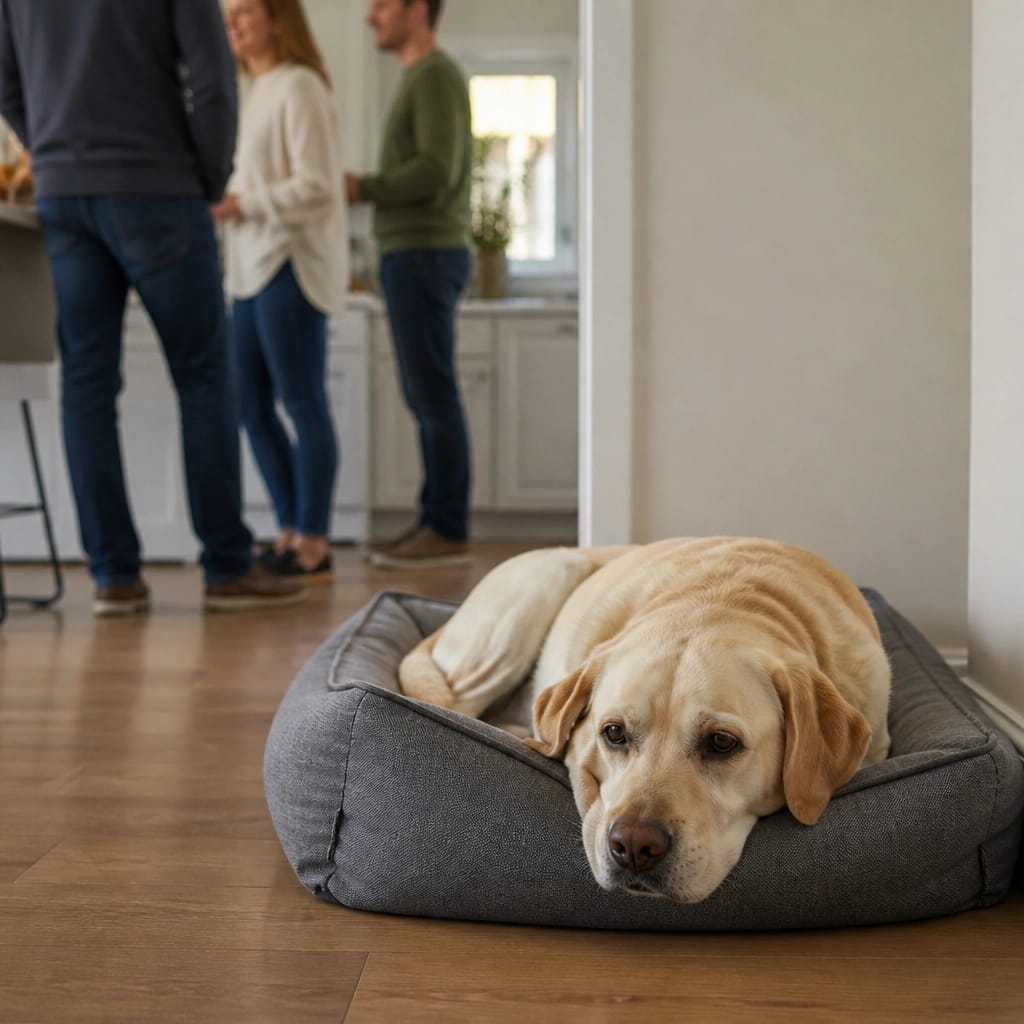
The biggest mistake is guessing the spot without watching your dog. Many owners put the bed somewhere they think looks nice, not where the dog actually wants to be.
Another common error is placing the bed in a walkway. Dogs need to feel safe, not like they’re in the middle of traffic. A bed that gets bumped or stepped on will be avoided.
Some owners also make the mistake of only buying one bed. A single bed can’t serve both a quiet retreat and a social hangout spot. Two beds give your dog real choice.
If your dog is chewing or digging at their bed, they might be telling you the location is wrong. Our guide on why dogs dig or scratch at their bed explains what those behaviors mean.
Special Situations: Puppies, Senior Dogs, and Anxious Dogs
Puppies benefit from a bed in a busy area during the day. It keeps them close for house training and supervision. At night, a bed in the crate in a quiet room supports better sleep.
Senior dogs need a quiet spot. Their joints ache and their sleep is lighter. A busy area can keep them from getting the rest they need for recovery.
Anxious dogs often prefer a den-like bed in a quiet corner. The American Veterinary Medical Association notes that a consistent safe space can reduce stress for noise-sensitive dogs. A calming donut bed or cave-style bed can make a quiet spot feel even more secure.
For dogs with specific needs, the right bed style matters as much as the location. Our guide on the best bed for a dog with anxiety or noise phobia covers what to look for.
What to Do If Your Dog Won’t Use the Bed
If your dog ignores the bed, start by moving it. Try a different location for a few days. Sometimes the wrong spot is the only problem.
Check the bed itself. Does it fit your dog? Is it too warm or too firm?
A bed that’s uncomfortable won’t get used no matter where you put it.
Use positive reinforcement. Drop treats on the bed throughout the day. Praise your dog when they choose to lie on it.
Never force them onto the bed.
If your dog sleeps on the floor instead, that’s a clue. Some dogs prefer a cooler surface or a different texture. Our article on why dogs sleep on the floor instead of their bed can help you troubleshoot.
Frequently Asked Questions
Should I put my dog’s bed in my bedroom?
Yes, many dogs do well with a bed in the bedroom. It’s a quiet, familiar space that lets them be near you at night. This works especially well for dogs who want to be close to their owners while sleeping.
Can a dog have beds in both quiet and busy areas?
Absolutely. Two beds give your dog the freedom to choose. They can nap in the living room during the day and retreat to a quiet bedroom at night.
This is the ideal setup for most households.
How do I know if my dog is stressed by the bed location?
Signs of stress include panting, pacing, avoiding the bed, or frequently getting up and resettling. If your dog seems restless in one spot, try moving the bed to a different type of area for a few days.
What if my dog moves their bed to a different spot?
That’s a clear signal. If your dog drags their bed to a different location, they’re telling you where they want to be. Try placing the bed there permanently.
Is a crate considered a quiet or busy spot?
A crate is a quiet spot by nature. It’s enclosed and den-like. If you place the crate in a busy area, it can still work for social dogs.
But the crate itself provides a sense of security.
Your Decision Guide: Where to Put the Bed
Start with your dog’s personality. Watch where they naturally choose to rest. Then match that spot with the right bed location.
If they’re anxious or easily startled, go quiet. If they’re social and follow you everywhere, go busy. When in doubt, try two beds.
The best spot is the one your dog uses. Trust their behavior, not your guess. A well-placed bed means better sleep, a calmer dog, and a happier home.


