
Why Does My Dog Stretch Before Lying Down?
You’ve noticed it a hundred times. Your dog walks to their bed, stops, plants both front paws forward, and lets their chest sink toward the floor in that deep stretch. Then they settle down like it’s the most comfortable spot on earth.
But why does my dog stretch before lying down?
It’s not random or just a cute habit. That stretch serves real purposes. It warms up muscles, eases joints into position, and helps your dog find the most comfortable resting posture.
In some cases, it can also tell you something about how your dog’s body feels that day, especially as they age.
Dogs stretch before lying down to prepare their muscles and joints for rest. The movement releases tension and helps them find a comfortable position. It can also signal relaxation or, in some cases, stiffness.
Occasional stretching is normal. Frequent or labored stretching may point to joint discomfort.
Is It Normal or Something to Worry About?
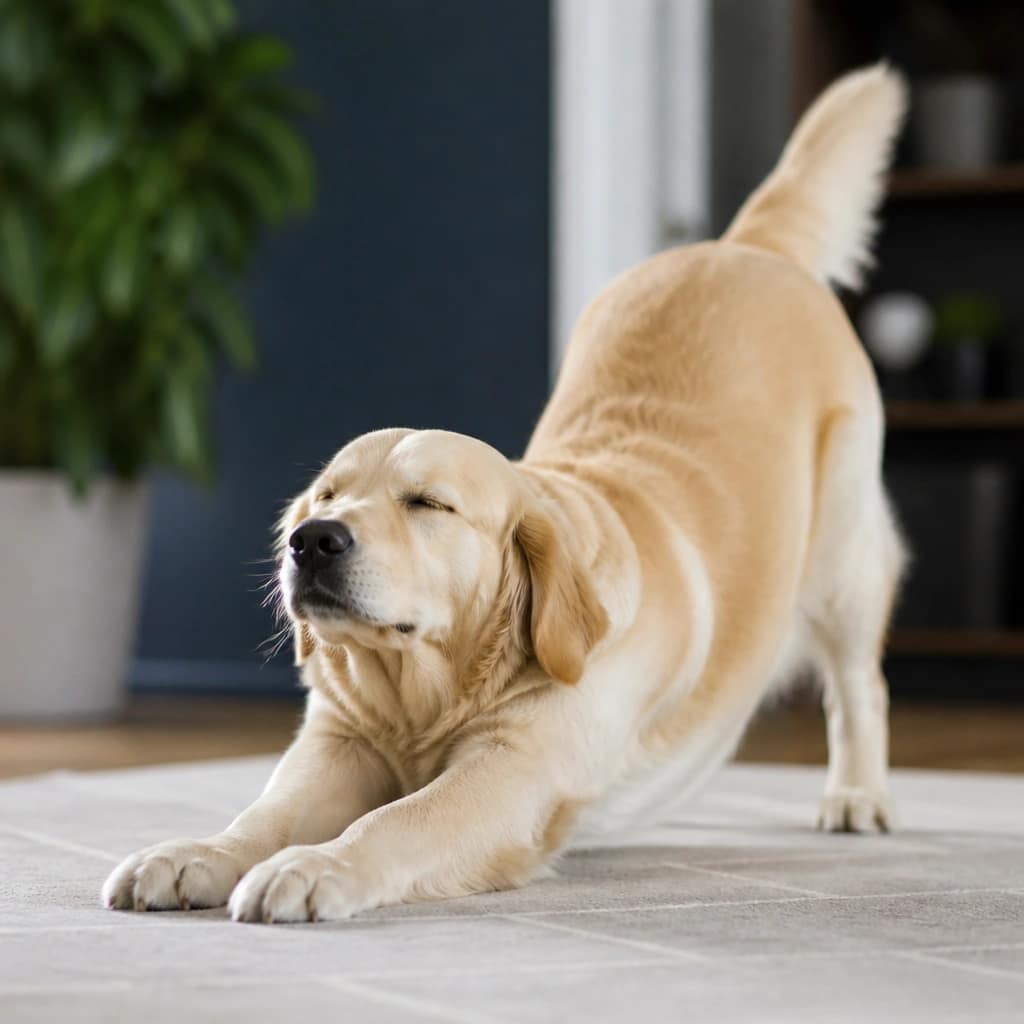
Most of the time, that stretch before settling is completely normal. It’s the canine version of rolling your shoulders back before you sit down after a long day. Dogs do it instinctively.
But context matters. A two-year-old Labrador who drops into a quick play bow stretch before curling up is not the same story as a ten-year-old German Shepherd who takes a long time lowering down, stretches repeatedly, and still looks stiff afterward.
The stretch itself isn’t the problem. It’s the frequency, the effort, and the other behaviors that come with it.
Normal stretches tend to be:
- Brief and smooth
- Followed by settling right away
- Happening once or twice before lying down
- Accompanied by a relaxed body and soft eyes
Stretches that deserve a closer look:
- Repeated five or six times before the dog lies down
- Followed by whimpering or sighing
- Accompanied by visible stiffness when the dog stands back up
- Seen alongside limping or reluctance to jump on furniture
If your dog stretches, settles, and sleeps normally, you can stop worrying. If the same stretch comes with stiffness or hesitation, you have a clue worth following.
What’s Happening Biologically When Your Dog Stretches
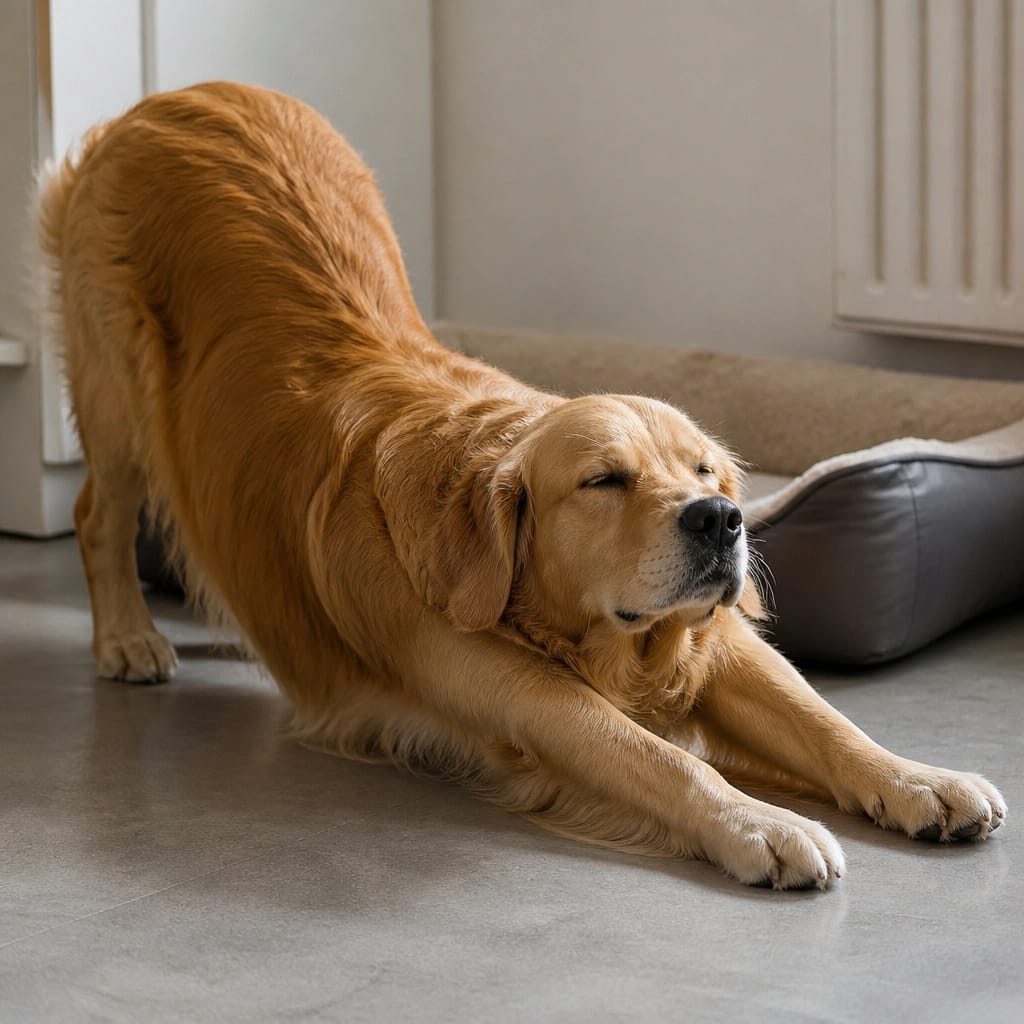
Stretching does real work in a dog’s body. When a dog lowers their chest and extends their front legs, a few things happen at once.
Muscles get a gentle warm-up. The stretch increases blood flow to the front limbs, shoulders, and spine. That prepares those muscles to support the dog’s weight in a resting position for the next hour or two.
Joints get lubricated. Synovial fluid, which cushions the joints, moves more freely when a dog stretches. That’s especially helpful for the elbows, shoulders, and hips before the dog settles into one position for a nap.
The spine decompresses slightly. Dogs who spend time walking, running, and playing accumulate a little compression in their vertebrae. A good stretch before lying down helps relieve that pressure.
Think of it the way you might stretch your neck after staring at a screen. Your dog does the same thing after a day of moving around, just before they commit to a rest position.
The Main Reasons Dogs Stretch Before Lying Down
Stretching to Warm Up Muscles Before Rest
This sounds backward at first. Why warm up right before you stop moving?
Here is the logic. Dogs go from walking or playing directly to stillness. A stretch is the bridge between those two states.
It tells the muscles “we are about to hold still for a while, so let’s get loose first.”
Dogs who have been napping for a while and then shift positions often do a smaller version of the same stretch. That reset stretch helps them resettle without fully waking up.
Stretching to Relieve Stiffness and Tension
Young, healthy dogs stretch because it feels good. Older dogs and dogs with mild arthritis often stretch because they need to.
When a dog has stiff joints, staying in one position for a while causes discomfort. The stretch before lying down helps shift the joints into a position that takes pressure off. That is especially common in large breeds and senior dogs.
Research from veterinary orthopedic specialists confirms that dogs with early-stage osteoarthritis show more stretching behavior before resting than dogs without joint issues. The stretch becomes a coping mechanism, not just a habit.
Stretching as a Comfort Positioning Tool
Your dog does not just drop onto the bed like a sack of potatoes. They lower themselves deliberately. The stretch lets them feel out the surface and find the best spot for their body.
A dog stretching on a properly supportive bed might settle immediately. A dog stretching on a floor with no cushion might stretch, shift, circle, and stretch again before finally giving up. That repetition tells you the surface is not working for them.
Stretching as a Communication Signal
There is one stretch that means something completely different. The play bow, where a dog drops their front end but keeps their rear end up, is an invitation. It says “I want to play.”
If your dog does that stretch before lying down, they are probably not ready to sleep yet. They are testing whether you want to engage. If you ignore them, they might circle a few times and eventually settle.
If you react, the game is on.
How to Tell the Difference Between a Normal Stretch and a Pain-Related Stretch
This is where most dog owners get nervous. The stretch looks similar whether it feels good or hurts. But the differences are real, and you can spot them with a little practice.

Normal stretch:
- Smooth and fluid
- Dog shifts weight easily
- Settles immediately after
- Wakes up and moves normally
Pain-related stretch:
- Slow and hesitant
- Dog holds the stretch longer than usual
- Gets up and down multiple times before settling
- Looks stiff or sore when standing up afterward
- May whimper, sigh heavily, or avoid putting weight on one leg
One behavior to watch closely is the “downward dog” stretch where your dog holds their rear end up and stretches their front legs forward for a long time. In healthy dogs, this lasts a few seconds. In dogs with back or hip discomfort, it can stretch to ten or fifteen seconds while the dog works up the nerve to lower down.
If you see that, and especially if it happens every time your dog lies down, a veterinary check is worth scheduling.
Decision Guide: What Your Dog’s Stretch Might Mean

Young Dogs vs. Senior Dogs
Age is the biggest factor in how you should interpret stretching.
Puppies and young adult dogs stretch because they have energy to burn and muscles that need warming up. Their stretches are quick, frequent, and followed by immediate settling. A puppy who stretches before lying down is just being a puppy.
Senior dogs stretch for different reasons. Many older dogs need additional joint support as their bodies change. Their stretches tend to be slower, longer, and more deliberate.
If the stretch looks like it requires effort, pay attention.
The rule of thumb is simple. If your dog is under five years old and otherwise healthy, stretching before lying down is almost certainly normal. If your dog is seven or older and the stretches are getting longer or more frequent, start asking questions.
Small Breeds vs. Large Breeds
Body size changes how stretching works.
Small dogs like Chihuahuas, French Bulldogs, and Shih Tzus carry less weight per joint. Their stretches are usually quick and casual. They do not need as much warm-up because their joints are under less pressure.
Large and giant breeds face a different reality. A Labrador, German Shepherd, or Great Dane puts significantly more stress on their hips, elbows, and spine every time they lie down. Their stretches tend to be more deliberate.
A large dog who skips the stretch entirely and just drops to the floor may actually be in more discomfort than one who stretches carefully. The stretch is protective. It helps them land safely.
Occasional vs. Repetitive Stretching
Frequency tells you more than the stretch itself.
A dog who stretches once or twice before lying down is working normally. A dog who stretches five, six, or seven times in a row is searching. They are trying to find a position that does not hurt.
Repetitive stretching combined with circling is another signal worth understanding. Why does my dog dig or scratch at their bed before lying down? That behavior is usually about nesting.
But when you add repetitive stretching to it, the dog is likely trying to arrange the sleeping surface AND find a joint position that works.
Common Mistakes Owners Make When Interpreting Stretching
The biggest mistake is assuming every stretch means pain. That creates unnecessary worry and, sometimes, unnecessary vet visits for a perfectly healthy dog.
The second mistake is ignoring stretches that actually matter. Owners of senior dogs sometimes write off repetitive stretching as “just getting old.” But stiffness that lasts more than fifteen minutes after rest is a meaningful symptom. It deserves attention, not dismissal.
The third mistake is choosing a bed that forces the dog to stretch in an awkward position. A bed that is too small means the dog cannot fully extend their legs before settling. That leads to more circling, more repositioning, and more stretching as the dog tries to make a cramped space work.
A bed with the right usable sleeping surface lets the dog stretch naturally and settle quickly.
When to Watch Closely and When to Call the Vet
Most stretching is normal. But there are clear thresholds that should prompt a call to your veterinarian.
Call the vet when:
- Your dog stretches and then refuses to lie down at all
- The stretch is accompanied by yelping or whimpering
- Your dog’s legs shake during or after the stretch
- Your dog is suddenly stretching before lying down when they never did before, especially if they are middle-aged or older
- Stretching is paired with limping, reduced appetite, or reluctance to go up stairs
Watch closely when:
- Your dog stretches two or three times before settling
- The stretches are longer than they used to be
- Your dog seems stiff when standing up after a nap but loosens up within a few minutes
- The stretching happens mostly after long periods of rest
As of 2026, veterinary behaviorists and orthopedic specialists agree that early detection of mobility issues makes a meaningful difference in treatment outcomes. A dog who starts stretching more at age six may benefit from joint support months before they show visible lameness.
How the Right Bed Setup Affects Your Dog’s Stretching and Comfort
The bed your dog sleeps on influences how often they stretch and whether the stretch does them any good.
A dog on a hard floor has no cushion to help their joints transition into rest. They stretch, lower down, and hit a surface that offers zero give. That forces the joints to absorb the full impact.
Over time, that can make a dog stretch longer and more carefully before committing to lying down.
A dog on a supportive bed has a different experience. The surface absorbs some of the impact and supports the joints as the dog settles. The stretch still happens, but it is shorter and smoother because the dog knows the landing will be comfortable.

What to look for in a bed that supports healthy stretching:
- Enough length for the dog to fully extend their body. Measure your dog from nose to tail while they are lying stretched out, then add at least 6 inches
- Adequate thickness for joint cushioning. Large breeds benefit from 4 inches or more of support foam
- A flat sleeping surface without raised bolsters in the middle. Some dogs prefer a bolster bed for head support, but they need enough open space to stretch their body fully
A bed that fits well and supports the joints reduces unnecessary stretching. A bed that is too small or too thin can make a dog stretch more because they are constantly trying to get comfortable.
If your dog stretches, circles, stretches again, and still cannot settle, the bed is the first thing to evaluate. Try offering a larger or more supportive surface and watch whether the behavior changes within a few days.
Frequently Asked Questions
Why does my dog stretch so much before lying down?
Frequent stretching before lying down can mean your dog is trying to relieve muscle tension or joint stiffness. It may also mean the sleeping surface does not provide enough support. If the stretching is repetitive and your dog seems restless, check the bed size and consider a more supportive option.
Is it bad if my dog doesn’t stretch before lying down?
No. Many healthy dogs simply drop down and get comfortable without stretching first. Skipping the stretch is not a cause for concern.
The absence of stretching only matters if it comes with other signs of discomfort like reluctance to move or visible stiffness.
Can stretching before lying down be a sign of arthritis in dogs?
Yes, it can be. Dogs with arthritis often stretch more slowly and hold the position longer before lying down. They may also stretch multiple times in a row.
If your dog is middle-aged or older and the stretching has increased over time, it is worth discussing with your veterinarian.
Why does my dog stretch and then walk away instead of lying down?
This usually means your dog was not ready to settle. The stretch may have been an invitation to play, or your dog may be checking multiple spots before choosing one. It can also mean the surface did not feel right.
If your dog does this repeatedly, consider whether the bed or location is comfortable.
Should I be worried if my puppy stretches before lying down?
Not at all. Puppies stretch constantly as part of their normal development. Their muscles and joints are growing, and stretching helps them stay limber.
Puppy stretches are usually quick, frequent, and followed by instant settling. That is completely healthy behavior.
What is the best bed for a dog that stretches a lot before lying down?
The best bed is one that gives your dog enough room to fully stretch out before settling. Measure your dog from nose to tail while they are lying flat, then choose a bed at least 6 inches longer than that measurement. Orthopedic support foam helps absorb impact as your dog lowers down.
What to Do Next
If your dog’s stretching looks normal and they settle fine, you do not need to change anything. Keep doing what works.
If the stretching seems hesitant or repetitive, start with the bed. Measure your dog’s stretched length and compare it to their current sleeping surface. A bed that is too small is the most common fixable cause of excessive stretching before lying down.
Consider where the bed is placed. Dogs stretch more when they feel uncertain about their surroundings. A bed in a quiet, low-traffic area helps your dog feel safe enough to settle quickly.
Our guide on where to place a dog bed in the house covers the best spots for different temperaments.
Track the behavior for a week. Note how many times your dog stretches before lying down and whether they seem comfortable after settling. If the pattern changes or worsens, take a video to show your veterinarian.
Video often reveals details you miss in the moment.
If your dog is older and showing new stretching habits, discuss joint health at their next checkup. Early support makes a real difference for mobility and comfort over time.


