

Why Does My Dog Kick Their Legs While Sleeping?
You have been staring at your dog sleeping peacefully when suddenly a leg twitches, then another, and before you know it those little paws are paddling like they’re chasing something. It’s cute, but it can also be a little worrying. If you’ve ever wondered “Why does my dog kick their legs while sleeping?” you’re not alone and the answer is usually reassuring.
In most cases, that leg kicking is completely normal. It’s your dog’s brain processing the day, sorting memories, and yes, acting out dreams. Research on canine sleep patterns shows dogs spend about 10 to 20 percent of their sleep in REM (rapid eye movement) phase, the same stage where humans dream most vividly.
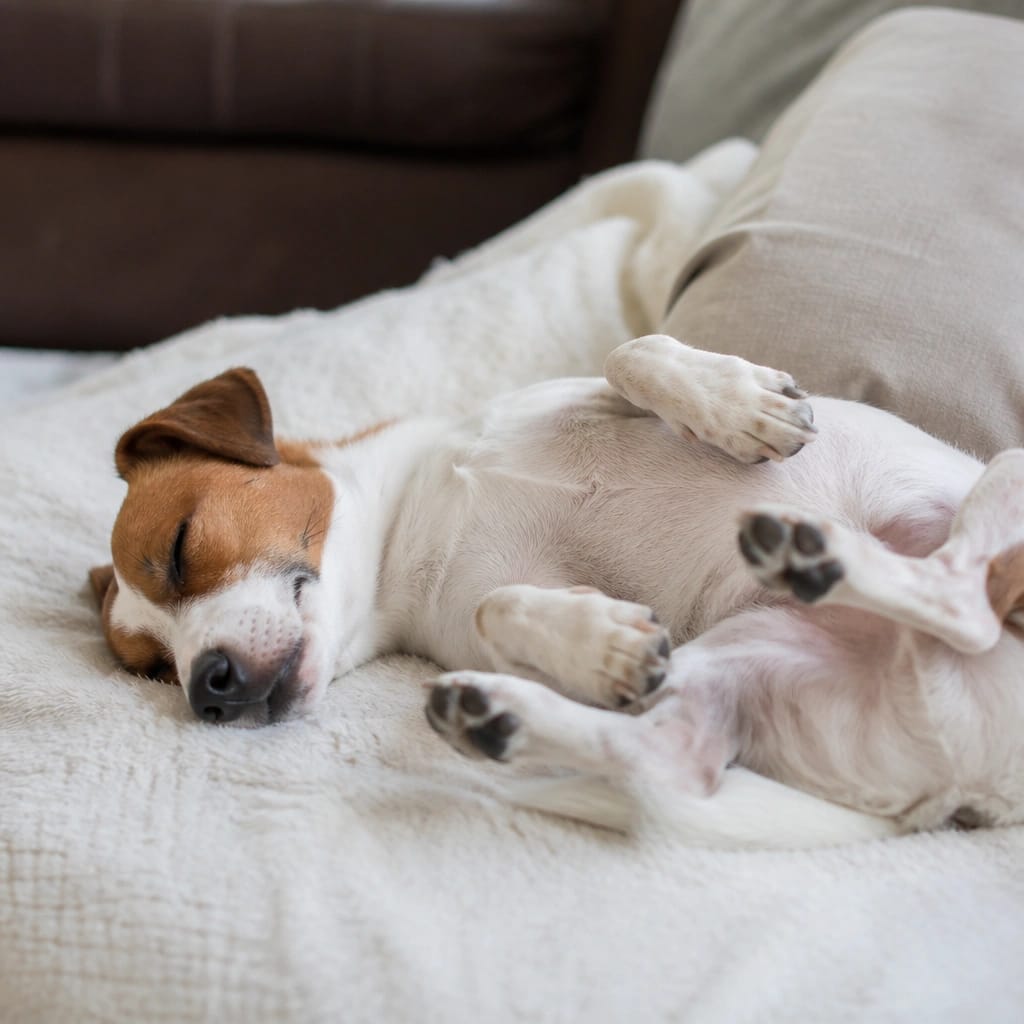
For puppies, that number is even higher. As of 2026, veterinary neurologists confirm that occasional leg twitching during REM sleep is a healthy sign of a functioning canine brain. Let’s walk through what’s actually happening and how to tell the difference between a happy dream and something that needs a vet’s attention.
Your dog kicks their legs while sleeping because they are dreaming. During REM sleep, the brain sends signals to the leg muscles. These signals create small twitches and paddling motions.
This is normal behavior for most dogs. It happens more often in puppies and young dogs. Only kick if the movement is rhythmic, rigid, or your dog seems unresponsive.

The Simple Reason Dogs Kick in Their Sleep
Think of your dog’s brain as a movie projector. During the day, experiences get recorded. At night, the brain replays those recordings while your dog sleeps.
The leg kicking is just the physical side effect of that replay.
Here’s what’s happening inside your dog’s head during REM sleep:
- The brain stem sends random signals to the spinal cord
- Those signals travel to the leg muscles
- The muscles respond with small twitches and paddling motions
- Your dog’s conscious control is switched off during this phase
Puppies twitch more than adult dogs because their nervous system is still developing. Think of it as their brain learning how to coordinate movement. A puppy’s REM sleep takes up a larger percentage of total sleep time compared to an adult dog, which means more opportunities for those adorable leg kicks.
The breed and size of your dog also play a role. Small breeds tend to twitch more visibly than large breeds, partly because their smaller legs move faster and catch your eye more easily. A Chihuahua’s little paws paddling looks dramatic, while a Great Dane’s leg twitch might feel like a minor earthquake in comparison.

How to Tell if It’s Just a Dream or Something Else
Most leg kicking during sleep is harmless dreaming. But how do you know for sure? The answer comes down to three simple checks you can do without waking your dog.
Check the timing. Normal dream kicking starts about 15 to 20 minutes after your dog falls asleep. That’s when REM sleep begins. If the kicking happens immediately as your dog’s eyes close, or continues for more than a few minutes at a time, that’s worth paying closer attention to.
Look at the movement pattern. Dream twitches are random. One leg kicks, then the other. The motion is loose, almost floppy.
Your dog might whimper softly or move their eyes under closed lids. Seizure activity looks different: the movement is repetitive, rhythmic, and the leg stays rigid.

Test responsiveness. Say your dog’s name softly. Don’t touch them during the kicking. A dreaming dog will stop twitching and wake up.
A seizing dog will not respond to your voice. This is one of the clearest ways to tell the difference.
One more thing worth knowing: dreaming dogs usually change positions naturally during sleep. A dog having a seizure will stay in one position with rhythmic leg movements. The body might look stiff or rigid during a seizure, while a dreaming dog’s body stays relaxed between twitches.
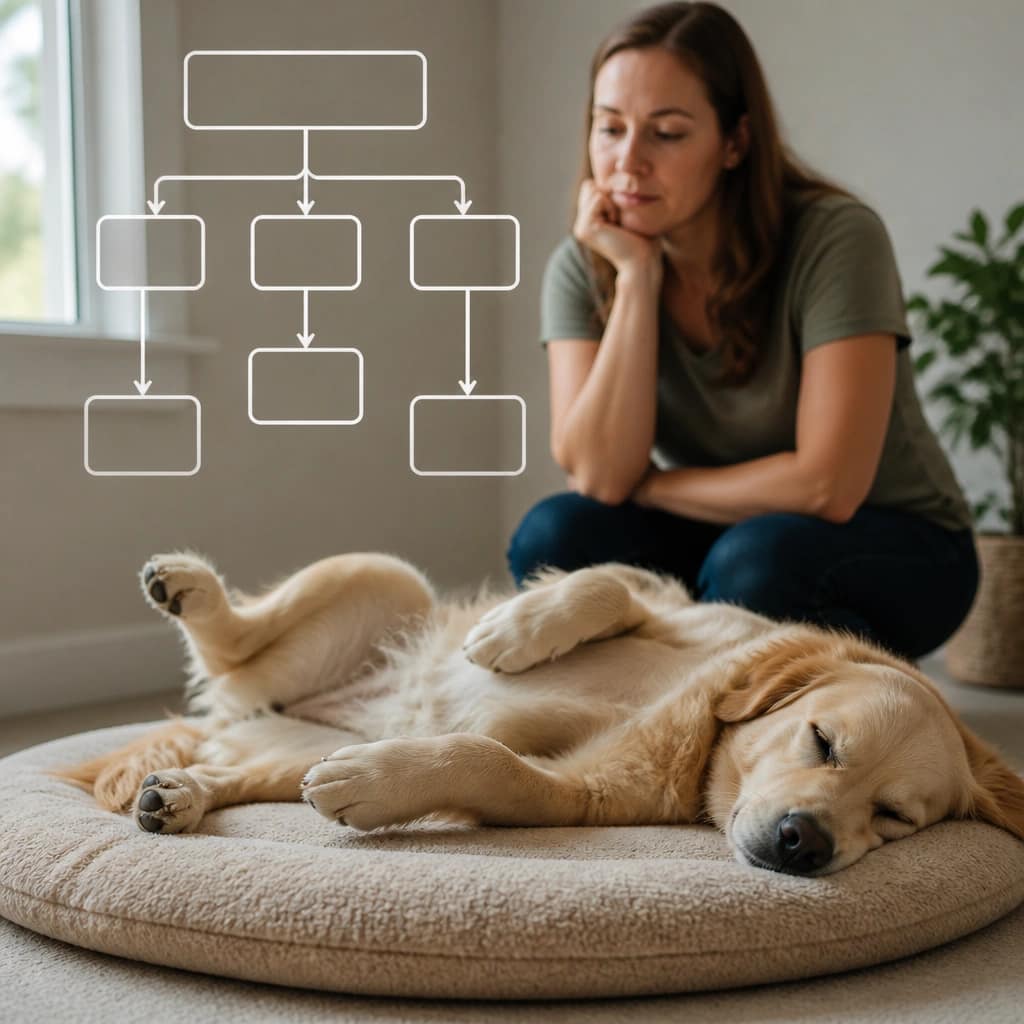
The Decision Tree: Normal Twitching vs. Seizure Activity
Let’s build a simple decision tree so you can assess your dog’s leg kicking in real time. Follow the branches based on what you actually observe.
Branch 1: Occasional Twitching, Easily Woken
Your dog kicks gently for a few seconds. The movement is random, one leg then the other. You say their name and the twitching stops.
They look up at you, blink, and go back to sleep.
This is normal dreaming. Nothing to worry about. Your dog is processing their day.
Enjoy the cute show.
Branch 2: Repetitive Rhythmic Kicking, Harder to Wake
Your dog’s leg moves in a steady rhythm, like paddling. The same leg or both legs move in a repeating pattern. Your voice does not stop the movement.
Your dog’s eyes might be open but glazed over.
This could be a focal seizure, a type of seizure that affects only part of the brain. Focal seizures in dogs can look like repetitive leg movements, facial twitching, or staring without blinking. The dog may not lose consciousness.
Branch 3: Full Body Stiffening and Paddling
Your dog’s entire body stiffens. The legs paddle hard. Your dog may drool, vocalize, or lose bladder control.
This usually lasts 30 seconds to 2 minutes.
This is a generalized seizure. Your dog is not aware of what’s happening. Do not put your hands near their mouth.
Time the seizure. If it lasts more than 2 minutes, or if multiple seizures happen in a row, call your vet immediately.
Branch 4: Sudden Change in an Older Dog
A senior dog who never kicked before starts twitching heavily during sleep. They seem confused or disoriented after waking. They may pace or stare at walls.
This could indicate canine cognitive dysfunction (similar to dementia in humans) or arthritis pain that disrupts sleep. The leg kicking may be a response to discomfort rather than dreaming. A vet visit is warranted to rule out underlying conditions, especially if the behavior is new.
Other Possible Causes Behind the Kicking
Dreaming and seizures cover most cases, but a few other causes are worth knowing about.
Nerve reflex during sleep. Sometimes a dog’s leg kicks because the nervous system fires a random signal. This is like the jerking sensation humans feel when falling asleep. It usually happens once and stops.
Pain or discomfort from an unsuitable bed. If your dog sleeps on a hard or thin surface, they may shift and twitch more as their body tries to find a comfortable position. Arthritis, hip dysplasia, or muscle soreness can cause restless sleep with more leg movement. A supportive bed designed for your dog’s size and sleeping style can make a real difference in reducing these disturbances.
Anxiety or stress. Dogs who are anxious may have more disrupted sleep. This can show up as increased twitching, restlessness, or kicking. A calm evening routine and a secure sleeping space can help.
Restless leg syndrome. This condition is well documented in humans and reported anecdotally in dogs. It causes an uncontrollable urge to move the legs, including during sleep. It’s rare but worth mentioning if your dog seems unable to settle their legs even when fully awake.
To be thorough, also look at whether the leg kicking happens in certain sleeping positions more than others. Dogs that sleep on their side tend to twitch more visibly than those sleeping curled up. That doesn’t mean the curled sleeper is having a different experience, just that the motion is more contained.


