

Why Does My Dog Sleep With Their Head Raised?
You notice your dog sleeping with their head propped up on the edge of their bed, and it makes you wonder. Why does my dog sleep with their head raised? It’s a fair question, and the answer isn’t always the same for every dog.
Sometimes it’s pure comfort. Other times, it signals a health issue worth paying attention to. As of 2026, veterinary research continues to highlight how sleeping posture can reveal underlying problems, especially in certain breeds.
Let’s break down what’s normal, what’s not, and what you should watch for.
Dogs sleep with their head raised for several reasons. It can be a simple comfort preference. It may help them breathe easier.
It often relieves pressure on sore joints. Some breeds naturally need this position. If your dog suddenly changes sleeping posture, consult your vet.

Why This Position Matters More Than You Think
A dog’s sleeping position tells you a lot about how they’re feeling physically. When a dog props their head up, they’re actively choosing a position that changes how their body works during rest.
The neck and spine shift into a different alignment. The airway opens wider. Pressure moves off the chest and shoulders.
For some dogs, this is the only way they can sleep soundly through the night.
The key is knowing whether your dog is choosing this position or needing it.
If your dog has always slept this way, it’s likely just their preferred style. But a sudden switch from sprawled-out sleeping to head-elevated sleeping deserves attention. That change often points to an underlying issue that developed recently.
The Difference Between Comfort and a Warning Sign
Here’s where things get a bit tricky. How do you tell the difference between a dog who likes sleeping this way and one who needs to?
The answer comes down to context and consistency.
Comfort-based head elevation:
- Your dog shifts positions throughout the night
- They sometimes sleep flat, sometimes with their head raised
- They seem relaxed and breathe normally in any position
- This has been their habit since puppyhood
Health-related head elevation:
- Your dog sleeps with their head raised almost every time
- They resist lying flat or reposition frequently
- You hear noisy breathing, snorting, or wheezing
- The behavior started recently and has become more frequent
Watch your dog over several nights. If the raised-head position is consistent and accompanied by other signs like coughing or restlessness, it’s worth a conversation with your veterinarian.
Common Reasons Dogs Sleep With Their Head Raised
Breathing and Airway Support
This is the most common medical reason. When a dog lies flat, their airway can partially collapse or become compressed, especially in breeds with flat faces.
A slightly raised head keeps the trachea open and reduces resistance. Think of it like how you might prop yourself up with an extra pillow when you have a stuffy nose.
Dogs with conditions like laryngeal paralysis, collapsing trachea, or respiratory infections often adopt this position instinctively. They’re not deciding to sleep that way. Their body is finding the position that lets them breathe.
Joint Pain and Arthritis Relief
For older dogs, arthritis changes everything about how they rest. Pressure on sore hips, shoulders, or elbows makes lying flat uncomfortable.
Elevating the head shifts weight distribution. It takes pressure off the front legs and shoulders. Many arthritic dogs also benefit from orthopedic support that cushions their joints while keeping their head slightly raised.
If your dog has slowed down on walks, seems stiff after sleeping, or hesitates to jump on furniture, arthritis may be the reason they’re choosing a head-elevated sleeping position. Providing a bed with proper joint support can make a real difference in their comfort level.
Nesting Instinct and Personal Preference
Not every reason is medical. Some dogs simply like having their head on something.
This goes back to denning behavior. In the wild, dogs would rest with their heads on a pile of leaves, a fallen log, or even a littermate. It feels secure.
It’s the canine version of fluffing your pillow.
Puppies often do this. Adult dogs with no health issues do this. If your dog is healthy, active, and breathing fine, but they still sleep with their head on the edge of their bed, they just prefer it that way.
Recovering From Illness or Surgery
Dogs recovering from certain illnesses or procedures may sleep with their head raised as well. After abdominal surgery, lying flat can pull on incision sites. Dogs with heart conditions sometimes find it easier to breathe in an elevated position.
If your dog is recovering from anything and changes their sleep posture, it’s worth mentioning to your vet during follow-up.
Brachycephalic Breeds: A Special Case
If you own a French Bulldog, English Bulldog, Pug, or Boston Terrier, this topic hits close to home. Brachycephalic breeds have flat faces and compressed airways. Sleeping with their head raised isn’t a preference for many of them.
It’s a necessity.
These dogs often struggle with brachycephalic obstructive airway syndrome (BOAS). Their shortened skulls crowd the same structures that other dogs have room for. The result is narrowed nostrils, an elongated soft palate, and a smaller trachea.
When these dogs lie flat, gravity works against them. Tissues in the throat relax and obstruct airflow. Lifting the head opens that airway just enough to make breathing easier.
A French Bulldog that always sleeps with their head elevated may be telling you something important about their breathing. If you hear loud snoring, see them gasping after exercise, or notice they overheat quickly, a vet check is in order.

When Raised Head Sleeping Signals a Health Problem
Respiratory Red Flags to Watch For
Some signs are easy to miss. Others are hard to ignore.
Watch for:
- Loud, persistent snoring that gets worse when lying flat
- Coughing or gagging during sleep
- Breathing that sounds wet, rattling, or strained
- Nostrils that flare excessively with each breath
- Gums that look pale or bluish
Any of these signs paired with head-elevated sleeping means a vet visit is needed. Breathing problems can worsen over time, and early intervention makes a difference.
Pain and Mobility Warning Signs
Pain-related head elevation comes with other clues. Your dog might:
- Struggle to settle into a comfortable position
- Circle excessively before lying down
- Whimper or sigh when shifting positions
- Show stiffness after getting up
- Avoid stairs or jumping
These signs point toward joint pain rather than breathing issues. The raised head is a secondary benefit. The real problem is that lying flat hurts somewhere.
Changes in Sleeping Habits
The single most important thing to notice is change.
A dog that has always slept curled in a ball suddenly sleeping with their head propped up. A dog that used to sprawl out now keeps their neck elevated all night. These shifts matter.
If the change lasts more than a few days or comes with any of the signs above, don’t wait to see if it passes. Make an appointment.
Which Dog Bed Supports This Sleeping Position Best
Not all beds work well for dogs who need or prefer head elevation. The right bed can make a significant difference in how well your dog rests.
Look for these features:
- A bolster or raised rim around the edges
- Dense foam that won’t flatten under your dog’s weight
- A design that lets your dog rest their head on the rim
- Enough surface area for your dog to stretch or curl as they prefer
Bolster beds are the most natural fit. The raised sides give your dog something to rest their head on while keeping their neck aligned. Flat beds can work too, but they don’t offer the same support.
If your dog has breathing issues or arthritis, prioritize firm, supportive foam. Soft beds that sink under your dog’s weight don’t provide the elevation they actually need.
For a more detailed breakdown of different bed types, our comparison of bed styles covers which options suit different sleeping habits.

What to Look for in a Bed
When shopping for a bed that supports head-elevated sleeping, focus on three things: support, height, and washability.
Support comes from the foam core. Memory foam or high-density polyfoam holds its shape under your dog’s weight. Cheap filling compresses quickly and defeats the purpose.
Height matters for smaller dogs. A bolster that’s too tall forces their neck into an awkward angle. One that’s too short doesn’t provide any support.
Your dog’s head should rest naturally on the bolster without strain.
Washability matters because dogs bring dirt and odors into their beds. Removable, machine-washable covers make maintenance much easier. A removable cover is essential for keeping the bed clean over time.
Bolster Beds vs. Flat Beds vs. Orthopedic Beds
| Bed Type | Best For | Limitations |
|---|---|---|
| Bolster Bed | Dogs who rest head on edges, need neck support | Takes up more floor space |
| Flat Bed | Dogs who sprawl, don’t need elevation | No head support for raised position |
| Orthopedic Bed | Senior dogs, joint pain, recovery | Varies by foam quality and thickness |
Bolster beds are the top recommendation for dogs who sleep with their head raised. Orthopedic versions add extra joint support for older dogs or those with arthritis.
Matching Bed Height to Your Dog’s Needs
The ideal bed height depends on your dog’s size and what they’re trying to achieve.
For breathing support, a moderate elevation is usually enough. Your dog’s head should be slightly above the level of their chest, not propped up at a steep angle.
For joint pain, firmer support matters more than height. A flat orthopedic bed with a small pillow or folded blanket can work well if your dog prefers it.
A simple test: Watch your dog on their current bed. If their head is hanging off the edge or they’re resting it on the floor beside the bed, they need more support. If they seem comfortable and breathe easily, the current setup is probably fine.
How to Tell If Your Dog Needs a Different Bed
You don’t need to overthink this. A few observations will tell you what your dog needs.
Check these things tonight:
- Does your dog rest their head on the bed’s edge or on the floor?
- Do they reposition frequently throughout the night?
- Do they seem restless or wake up often?
- Is their breathing noisy or labored when lying flat?
If you answered yes to two or more, a different bed could help. A bolster bed sized appropriately for your dog’s body might be exactly what they need.
Keep in mind that some dogs simply prefer firm surfaces. A dog that sleeps on the floor despite having a perfectly good bed may be telling you their current bed is too soft or too warm. Pay attention to their choices and adjust accordingly.
Common Mistakes Dog Owners Make
One of the biggest mistakes is assuming head elevation is always normal. It often is. But when it’s not, ignoring it can allow a manageable issue to worsen.
Another common error is buying a bed that’s too small. A dog who needs to stretch out or rest their head on a bolster can’t do that in a bed that barely fits their body. Measure your dog from nose to tail base and add a few inches for comfort.
Some owners also choose beds that are too soft. Plush, pillow-like beds feel cozy to us, but they don’t provide the support a dog with breathing or joint issues needs. Firm support matters more than fluffiness.
Finally, don’t overlook the value of a good crate setup. If your dog sleeps in a crate, the bed needs to fit properly and offer the same support options.
When to Talk to Your Veterinarian
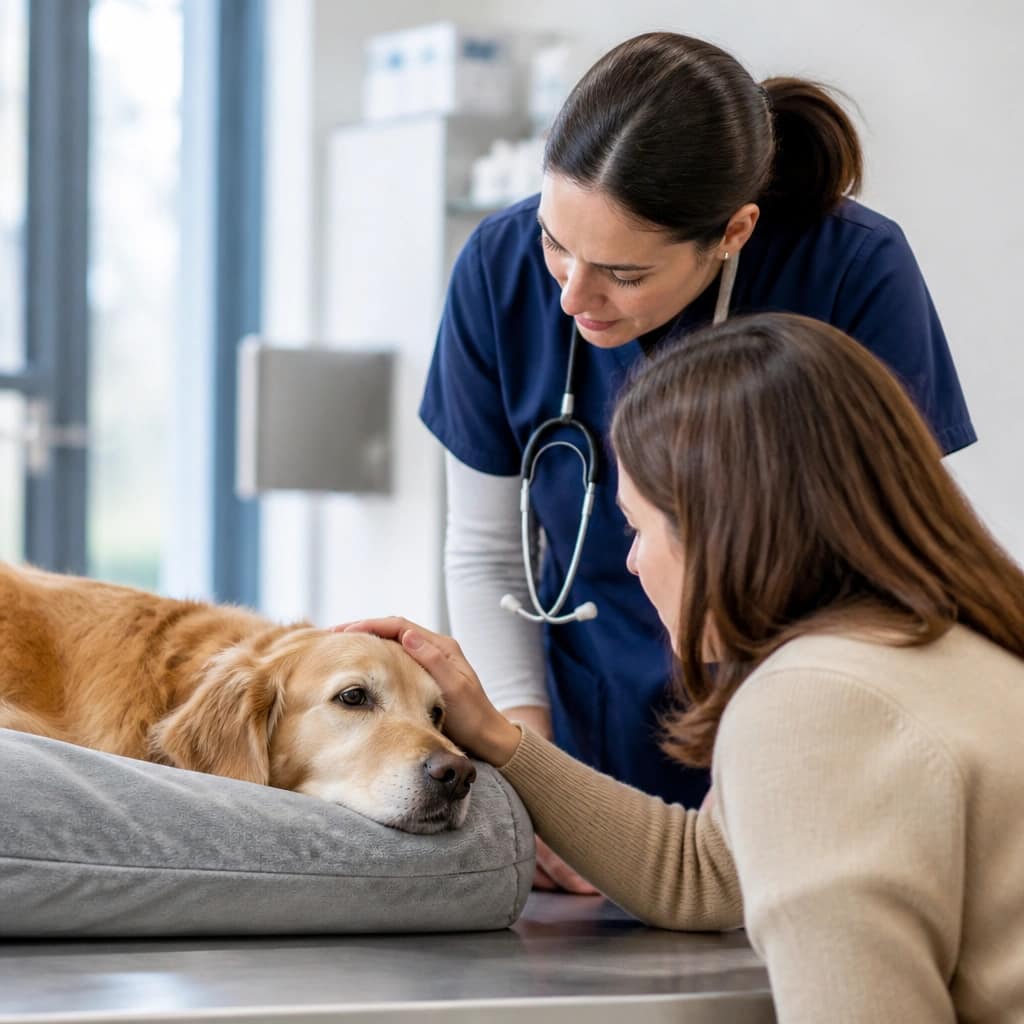
You know your dog better than anyone. Trust your instincts.
Schedule a vet visit if:
- The raised-head sleeping is new and persistent
- Your dog seems to struggle breathing when lying flat
- You notice coughing, gagging, or wheezing
- Your dog shows signs of pain or stiffness
- The behavior has changed along with appetite or energy levels
A veterinarian can check for respiratory issues, joint problems, heart conditions, or other underlying causes. They may recommend an X-ray, blood work, or a referral to a specialist depending on what they find.
For some conditions, early detection makes treatment more effective and keeps your dog more comfortable.
Frequently Asked Questions
Is it normal for my dog to sleep with their head on a pillow?
Yes. Some dogs naturally enjoy resting their head on a pillow, the edge of their bed, or even your arm. It’s usually a comfort preference.
If your dog breathes easily and seems relaxed, there’s no cause for concern.
Can sleeping with their head raised help my dog snore less?
It can. Elevating the head opens the airway and reduces soft tissue obstruction. This is especially helpful for brachycephalic breeds.
If snoring stops when your dog’s head is raised, breathing resistance is likely the cause.
Should I prop my dog’s bed up at an angle?
Not without a vet’s recommendation. Propping the entire bed at an angle can create an unnatural sleeping position. A bolster bed or a small, firm pillow under the head provides better support without straining the spine.
Does my dog need an orthopedic bed if they sleep with their head raised?
Not necessarily. Many dogs simply prefer the position. But if your dog is senior, has arthritis, or shows signs of stiffness, an orthopedic bed offers both head support and joint relief.
It’s a good investment for dogs with multiple comfort needs.
When should I worry about my dog’s sleeping position?
Worry when the behavior is new, persistent, and paired with other symptoms. Difficulty breathing, coughing, restlessness, or signs of pain all warrant a vet visit. A sudden change in sleeping posture is worth investigating.
The Bottom Line on Raised Head Sleeping
Dogs sleep with their head raised for many reasons. Most of them are harmless. Some are not.
Watch your dog’s behavior over time. Notice changes. Trust what you see.
If your dog is healthy, comfortable, and breathing easily, let them sleep however they like. If something feels off, don’t hesitate to ask your vet. A simple change in sleeping posture can be the first clue your dog gives you that something needs attention.
How to Tell If Your Dog Needs a Different Bed
You don’t need to overthink this. A few observations will tell you what your dog needs.
Check these things tonight. Does your dog rest their head on the bed’s edge or on the floor? Do they reposition frequently through the night?
Are they restless or waking up often? Is their breathing noisy when lying flat?
If you answered yes to two or more, a different bed could help. A properly sized bolster bed might be exactly what they need.
Keep in mind some dogs simply prefer firm surfaces. A dog that sleeps on the floor despite having a good bed may find their current bed too soft or too warm. Pay attention to their choices and adjust accordingly.
Common Mistakes Dog Owners Make
The biggest mistake is assuming head elevation is always normal. It often is. But when it’s not, ignoring it can let a manageable issue worsen.
Another common error is buying a bed that’s too small. A dog that needs to stretch or rest their head on a bolster can’t do that in a bed that barely fits. Measure your dog from nose to tail base and add a few inches.
Some owners choose beds that are too soft. Plush, pillow-like beds feel cozy to us, but they don’t support dogs with breathing or joint issues. Firm support matters more than fluffiness.
Don’t overlook crate setup either. If your dog sleeps in a crate, the bed needs to fit properly and offer the same support options.
When to Talk to Your Veterinarian
You know your dog better than anyone. Trust your instincts.
Schedule a vet visit if the raised-head sleeping is new and persistent. Go if your dog struggles to breathe when lying flat. Make an appointment if you notice coughing, gagging, or wheezing.
See a vet if your dog shows pain, stiffness, or changes in appetite or energy.
A veterinarian can check for respiratory issues, joint problems, heart conditions, or other underlying causes. They may recommend X-rays, blood work, or a specialist referral.
For some conditions, early detection makes treatment more effective and keeps your dog more comfortable.
Frequently Asked Questions
Is it normal for my dog to sleep with their head on a pillow?
Yes. Many dogs naturally enjoy resting their head on a pillow or the edge of their bed. It’s usually a comfort preference.
If your dog breathes easily and seems relaxed, there’s no concern.
Can sleeping with their head raised help my dog snore less?
It can. Elevating the head opens the airway and reduces soft tissue obstruction. This is especially helpful for brachycephalic breeds.
If snoring stops when the head is raised, breathing resistance is likely the cause.
Should I prop my dog’s bed up at an angle?
Not without a vet’s recommendation. Propping the entire bed at an angle can strain the spine. A bolster bed or a small, firm pillow under the head provides better support.
Does my dog need an orthopedic bed if they sleep with their head raised?
Not necessarily. Many dogs simply prefer the position. But if your dog is senior or shows signs of stiffness, an orthopedic bed offers both head support and joint relief.
When should I worry about my dog’s sleeping position?
Worry when the behavior is new, persistent, and paired with other symptoms. Difficulty breathing, coughing, restlessness, or signs of pain all warrant a vet visit.
The Bottom Line on Raised Head Sleeping
Dogs sleep with their head raised for many reasons. Most are harmless. Some are not.
Watch your dog’s behavior over time. Notice changes. Trust what you see.
If your dog is healthy, comfortable, and breathing easily, let them sleep however they like. If something feels off, ask your vet. A simple change in sleeping posture can be the first clue your dog gives you that something needs attention.
There are no remaining sections to continue. The final section delivered was “The Bottom Line on Raised Head Sleeping,” which concluded the article naturally.
Nothing further to output.


