

How to Pack a Dog Bed for Air Travel
Packing for a flight with your dog means figuring out how to bring their bed along without turning your suitcase into a nightmare. That’s the real challenge behind learning how to pack a dog bed for air travel: balancing airline rules, luggage space, and your dog’s need for a familiar spot to sleep. Most travelers don’t realize the process changes completely depending on whether the bed is going in a carry-on, checked bag, or cargo hold.
As of 2026, standard US airline carry-on dimensions are 22 x 14 x 9 inches, and a typical small dog bed measures around 20 x 15 x 4 inches. That leaves very little wiggle room. Let’s walk through your options so you pick the right method before you leave home.
Check your airline’s pet policy first. Measure the bed’s length, width, and thickness. Compress the bed using a vacuum storage bag.
Place it in a carry-on, checked suitcase, or a separate duffel. Never assume it will fit without testing the compression first.
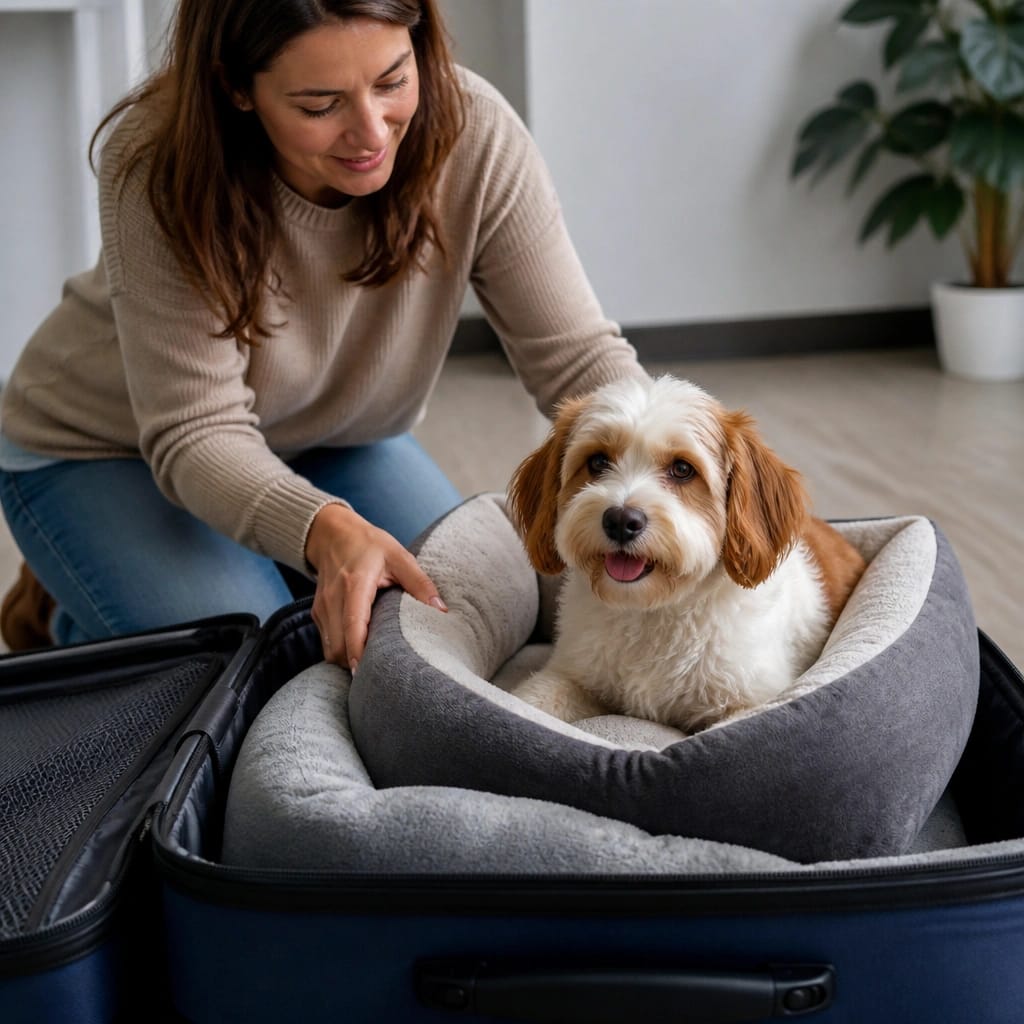
Know Your Situation First
The right packing method depends on three variables: your dog’s travel location, the bed’s size, and the airline’s baggage rules. Here’s how to figure out which path you’re on.
If your dog is flying in the cabin with you: The bed can go in your carry-on suitcase or a separate soft-sided bag, as long as the combined dimensions and weight meet carry-on limits. Most airlines allow one carry-on and one personal item per passenger. The bed counts as part of your luggage, not as a separate pet item.
If your dog is flying as cargo: The bed can be packed inside the airline-approved crate or placed in a checked suitcase. Airlines often have specific rules about what goes inside the crate, so check those restrictions before packing.
If the bed is too large for a carry-on but you want to bring it: It goes in checked luggage, or you gate-check it as an oversized item. Some airlines charge extra for gate-checked bags.
If the bed is a travel-specific model designed for compression: You may be able to fold it into a compact pouch that fits in a personal item. These are a different category from standard home beds.
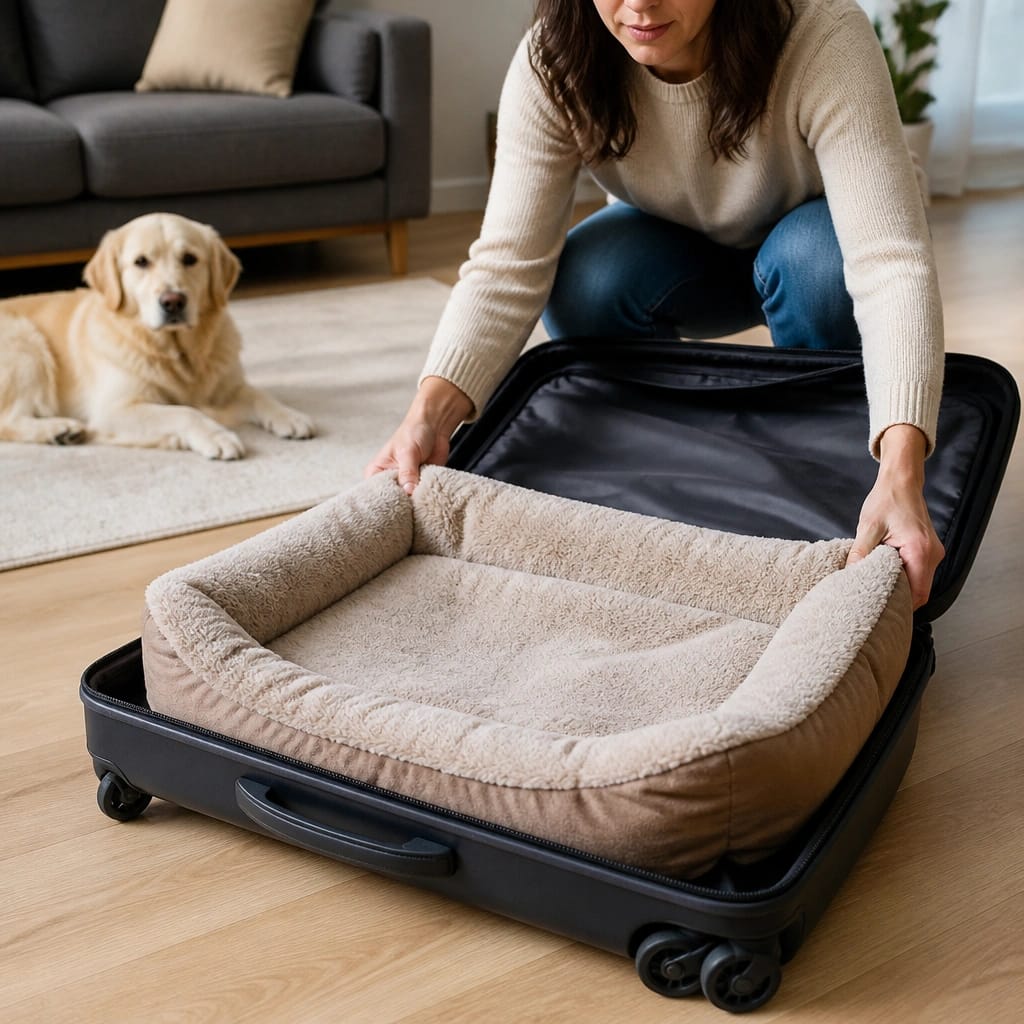
Here’s a quick reference table to match your situation:
| Your Scenario | Best Packing Method | Key Limitation |
|---|---|---|
| Dog in cabin, bed small | Carry-on suitcase | Must fit 22x14x9 inches |
| Dog in cabin, bed medium | Checked suitcase | Weight limit ~50 lbs |
| Dog in cargo, any bed | Inside crate or checked bag | Airline crate rules apply |
| Bed is bulky or odd-shaped | Gate-check as oversized item | Extra fees possible |
Option 1: Packing the Bed in a Carry-On Suitcase
This is the ideal method if the bed is small enough. A standard dog bed for a 10 to 15-pound dog usually fits inside a carry-on after compression.
Step 1: Remove the cover if it’s removable. Wash it before you travel, or pack it separately. The foam core compresses much better without the cover.
Step 2: Fold the foam core in half, then in half again. For round or donut beds, fold them into a half-moon shape first.
Step 3: Use a vacuum storage bag. Place the folded bed inside, seal the bag, and roll it to push the air out. Hand-rolling works better than using a vacuum cleaner nozzle, which can overshrink the foam.
Step 4: Measure the compressed bundle. It should be at least an inch smaller than your carry-on bag in every dimension. If it’s close, you may need to remove other items.
Step 5: Place the compressed bed at the bottom of the suitcase. Put heavier items on top to keep it flat during transit.
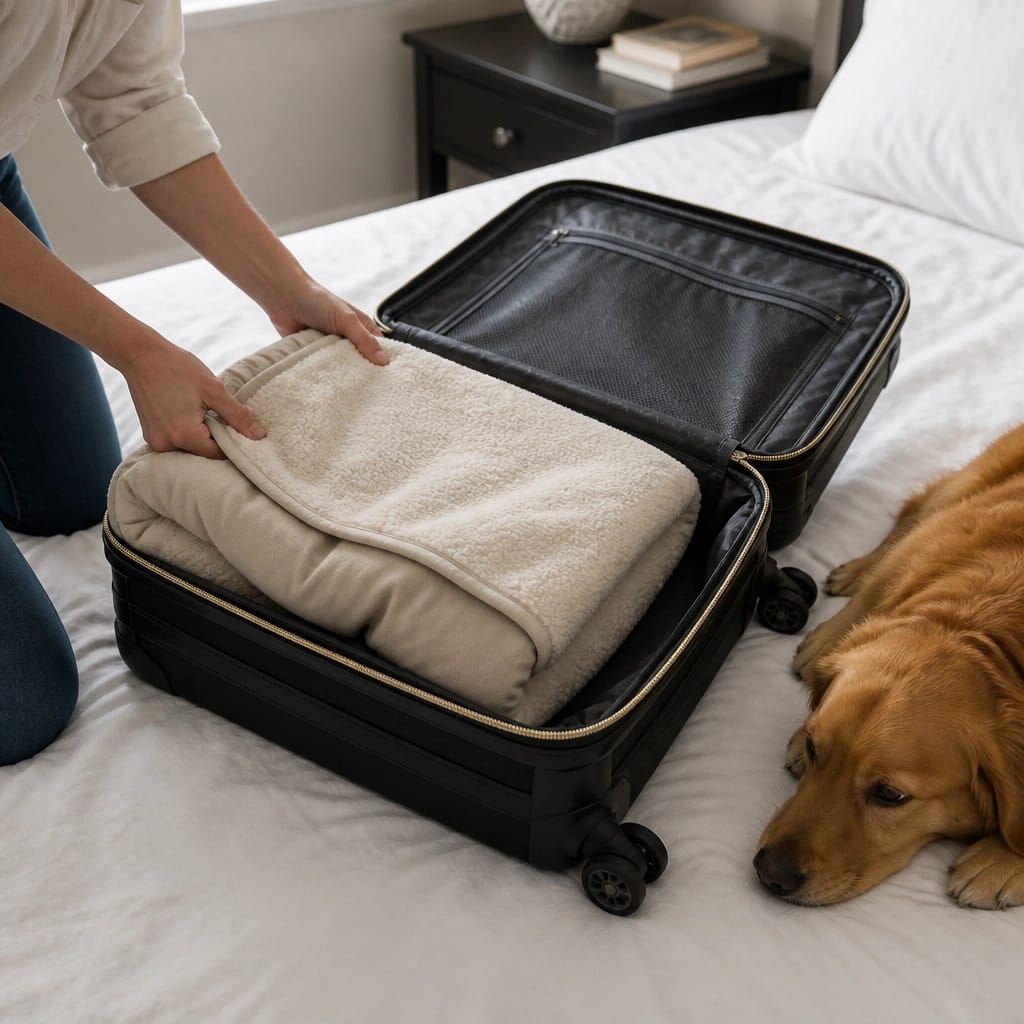
When this doesn’t work: If the compressed bed still exceeds carry-on dimensions, you have two choices. Switch to checked luggage, or consider a travel-specific bed that packs smaller. For small dogs, a calming donut bed that’s designed to be portable might be a better fit for future trips.
Option 2: Packing the Bed in Checked Luggage
For larger beds, checked luggage is the most straightforward option. The main risk is weight. A large memory foam bed can weigh 10 to 15 pounds, and a full suitcase plus your clothes can easily push past the 50-pound airline limit.
Step 1: Weigh the bed on a bathroom scale before you start packing. Check your airline’s checked bag weight limit. Most US carriers allow 50 pounds per bag, but some budget airlines cap at 40 pounds.
Step 2: Use a heavy-duty vacuum storage bag. The standard zipper bags may tear under the pressure of a full suitcase. Look for bags labeled “extra thick” or “double seal.”
Step 3: Place the compressed bed in the center of the suitcase. Surround it with soft items like clothes or towels to cushion it during loading and unloading.
Step 4: If the bed is very bulky, consider shipping it to your destination instead of checking it. Ground shipping is often cheaper than an extra checked bag fee, which can run $35 to $60 each way.
Pro tip: If you’re traveling with a dog that has anxiety, bringing their regular bed can be a huge help. But a crate pad vs crate mat choice might matter more for cargo travel, where the bed needs to fit inside the airline-approved crate exactly.
Option 3: Gate-Checking the Dog Bed
Gate-checking is a fallback option for beds that are too large for a carry-on but too valuable to risk in checked luggage. You carry the bed to the gate, and the airline staff stows it in the cargo hold just before boarding.
When to use this: If your dog is flying in the cabin and their bed is a medium size that doesn’t fit in a carry-on but isn’t so heavy that it exceeds weight limits. It’s also a good option for bolster beds that don’t compress well.
How it works: The bed counts as an oversized carry-on item. At the gate, you hand it to the airline agent. They tag it and place it in the cargo hold.
You pick it up at the baggage claim carousel upon arrival.
What to watch for: Not all airlines allow gate-checking for pet beds. Some only permit it for strollers or mobility aids. Check your airline’s gate-check policy before relying on this method.
Also, gate-checked items are handled roughly, so use a sturdy bag or duffel to protect the bed.
Best for: Beds that are bulky but not heavy, like fiberfill or polyester fill beds. Memory foam beds are heavy and may push you over the weight threshold for a gate-checked item, which still counts toward your total checked baggage allowance.
Option 4: Using a Dedicated Travel Dog Bed
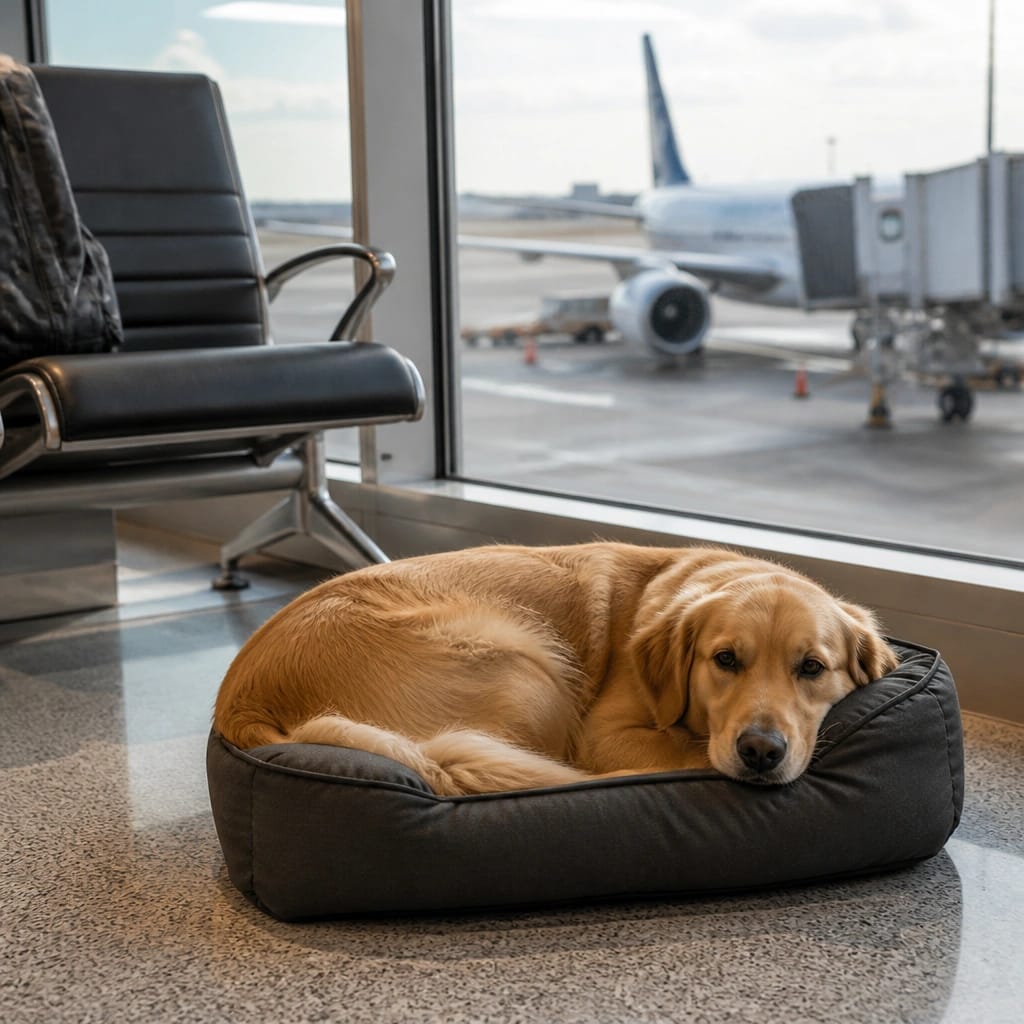
If you travel with your dog more than once or twice a year, a dedicated travel bed is worth considering. These are designed to compress down to a fraction of their full size, often fitting into a pouch the size of a small pillow.
What makes them different: Travel beds use lighter fill materials like hollow fiber or shredded foam rather than solid memory foam. They compress more easily and regain their shape faster. A good travel bed for a 20-pound dog might weigh under 2 pounds and pack down to 10 x 6 x 4 inches.
The trade-off: They don’t provide the same orthopedic support as a thick memory foam bed. If your dog has joint issues or is a senior, a travel bed may not be comfortable enough for extended stays. In that case, you’re better off packing their regular bed using the methods above.
When this option wins: Short trips, dogs under 30 pounds, and any situation where luggage space is extremely tight. It’s also a great backup if you want to keep your dog’s regular bed at home. A travel bed can serve as an extra sleeping spot between trips, so it doesn’t go to waste.
Step-by-Step: How to Compress a Dog Bed for Travel
No matter which option you choose, the compression step is the same. Here’s the exact process that works for most bed types.
Step 1: Remove the cover. Wash it or pack it separately. This reduces bulk and prevents the cover from bunching up during compression.
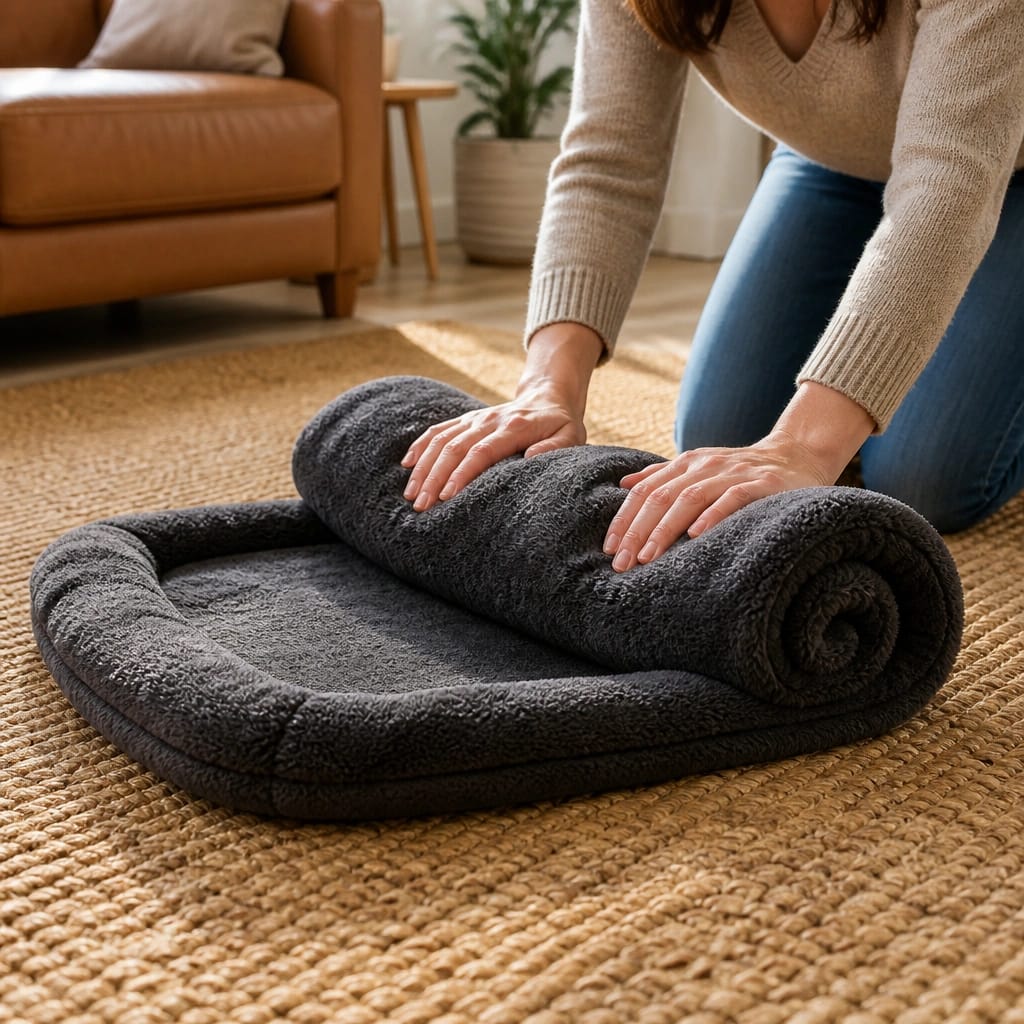
Step 2: Fold the bed in half lengthwise, then fold it again. For round beds, fold into a half-moon and then into a quarter-circle. For bolsters, fold the bolster in first, then the flat base on top.
Step 3: Slide the folded bed into a vacuum storage bag. Leave the bag open slightly.
Step 4: Roll the bag from the open end toward the sealed end. This pushes the air out through the small opening. Keep rolling until the bed is as flat as you can get it.
Step 5: Seal the bag while the air is pushed out. Do not open the bag again until you reach your destination.
Step 6: Place the compressed bed in your suitcase or duffel. Position it so it doesn’t get crushed by heavy items.
For memory foam beds: Do not keep them compressed for more than 24 to 48 hours. Memory foam needs time to expand back to its original shape. If you compress it for days, it may develop permanent creases or lose loft.
If you’re traveling for a week, compress the bed the night before you leave, not earlier.
For shredded foam beds: These compress well and rebound quickly. They’re the most forgiving option for compression storage. Most shredded foam beds return to full shape within an hour of being opened.
Common Mistakes That Ruin a Dog Bed During Travel
Using a regular trash bag instead of a vacuum bag. Trash bags don’t seal properly. Air seeps back in, and the bed expands inside your suitcase. This can cause the suitcase to bulge and exceed size limits.
Always use a vacuum storage bag designed for compression.
Forgetting to measure before leaving home. The most common mistake is assuming the bed will fit. Measure both the bed and the suitcase before you start packing. If it’s close, test the compression first.
Don’t wait until you’re at the airport.
Compressing the bed too far. Vacuum storage bags that use a vacuum cleaner hose can shrink memory foam to a fraction of its original size. But this can damage the foam structure. Hand-rolling is gentler and still reduces the bed to about half its original volume.
Packing the bed in a paper-thin duffel. The bed is protected during compression, but the bag itself is not. A thin duffel can tear during baggage handling. Use a suitcase with a hard shell or a thick fabric duffel.
Not drying the bed before packing. If the bed is damp from washing or from a sweaty dog, it will develop mildew inside the vacuum bag. Make sure the bed is completely dry before you compress it. For cleaning tips, check out how to deal with odors and stains without damaging the foam.
Frequently Asked Questions
Can I put a dog bed in a carry-on luggage?
Yes, if the bed fits within the airline’s carry-on size limits after compression. Most small dog beds for dogs under 15 pounds will fit. Always measure the compressed bed against your carry-on bag before leaving home.
Will a vacuum bag ruin my dog’s memory foam bed?
Prolonged compression can damage memory foam, especially if kept compressed for more than 48 hours. For short trips, it’s fine. For longer travel, compress the bed the night before you leave and no earlier.
How do I pack a large dog bed for air travel?
Large beds must go in checked luggage or be shipped separately. Use a heavy-duty vacuum storage bag and a sturdy suitcase. If the bed is too heavy, consider shipping it ahead or purchasing a travel-specific bed.
Can I bring a dog bed in the cabin if my dog is in a carrier?
The bed counts as part of your luggage, not as a pet accessory. It must fit in your carry-on or personal item. You cannot bring a separate bed bag in addition to your carry-on and personal item.
What’s the best dog bed type for frequent air travel?
A travel-specific bed with shredded foam or hollow fiber fill is the best option. It compresses well, rebounds quickly, and is lightweight. For occasional travel, your dog’s regular bed works fine with the compression method above.
How do I keep the bed from getting damaged during the flight?
Use a hard-sided suitcase or a thick fabric duffel bag. Place the compressed bed in the center of the bag, surrounded by soft items. Avoid placing it near the edges where it could get crushed.
What to Do If the Bed Won’t Fit After Compression
Sometimes a bed just won’t compress enough. If the vacuum bag still leaves a bundle that’s too big for your suitcase, you have a few backup options.
Switch to a checked bag. This is the simplest fix. Pull the compressed bed out of your carry-on and put it in a larger checked suitcase. You’ll pay the checked bag fee, but the bed gets to travel.
Ship the bed ahead. For long trips, shipping the bed to your destination via ground service often costs less than an extra checked bag fee. Pack it in a box and send it a few days before you leave.
Leave the bed behind. If compression fails completely, consider whether your dog actually needs their full bed. A folded blanket or towel in their crate might be enough for a short trip. For dogs that are adaptable, this can work fine.
Buy a smaller travel bed. If you travel frequently, it’s worth investing in a bed designed for packing. A travel-specific bed takes up a fraction of the space and saves you the hassle every time.
Choosing the Right Method for Your Trip
Here’s how to decide based on your specific trip details.
Short weekend trip (1-3 days): Use a travel-specific bed or a folded blanket. For a small dog, the carry-on method works. For a large dog, ship the bed ahead or check it.
Week-long trip (4-7 days): Your dog will appreciate having their regular bed. Use the checked luggage method with a heavy-duty vacuum bag. Make sure the bed is completely dry before packing.
International travel: Check your airline’s international pet policy carefully. Some countries have strict rules about what can go inside a cargo crate. You may need to use a crate pad specifically designed for travel.
Travel with an anxious dog: Always bring their regular bed. The familiar scent and texture can significantly reduce stress. For noise-sensitive dogs, a cave-style bed provides extra comfort during travel.
The key rule is simple: measure first, compress second, and never assume it will fit. A little planning before you pack saves you from a stressful airport scramble.


