

Why Does My Dog Prefer My Bed Over Theirs?
“Why Does My Dog Prefer My Bed Over Theirs?” That’s the question most owners ask after spending 80 dollars on a plush dog bed their pet refuses to touch.
The answer comes down to scent, security, comfort, and learned habit. Your bed carries your smell in a concentration no new dog bed can match. As of 2026, the American Veterinary Medical Association reports that adult dogs sleep roughly 12 to 14 hours a day, and a large share of that happens at night.
Identifying which of the four drivers applies to your dog is the first step toward a dog that sleeps in their own bed.
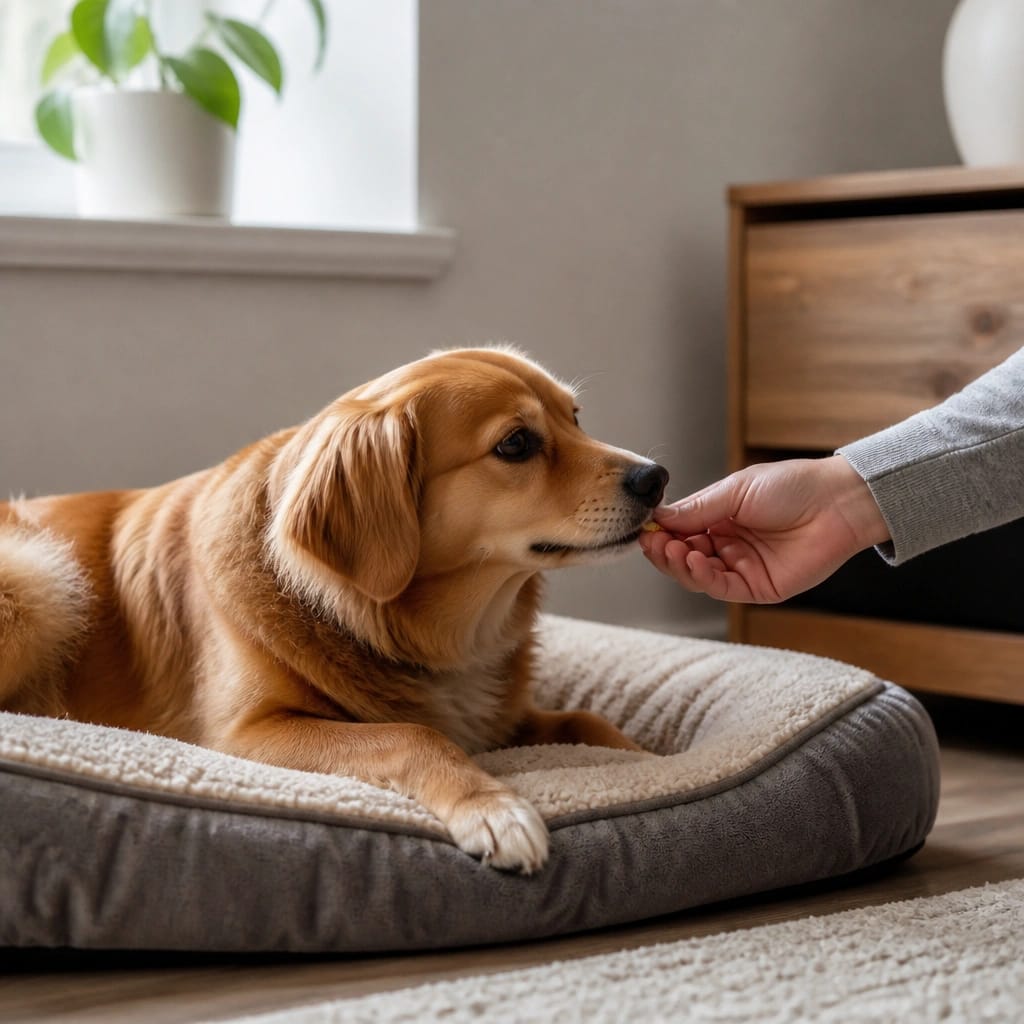
The Real Problem: You Got Your Dog a Bed, But They Sleep in Yours
When a dog ignores its new bed, most owners read it as stubbornness. In our research, what feels like defiance is usually a mismatch between the bed and the dog’s needs.
Your dog chooses the surface that offers the most safety and comfort. That is not a flaw in your dog. It is a signal that the current bed setup is not meeting those needs.
Your bed happens to check all the boxes your dog is looking for.
The fix involves finding which box is missing and closing that gap. That is what this guide walks you through.
The 4 Core Reasons Your Dog Chooses Your Bed

Your dog prefers your bed because it smells like you. Your scent signals safety and comfort. Your mattress also feels softer and holds warmth better.
Dogs naturally seek their owner’s resting spot. It is rarely defiance, so scolding will not help. Identifying the true driver leads to the right fix.
How Scent and Bonding Drive Your Dog’s Choice

Image source: Wikimedia Commons / West Midlands Police from West Midlands, United Kingdom (CC BY-SA)
Your dog experiences the world through their nose. A dog’s olfactory system contains up to 300 million scent receptors, roughly 30 times more than a human nose. That means your bed carries a loud, familiar signal: you were here, you are safe.
This is pack behavior. Dogs naturally sleep close to their pack leader. Your bed literally smells like where you spend the most restful hours.
A new dog bed, no matter how plush, carries zero of that reassurance.
If your dog gravitates to your pillow, your side of the bed, or your worn clothes, the primary driver is scent, not comfort.
The fix involves transferring your smell onto their bed. Place a worn t-shirt or a blanket you have slept with on the dog’s bed for the first few nights. Your dog will start associating that surface with your presence.
In our research, this simple technique resolves the problem for many dogs within a week. Understanding the root of the behavior helps you apply this more effectively.
Why Your Dog’s Bed Might Actually Be Uncomfortable
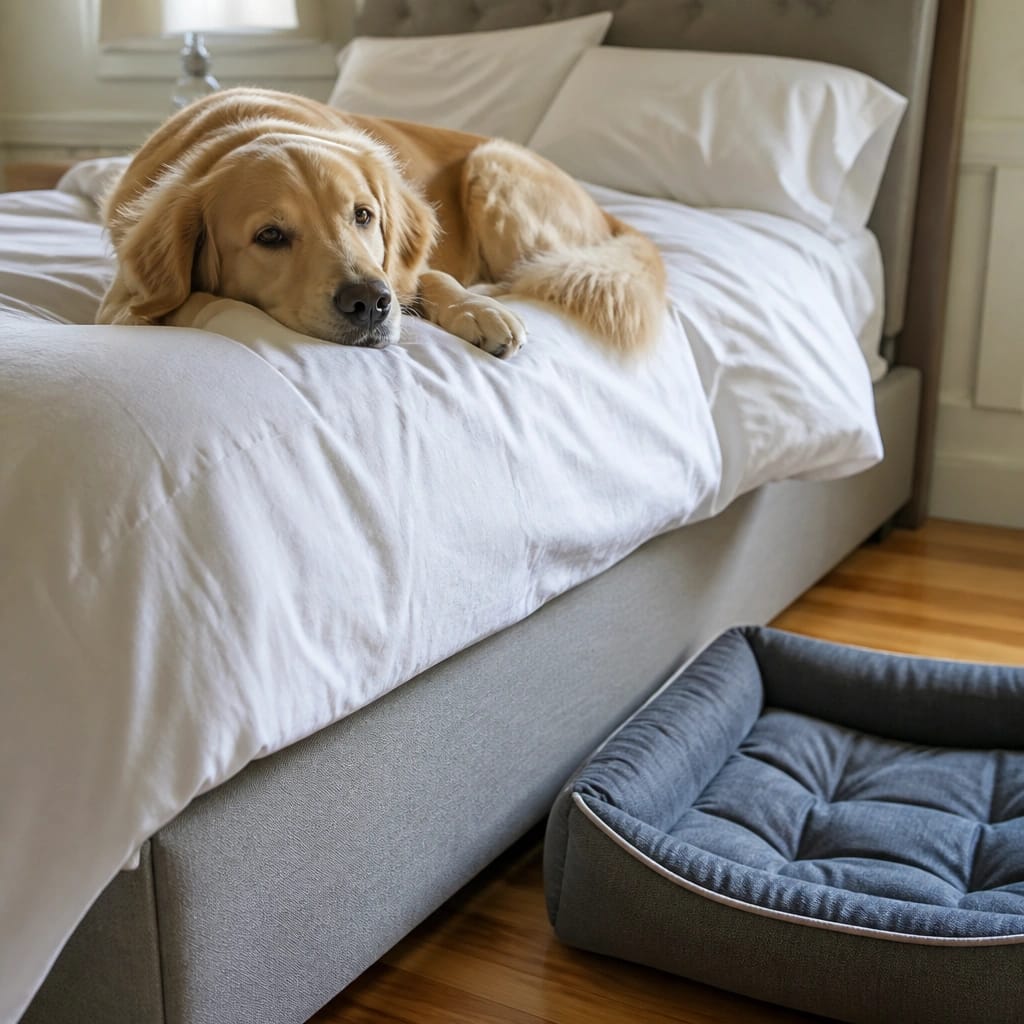
Sometimes the answer has nothing to do with scent and everything to do with support. If your dog sleeps normally in their bed during the day but migrates to yours at night, the issue is likely comfort.
Start with size. Measure your dog from nose to tail base while they lie fully stretched, then add five to ten centimetres. That is the minimum bed length.
Check the size chart for your dog’s weight before buying a replacement.
Next look at firmness. Senior dogs often need an orthopedic memory foam mattress. Aggregated owner feedback reports that active dogs usually prefer structured support over a soft pillow.
If your dog digs at the bed before lying down, they may need a more supportive surface.
Temperature also matters. Your mattress holds body heat through the night. A dog that burrows under your blankets is looking for warmth.
A cave-style bed traps heat better than an open flat bed. In cold months, a heated bed may give your dog the same thermal comfort your blankets provide.
If the bed passes the size, firmness, and temperature checks, the problem is likely location. Dogs like to sleep near their pack. Move the bed into your bedroom, close to your own sleeping spot, before you try moving it further away.
Is It Anxiety or Just Preference?
Not every dog that sleeps in your bed has separation anxiety. Preference is a calm, consistent choice. Anxiety looks different.
An anxious dog pants, paces, whines, or scratches at the bedroom door when separated at night. They may also follow you from room to room during the day, or refuse food when you leave. If those signs are present, a bed alone will not solve the issue.
If your dog simply wanders onto your bed and falls asleep without distress, that is preference. Moving them to their own bed takes consistency and a cozy donut bed or bolster-style bed that feels like a refuge.
In either case, remember the golden rule: never punish a dog for sleeping in your bed. That creates anxiety and makes the problem worse. Instead, make their bed feel like the best option in the room.


