

What Is a Heated Dog Bed? A Safety Guide
If you’ve been searching “What Is a Heated Dog Bed? A Safety Guide,” you’re probably trying to figure out whether these beds are genuinely useful or just another gadget. A heated dog bed is any bed that provides extra warmth through electricity, reflective materials, or a heat pack.
The real question isn’t whether they keep dogs cozy, but whether they’re safe for your particular dog. Safety depends on age, chewing habits, and how long your dog stays in one position.
One key specification to know is that quality electric heated beds typically warm the surface just 5 to 10 degrees above room temperature. Many also feature a built-in thermostat to prevent overheating. As of 2026, the safest models use pressure-activated heat, so they only warm up when your dog actually lies down.
Keep those details in mind as we walk through the safety checklist.
A heated dog bed is a bed with a built-in heat source. It may use electric wires or reflective self-warming materials. Safety depends on design, dog age, and chewing habits.
Look for pressure-activated heat, waterproof layers, and low-voltage power.

The Two Main Types of Heated Dog Beds (And How They Differ)
Electric heated beds plug into the wall and contain a heating element under the sleeping surface. They often include thermostatic controls or pressure sensors. Self-warming beds don’t use electricity at all.
Instead, they rely on a reflective layer like Mylar to bounce your dog’s body heat back.
There are also microwaveable pads and heat packs, though those work better for travel or short-term use. Most dogs who crave extra warmth do best with either an electric bed for overnight comfort or a self-warming bed for less supervision.
| Type | Heat source | Typical use |
|---|---|---|
| Electric heated bed | Wall plug + internal heating element | Overnight sleeping, crate rest |
| Self-warming bed | Reflective layer (e.g., Mylar) | Daytime naps, anxiety comfort |
| Microwaveable pad | Heat pack warmed in microwave | Travel, short recovery sessions |
Core Safety Features to Look For in a Heated Bed
Not every heated bed on the market deserves your trust. The safest models share a few clear features.
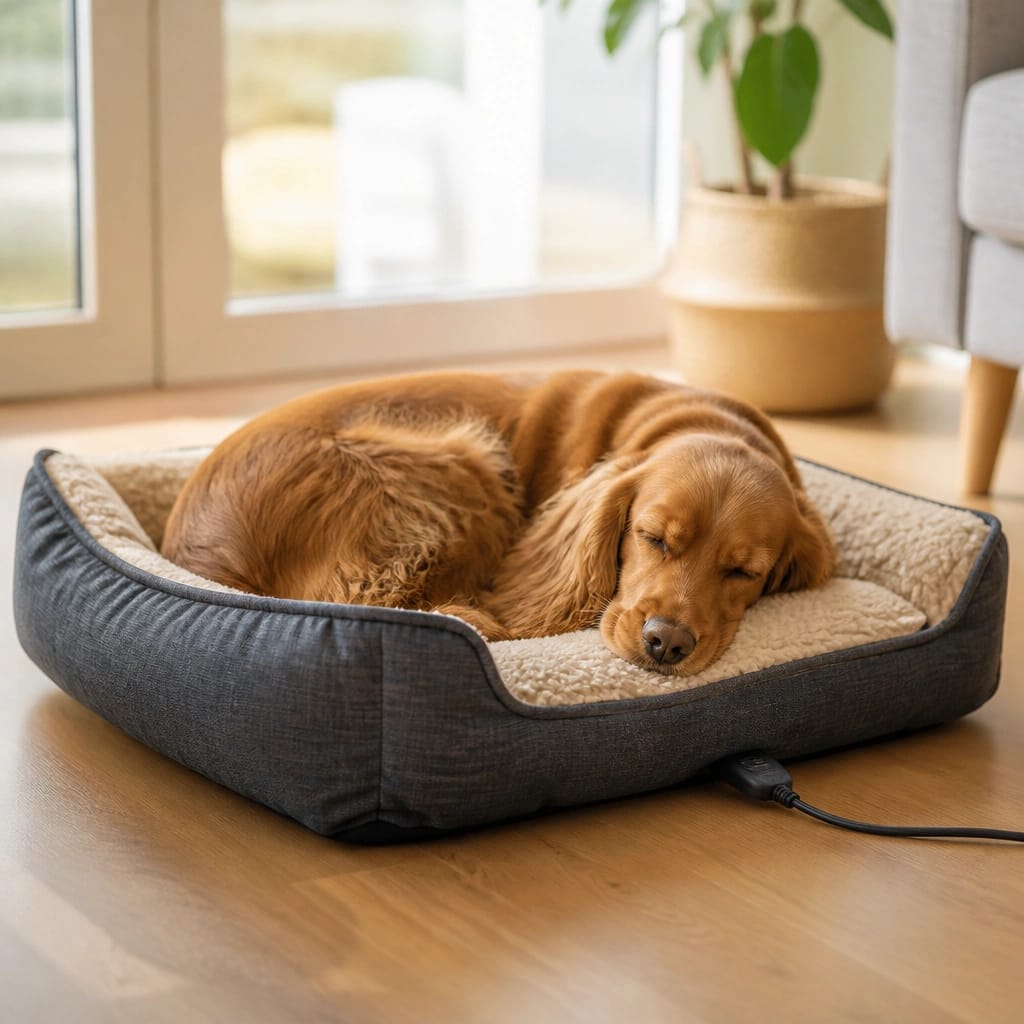
- Pressure-activated heating only turns on when your dog lies down. That reduces burn risk and keeps the bed from running empty all day.
- Thermostatic temperature control holds the surface at a safe range instead of letting heat climb.
- A waterproof inner liner protects against accidents, drool, and spilled water bowls.
- Low-voltage power supplies cut the risk of electric shock significantly.
- Chew-resistant cord casing gives you extra time if a puppy gets curious.
- A removable, washable cover keeps things clean and extends the bed’s life.
These features aren’t luxuries. They’re the difference between a bed that helps and one that hurts. If a product doesn’t mention any of them, treat that as a red flag.
And if you’re weighing supportive foam vs. simple padding, our guide to supportive foam options can help you compare.
Risk Factors: Low-Temperature Burns, Cord Chewing, and Wet Beds
The biggest risk is a low-temperature burn. That happens when a dog lies on a warm surface for hours without shifting. Per veterinary guidance, prolonged contact with surfaces above 120°F can damage skin.
That’s why pressure sensors and thermostats matter so much.

Cords are another concern. A curious puppy can chew through a live cable and get a serious shock. If your dog has chewed anything before, an electric bed isn’t the right first choice.
You’re better off starting with a self-warming bed until you’re confident about chewing behavior.
Moisture is just as dangerous. Puddles from a water bowl, drool, or urinary accidents can reach the heating element. A waterproof liner is non-negotiable for any electric bed.
Our research shows that most reported issues come from cheap beds that skip this layer.
In our research, dogs who already prefer the hard floor often need extra warmth even more than typical pets. But that also means they may not move around enough to avoid heat buildup. Watch them carefully.
For broader cold-weather safety advice, the American Veterinary Medical Association offers detailed guidance for pet owners.
Who Should Use a Heated Bed — And Who Should Skip It
Heated beds aren’t for every dog. That’s a truth a lot of marketing won’t tell you.
Good candidates:
- Adult dogs with short or thin coats
- Senior dogs with mild joint stiffness
- Dogs who naturally seek warm spots, like burrowing breeds
- Dogs who sleep in drafty or cold rooms
Skip electric versions if:
- You have a puppy under one year old
- Your dog is a known chewer
- Your dog has incontinence or mobility issues
- Your dog stays absolutely still for hours on end
| Dog type | Recommended option |
|---|---|
| Puppy or chewer | Self-warming bed |
| Healthy adult | Electric bed with pressure sensor |
| Senior or immobile | Self-warming bed or vet-approved low-wattage pad |
| Outdoor winter dog | Insulated, weatherproof heated shelter bed |
For outdoor use, you need a more rugged setup. Check out our recommendations for outdoor winter setups before you buy anything.
Heated Dog Bed vs. Self-Warming Bed: Which Is Safer?
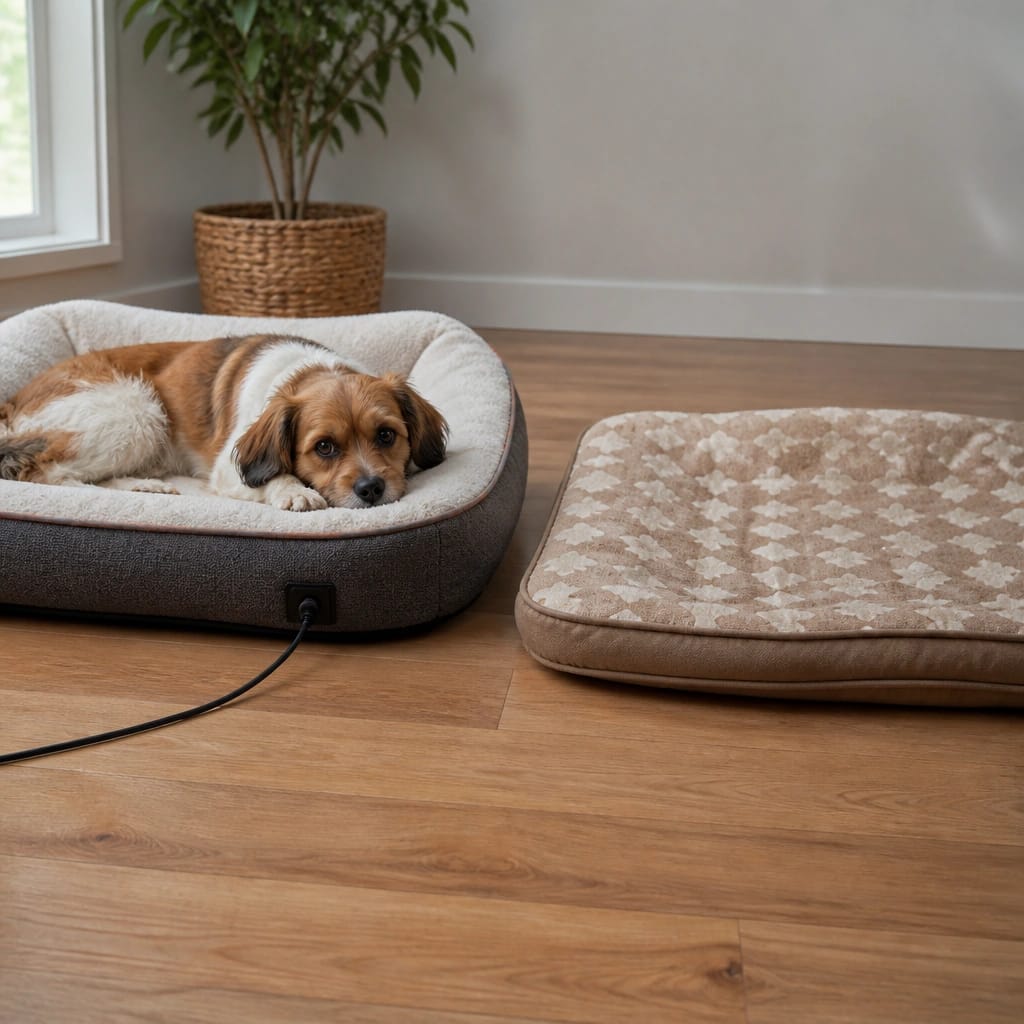
When you compare safety directly, self-warming beds win almost every time. No electricity means no cords. No heating element.
No risk of water reaching a live wire. That makes them the default choice for puppies, chewers, and senior dogs.
The downside is they only reflect heat your dog already produces. If your dog runs cold, they may not get much relief from a self-warming bed alone.
Electric beds provide more consistent heat, which helps dogs who really need it. But they demand supervision, proper placement, and extra features like waterproof liners and thermostats.
If your dog loves to curl into a tight ball, a self-warming bed matches that behavior perfectly. We’ve written about that burrowing instinct and why it matters for choosing a bed that actually gets used. If you’re still deciding between indoor and outdoor setups, our breakdown of where the bed will live can guide that choice.
How to Use a Heated Dog Bed Safely: Step-by-Step
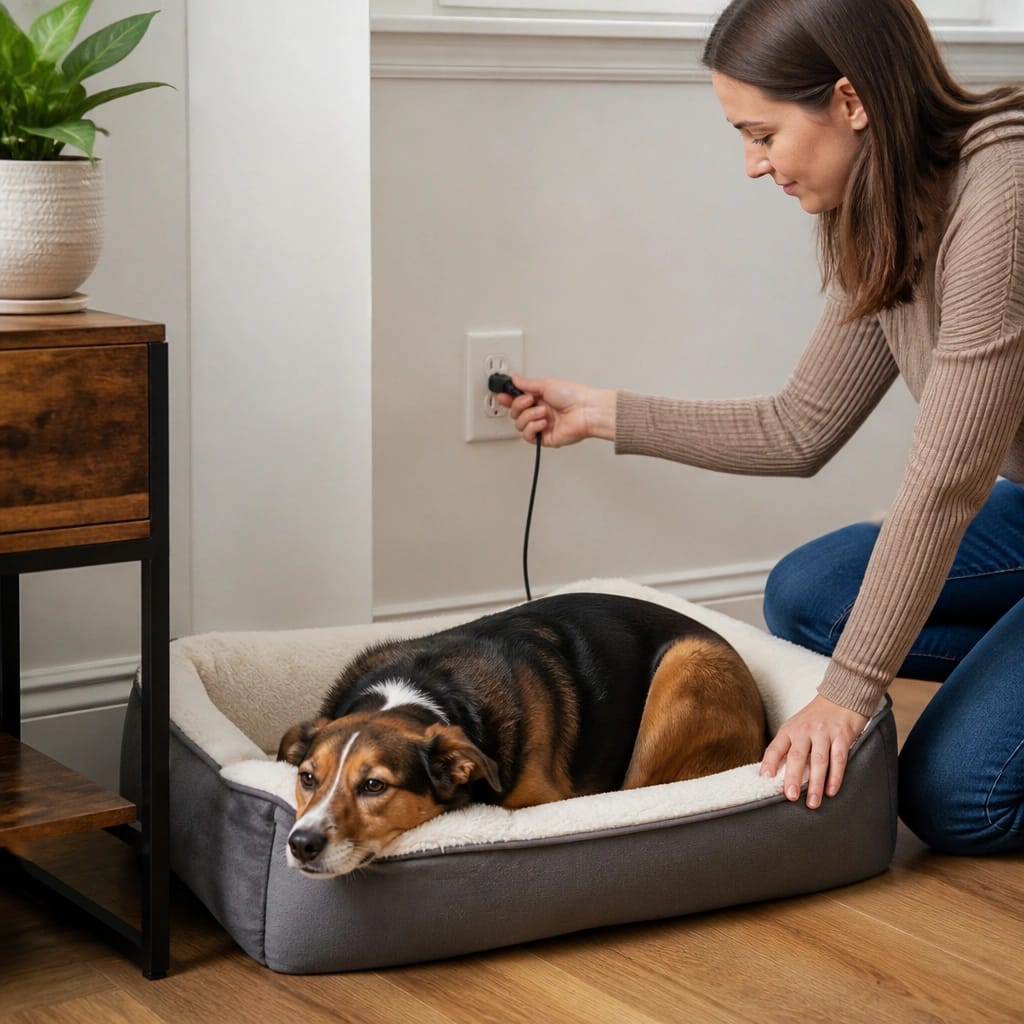
Start with the bed unplugged. Let your dog sniff and explore it. Dogs settle better when a bed doesn’t feel like a strange object.
Once they’re comfortable, follow this sequence:
- Test the surface temperature with your hand. It should feel warm, never hot.
- Supervise the first few sessions. Keep them short, starting with 20 to 30 minutes.
- Place the bed on a flat, dry surface. Hardwood and tile work well. Avoid thick carpet that traps heat.
- Route the cord away from chewing range. Tuck it under the bed or secure it with a cord cover.
- Check the bed before every use. Look for frayed wires, cracks, or damp spots.
If your dog pants, moves away from the bed, or tries to dig it off the floor, turn it off and remove it for the night. Those are signs the heat isn’t working for them.
Common Mistakes Owners Make With Heated Beds
- Using a human heating pad. Human pads run hotter than pet beds and lack proper waterproofing. This is the most dangerous mistake you can make.
- Leaving the bed on around the clock. Constant heat strains the element and raises burn risk. Use it for sleep hours, not all day.
- Covering the bed with thick blankets. Trapped heat can make the surface dangerously warm. Follow the manufacturer’s guidance instead.
- Ignoring the pressure sensor. If your bed only heats when the dog lies down, trust it. Don’t bypass the feature with heavy items on top.
Aggregate reviews confirm that most heat-related issues trace back to these four mistakes. Buy a safer model and you’ve done half the work. Use it properly and you’ve done the rest.
Can Your Vet Help? When to Ask Before Using a Heated Bed
Talk to your vet before buying an electric bed if your dog has a health condition. That includes arthritis, skin problems, nerve damage, or recent surgery. A vet can tell you if added heat will help or irritate the area.
Also ask if your dog is a safe candidate. Senior dogs and dogs with mobility problems can’t always shift away from heat. Your vet knows your dog’s specific limits and can recommend a safer alternative, or confirm a self-warming option makes more sense.
Practical Placement and Maintenance Tips
Keep the bed out of drafty hallways and away from direct sunlight. A quiet corner works best. The surface underneath should stay dry and stable.
Wash the cover weekly if your dog uses the bed nightly. Use a mild detergent and avoid fabric softeners. They leave a coating that traps heat.
Check the heating element every month by running your hand across the entire surface. Cold spots mean a broken wire, which means it’s time to replace the bed.
Final Verdict: What a Safe Heated Dog Bed Looks Like
A safe bed focuses on three things: pressure-activated heat, a waterproof liner, and a low-voltage power supply. If all three are present, an electric bed can be a genuinely comforting addition for the right dog.
If your dog is a chewer, a senior, or a puppy, skip electricity and go with a self-warming bed instead. It carries almost no risk and still delivers steady comfort. Take your time, match the bed to your dog’s habits, and when in doubt, ask your vet.
Your dog will thank you for the effort.


