

How Long Does a Dog Bed Take to Break Down?
Wondering how long does a dog bed take to break down? The honest answer is that it depends on what the bed is made of and where you dispose of it. A polyester bed could sit in a landfill for centuries, while a cotton one might compost in months.
That’s a huge difference, and most owners never think about it until they’re staring at a torn, saggy bed they need to get rid of.
In our research, landfill conditions slow decomposition dramatically because there’s almost no oxygen or moisture. As of 2026, most synthetic pet beds are still made from polyethylene and polyurethane foam, materials that aren’t designed to degrade. The U.S.
Environmental Protection Agency tracks textile waste, and pet beds fall into that category. So the breakdown question really comes down to two main variables: destination and material. Let’s look at them one by one.
Dog beds don’t break down on a single timeline. It depends on the materials and where the bed ends up. In a landfill, synthetic foam and polyester can last 200 to 500 years. In a compost pile, natural fabrics like cotton or wool may decompose in a few months. The fastest way to know your bed’s timeline is to read the care label and sort the layers.
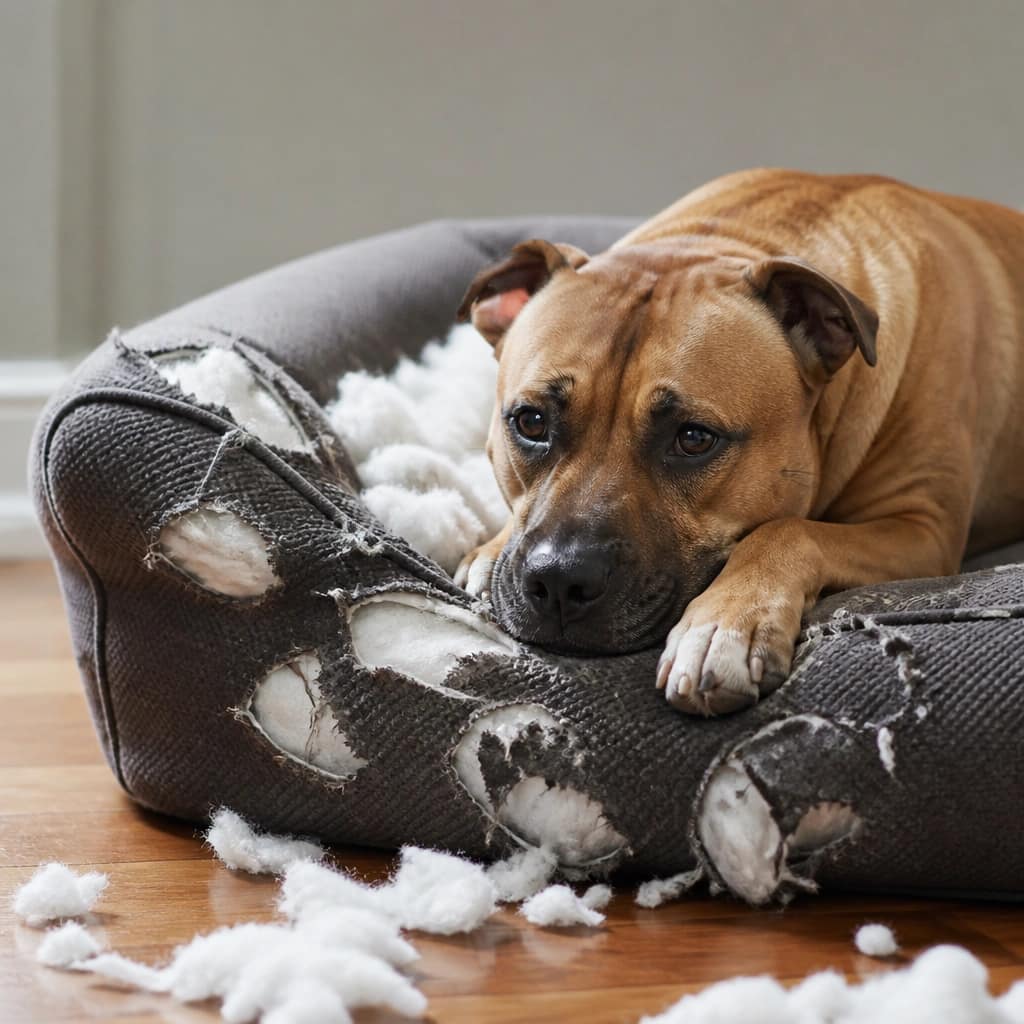
Why a Dog Bed’s Breakdown Timeline Matters
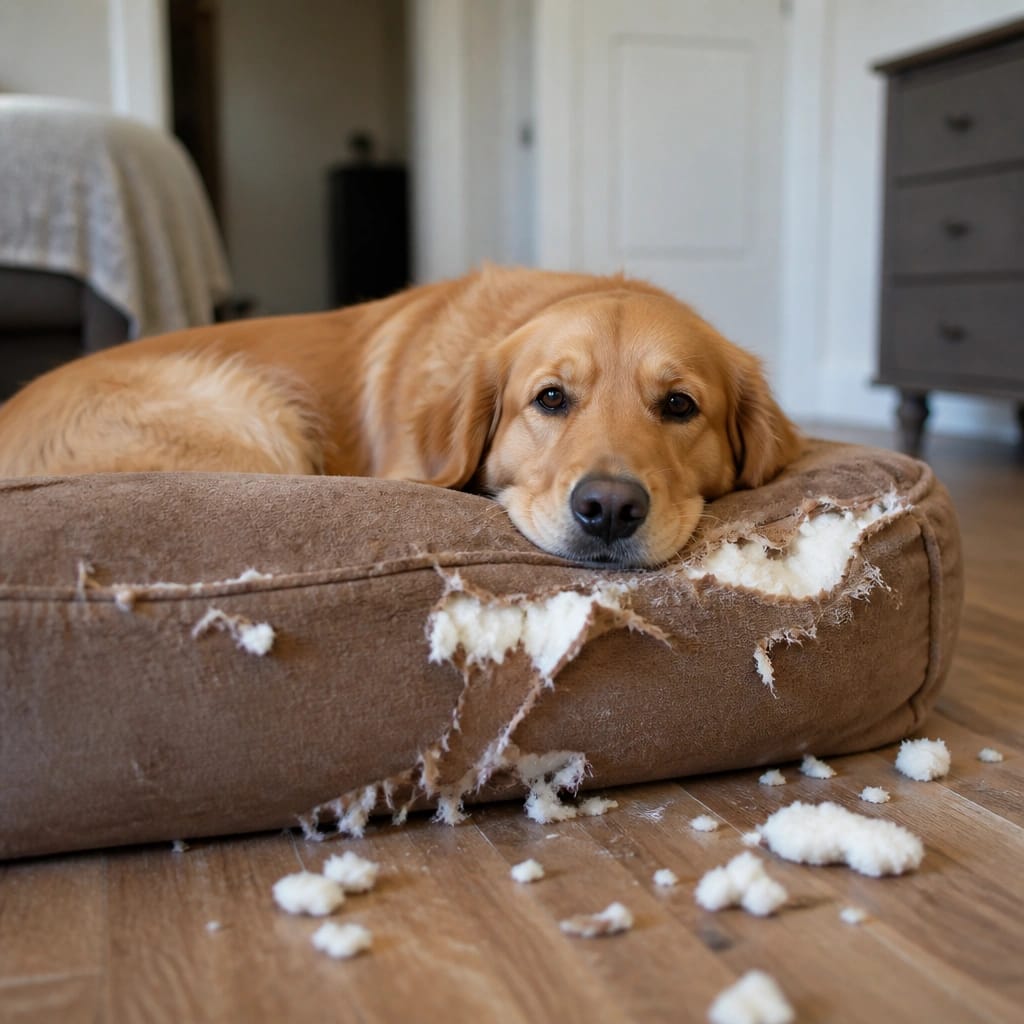
You might think that once you toss an old dog bed in the trash, it just rots away. That’s rarely true. Most dog beds are a mix of synthetic fabrics, foam, and plastic hardware, and those materials are built to last.
When they end up in a landfill, they take up space for generations.
That matters because the average dog bed gets replaced every few years, whether from wear, smells, or a puppy that chewed through it. Multiply that by millions of households, and you get a lot of slow-decomposing waste. If you’re choosing a new bed, understanding breakdown helps you buy smarter.
It also helps you dispose of the old one in the least harmful way.
Condition #1: Where the Bed Ends Up (Landfill vs. Compost)
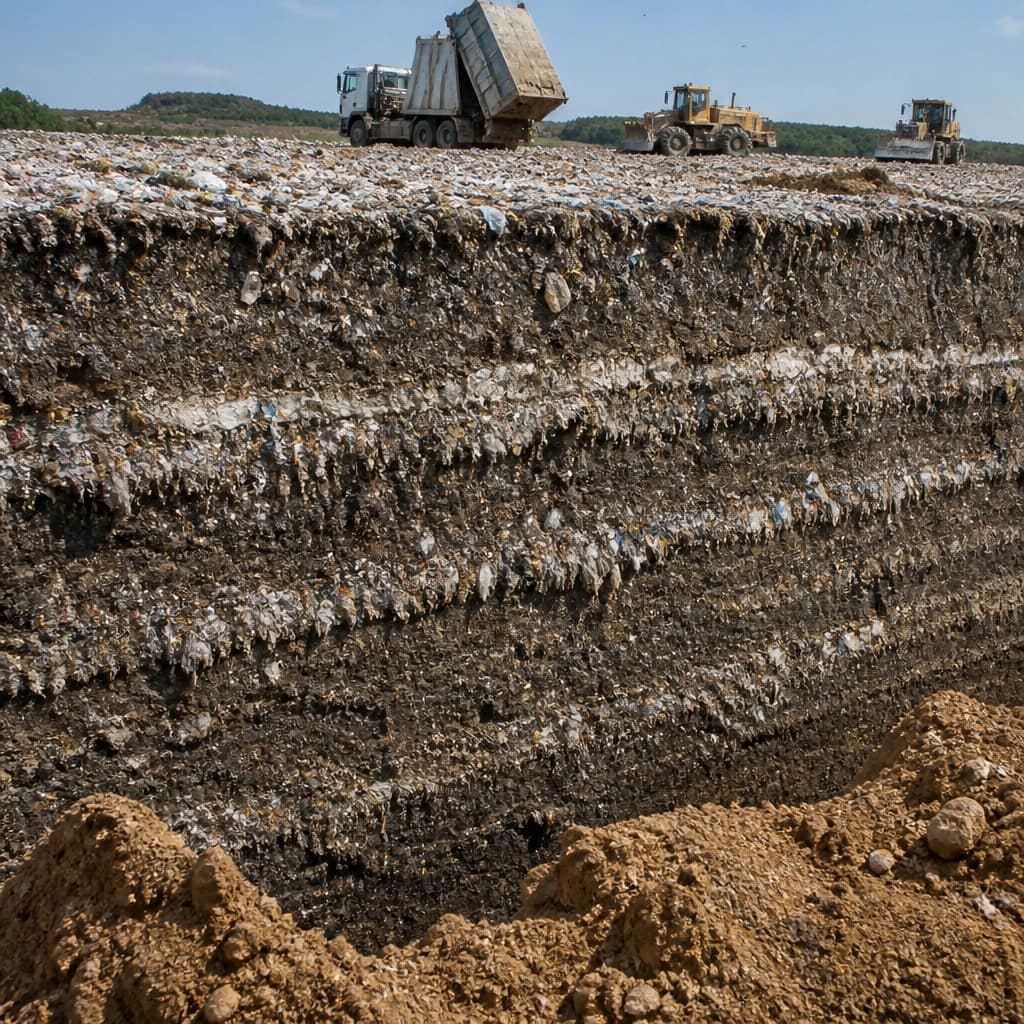
The single biggest factor in how fast a bed degrades is the environment it lands in. Landfills are designed to compact trash and block out air and water. That means almost nothing breaks down quickly inside one.
Researchers have found 20-year-old hot dogs and newspapers still intact in landfills.
Composting is different. In a backyard pile or an industrial facility, organic materials get oxygen, moisture, and microbes. Those conditions can break down natural fibers within months.
But synthetic materials won’t compost at all, even in ideal conditions. They need UV light and physical wear to fragment, which doesn’t happen in a sealed landfill bag.
Here’s a quick comparison of the two destinations:
| Environment | Oxygen | Moisture | Typical Breakdown Rate |
|---|---|---|---|
| Landfill | Very low | Low | Extremely slow (decades to centuries) |
| Home compost | High | Moderate | Fast for natural materials (weeks to months) |
| Industrial compost | High | Controlled | Fast for certified compostable materials |
So the first question to ask isn’t “how long,” but “where is this bed going?”
Condition #2: What the Bed Is Made Of
Once you know the destination, the material becomes the deciding factor. Dog beds are usually a mix of a cover, a filling, and sometimes a waterproof liner. Each layer breaks down differently.
Synthetic materials are the most common. Polyester fabric is woven from plastic fibers. Nylon is also plastic.
Polyurethane foam fills most orthopedic beds. These materials are petroleum-based and don’t biodegrade. They break into smaller pieces, called microplastics, but never truly disappear.
Under landfill conditions, a memory foam core can persist for 500 years or more.
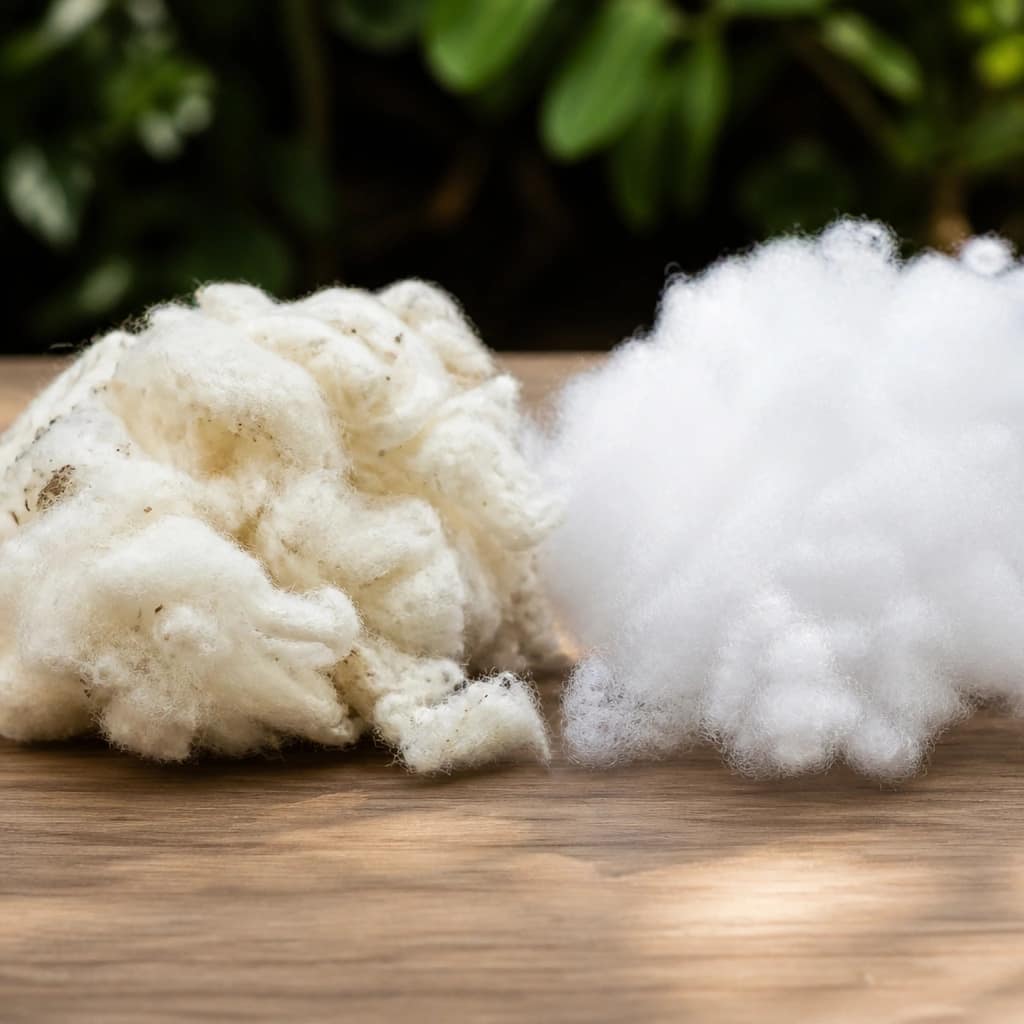
Natural materials are far easier on the earth. Cotton, wool, hemp, and kapok are plant- or animal-based. They can break down in a compost pile, though the timeline varies.
A cotton cover may decompose in one to five months. Wool takes longer, often one to three years, depending on thickness. These materials also return nutrients to the soil instead of leaving microplastic pollution.
Here’s a realistic breakdown for common dog bed components:
- Cotton cover, 1 to 5 months in compost
- Wool filling, 1 to 3 years in compost
- Polyester cover, 200+ years in landfill
- Nylon cover, 30 to 40 years in landfill
- Polyurethane foam, 500 to 1,000 years in landfill
- Bamboo or hemp fabric, 1 to 6 months in compost
How to Read the Care Tag and Identify the Filling
You can’t guess what a bed is made of by looking at it. The care tag is your best guide. Most manufacturers list the shell fabric, the filling, and the washing instructions.
If the tag is missing, feel the materials. Polyester usually feels smooth and slippery. Cotton feels breathable and slightly rough.
Foam that bounces back quickly is likely polyurethane.
Look for words like “100% cotton,” “polyester fill,” or “shredded memory foam.” Some eco-friendly beds will say “organic cotton” or “recycled polyester.” If the tag says “biodegradable” or “compostable,” check the details. A compostable cover might still have a foam core that isn’t.
Once you’ve identified the layers, you can sort them for disposal. This matters because mixing materials makes recycling harder. A cotton cover can be composted, while a zipper and foam core cannot.
Step-by-Step: Disassembling the Bed for Disposal
Breaking down a dog bed for responsible disposal is easier than it sounds. Here’s a simple process:
- Check the condition. If the bed is still intact and clean, consider donating it to a local animal shelter. Shelters often accept gently used bedding.
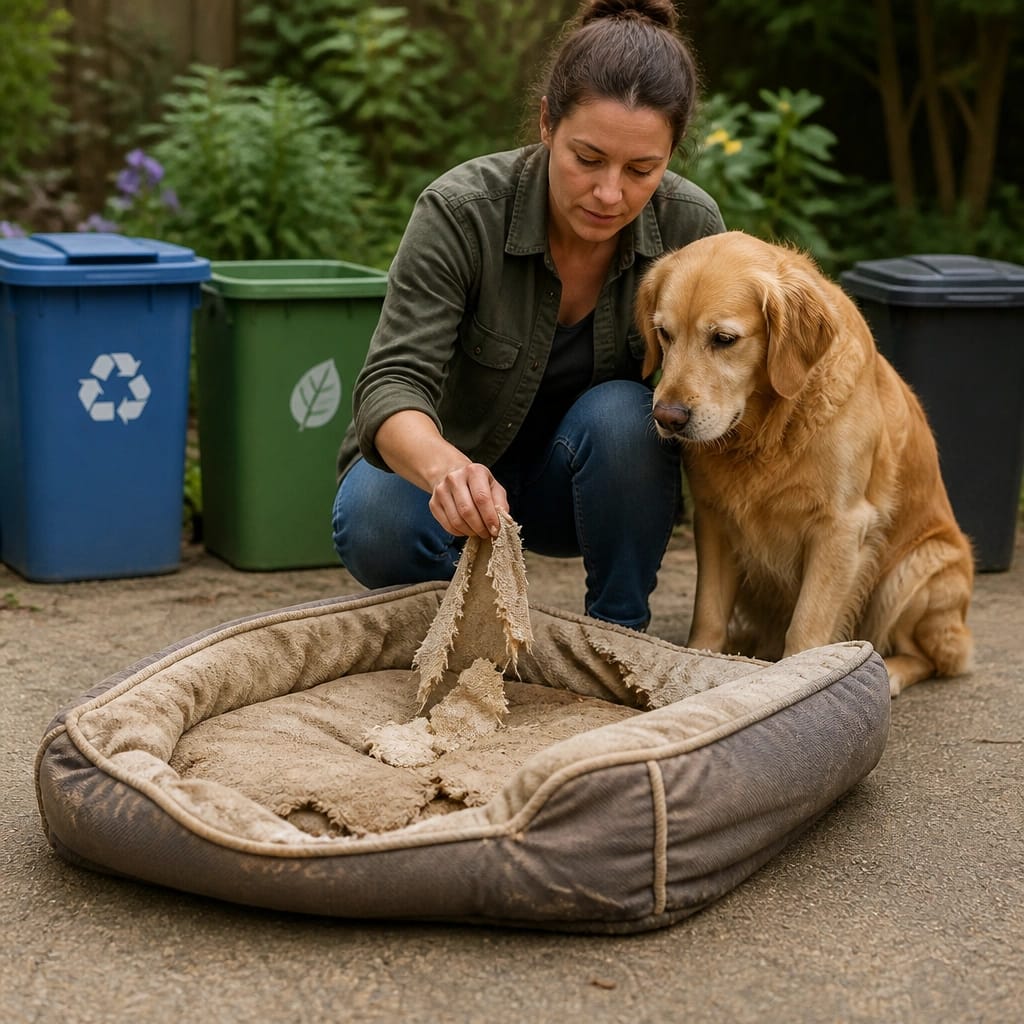
- Remove the cover. Unzip it or cut the seams. Separate the fabric from the filling.
- Sort the hardware. Take out zippers, buckles, and plastic tags. These go in the trash unless your local recycling accepts them.
- Compost the natural parts. Cotton, wool, hemp, and similar fibers can go into a home compost bin if they’re clean and not blended with synthetic threads.
- Trash the synthetic parts. Polyester, nylon, and foam go in the regular waste bin. Some textile recycling programs accept them, so check with your local facility.
If the foam is still in good shape, consider repurposing it. You can use it as a workshop pad, under a sofa cushion, or in a DIY pet step. That keeps it out of the landfill for a few more years.
And if you’re dealing with a wet or stained bed, you might want to read up on cleaning a memory foam bed before deciding it’s trash.
The Disposal Decision Tree: Recycle, Compost, Repair, or Trash
Walk through these branches in order. If the cover is ripped but the foam is solid, you can repurpose the core. If the filling is compressed and flat, recycling is the better route.
If the bed is still clean and structurally sound, donate it to a local shelter. Natural fiber covers can go into a backyard compost bin. Synthetic covers and foam need a textile recycler or the landfill.
If you are handy, consider turning the old cover into a DIY no-sew project. That keeps every layer out of the waste stream for a while longer.
Common Mistakes That Stall or Ruin Breakdown
Tossing a whole bed into the compost pile without removing zippers or plastic liners is the biggest error. Those synthetic parts will not break down and can contaminate the compost. Another mistake is assuming “biodegradable” on the label means the entire bed is compostable.
The cover may be, but the foam core almost never is.
Also, don’t put synthetic foam in the recycling bin without checking. Most curbside programs do not accept it. The EPA’s textile waste guidance notes that contaminated textiles often end up in landfills anyway.
FAQs About Dog Beds and Decomposition
Can a memory foam dog bed be composted?
No. Memory foam is a petroleum-based polyurethane product. It will not break down in a compost pile.
Remove the cover, compost that if it’s natural, and discard the foam with regular trash.
Does a dog bed break down faster if it gets wet?
Moisture helps natural fibers decay, but it stalls synthetic materials. In a landfill, even wet polyester and foam stay intact for decades. Exposure to sunlight and air speeds up fragmentation, but not true decomposition.
Is it better to donate or throw away an old dog bed?
Donate whenever the bed is clean and intact. Shelters and rescues often accept gently used bedding. If the filling is crushed or the fabric is torn beyond repair, disposal is the responsible option.
Bottom Line: Picking a Faster-Breakdown Bed Next Time
When you replace that old bed, look for plant-based materials like organic cotton, hemp, or wool. Check the label for “compostable” and “polyurethane-free.” A simpler cover construction also makes future disposal easier. For sizing and fitting, the dog bed size chart by weight can help you buy the right one the first time.
That way, you’re not throwing away another bed anytime soon.


