

How to Remove Drool Stains From a Dog Bed?
Drool is a protein stain that needs cold water. Hot water bakes it into the fabric permanently. Use an enzyme cleaner to break down the proteins.
Pre-treat the stain before washing the cover. Air dry to avoid setting any remaining stain.
Drool stains on a dog bed are frustrating, but they don’t have to be permanent. Learning how to remove drool stains from a dog bed is mostly about understanding one thing: drool is a protein stain, and protein stains behave differently than mud or grass.
The American Cleaning Institute confirms that protein-based stains need cold water treatment. Hot water cooks the proteins into the fabric fibers, making them almost impossible to get out. That single mistake is why most people struggle with these stains.
Let’s start with what makes them so stubborn and how to fix them.
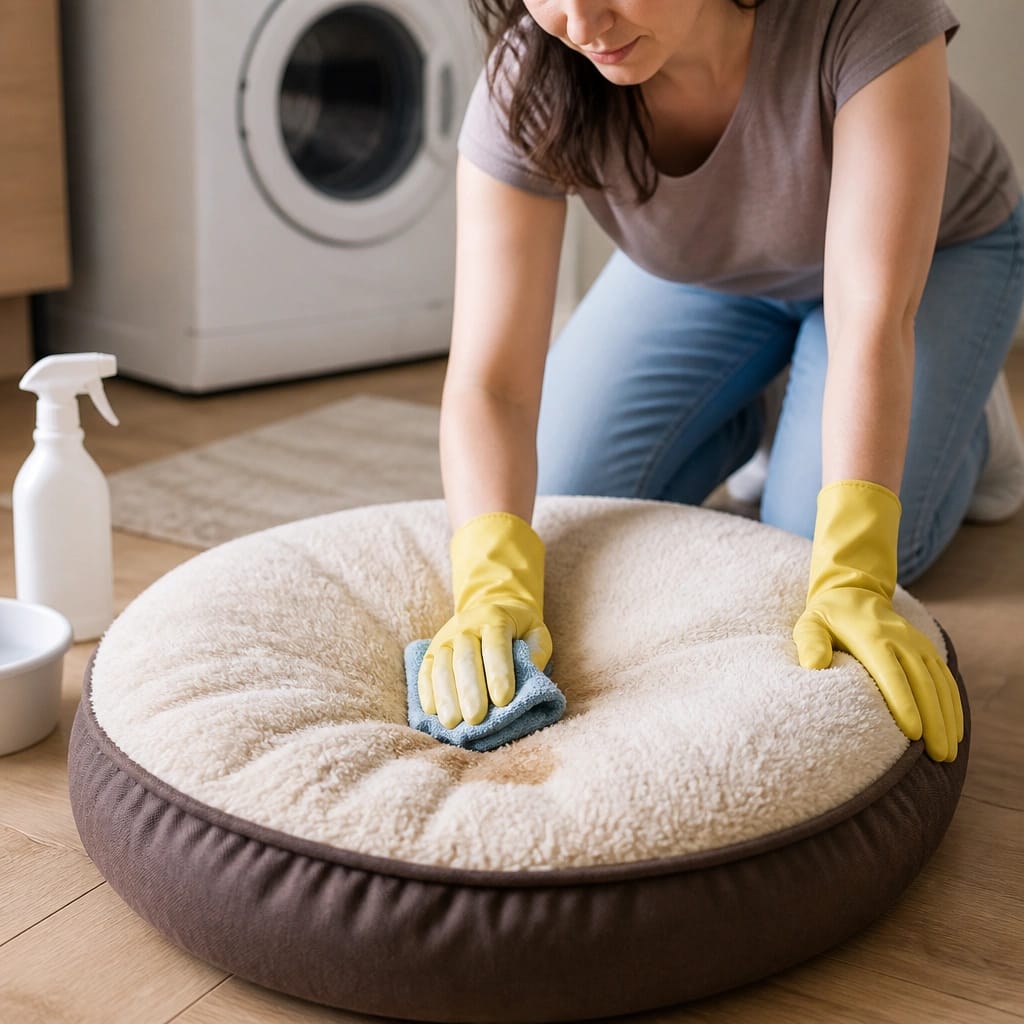
Why Drool Stains Are So Stubborn (And Why Hot Water Makes It Worse)
Drool contains proteins, enzymes, and bacteria. When those proteins hit hot water, they coagulate, just like egg whites in a frying pan. The result is a stain that bonds to the fabric fibers and refuses to budge.
The same thing happens in the dryer. Heat from the drying cycle can set a stain that looked gone after washing. As of 2026, most modern washing machines have a cold water cycle that runs below 86°F, which is perfect for protein stains.
If your dog also has a habit of digging or scratching at their bed before lying down, that motion can grind drool deeper into the fabric over time, making stains harder to lift.

Why Fabric and Foam Matter: The First Decision You Need to Make
Before you grab any cleaner, you need to know what you’re working with. Dog beds fall into two main categories:
Removable cover beds. These have a zippered outer cover that comes off for washing. The foam insert stays separate. This is the easiest scenario for stain removal.
Non-removable or foam-only beds. The cover is sewn on, or the bed is one solid piece of foam. These require spot cleaning or hand washing the whole thing.
If your bed has a waterproof liner underneath the cover, that’s a bonus. Waterproof options protect the foam from soaking up drool and odors, which makes cleaning much easier.

How to Choose the Right Cleaning Method Based on Your Situation
The right method depends on two variables: the fabric type and the stain’s age. Here’s a quick reference:
| Fabric Type | Best Approach | What to Avoid |
|---|---|---|
| Cotton, polyester, microfiber (removable cover) | Machine wash cold with enzyme cleaner | Hot water, bleach, fabric softener |
| Fleece, velvet, delicate fabrics | Hand wash or gentle cycle, air dry | Harsh scrubbing, high heat |
| Foam only (no cover) | Spot clean with enzyme spray, blot don’t scrub | Soaking the foam, machine washing |
| Waterproof-backed covers | Pre-treat, machine wash cold, extra rinse | Fabric softener (damages waterproof layer) |
For fresh stains, a quick pre-treatment with an enzyme spray is often enough. For set-in stains that have been through the dryer, you may need to soak the cover in cold water with an enzyme cleaner for 30 minutes before washing.
Cleaning a memory foam bed requires extra care because foam absorbs moisture and takes forever to dry. If your bed has a foam insert, check out our guide on cleaning memory foam beds for more detail.
Step-by-Step: Removing Drool Stains from a Removable Cover
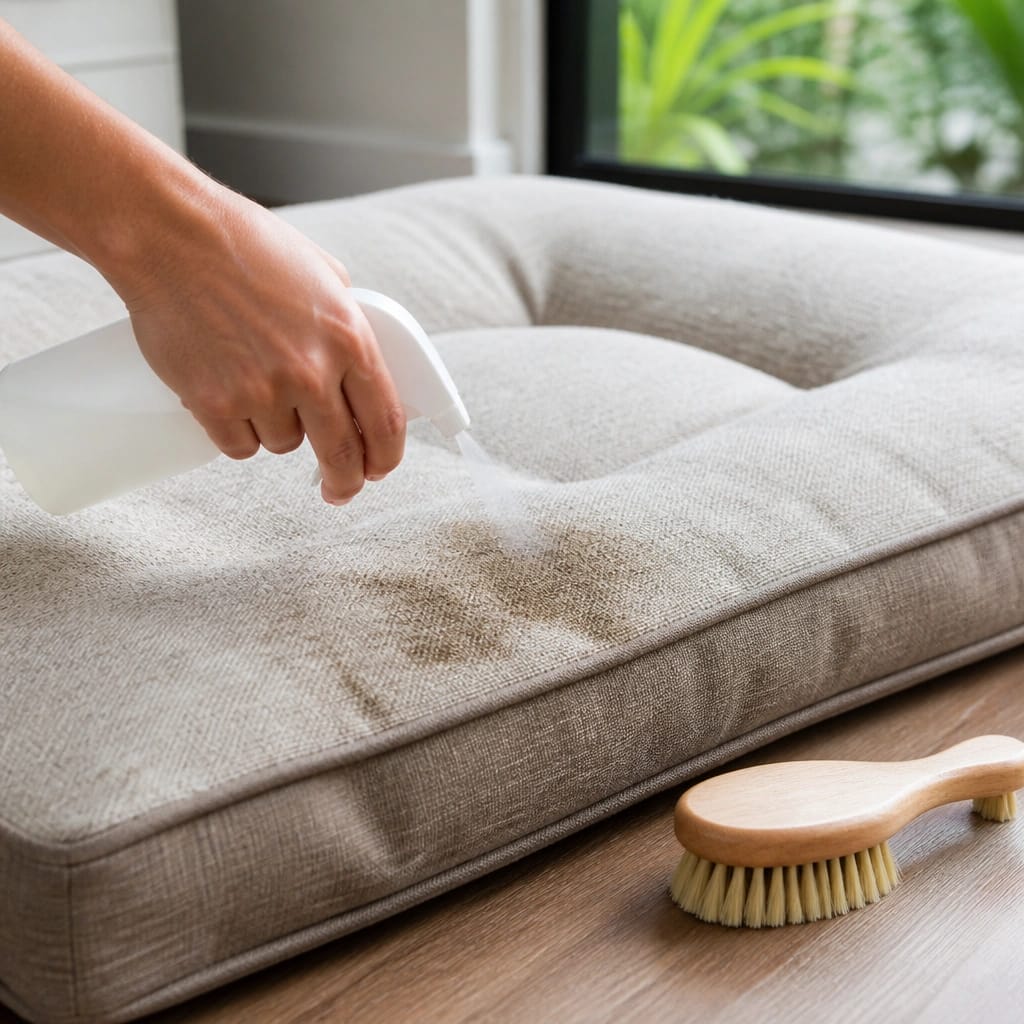
This is the most straightforward method. Here’s the process:
- Remove the cover. Unzip it and take it off the foam insert. Set the foam aside somewhere dry.
- Shake or vacuum off loose debris. Hair and crumbs can trap moisture and odors.
- Pre-treat the stain. Spray the drool stain with an enzyme cleaner or a mix of one part white vinegar to three parts cold water. Let it sit for 15 minutes.
- Scrub gently. Use a soft-bristled brush or your fingers to work the cleaner into the stain. Don’t scrub hard, you don’t want to damage the fabric.
- Wash in cold water. Use the gentle cycle with an extra rinse. Skip the fabric softener, it coats the fibers and traps odors.
- Check the stain before drying. If the stain is still visible, repeat the pre-treatment step. Do not put the cover in the dryer until the stain is completely gone.
- Air dry or use low heat. High heat will set any remaining stain permanently.
The right bed size matters for washing. If your cover is too large for your machine, it won’t get clean. Check our dog bed size chart to make sure your bed fits your washer.
Step-by-Step: Removing Drool Stains from a Non-Removable or Foam Bed
This is trickier because you can’t just toss the whole thing in the washing machine. But it’s still doable.
- Vacuum the bed thoroughly. Remove as much hair and debris as possible.
- Mix a cleaning solution. Combine one cup of cold water, one tablespoon of white vinegar, and a few drops of mild dish soap.
- Spot clean the stain. Dip a clean cloth into the solution and blot the stain. Don’t rub, that spreads the drool deeper into the foam.
- Rinse with a damp cloth. Use a cloth dipped in plain cold water to remove any soap residue.
- Blot dry with a towel. Press a dry towel onto the wet area to absorb as much moisture as possible.
- Air dry completely. Place the bed in a well-ventilated area or in direct sunlight. Sunlight is a natural deodorizer and helps break down remaining stains. This can take 24 to 48 hours depending on humidity.
If the bed has a strong odor after drying, sprinkle baking soda over the surface, let it sit for a few hours, then vacuum it off. Where you place their bed can also affect how quickly it dries, so choose a spot with good airflow.
Common Mistakes That Can Ruin Your Dog Bed
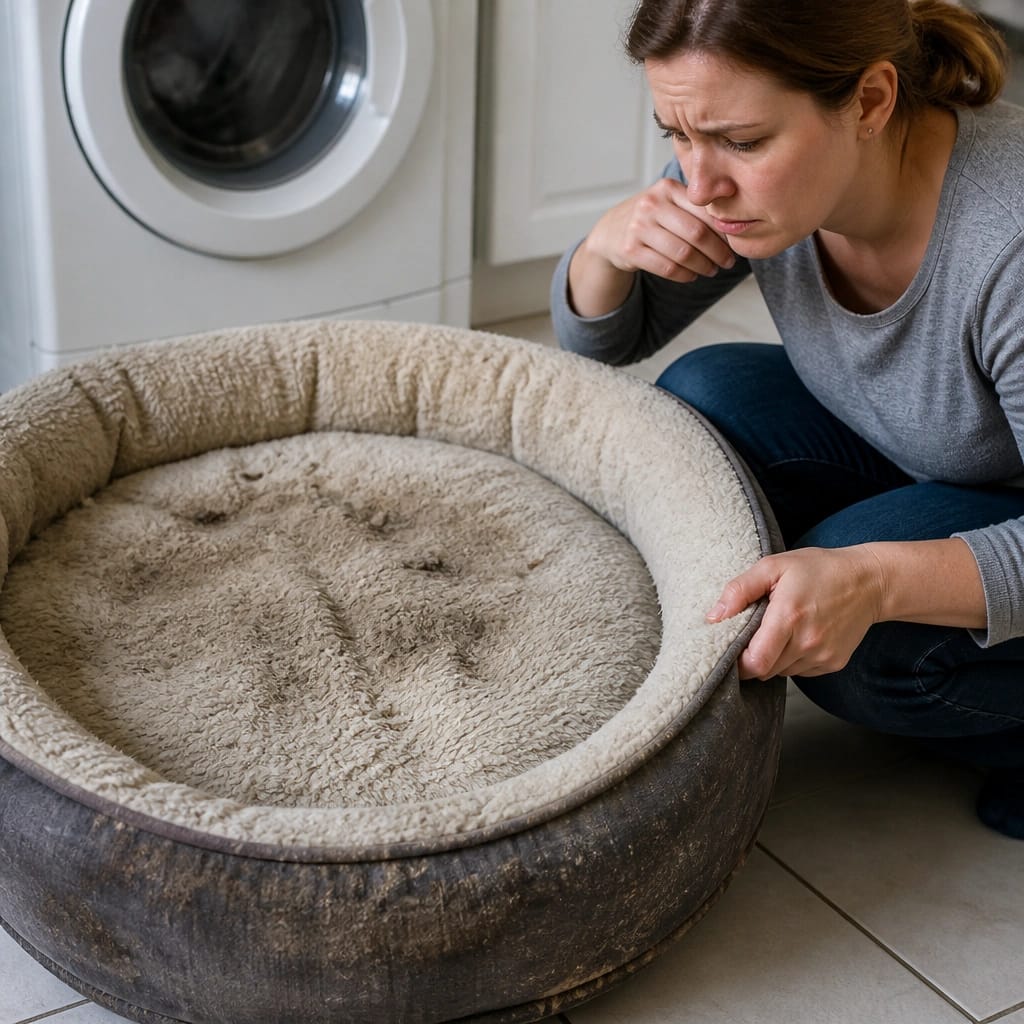
The biggest mistake is using hot water. It sets the protein stain permanently. The second is putting the cover in the dryer before confirming the stain is gone.
Bleach is another common error. It damages fabric fibers and can irritate your dog’s skin. Fabric softener seems harmless, but it coats fibers with a waxy layer that traps odors and reduces absorbency.
Some owners scrub hard with brushes, thinking more friction means better cleaning. That actually grinds drool deeper into the weave. Blotting and gentle pressure work far better for protein stains.
If your dog tends to chew or lick their bed, that also worsens stains over time. Moisture from saliva soaks in and attracts dirt. Addressing the underlying behavior helps keep the bed cleaner longer.
Real Life Scenarios: What Works Best for Different Dogs
Heavy droolers like Saint Bernards and Bulldogs need a different approach than light droolers. For breeds that soak their beds nightly, a waterproof-lined bed makes cleaning dramatically easier. Without that liner, drool seeps into the foam and leaves odors that no amount of surface cleaning can fix.
Puppies are a separate case. Teething produces excessive drool, and their covers get stained constantly. The best strategy is weekly pre-treatment with an enzyme spray before washing.
It prevents buildup and keeps stains from becoming permanent.
Senior dogs may drool more due to dental issues or medication side effects. If your older dog’s drooling has increased suddenly, it’s worth a vet visit. Meanwhile, spot cleaning with a vinegar solution keeps the bed fresh between washes.
Frequently Asked Questions About Drool Stains
Can I use baking soda on drool stains?
Yes. Make a paste with cold water and baking soda, apply it to the stain, and let it sit for 30 minutes. Rinse thoroughly before washing.
It also neutralizes odors, not just stains.
Does vinegar remove drool stains?
White vinegar breaks down the proteins in drool and neutralizes odors. Mix one part vinegar with three parts cold water. Pre-treat the stain and let it sit for 15 minutes before washing.
How often should I wash my dog’s bed?
For heavy droolers, wash the cover weekly. For average dogs, every two to three weeks is enough. Foam inserts need less frequent cleaning but should air out monthly.
Is hydrogen peroxide safe for dog bed covers?
In a 3% solution, diluted with water, it’s effective on stubborn protein stains. Test on a hidden area first. Some fabrics may fade or weaken.
Your Quick Decision Guide
If the stain is fresh, spray with enzyme cleaner and wash cold. If it’s set in, soak in cold water with enzyme cleaner for 30 minutes before washing. If foam is stained, spot clean and air dry fully.
If the bed has an odor after drying, sprinkle baking soda, wait, vacuum.
Choose your approach based on fabric type first, then stain age, then available tools. That sequence always works.


