

How to Help a Rescue Dog Adjust to a New Sleeping Area
Help a rescue dog adjust to a new sleeping area by starting with a quiet, low-traffic location. Let the dog explore the bed on their own terms. Use scent items like your worn t-shirt to build familiarity.
Offer treats near the bed to create positive associations. Never force the dog into the bed. Patience is the most important tool you have.
Bringing a rescue dog home is one of the most rewarding things you can do, but it comes with its own set of challenges. One of the biggest hurdles is figuring out how to help a rescue dog adjust to a new sleeping area. Where your dog sleeps sets the tone for their sense of safety and security in your home.
In our research, the decompression period for a rescue dog typically spans three days to three months. This timeline depends heavily on their past experiences. Their previous sleeping environment may have been traumatic, unfamiliar, or nonexistent.
Understanding this context is key to a smooth transition.

Why This Adjustment Matters More Than You Think
Sleep is fundamental to a rescue dog’s recovery. A dog that doesn’t feel safe in their sleeping area can’t fully relax. And a dog that can’t relax may develop behavioral issues like anxiety, pacing, or destructive habits.
The first few nights in a new home are critical. During this time, the dog is processing an overload of new sights, sounds, and smells. A secure sleeping spot helps them decompress faster.
In fact, many rescue organizations recommend a “three-day decompression” rule. This refers to the time it takes for a dog to start showing their true personality.
If you push the sleeping area too aggressively, you risk damaging the trust you’re trying to build. The right approach is to let the dog feel in control. That means choosing the right spot in the house and letting them discover it naturally.
What Makes a Rescue Dog’s Sleep Setup Different
A rescue dog isn’t starting from scratch, they’re starting from a deficit of trust. Many have never had a consistent sleeping area. Others may associate certain spaces, like crates, with confinement or neglect.
Because of this, you can’t just buy a nice bed and expect them to love it. You need to consider their history. A dog that was crated for 12 hours daily may panic in a crate.
A dog that slept on concrete may not understand soft bedding.
The setup also needs to account for triggers. Is the dog scared of loud noises? Place the bed away from exterior walls.
Is the dog nervous about being alone? Start with the bed in the same room where you sleep. The goal is to create a space that feels like a safe zone, not a punishment.
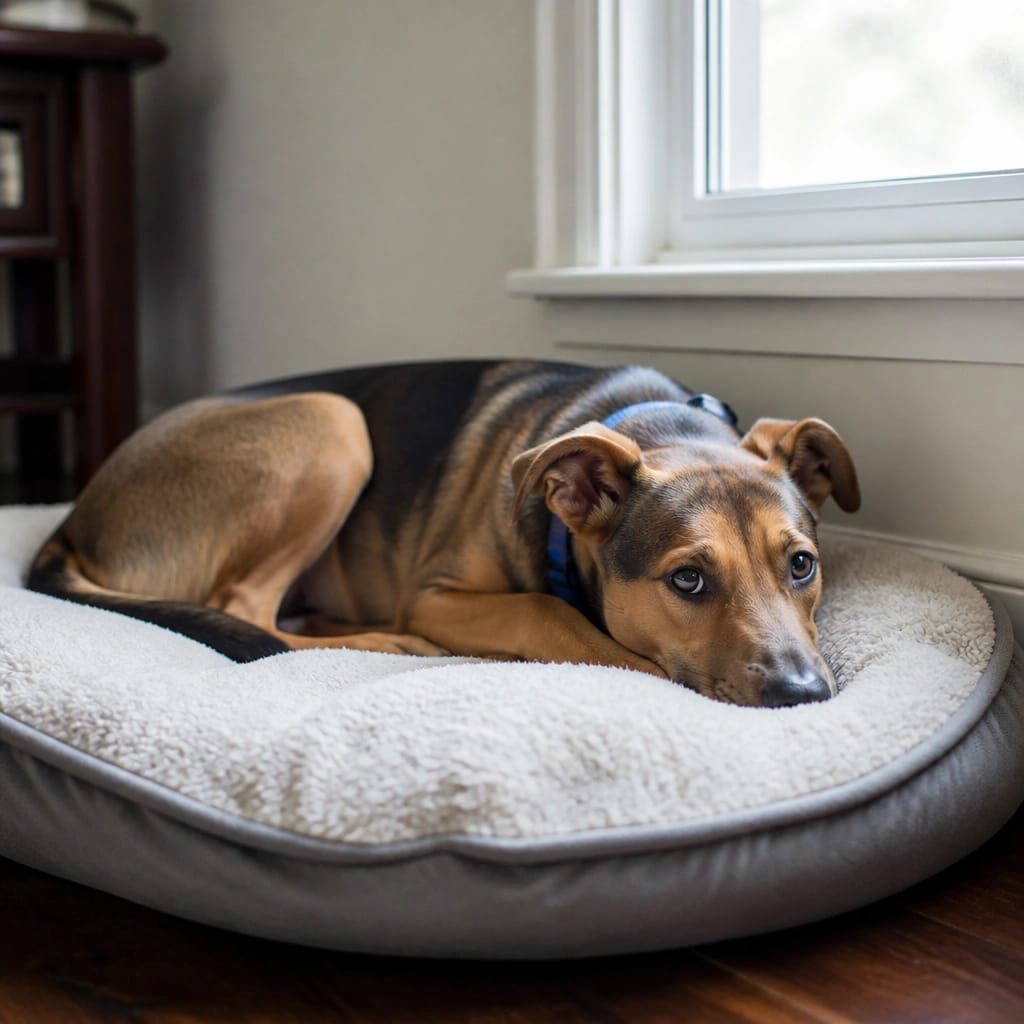
Key factors to consider
- Location: Choose a quiet corner with low foot traffic. Avoid hallways, near doors, or next to washing machines.
- Noise level: Keep the bed away from windows, TVs, or heating vents that make sudden sounds.
- Visibility: Some dogs feel safer with a clear view of the room. Others prefer a more enclosed spot.
- Your scent: Placing a worn piece of clothing near the bed can speed up bonding.
The First 72 Hours: Setting the Stage Without Pressure
The first three days are about observation, not training. During this period, you should be watching the dog’s behavior, not correcting it.
Here’s a simple breakdown of what to expect:
| Day | What to focus on | What to avoid |
|---|---|---|
| Day 1 | Let the dog explore the house at their own pace. Show them the bed but don’t push. | Forcing interaction, picking them up and placing them on the bed. |
| Day 2 | Drop treats near the bed. Sit on the floor next to the bed while reading or watching TV. | Closing doors, confining them to one room, punishing them for choosing the floor. |
| Day 3 | Place a familiar-smelling blanket on the bed. Reward any voluntary contact with the bed. | Moving the bed to a new location, introducing new family members, loud celebrations. |
If the dog chooses to sleep on the floor instead of the bed, that’s fine. It’s not rejection, it’s a sign they’re still processing. The floor feels familiar and safe.
Forcing the issue now can set back progress by weeks.
Step-by-Step: Helping Your Dog Choose Their Spot
This process is more about guidance than instruction. You’re not training a dog to use a bed. You’re creating an environment where the bed becomes the obvious choice.
Step 1: Set up the bed in the right location. Use the quietest, most predictable spot in the house. If you have other pets, make sure the bed is in an area where the rescue dog can see the room but won’t be ambushed.
Step 2: Add scent familiarity. Rub a soft cloth on the dog’s cheeks and neck, then place it on the bed. This transfers their own scent, making the bed feel like theirs. You can also place a worn t-shirt of yours nearby.
Step 3: Lure, don’t push. Hold a high-value treat near the dog’s nose. Lead them toward the bed. If they step onto it, drop the treat.
If they don’t, that’s okay. Just drop the treat on the floor next to the bed and try again later.
Step 4: Reward calm behavior. The goal is to catch the dog using the bed naturally. When they lie down on it, even for a second, say “good” softly and toss a treat toward them. Don’t hover or stare.
Step 5: Don’t trap them. Never close a crate door or block the dog’s exit from the bed. The bed must be a place they can leave freely. If they feel trapped, they’ll avoid it entirely.
The Role of the Bed Itself — What to Look For
Not all beds are created equal for a rescue dog. The right bed can make the adjustment process noticeably faster. The wrong bed can add an extra layer of stress.

Here’s what to look for based on the dog’s needs:
| Bed type | Best for | Why it helps |
|---|---|---|
| Donut or bolster bed | Anxious dogs, burrowers | Raised edges create a sense of enclosure without being a cave. Many rescue dogs feel safer with a “wall” at their back. |
| Cave or hooded bed | Dogs that like to hide | Enclosed beds provide a den-like feel. Good for dogs that are easily startled by movement. |
| Flat orthopedic bed | Senior dogs, large breeds | Low profile, no edges to climb over. Good for dogs that are wary of enclosed spaces. |
| Crate pad | Dogs that will use a crate | Thin, flat, and easy to wash. Less intimidating than a plush bed for dogs new to indoor living. |
A bed that’s too soft can actually be uncomfortable for a rescue dog that’s used to hard surfaces. Start with a medium-firm bed. If the dog seems to enjoy it, you can add a soft blanket or a second layer later.
Look for a bed with a removable, washable cover. Accidents happen during the adjustment period. A waterproof liner underneath the cover is a smart investment.
You don’t want the bed to smell like stress or urine, or the dog will avoid it.
For more details on choosing the right style, our guide on a donut-style bed covers why the raised rim helps nervous dogs settle. And if you’re worried about cleanup, a waterproof dog bed can save you a lot of frustration during the first few weeks.
Common Mistakes That Undermine Trust
The biggest mistake is forcing the dog onto the bed. Picking them up and placing them there removes their sense of control. It teaches them that the bed is a place they get trapped.
Another common error is moving the bed too often. Pick a spot and stick with it for at least two weeks. Consistency builds confidence.
Punishing the dog for sleeping on the floor is also counterproductive. The floor feels safe to them. Let them choose the bed on their own timeline.
Reading Your Dog’s Stress Signals (And What to Do)
A rescue dog can’t tell you they’re scared. They show you through body language. Learning to read these signals prevents you from pushing too hard.

Watch for whale eye (visible white of the eye), lip licking when not eating, tucked tail, or freezing in place. These mean the dog is uncomfortable. If you see them, back off and give the dog space.
Yawning, pacing, or excessive panting in a cool room are also stress signals. When you notice these, move the treat further from the bed. Let the dog approach at their own pace.
A relaxed dog has soft eyes, a loose mouth, and a wagging tail at mid-height. That’s the green light to continue.
When the Dog Refuses the Bed Entirely
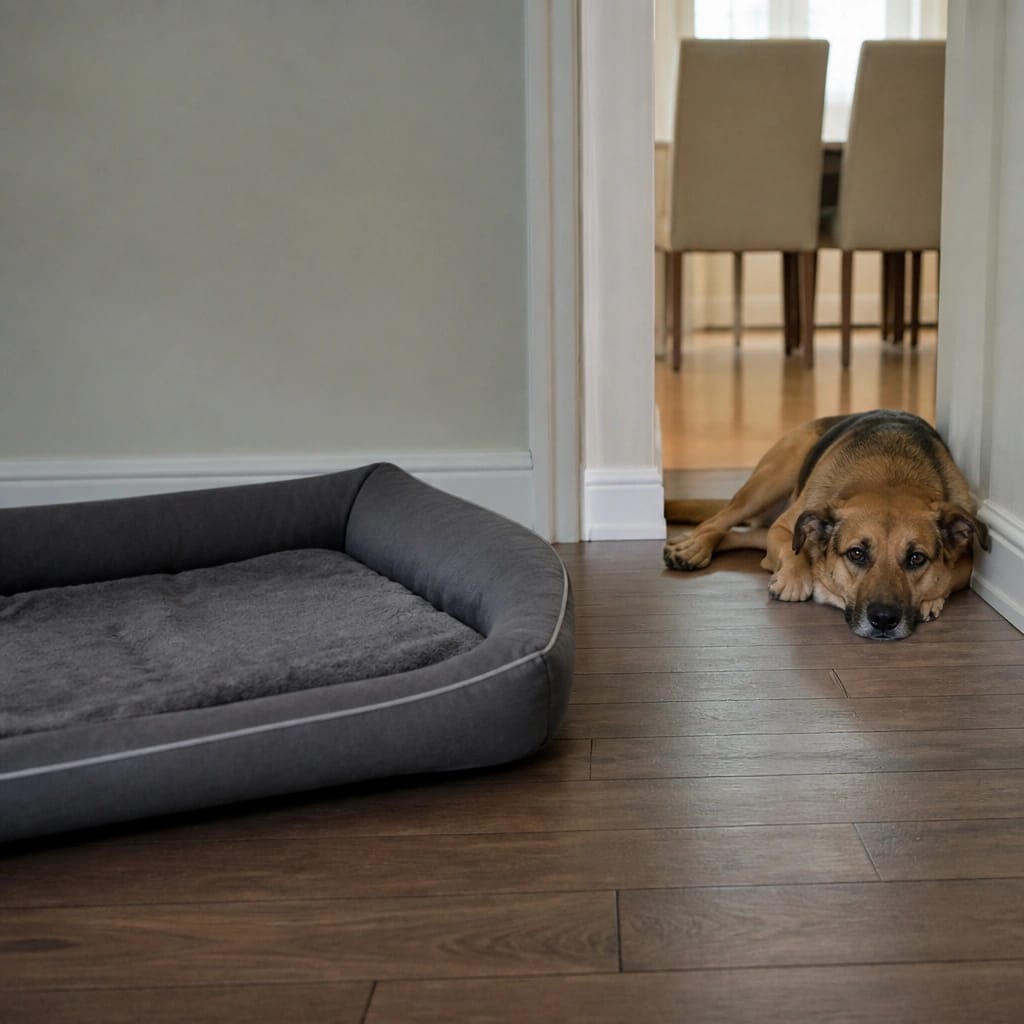
Some dogs avoid the bed for weeks. This is normal. It doesn’t mean the bed is wrong.
If the dog won’t go near the bed, try a different location. Move it to a corner where they already choose to rest. You can also place a worn t-shirt of yours on the floor next to the bed.
Let them build confidence near the bed before expecting them to sleep on it.
Consider whether the bed material is unfamiliar. A dog that slept on hard surfaces may find thick memory foam unsettling. A flat, thin blanket on the floor can be a stepping stone to a proper bed.
Crate vs. Open Bed: Which Works for a Rescue?
This depends entirely on the dog’s history. A dog that was crated for long periods may panic in a crate. A dog that lived outdoors may find a crate feels like a safe den.
| Option | Best for | Avoid for |
|---|---|---|
| Open bed | Dogs that seem anxious about confinement | Dogs that need to be contained for safety |
| Crate with door open | Dogs that explore the crate on their own | Dogs that freeze or drool near the crate |
| Crate with door closed | Only dogs that voluntarily enter and settle | Any dog showing stress when the door closes |
If you’re unsure about a crate, our comparison of a crate pad versus a crate mat can help you choose the right setup. And for dogs that need that enclosed feeling, a cave or hooded style bed might be a better option than a traditional crate.
Nighttime Whining and Pacing — What’s Normal
Whining on the first night is expected. The dog is in a new place with new sounds. They may pace, scratch at the door, or cry.
This usually settles within a few nights. If the dog is whining because they need to go outside, take them out calmly and return them to the bed. No playtime, no excitement.
If the whining continues past the first week, check the bed location. Is it too close to a noisy area? Are there other pets bothering them?
A small adjustment to the spot can make a big difference.
Excessive pacing that doesn’t stop may indicate deeper anxiety. In that case, a consult with a trainer or vet is wise.
When to Call a Trainer or Behaviorist
Most dogs adjust within a few weeks. But some need professional help.
Call a trainer if the dog refuses to enter the room where the bed is. Call a behaviorist if the dog shows aggression when approached near the bed. These are signs of deep fear, not stubbornness.
A certified professional can assess the dog’s history and create a tailored plan. The Association of Professional Dog Trainers maintains a directory of qualified trainers. This is especially important if the dog has a known history of trauma or abuse.
Frequently Asked Questions
How long does it take for a rescue dog to use a new bed?
Most dogs start using the bed within one to two weeks. Some take longer, especially if they have trauma around confinement. The key is consistency and patience.
Forcing the issue always slows progress.
Should I put my rescue dog’s bed in my bedroom?
Yes, starting with the bed in your bedroom can help. Your presence provides comfort and security. Once the dog settles, you can gradually move the bed to its permanent location.
This works well for anxious dogs.
What if my rescue dog only sleeps on the floor?
That’s completely normal. The floor feels familiar and safe. Leave the bed available and reward any interest.
Over time, most dogs transition to the bed as they build trust. Check our guide on why dogs choose the floor for more insights.
Can I use a crate for a rescue dog that was previously crated?
It depends on the dog’s experience. If the crate was associated with punishment, avoid it. If the dog voluntarily enters a crate with the door open, it can be a safe den.
Never close the door until the dog is fully comfortable.
The Bottom Line: Patience Over Perfection
Helping a rescue dog adjust to a new sleeping area is a slow process. There’s no timeline that fits every dog. Some settle in a few days.
Others need months.
Your job is to create a safe space and let the dog discover it. Watch their signals. Adjust your approach.
Never force the issue.
The bed itself matters, but your patience matters more. A calm, consistent presence is the best tool you have. Let the dog come to the bed on their own terms.
That’s how trust is built.


