

Should a Dog Bed Be Near an Air Conditioner?
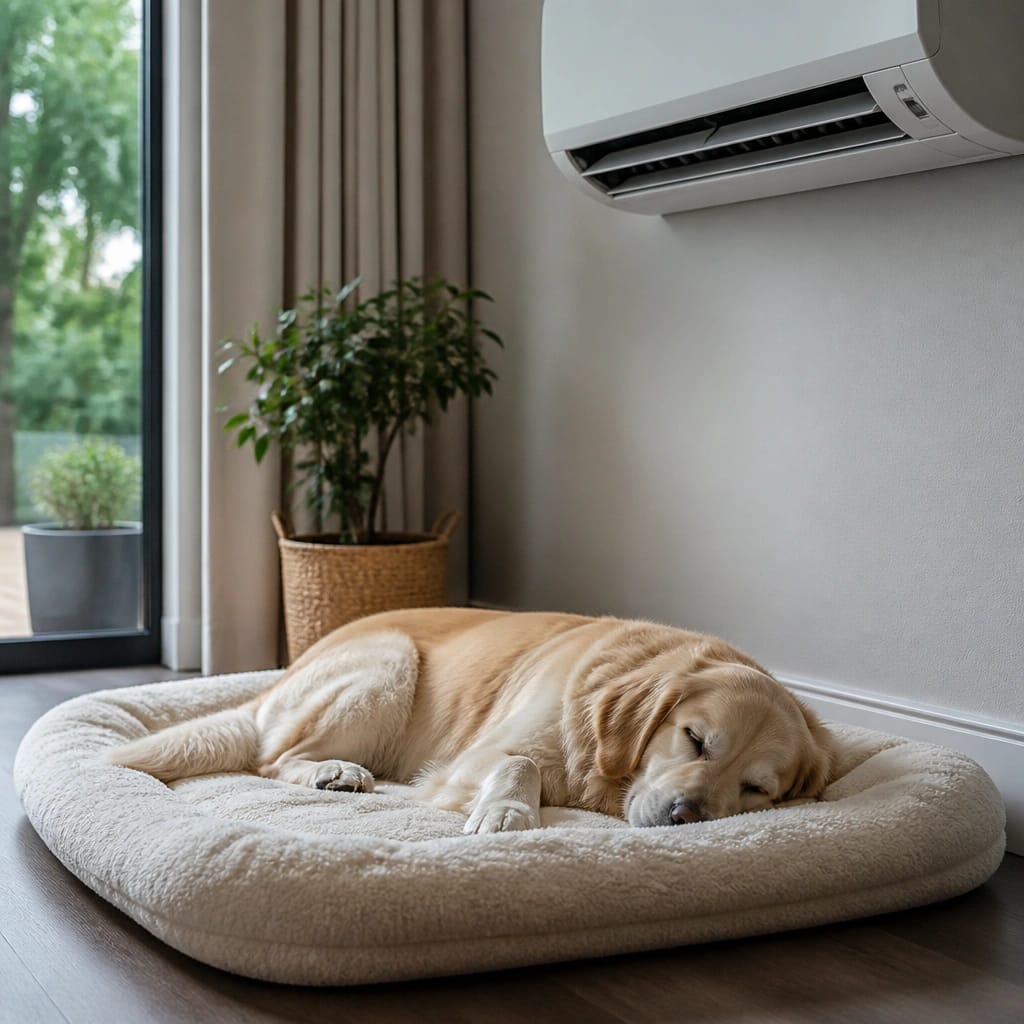
Should a dog bed be near an air conditioner? Usually not. Direct cold drafts can cause hypothermia and breathing issues.
Place the bed at least 3 to 6 feet away. The exact distance depends on your dog’s breed and health.
You want your dog to stay cool on hot days, but you also don’t want them shivering all night. Should a dog bed be near an air conditioner? It’s a surprisingly common question, especially during summer heatwaves.
The answer isn’t a simple yes or no.
Research into canine temperature regulation shows that dogs have a normal body temperature between 101°F and 102.5°F. As of 2026, veterinary guidelines remain consistent: the ideal room temperature for most dogs falls between 68°F and 72°F. But the real question is about direct airflow, not just ambient temperature.
Let’s break down what actually makes a difference.
The Real Answer: It’s Not a Simple Yes or No
The safest answer is no. A dog bed should not be placed directly under an air conditioner vent or immediately next to a window unit. But the real answer is more nuanced.
It depends on three main factors: your dog’s individual sensitivity, the type of AC unit, and the distance from the bed. A healthy, thick-coated Husky will tolerate cool air far better than a short-nosed French Bulldog puppy.
Consider your dog’s sleeping habits too. If they curl up tightly and seek warmth naturally, they may be more sensitive to cold drafts. Your overall approach to setting up a comfortable sleeping area matters just as much as the AC placement.
What Makes a Dog Sensitive to Cold Air
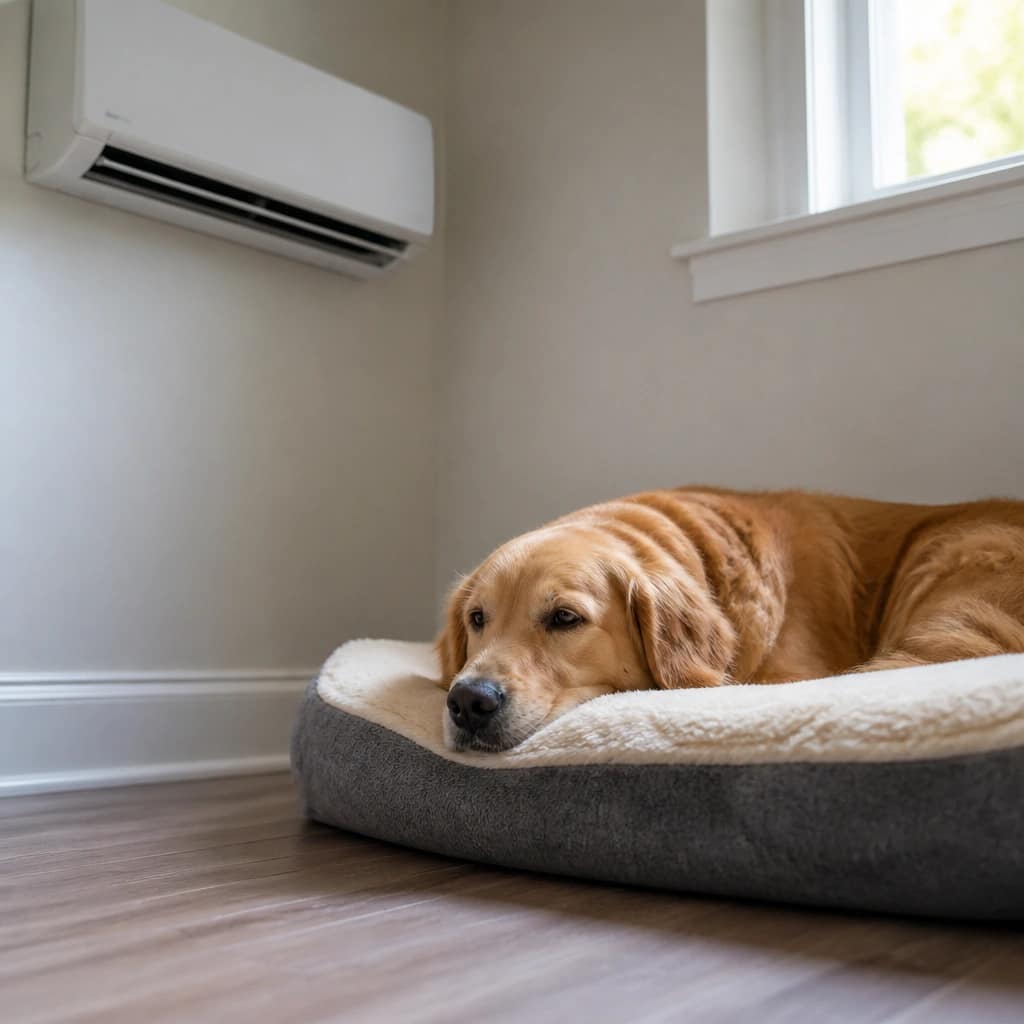
Not all dogs react the same way to cold air. Some dogs are much more vulnerable to drafts than others.
Brachycephalic breeds like French Bulldogs, Pugs, and Boston Terriers have shorter airways. Cold air can trigger respiratory distress or make breathing harder. Puppies under eight weeks old cannot regulate their body temperature well.
Senior dogs over seven years old often have weaker immune systems and slower circulation.
Coat type plays a big role too. Dogs with thick double coats, like Huskies and Malamutes, can handle cool air better. Short-haired breeds like Greyhounds and Dobermans get cold much faster. A French Bulldog, for example, would benefit from a bed that provides good support regardless of the room temperature.
Body size matters as well. Smaller dogs lose heat faster because they have a larger surface area relative to their body volume. Giant breeds like Great Danes may overheat easily and actually benefit from a cooler spot.
Matching the AC Type to the Risk
The type of air conditioner you have changes the risk level. Not all AC units deliver cold air the same way.
Window units create a concentrated, direct draft. They blow cold air in a narrow stream, which can hit a dog bed directly. Portable ACs work similarly.
Central AC vents distribute air more evenly, but a bed placed directly over a floor vent still gets a steady stream of cold air.

Ductless mini-splits are somewhere in between. They mount high on the wall and blow air across the room. A bed placed directly under the unit can still get a cold draft.
The key is to adjust the louver direction so the air flows away from the bed, not toward it.
The Goldilocks Zone: Finding the Right Distance
The general rule of thumb is to keep the bed at least 3 to 6 feet away from the AC unit. But that’s just a starting point.
Test the spot with your hand. Place your hand at the height your dog sleeps. If you feel a noticeable draft, the bed is too close.
Move it further away until you feel only gentle, ambient air movement.
Watch your dog’s behavior. If they curl into a tight ball, tuck their nose under their tail, or seek out warmer spots, the bed is too cold. If they sprawl out flat on their belly or pant heavily, the room may be too warm.
Getting the right temperature can help them sleep better in their own space rather than climbing into yours.
Signs Your Dog Is Too Cold or Too Hot
Your dog’s body language tells you everything. Here are the signs to watch for.
Signs your dog is too cold:
- Shivering or trembling
- Curling into a tight ball
- Tucking their nose under their tail
- Seeking warm spots like blankets or your lap
- Slow or stiff movements
Signs your dog is too hot:
- Heavy panting even while resting
- Sprawling out flat on their belly
- Lying on cool tile or hardwood floors
- Excessive drooling
- Restlessness or unable to settle

Move the bed immediately if you see any of these signs. A quick adjustment can prevent discomfort or health issues. If symptoms persist, consult your veterinarian.
The American Veterinary Medical Association offers broader pet care guidelines for seasonal temperature management.
Common Mistakes Owners Make with Bed Placement
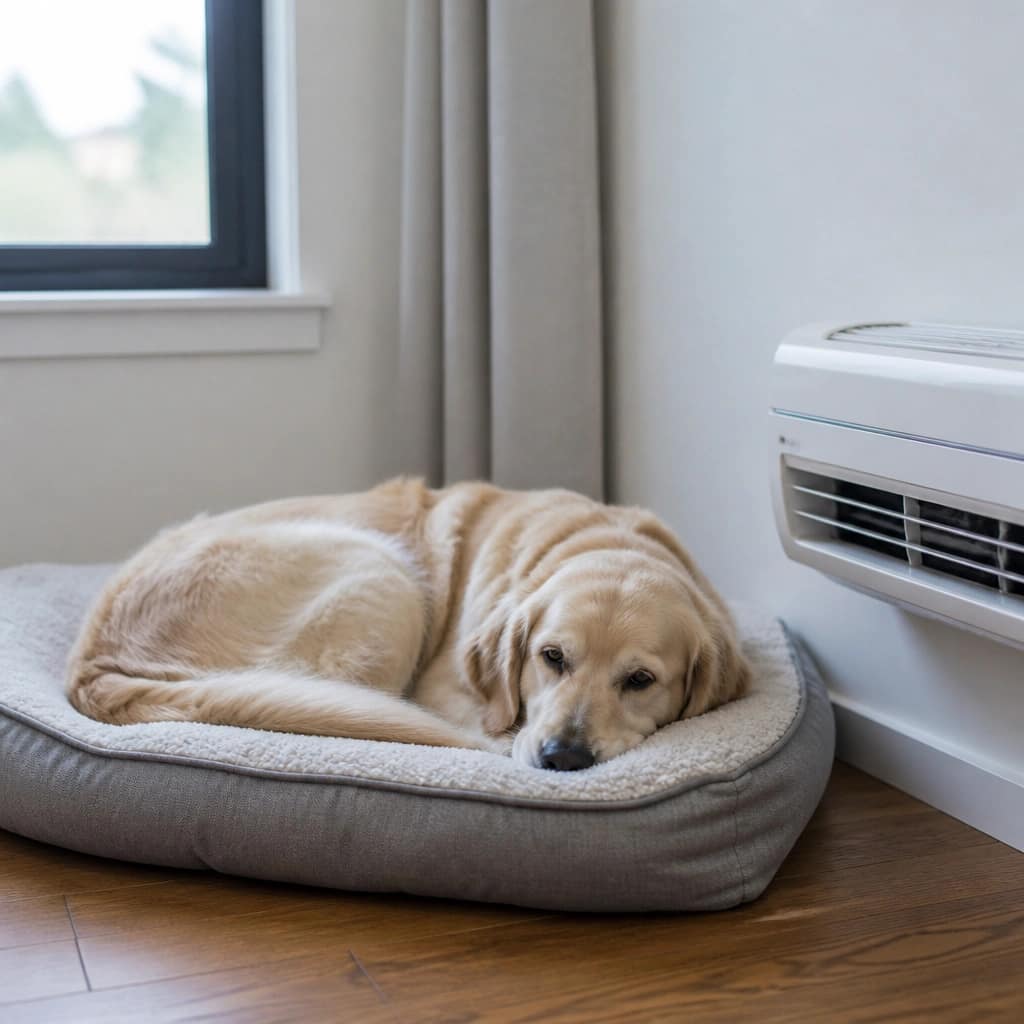
Most people assume any cool spot is a good spot. That’s not true. Here are the most common mistakes we see.
Blocking the AC vent with the bed. This restricts airflow and makes the AC work harder. It also blasts cold air directly onto your dog. Move the bed to the side of the vent, not in front of it.
Ignoring the floor temperature. Tile and hardwood get much colder than carpet. A bed on a cold floor near an AC unit can feel like an icebox. Check the floor with your hand before you decide on a spot.
Assuming all dogs need the same temperature. A Husky and a Chihuahua have completely different needs. Your dog’s coat, age, and health all matter. Learn where your dog naturally prefers to rest, and that will tell you a lot about their comfort zone.
Forgetting seasonal adjustments. The spot that works in July may be too cold in September. Move the bed further from the AC in summer and closer in winter. It’s a simple switch that makes a big difference.
Breed-Specific Considerations
Some breeds are much more sensitive to cold air than others. Here is a quick breakdown.
Northern breeds like Huskies, Malamutes, and Samoyeds have thick double coats. They often tolerate or even prefer cooler spots. A bed near the AC may actually help them stay comfortable in summer.
Short-nosed breeds like French Bulldogs, Pugs, and Boston Terriers have narrow airways. Cold air can cause breathing difficulties. Keep their beds well away from any direct AC draft.
Sighthounds like Greyhounds and Whippets have very low body fat. They get cold quickly. A bed near an AC unit can make them shiver all night.
These breeds often need a warmer sleeping spot and may benefit from options like a heated dog bed in cooler weather.
Giant breeds like Great Danes and Mastiffs run hot. They may appreciate a cooler spot, but they still need distance from the direct draft. Their size means they can overheat easily, but they are also prone to joint stiffness if they get too cold.
When to Check with Your Veterinarian
Certain conditions make AC placement a bigger concern. If your dog has any of these, talk to your vet before making changes.
Arthritis or joint issues. Cold air can stiffen joints and increase pain. Your vet may recommend a warmer spot or a supportive bed.
Heart conditions or respiratory problems. Dogs with these issues are more sensitive to temperature changes. A sudden cold draft can trigger breathing trouble.
Puppies under eight weeks or seniors over seven years. Both age groups struggle to regulate their body temperature. They need a stable, draft-free environment.
Any sudden change in behavior. If your dog starts avoiding their bed, shivering, or panting heavily after you move the bed, check with your vet. It may be a sign of something deeper.
Quick Decision Guide for Bed Placement
Here is a simple way to think about it. Ask yourself these questions.
Is your dog healthy and adult? Place the bed 3 to 6 feet from the AC. Adjust the louver direction away from the bed. Watch for signs of discomfort.
Is your dog a puppy, senior, or short-nosed breed? Keep the bed at least 6 feet away from the AC. Consider a different room entirely. Monitor their behavior closely.
Is your dog a thick-coated northern breed? The bed can be closer, but not directly under the vent. Test the spot with your hand first. If you feel a draft, move it back.
Does your dog show signs of being too cold? Move the bed further away immediately. Add a blanket or a warmer bed option. If symptoms persist, consult your vet.
The one rule to remember: if you feel a draft at the bed height, your dog feels it too. Move the bed until the air feels still and comfortable.
Frequently Asked Questions
Can a dog sleep in a room with an air conditioner running?
Yes, most dogs can sleep in an air-conditioned room. The key is to keep the bed away from the direct airflow. Set the thermostat between 68°F and 72°F for a comfortable sleeping environment.
How far should a dog bed be from an air conditioner?
Aim for at least 3 to 6 feet of distance. The exact distance depends on the AC type and your dog’s breed. Test the spot with your hand to make sure there is no direct draft.
Is it bad for my dog to sleep under the AC vent?
Yes, it can be. Direct cold air from a vent can cause shivering, stiffness, and respiratory issues. Move the bed to the side of the vent to avoid the direct draft.
What temperature is too cold for a dog to sleep in?
Temperatures below 50°F are generally too cold for most dogs to sleep in comfortably. Indoors, anything below 60°F may be too cold for sensitive breeds. Watch for shivering and adjust accordingly.
Can a dog get sick from sleeping near an air conditioner?
Drafts from an AC can cause muscle stiffness and respiratory irritation, especially in sensitive breeds. It is not the same as catching a cold, but it can make your dog uncomfortable. Keep the bed away from direct airflow to prevent issues.
Should I move my dog’s bed seasonally?
Yes, seasonal adjustments are a good idea. In summer, you may need to keep the bed further from the AC. In winter, the bed can be closer to the heat source.
Always check the floor temperature and your dog’s behavior.


