

Why does my dog sleep on the floor instead of their bed?
Your dog isn’t being stubborn. The floor often wins over a perfectly good bed, and there’s usually a concrete reason behind the choice. Whether it’s temperature, pain, or simply a bed that doesn’t fit their sleep style, the answer is almost always logical once you look closely.
Understanding this behavior is the first step to fixing it. As of 2026, manufacturers list bed dimensions in two ways: outer measurements and usable sleeping surface. That difference matters more than most owners realize, and it’s often the root cause of the problem.

Let’s break down why your dog chose the floor and what you can do about it.
Dogs sleep on the floor because it’s cooler, firmer, or more secure than their bed. Hot dogs seek cold tile or wood to regulate temperature. Older dogs may find hard floors easier to get up from.
Some dogs simply dislike the bed’s size, texture, or location. Watch for limping or stiffness, which signals pain rather than preference.
Why Dogs Choose the Floor: The Most Common Reasons

Temperature Regulation
Dogs cool themselves through their paw pads and panting. When your home is warm, the floor acts like a natural cooling pad. Tile, hardwood, and concrete stay noticeably cooler than a plush bed.
If your dog flops onto the floor after exercise or during summer months, they’re likely overheated. A thick memory foam bed traps body heat, making the floor feel more comfortable by comparison.
Preference for Firm Surfaces
Not every dog wants soft bedding. Some dogs, particularly large breeds or those with thick coats, prefer a firmer surface. Deep pressure from a hard floor can feel grounding and stable.
Puppies often choose the floor simply because they haven’t developed a preference for soft surfaces yet.
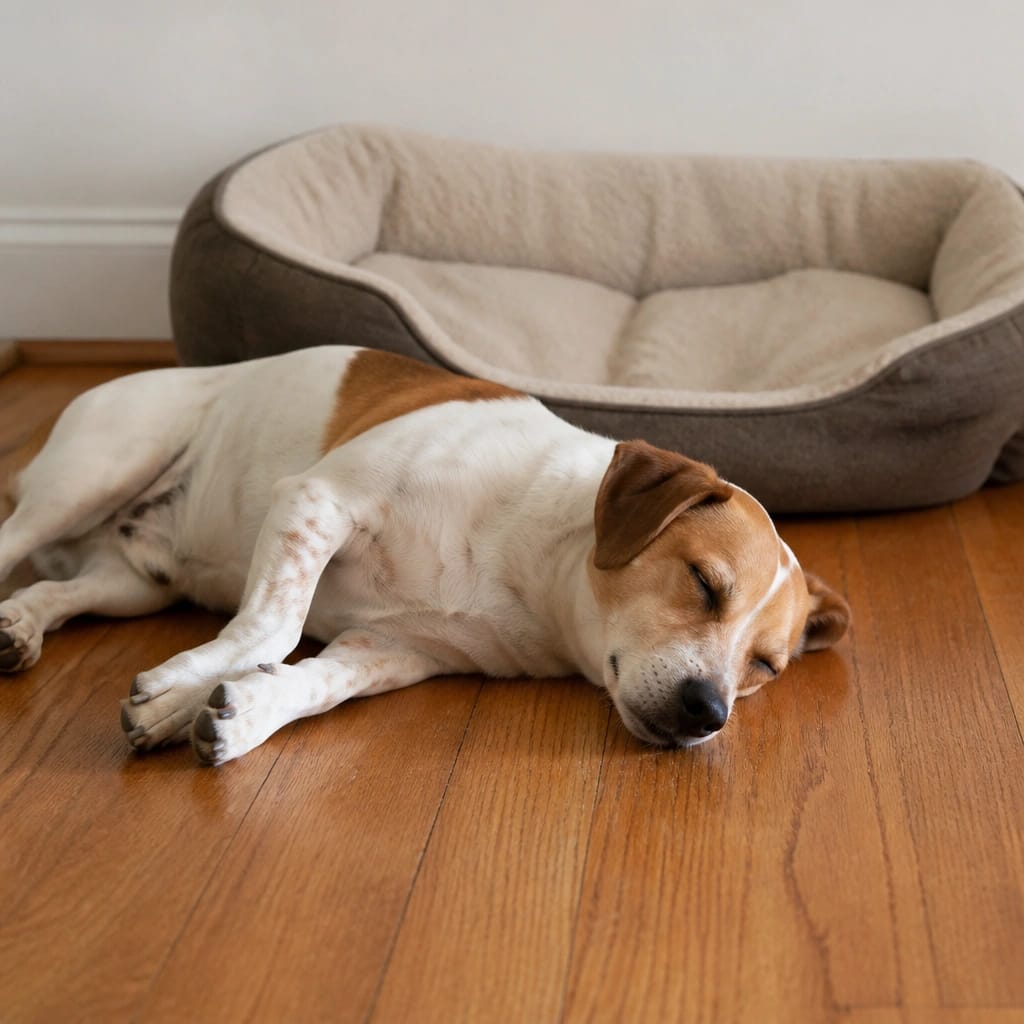
Joint Pain and Mobility Issues
This is the reason you shouldn’t ignore. Dogs with arthritis, hip dysplasia, or recovering from injury often choose hard floors. Why?
Because soft beds can be difficult to get out of. A low, firm surface requires less effort to stand up from. If your dog seems stiff after lying on the floor, or hesitates before rising, pain may be driving the choice.
The floor is easier to navigate, even if it’s worse for their joints long term.
Anxiety and Feeling Unsafe
A bed that sits in a high-traffic area can feel exposed. Dogs with anxiety or noise sensitivity often prefer the floor because it lets them tuck against a wall or under furniture. Hard surfaces also transmit vibrations, helping them sense approaching footsteps.
If your dog only avoids the bed in certain rooms or times of day, location and security are likely the issue.
Bed Size, Shape, or Material Mismatch
A bed that’s too small forces your dog to curl uncomfortably. A bed with high bolsters may block their view, which some dogs dislike. Others find certain fabrics uncomfortable, like slippery polyester or scratchy wool.
If your dog circles the bed, scratches it, then walks away, they’re trying to make it comfortable and failing.
Scent and Cleanliness
Dogs rely heavily on smell. If the bed smells like detergent, fabric softener, or something unfamiliar, they may reject it. A new bed without their own scent doesn’t feel like “theirs.” Conversely, a bed that’s dirty, damp, or covered in hair can also be off-putting.
Dogs are clean animals, and a stale-smelling bed loses its appeal.
How to Tell If It’s a Preference or a Warning Sign

Most floor sleeping is harmless, but you need to rule out pain first. Watch your dog’s body language closely. A dog in discomfort often shows subtle signs you can easily miss.
Signs That Suggest Pain
| Sign | What to Watch For |
|---|---|
| Limping | Noticeable favoring of one leg after lying down |
| Stiffness | Slow, hesitant rising from the floor |
| Whining | Vocalizing when getting up or lying down |
| Reduced activity | Less interest in walks, stairs, or jumping |
| Personality change | Irritability, hiding, or reduced appetite |
If you spot any of these, a veterinary checkup is warranted. Conditions like osteoarthritis, hip dysplasia, or intervertebral disc disease can make soft beds uncomfortable. A vet can diagnose the issue and recommend appropriate support.
Signs That It’s Just a Preference
Normal floor sleeping looks relaxed. Your dog settles quickly, stretches out, and sleeps deeply. They don’t whine or shift positions constantly.
They willingly move to the floor after trying the bed, then stay there for hours. If your dog is comfortable, content, and shows no signs of stiffness, the floor is simply their choice. That’s especially common in hot weather or after exercise.
Step-by-Step: How to Assess Your Dog’s Floor-Sleeping Habit

Before you buy a new bed or rearrange your home, take a systematic approach. This assessment will reveal the true cause of the behavior.
Step 1: Observe Your Dog’s Sleep Position
Watch how your dog sleeps on the floor. Do they curl into a tight ball or stretch out fully? Curled dogs often want to feel protected.
Stretched dogs typically need more space. This observation tells you what shape and size bed might work better.
Step 2: Check Bed Size Against Your Dog’s Length
Measure your dog from nose to tail base while they’re lying down. Add 10 to 15 centimeters for a comfortable fit. Compare this to the bed’s usable sleeping surface, not its outer dimensions.
A bed that looks big but has thick bolsters may provide less actual lying space than you think.
Step 3: Test Different Firmness Levels
Borrow a friend’s bed or use a firm blanket on the floor. See if your dog prefers a flatter surface. Some dogs want orthopedic support with firm memory foam.
Others want a thinner, cooler option. Testing helps you match firmness to preference before spending money.
Step 4: Evaluate Bed Location
Move the bed to a different spot. Try a quiet corner away from foot traffic. Avoid drafty areas or places near heating vents.
Some dogs prefer a bed that lets them see the room. Others want to be partially hidden. Location changes can make a dramatic difference.
Step 5: Review Material and Cleanliness
Check the bed fabric. Is it rough, slippery, or too warm? Run your hands across it.
Consider the fill material too. Memory foam retains heat, while fiberfill sleeps cooler. Also assess cleanliness.
Wash the bed with fragrance-free detergent and dry it completely. Add a worn t-shirt or blanket with your scent to help the bed feel familiar.
Step 6: Monitor for Pain Indicators
For several days, note how your dog moves after waking. Watch for limping, stiffness, or reluctance to jump. Pay attention to how they settle onto the floor.
If they’re slow or careful, pain may be the issue. If they drop down quickly and comfortably, preference is more likely.
Troubleshooting by Behavior Pattern
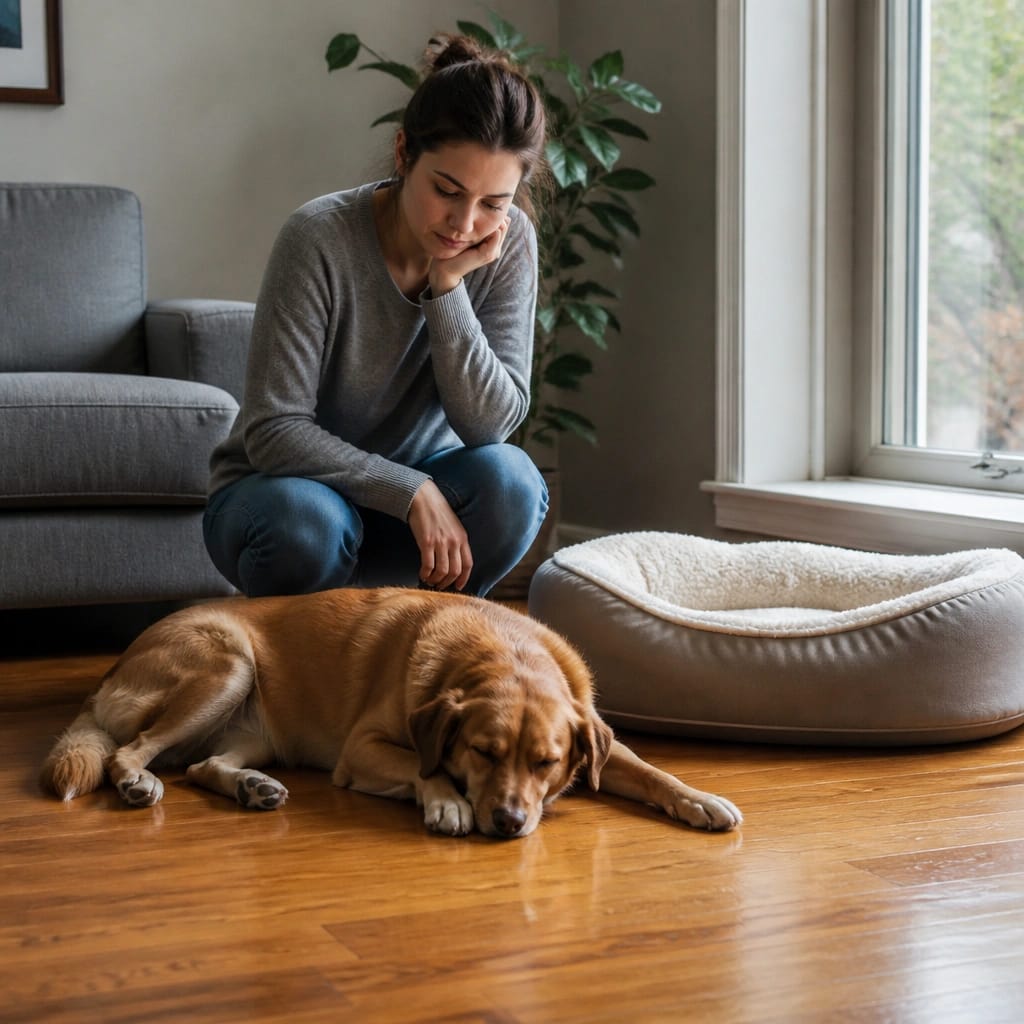
Different floor-sleeping patterns point to different causes. Match your dog’s behavior to the right solution.
Dog Scratches the Bed But Refuses to Lie In It
Scratching is a nesting behavior. Your dog is trying to make the bed more comfortable. If they scratch then leave, the bed feels wrong.
Try a different fabric or a flatter design. Adding a familiar blanket can also help.
Dog Starts on the Bed Then Moves to the Floor
Starting on the bed suggests comfort, not rejection. Moving to the floor usually means overheating. The bed retains too much body heat.
Switch to a cooling bed or a breathable cotton cover. If your dog is older, they may simply find it easier to get comfortable on a firm surface.
Dog Only Sleeps on Hard Surfaces Regardless of Bed
This pattern often points to a strong preference or a medical issue. If your dog always chooses tile or wood over any bedding, firmness is key. A thin, firm mat may work better than a plush bed.
If your dog is senior or seems stiff, consult your vet about joint support.
Dog Sleeps on the Floor Near Your Bed But Not in Their Own
Your dog wants to be close to you. If their bed sits across the room, the floor beside your bed wins every time. Move the bed next to yours.
This simple change often solves the problem overnight.
Dog Used to Use the Bed But Stopped
A sudden change in behavior warrants attention. Consider recent events: a move, new pet, or new flooring. The bed may have become uncomfortable with age, or your dog may be developing joint issues.
Evaluate the bed’s condition and your dog’s mobility, then adjust accordingly.


