

How Moisture Affects Dog Bed Materials
Moisture can ruin a dog bed fast. It causes mold, mildew, and odor, and it breaks down foam and fabric over time. Some materials trap moisture while others dry quickly. The right choice depends on your dog’s habits, health, and where the bed lives. Understanding how each material handles moisture helps you pick a bed that lasts and keeps your dog comfortable and healthy.
If you’ve ever peeled back a dog bed cover to find black spots or a musty smell, you know the problem. Moisture doesn’t just make the bed unpleasant, it shortens its life and can affect your dog’s skin and breathing. As of 2026, most dog bed manufacturers use one of a handful of core materials: memory foam, polyurethane foam, polyester fiberfill, or cotton.
Each reacts differently to moisture, from absorption rate to drying time to how well it resists mildew.
Why Moisture Matters for Dog Bed Materials
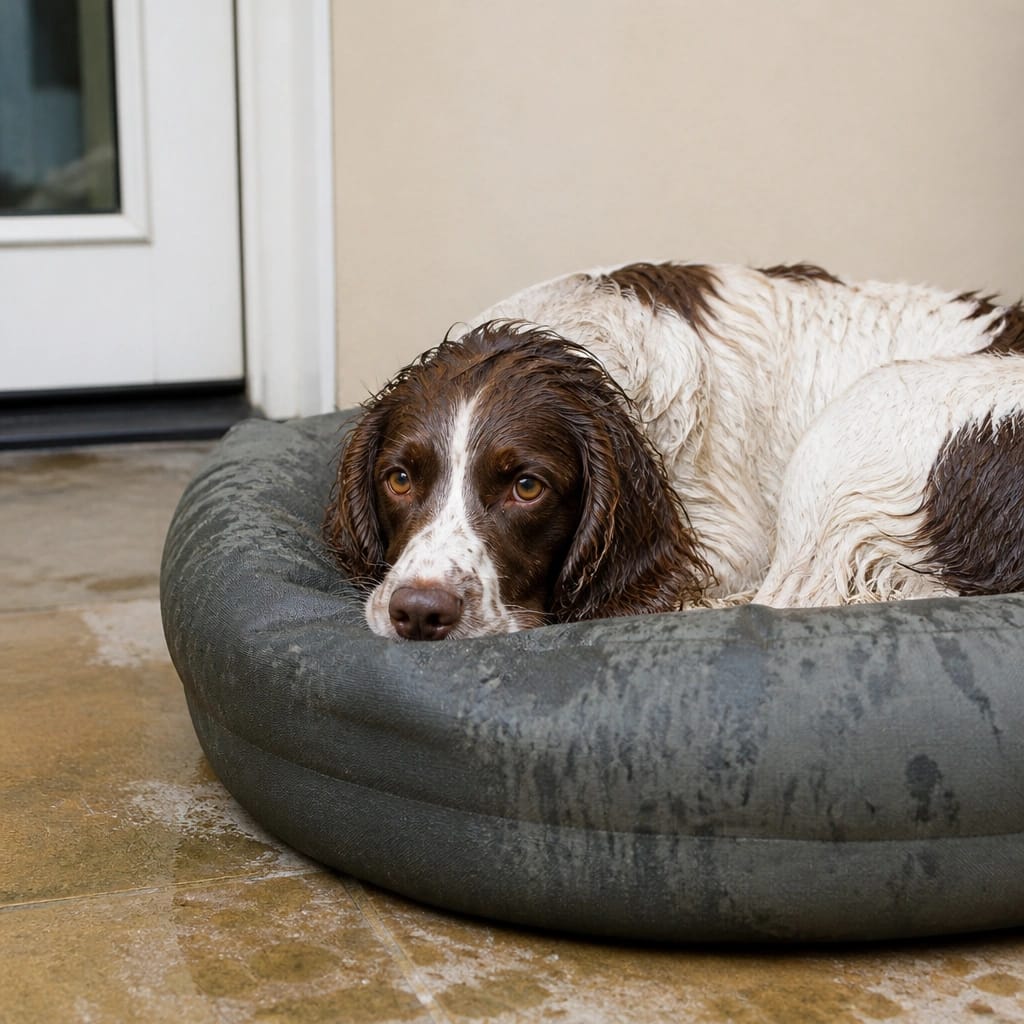
A dog bed faces moisture from many angles. Urine accidents, drool, wet paws after a walk, spills from a water bowl, and even high humidity in the air all add up. Over time, that moisture seeps into the bed’s core.
The real damage happens when moisture stays trapped. Foam that can’t dry develops mold and bacteria. The foam starts to crumble and lose support.
Covers wick moisture into the fill, and if the cover isn’t waterproof, the inner layers never fully dry. That’s when odors become permanent and the bed becomes a health risk.
For dogs with allergies, skin infections, or respiratory issues, a damp bed can make things worse. Even healthy dogs shouldn’t sleep on a wet surface. That’s why material choice matters more than most owners realize.
How Different Dog Bed Materials Handle Moisture
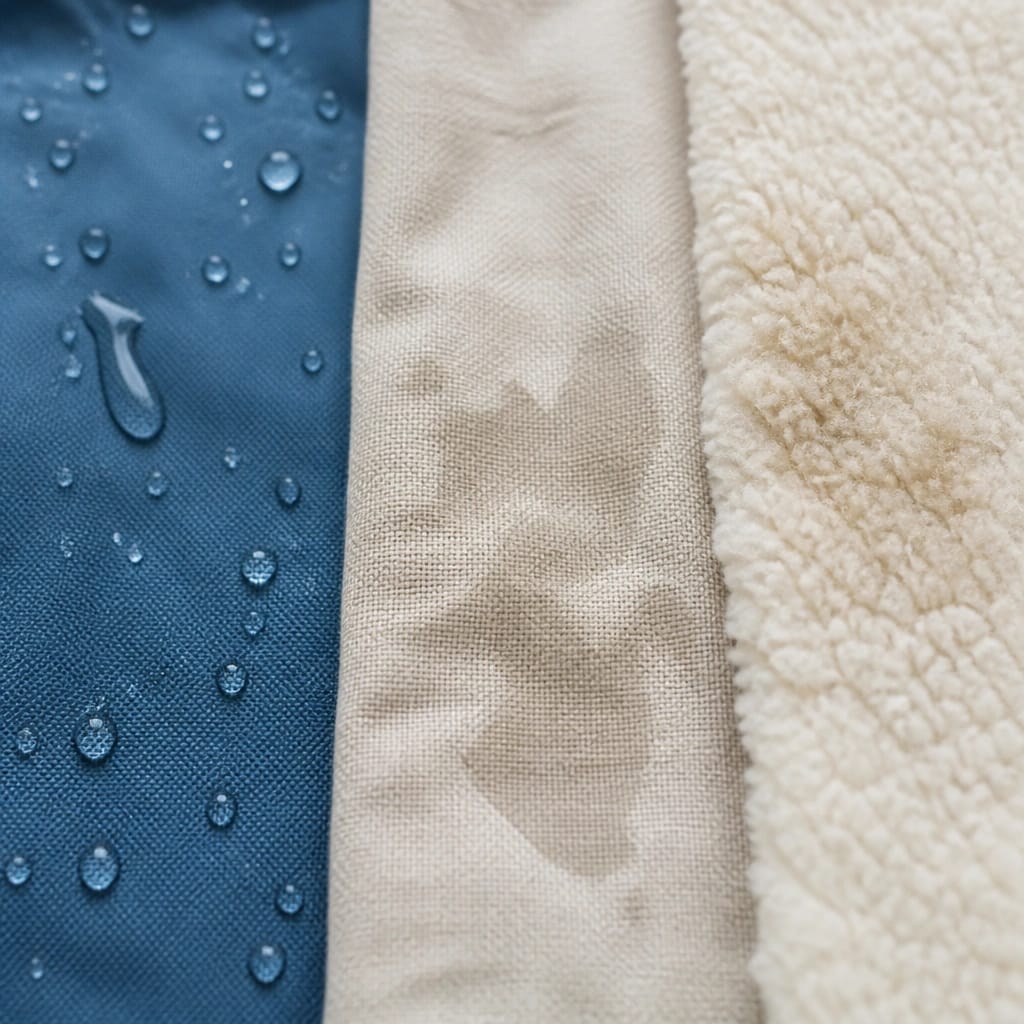
Memory foam is dense and open-cell by nature. It absorbs moisture like a sponge. Once wet, it takes days to dry fully, even in warm air.
The moisture breaks down the foam structure, leading to sagging and permanent odor. Memory foam beds are comfortable but risky for incontinent dogs or high-humidity homes unless they have a sealed waterproof liner.
Polyurethane foam (the standard foam in most budget dog beds) is slightly more resistant to moisture than memory foam, especially high-density closed-cell varieties. Closed-cell foam doesn’t absorb water easily. But many budget beds use open-cell polyurethane foam that still holds moisture and dries slowly.
Shredded memory foam is the worst offender. The small pieces create countless air pockets that trap moisture. Drying a shredded foam bed after an accident is nearly impossible without removing every piece by hand.
Polyester fiberfill (the fluffy stuffing in many “pillow-style” beds) resists water absorption better than cotton. Polyester fibers don’t soak up moisture, water beads on the surface or drains through. It dries relatively fast, especially when the cover is removable and washable.
This makes polyester a decent choice for light moisture exposure, but it can still trap moisture in the core if the bed is thick and the cover isn’t waterproof.
Cotton is the most absorbent common fill. It can hold up to 27 times its weight in water. Cotton dries slowly, and when wet, it becomes heavy, cold, and prone to mold.
Cotton beds are comfortable but impractical in any moisture-prone situation. A cotton-filled bed without a waterproof barrier will likely need replacement within months.
Waterproof Liners: Pros, Cons, and When They Make Sense
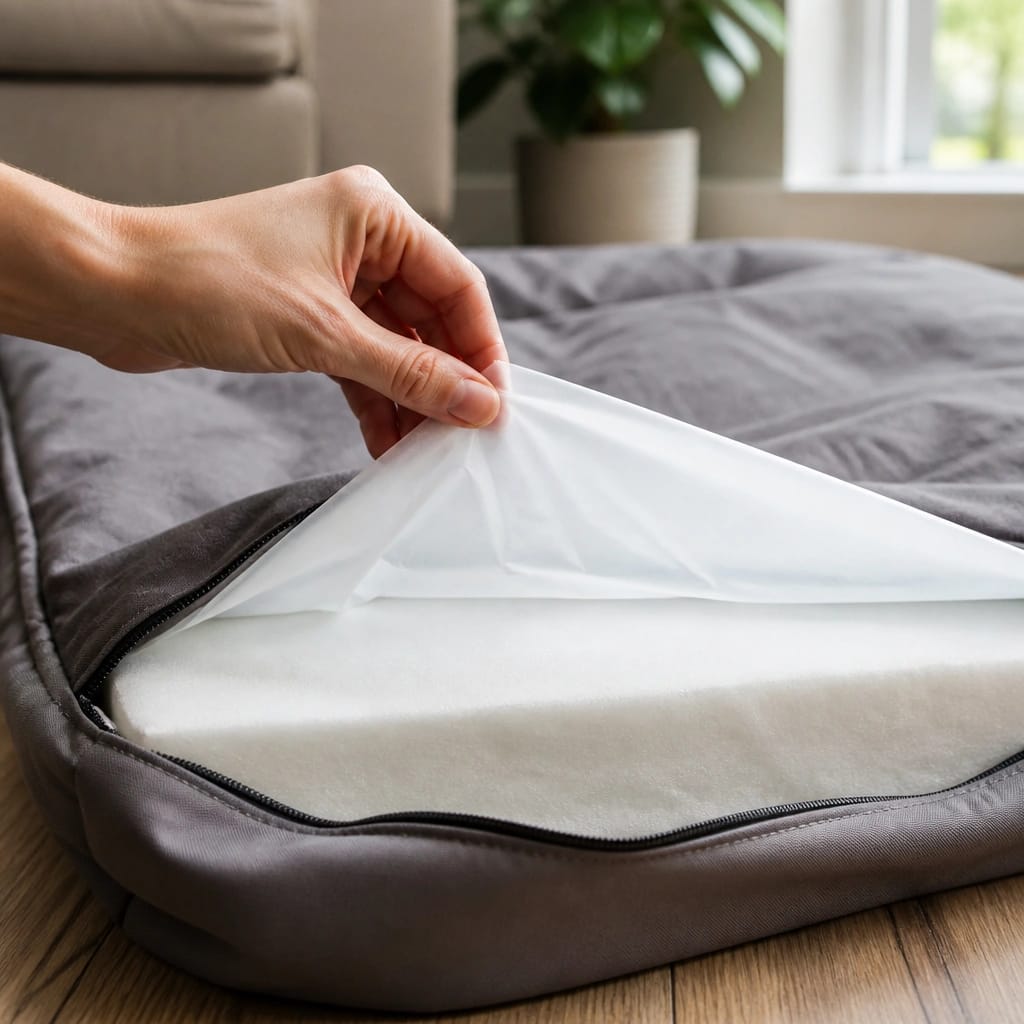
A waterproof liner sits between the outer cover and the inner foam. It stops liquid from reaching the core. Most liners are made from TPU (thermoplastic polyurethane) or polyurethane laminate, thin, flexible films that block water but allow some airflow.
Pros of waterproof liners:
- Protect the foam from urine, drool, and spills
- Extend the bed’s lifespan significantly
- Make cleanup easier, just wipe the liner or wash the cover
- Prevent mold and mildew deep inside the bed
Cons of waterproof liners:
- Some liners trap heat, making the bed warmer, a problem for hot climates or heavy-coated breeds
- Cheap liners crack or peel after a few washes
- A liner does nothing for the cover itself, which still gets wet and needs washing
- Not all liners are breathable, which can cause condensation inside the bed
When they make sense: Any dog with incontinence, heavy drooling, or a habit of dragging in mud. Also essential for crate beds where airflow is limited and moisture can’t evaporate. For dry climates or dogs that rarely get the bed wet, a liner may be overkill, it adds warmth and cost without much benefit.
Breathability and Drying Time: Why They Matter More Than You Think
Breathability refers to how easily air passes through the bed materials. Drying time is how long the bed takes to return to a dry state after getting wet. These two factors determine whether moisture becomes a long-term problem.
A breathable cover lets moisture evaporate from the surface. But if the inner foam is dense and non-breathable (like memory foam), moisture can’t escape from the core. The result: a wet layer hidden under a dry cover.
Drying time depends on material thickness, density, and ambient humidity. A thin polyester fiberfill bed in a dry climate might dry in a few hours. A thick memory foam bed in a humid basement could stay damp for a week.
What to look for:
- Covers with a tight weave (like nylon or high-thread-count polyester) reduce moisture absorption and speed drying
- Removable covers that you can machine dry are a huge advantage
- Beds with a mesh or ventilated base allow airflow from underneath
- Open-cell foam without a waterproof liner should be avoided in anything but the driest conditions
If your dog’s bed feels damp to the touch after a day or two, the materials are trapping moisture. That’s a sign you need a different combination of cover, liner, and fill.
Best Dog Bed Materials for Incontinent Dogs
Incontinence is common in senior dogs, spayed females, and dogs with medical conditions. These dogs need a bed that handles repeated moisture without breaking down.
Top choice: Closed-cell polyurethane foam with a fully waterproof liner. This foam doesn’t absorb water, so even if the liner fails, the damage is limited. Pair it with a removable, machine-washable cover made from polyester or nylon, not cotton.
Second option: Polyester fiberfill with a waterproof liner. Fiberfill dries faster than foam, making it easier to manage after accidents. But it compresses over time and offers less orthopedic support than foam.
What to avoid: Memory foam and cotton. Memory foam holds moisture and degrades quickly. Cotton absorbs everything and becomes a breeding ground for bacteria.
For senior or incontinent dogs, also consider a bed with an integrated waterproof layer bonded to the cover. Those beds are easier to clean because you don’t have to remove a separate liner. Just take off the cover, wash it, and the bed is ready.
And if you’re dealing with persistent urine smells, check out our guide on how to get urine smell out of a memory foam bed, but honestly, prevention with the right material is far easier than trying to fix it later.
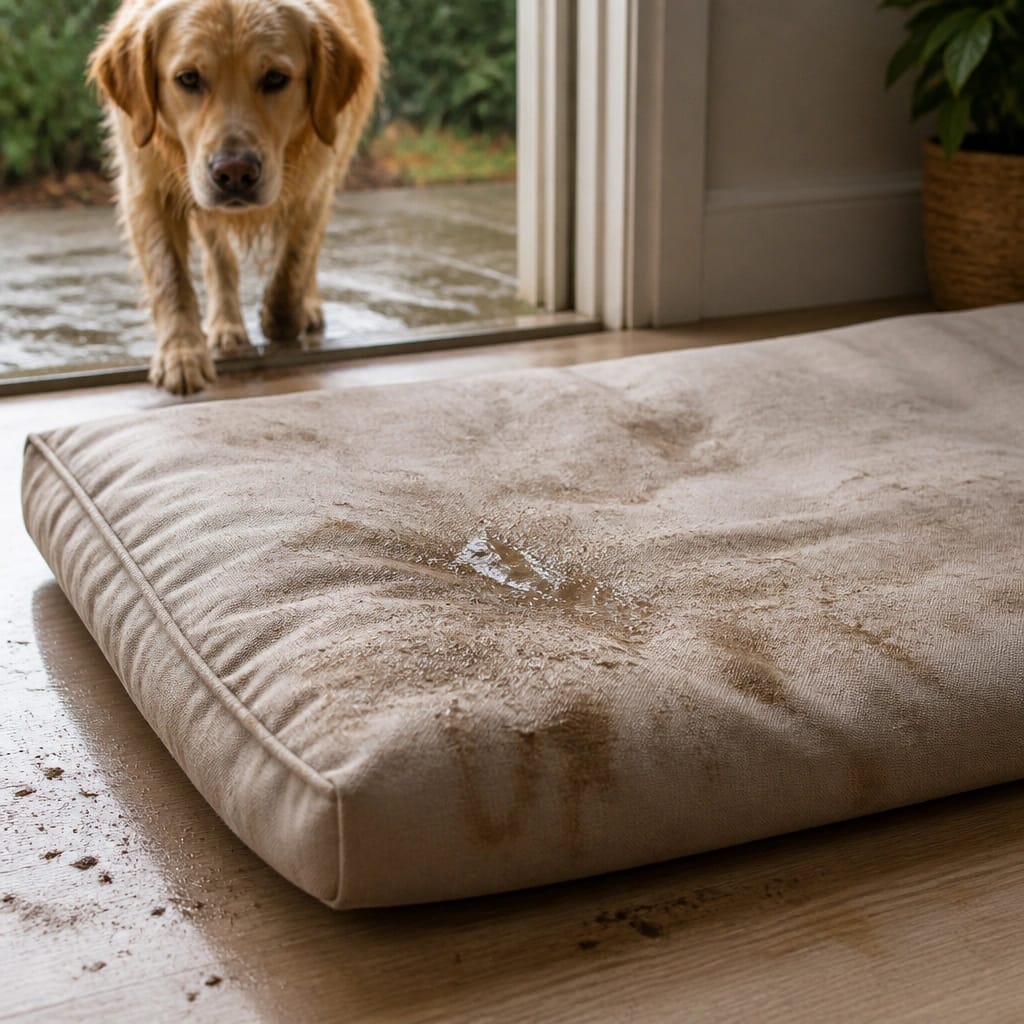
Best Dog Bed Materials for Heavy Droolers and Wet Paws
Drool and wet paws are less severe than incontinence, but they still introduce moisture daily. Over months, the buildup can cause surface mold and odor.
Best cover material: Nylon or polyester. These fabrics repel water and dry in minutes. Cotton and fleece absorb drool and stay damp, which leads to bacterial growth and smell.
Best fill: Polyester fiberfill or closed-cell foam. Both resist water absorption. Open-cell foam will absorb drool that soaks through the cover, so avoid that unless you have a waterproof liner.
What to avoid: Cotton covers, fleece covers (unless they are removable and you wash them frequently), and any unlined memory foam.
A simple solution for heavy droolers: use a bed with a removable cover and wash it weekly. The cover protects the fill, and regular cleaning prevents odor from setting in. For dogs that slobber especially heavily, consider a bed with a smooth surface, textured fabrics trap drool and are harder to clean.
Mistakes to Avoid When Choosing a Moisture-Prone Bed
Many owners make the same errors. Here are the most common:
Assuming “waterproof” means the whole bed is waterproof. Most bed covers aren’t waterproof themselves, they rely on an internal liner. If the liner leaks or cracks, the foam gets wet.
Buying cotton because it’s soft. Cotton is comfortable but a nightmare with moisture. It absorbs, stays wet, and grows mold. Use cotton only in dry, indoor-only settings with no accident risk.
Ignoring the drying process. Even with a waterproof liner, the cover gets wet. If you can’t remove and dry the cover quickly, moisture can wick through zippers and seams. Always check that the cover is machine washable and dryer-safe.
Choosing a bed without considering your climate. In humid regions, even minor moisture becomes a major issue. A bed that works fine in Arizona might fail in Florida. For outdoor use, check our indoor vs outdoor dog bed comparison for specific material recommendations.
Not replacing a bed after a serious accident. If urine or water saturates the foam for more than 24 hours, the foam is probably compromised. You can’t fully clean or dry it. Replace the bed rather than fighting a losing battle against odor and mold.
Frequently Asked Questions
Can I wash a memory foam dog bed?
You can wash the cover, but never submerge memory foam in water. It will absorb moisture and take days to dry, leading to mold. Spot clean the foam with a damp cloth and mild detergent.
How do I dry a dog bed that got wet?
Remove the cover and wash it. For foam, blot up as much moisture as possible with towels, then place the foam in a well-ventilated area with a fan or dehumidifier. Avoid direct heat.
Drying may take 2 to 4 days.
Is polyester or cotton better for dog beds with moisture issues?
Polyester is far better. It resists water absorption, dries quickly, and resists mildew. Cotton absorbs moisture and stays wet, which encourages bacterial growth and odor.
How often should I replace a dog bed exposed to moisture?
If the bed has a waterproof liner and you clean the cover regularly, the bed can last 2 to 5 years. Without a liner, or after a full soaking, replace it within a year. Foam that develops a musty smell or visible mold should be replaced immediately.
What is the best dog bed for a dog that pees in its sleep?
A bed with a closed-cell polyurethane foam core and a fully waterproof, machine-washable cover. Add a washable pee pad on top for easier daily cleanup. For more guidance, see our article on waterproof dog beds.
Can mold in a dog bed make my dog sick?
Yes. Mold spores can cause respiratory irritation, coughing, sneezing, and skin infections, especially in dogs with allergies or compromised immune systems. The CDC warns that prolonged exposure to mold in indoor environments can lead to health issues.
If you see or smell mold, discard the bed immediately.
Best Dog Bed Materials for Humid Climates or Outdoor Use
Humidity accelerates every moisture problem. In climates with 70%+ average humidity, even dry dogs make their beds damp through body moisture and breath.
Best fill: Closed-cell polyurethane foam. It doesn’t absorb moisture from the air. Open-cell foams pull humidity into the core, leading to gradual mildew growth.
Best cover: Nylon or a quick-dry polyester mesh. Avoid cotton and fleece. For outdoor use, look for a bed with a raised or ventilated base that allows airflow underneath.
This prevents condensation from ground moisture. Check our guide on dog beds for cold weather outdoor winter use for specific outdoor material recommendations.
Common Mistakes Owners Make with Moisture-Prone Beds
Beyond the earlier mistakes, one oversight stands out: ignoring the zipper and seams. Even with a waterproof liner, moisture can wick through an unprotected zipper track or unsealed seams. Look for beds with sealed or covered zippers and taped seams for true moisture protection.
Another frequent mistake is using fabric softener on dog bed covers. Softeners reduce water repellency and clog fabric fibers, making the cover absorb moisture faster. Wash covers with plain detergent only.
How to Care for and Maintain Dog Beds in Moist Conditions
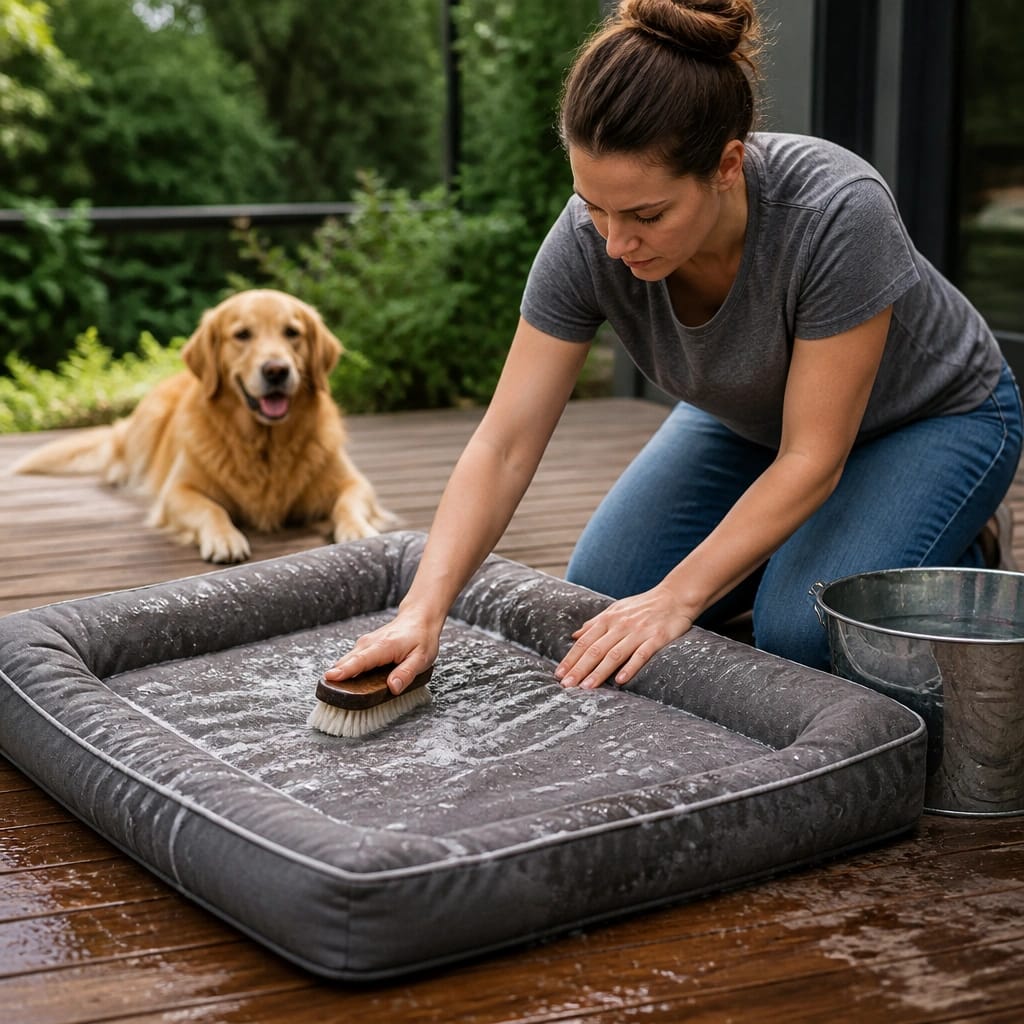
Prevention starts with a routine. Wash the cover every 1 to 2 weeks for dogs that drool or go outside daily. For incontinent dogs, wash every few days.
Let the bed air out fully between washes. Remove the foam or fill and let both the cover and core dry separately. A weekly airing in direct sunlight helps kill bacteria and evaporate trapped moisture.
If you use a waterproof liner, inspect it monthly for cracks or peeling. Replace it at the first sign of damage. A small leak lets moisture reach the foam and defeats the purpose.
When to Replace a Dog Bed Due to Moisture Damage
Replace the bed immediately if you see visible mold, smell a musty odor that won’t wash out, or notice the foam has yellowed or crumbled. These signs mean bacteria and spores have colonized the core.
Even without visible signs, replace the bed every 12 to 18 months if it has been repeatedly exposed to moisture without a waterproof liner. The structural integrity of the foam degrades over time, and it can no longer provide proper support.
Quick Reference: Comparing Material Moisture Performance
| Material | Moisture Absorption | Drying Time | Mold Resistance | Best For |
|---|---|---|---|---|
| Memory foam | High | Very slow | Poor | Dry climates, with waterproof liner |
| Polyurethane foam (closed-cell) | Low | Fast | Good | Humid climates, incontinence |
| Polyester fiberfill | Low | Fast | Good | Light moisture, washable beds |
| Cotton | Very high | Very slow | Poor | Dry, indoor-only use |
| Nylon cover | Very low | Very fast | Excellent | All moisture-prone situations |
| Cotton cover | High | Slow | Poor | Low-moisture only |
Final Verdict: Choosing the Right Dog Bed Material for Your Situation
There is no single best material. Your choice depends on your dog’s health, your climate, and how the bed is used. For heavy moisture exposure, choose closed-cell foam with a waterproof liner and a nylon or polyester cover.
For light moisture, polyester fiberfill with a washable cover works well. Avoid memory foam and cotton in any damp situation. Prioritize materials that dry fast and resist absorption.
Your dog will sleep better, and the bed will last longer.
The Role of Antimicrobial Treatments
Some dog beds come with antimicrobial additives in the foam or cover. These treatments slow bacterial and fungal growth but don’t prevent moisture damage. They buy you time between cleanings but aren’t a replacement for a waterproof barrier.
Understanding Bed Construction: Stitching and Seams
Seams are the weakest point for moisture entry. Beds with taped or sealed seams outperform stitched-only construction. Look for double-stitched seams with waterproof taping if the bed will face frequent wetness.
Mattress Protectors vs. Waterproof Liners
A mattress protector wraps the entire bed like a fitted sheet. It’s easier to remove and wash than an internal liner but less secure. Protectors work well for light moisture.
For accidents, an internal bonded liner is more reliable.
Travel Tips for Moisture-Prone Beds
When traveling, use a removable waterproof cover and a thin polyester pad. Avoid taking memory foam beds on trips. They’re heavy when wet and impossible to dry in a hotel room.
Budget vs. Premium Materials: Moisture Performance
Budget beds use open-cell polyurethane foam and basic polyester covers. Premium beds add sealed liners, closed-cell foam, and taped seams. The difference in moisture resilience is dramatic.
You can pay twice as much but get five times the lifespan in wet conditions.


