

Can Dogs Get Too Hot or Cold While Sleeping?
Your dog spends a third of their life asleep. That means they’re lying in their bed, in your bedroom, or curled on the sofa for eight to twelve hours a day. During all that time, their body is either gaining or losing heat, and there’s not much they can do about it while they’re unconscious.
Unlike humans, dogs don’t pile on blankets or crack open a window. They can’t peel off a sweater. They’re stuck with whatever sleeping setup you gave them, and they have almost no ability to self-correct once they’re lying down.
Their natural mechanisms for managing temperature are also less precise than ours. When we get hot, we sweat across most of our skin. Dogs only sweat through their paw pads, and they rely on panting, which is a less effective cooling system, especially during sleep.
When dogs get cold, they can’t shiver forever and expect to warm up. Shivering burns energy and only helps so much.
So the real question is: can dogs get too hot or too cold while sleeping? Absolutely.
Their natural body temperature runs between 101 and 102.5°F, roughly 2 to 3 degrees warmer than ours. That means their comfort zone at rest is narrower than you might think, and it changes depending on their breed, size, age, and even the bedding you provide. Sleep is where they regain strength swelling, and if their sleeping environment is working against them, it doesn’t matter how comfortable the bed looks, they won’t get the rest they need.
Let’s break down exactly what happens, what the warning signs are, and how you can make sure your dog isn’t fighting the thermostat all night.
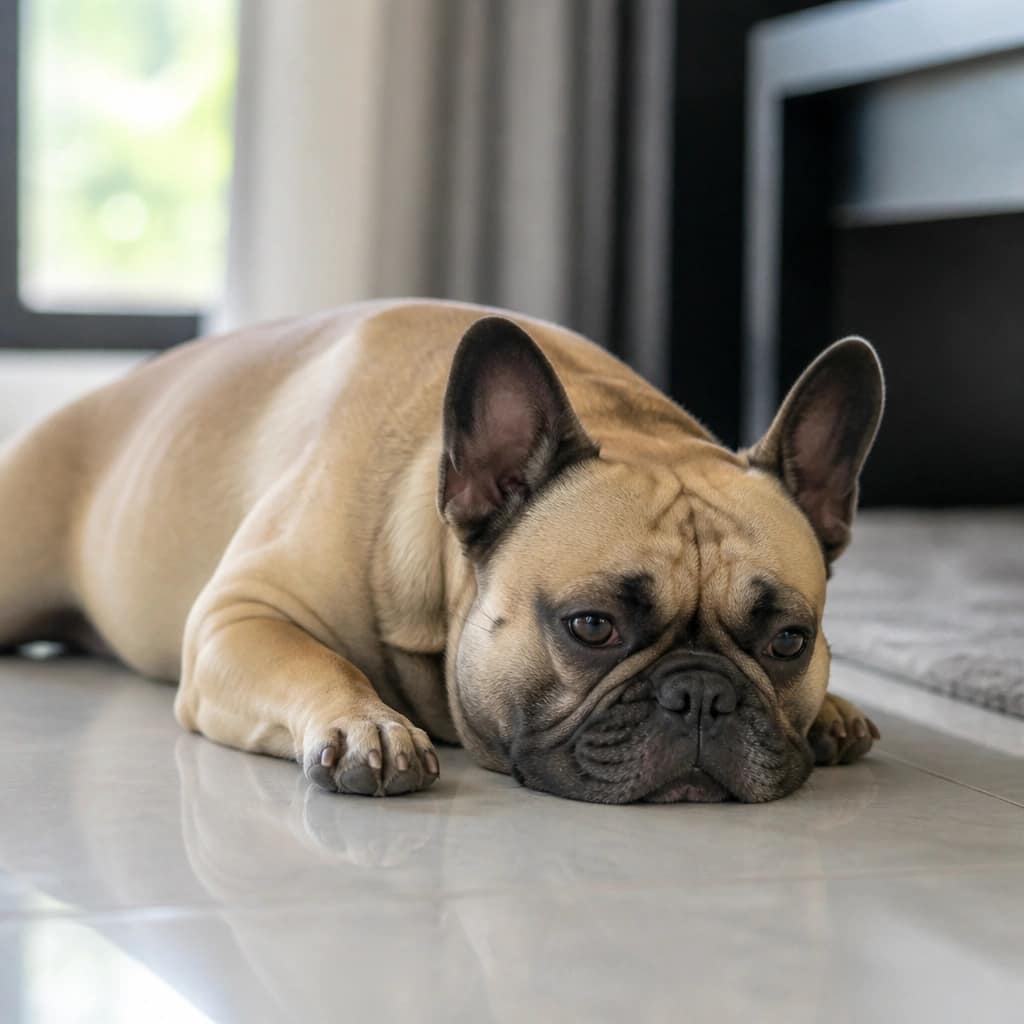
Why Your Dog’s Sleeping Temperature Matters More Than You Think
Most people assume that because dogs have fur coats, they can handle a wide range of temperatures without issue. That’s true, to a point. Dogs do have a higher baseline body temperature than humans, around 101°F to 102.5°F compared to our 98.6°F.
That means they start feeling uncomfortable at temperatures we’d find perfectly fine.
Your dog’s core temperature tolerance is actually quite narrow. If it climbs above 106°F or drops below 95°F for any extended period, serious health complications can begin. And during sleep, dogs aren’t actively panting or moving around to warm themselves up the way they do during the day.
So their sleeping environment has to do the heavy lifting, or the dog will wake up constantly or simply suffer through the night.
The question isn’t whether dogs can get too hot or too cold while sleeping. They absolutely can. The real question is: what are the safe ranges, and what do you change when your dog falls outside them?
What’s the Safe Temperature Range for a Sleeping Dog?
For most healthy adult dogs, a room temperature between 60°F and 75°F is the sweet spot for overnight sleep. That range isn’t pulled from thin air. It aligns with general veterinary guidance on safe indoor temperatures for dogs that accounts for their higher baseline body temperature.
Here’s the thing: a dog’s normal body temperature runs between 101°F and 102.5°F, roughly 3 to 4 degrees warmer than a human’s. That means they start feeling uncomfortable at temperatures we’d still consider mild. If the room is 80°F or above, a dog lying on an insulated bed is essentially sleeping next to a heat source.
Their own body heat, trapped by the bedding, pushes their core temperature dangerously close to overheating.
On the other side, anything below about 50°F becomes risky for small breeds, puppies, and short-haired dogs. Their bodies bleed heat fast because they have a higher surface-area-to-body-mass ratio than we do. A human can shrug and grab a blanket.
A dog just lies there, trying to stay warm with whatever they have.
What Happens to a Dog When It Gets Too Hot While Sleeping?
When the temperature climbs past their comfort zone, a dog’s body starts working hard just to maintain a safe core temperature. And here’s the catch: that work doesn’t stop just because they’re asleep attemptings says. Their sleep is lighter, their body is releasing energy trying to cool down, and they wake up more often.
A sleeping dog’s natural cooling system relies on panting and minimal sweating through their paw pads. Since they can’t sweat the way we do, their body temperature rises faster in warm environments. Heat stress starts creeping in when the room temperature climbs above 80°F (27°C), especially for breeds with flat faces or thick coats.
What actually happens when a dog gets too hot while sleeping?
One of the first signs is restlessness. A dog that normally curls up and stays put may start moving around the bed, digging at the mattress, or shifting positions every few minutes. They may stretch out flat on their side or belly in an attempt to maximize surface area for cooling and press themselves against cooler floor or wall surfaces.
A warm sleeping environment also disrupts sleep architecture. Research in veterinary sports science suggests that dogs in hot environments experience more fragmented sleep and show increased respiratory rates during rest. That means they don’t get the deep, restful sleep they need for proper recovery and cognitive function.
More concerning is the risk of overheating. Dogs’ thermoregulatory systems are less efficient than humans’. Where we sweat from head to toe, dogs only release heat through their paws and panting.
And even panting has limits, the pause between breaths and the physical effort of rapid breathing actually generates some heat in the process.
When a dog is in a hot environment, their heart rate climbs, and the amount of energy they burn just to cool down increases. Over long periods of poor sleep in hot temperatures, especially during summer months and in homes without central air, dogs can experience the same kind of sleep deficiency that humans deal with. And that compounds into behavioral issues like irritability, excessive daytime sleepiness, and slowed recovery from daily exercise.
Why Room Temperature and Bedding Matter More Than You’d Think
A dog’s sleeping surface affects how they regulate temperature all night long. And while ambient room temperature will always matter, the bed itself can either fight or help their body clock.
Here’s a number worth remembering: the average dog’s resting temperature is between 101°F and 102.5°F, roughly 3 to 4 degrees above the human average of 98.6°F. That matters because a dog lying on a bed that traps their own body heat will overheat much faster than a human would in the same bedding.
This is especially relevant for larger breeds and dogs with heavy coats. A heavy, insulated dog bed designed for winter can hold enough body heat to push a resting large dog’s skin temperature several degrees higher than their comfort zone. That’s exactly why so many dogs abandon their “perfectly good” bed for the kitchen tile floor in summer.
Your dog’s sleeping setup matters for the same reason your own does, you wouldn’t sleep well under a thick down duvet in July. The difference is that a dog can’t just kick the covers off. They either tolerate an uncomfortably warm bed, or they seek a cooler alternative like tile, hardwood, or even the dirt under the porch.
The Temperature Window for Dog Sleep
Most healthy adult dogs sleep comfortably in the temperature range that suits their human family, usually between 65°F and 75°F. But that comfortable zone narrows significantly for certain dogs. Puppies, senior dogs, short-haired breeds, and flat-faced breeds all lose heat (or retain it) differently than the average healthy adult dog.
And the material on your dog’s bed matters just as much as the room temperature. According to manufacturer specifications from major pet bedding brands, many popular memory foam and orthopedic dog beds actively trap body heat. Memory foam retains a significant portion of the body’s heat against the surface.
A dog lying on that material in a warm room is effectively pinned between their own rising body heat and the heat absorbed by the foam.
So the answer to the question “Can dogs get too hot or cold while sleeping?” is a clear yes, but a one-size-fits-all temperature number doesn’t exist. It depends on age, breed, coat type, body condition, bed material, and room temperature. Let’s break down each factor so you can actually identify what’s happening with your dog.
Why Hot Sleeping Environments Are Dangerous for Dogs
Heat stress is the more urgent problem of the two, because it can escalate quickly. A dog’s cooling system, panting plus a small amount of sweat through paw pads, is simply not designed to handle excessive heat for extended periods. Humans cool efficiently through widespread sweat evaporation; dogs do not.
A room that feels comfortable to you, say, 78°F on a warm summer night, might feel stifling for a dog sleeping on a thick orthopedic bed. The body weight pressing into the bed traps heat underneath their belly and prevents airflow from reaching their skin. Your dog’s core temperature starts to rise while lying there, even if the room itself is not particularly warm.
This is why heat-related sleeping discomfort is often mistaken for restlessness or “age-related” sleep changes. A dog that can’t cool down will typically perform a series of obvious behaviors:
- Flat out on the floor or on a cool surface instead of their bed
- Panting within a couple minutes of lying down
- Moving from bed to floor and back repeatedly during the night
- Stretching fully flat with their belly pressed against anything cool
- Swapping between surfaces, bed, tile, hardwood, sofa
Dogs use the coolest surface within reach as a natural thermostat. If your dog regularly abandons their bed in the middle of the night, the bed may be a major factor in their inability to settle.
The Real Risk: Why Overheating Is More Common Than Chilling
It’s more common, and generally more dangerous, than being too cold for dogs. This is partly because dogs don’t cool themselves efficiently compared to their ability to warm up. A dog that’s too cold can curl into a ball, tuck their nose under their tail, or shiver to generate body heat.
These are all available coping strategies.
But a dog that’s too hot has no equivalent solution. They can’t strip off a layer. They can’t kick off the sheets.
They have to get up, move somewhere cooler, or simply tolerate the discomfort. For dogs who naturally sleep through the night, an overheating bed can turn rest into restlessness.
Here’s where it gets practical: Dogs have an average resting temperature between 99.3°F and 100.5°F, noticeably higher than the 98.6°F we treat as human normal. Combine that with a winter coat, and a bed that feels fine to you might feel sweltering to your dog by hour three.
Signs Your Dog Is Overheating While Sleeping
How do you know if your dog is struggling with the temperature in their bed? They can’t tell you, and they may not even move, some dogs just suffer quietly through the night rather than wake up.
The clearest behavioral sign is restlessness. A dog that normally sleeps through the night but suddenly can’t settle, keeps shifting position, or gets up to lie on a different surface (especially tile, concrete, or bare floor) is often too warm. Panting during sleep, even light panting, is another indicator. A sleeping dog shouldn’t be breathing rapidly for an extended period.
Physical signs your dog is overheating while sleeping:
- Panting that continues even during rest
- Sprawling flat on their belly or lying stretched out in unusual positions
- Trying to dig or scratch at their bed to reach a cooler surface underneath
- regularly waking up and relocating to the floor
- Hot, reddened paws and warm ear tips to the touch
If the room temperature is over 80°F, or if your dog is an obese, flat-faced, or thick-coated breed, even “indoor” conditions can be problematic for overnight rest.
Understanding Your Dog’s Sleep Temperature Range
Your dog’s comfort zone for rest is roughly 60 to 75 degrees Fahrenheit (15, 24°C). This is actually similar to ideal human sleeping temperatures, but there are two big differences.
First, dogs carry a higher baseline body temperature than humans, typically 101 to 102.5°F. That means they begin feeling warm sooner than we docars. A room that feels slightly cool to you can feel perfectly comfortable to themall.
Second, dogs can’t shed their heat the way we can. Humans dissipate heat through sweating across the entire body. Dogs only sweat through their paw pads, which makes them much less effective at cooling off in warm conditions.
Their primary cooling mechanism, panting, is physically taxing and inefficient during deep sleep.
That’s why a decent temperature range matters more than you might think. Even a few degrees above their comfort zone makes dogs choose sleep positions that cool or warm themselves. If you’ve ever seen a dog sprawled out flat on the floor instead of their bed, that’s an early sign that their bed may be retaining too much heat.
Why Dogs Struggle With Nighttime Temperature Regulation
Dogs can’t pull the covers up or turn down the thermostat. During sleep, their natural temperature regulation partially slows down, just like ours does. That means their body isn’t actively re-adjusting as effectively as it would be during waking hours.
A dog that falls asleep comfortably can still end up waking up, panting and restless, if their sleeping surface holds too much heat.
Here’s what’s happening biologically. Dogs have a resting respiratory rate of 15 to 30 breaths per minute while sleeping. When they’re hot, that rate climbs as they begin panting, even during light sleep.
Panting requires physical effort, it uses the same muscle groups as rapid, shallow breathing. That means a dog who stays in an overheated bed is actually working while trying to rest Knots, their body remains in a state of low-grade stress instead of true rest.
On the flip side, dogs that get too cold do the opposite. They curl into a tight ball, tuck their paws under their bodies, and may shiver during sleep. This posture reduces surface area exposed to the cold, but it also prevents the relaxed, sprawling sleep positions that indicate deep rest.
Chronic exposure to uncomfortable sleeping temperatures does more than disturb sleep. Heat stress can lead to excessive panting, dehydration, and heightened anxiety, especially in dogs with flat faces like bulldogs and pugs, who already work harder to breathe. Cold discomfort, on the other hand, can cause muscle tension, joint stiffness the next day, and increased sensitivity in older dogs with arthritis.
Why Certain Dogs Are More Prone to Overheating or Getting Cold
Not every dog tolerates the same sleeping temperature. Breeds, age, size, and overall health all shift the range where a dog sleeps comfortably-born. While most healthy adult dogs are fine at normal indoor temperatures (65, 75°F), there are groups that need closer attention.
Brachycephalic breeds (short-nosed dogs like French Bulldogs, Pugs, and Boston Terriers) have a harder time cooling down. Because their airways are compressed, they can’t pant as efficiently as longer-nosed dogs. Even at moderate temperatures, they can overheat in a bed with poor airflow.
Puppies and senior dogs both have less ability to regulate body temperature than healthy adult dogs. Puppies are born unable to thermoregulate at all, it takes weeks for their bodies to catch up. Even as they grow, their smaller body mass means they lose heat faster and are more vulnerable to both extremes.
Senior dogs, especially those with arthritis or thyroid issues, also lose temperature regulation capacity as their endocrine system slows down.
Brachycephalic breeds, pugs, French bulldogs, Boston terriers, are more prone to heat-related problems even at rest. Their upper airway structure makes panting less efficient, which means they need cooler sleeping environments and can’t cool down as quickly once they overheat. Sighthounds like greyhounds and whippets are notably lean with little body fat, so they feel cold faster than most breeds.
For them, a warm room and an insulated bed matter just as much as ventilation does for a bulldog.
How to Tell If Your Dog Is Too Hot While Sleeping
Dogs can’t ask for a different blanket. You need to read their physical cues, and most of those cues show up in the first few minutes after they settle down to sleep. If you get to know what’s normal for your dog, it’s not too hard to spot when they’re uncomfortable.
The telltale signs of overheating:
- Panting while lying down in a cool part of the house, especially at night when the room should be cooler
- Restlessness, shifting positions repeatedly, or being unable to settle
- Sprawling flat on their side with limbs splayed out, this increases body surface area for heat loss, but it’s also how many dogs try to cool down against a cool surface
- Actively moving from their dog bed to a tile or wood floor to sleep or rest
- Licking their paws or nose excessively, which is one of their only cooling mechanisms
- Flattening against the coolest surface they can find rather than settling into their bed
A common mistake owners make is assuming their dog’s heavy panting at night just means they’re “getting comfortable.” If the panting doesn’t slow within the first five minutes of settling, heat is likely the culprit. Dogs don’t need to pant to fall asleep. They need to pant to cool down.
If your dog starts the night on their bed and moves to the floor, or stretches out flat on a cool surface instead of bundling up in their bed, that’s not restlessness. That’s your dog telling you they’re hot and trying to cool down by pressing their belly against the coolest surface available.
One of the best ways to help a dog that sleeps warm is to check the actual temperature of their sleeping space. Air temperature matters, but so does the surface they’re lying on. Thick memory foam and heavily insulated beds trap body heat exactly like a thermal blanket would.
For a heat-sensitive dog, that’s a problem, even when the room is comfortable.
Why Brachycephalic Dogs Overheat Faster at Night
It’s not your imagination. Flat-faced breeds really do struggle more with temperature regulation, especially at night.
Dogs like French bulldogs, pugs, Boston terriers, and boxers have shorter airways that make panting, their main cooling method, significantly less efficient. A brachycephalic dog has to work harder to move the same volume of air, and that extra effort generates even more heat. It’s a feedback loop that leaves them warmer and less able to cool down than their long-muzzled counterparts.
In our research, brachycephalic breeds tend to have a harder time regulating temperature during sleep than dogs with normal snouts. Their soft palates and narrow nostrils, which cause Brachycephalic Obstructive Airway Syndrome (BOAS), make each breath less effective at dissipating heat. If they’re already prone to snorting and snoring while sleeping, they’re also working harder to breathe, which generates additional body heat.
These breeds also tend to overheat faster because they can’t pant as effectively. The shorter their muzzle, the less surface area they have for evaporative cooling. This is why pugs, French bulldogs, and Boston terriers often choose to lie spread out on cold tile floors instead of their beds in summer.
Signs Your Dog Is Too Hot While Sleeping
Most dogs are not subtle about overheating. They just communicate with movement and behavior rather than words. If you learn to read their sleeping patterns, you’ll spot the signs early, before it becomes a problem.
The patterns to watch for:
- Panting while lying down. A sleeping or resting dog shouldn’t be panting heavily. Occasional open-mouth sleeping is normal, but steady, rhythmic panting at rest means they’re trying to cool down.
- Constant repositioning. Dogs that can’t settle, circle repeatedly, or dig excessively at their bed are often searching for a cooler spot.
- Stretching out completely flat. When a dog lies on their belly or side, spread out in a way that leaves no heat trapped between body and bed, they’re trying to maximize surface area for heat loss.
- Moving to the floor. If your dog constantly leaves their bed to lie on tile, linoleum, or hardwood, their bed is likely too warm for them.
- Panting during sleep. Some panting during rest is normal, but if it’s persistent, paired with restlessness, or happens when your room is warm, it’s a sign they are overheating.
Why Are Heated Beds and Padded Beds Different
Not all beds sleep the same in terms of temperature. And this matters more than most owners realize.
An orthopedic memory foam bed is excellent for joint support, but it’s also a heat sink. Memory foam conforms to the body retaint. It traps body heat, which is great for a senior dog in winter and miserable for a thick-coated dog in summer.
The same dog will sleep very differently on that same bed depending on the season.
In our research of heated bed and orthopedic bed specs, manufacturers report surface temperature rises of roughly 5, 10°F from body contact alone on standard memory foam products.
We don’t always think about that when choosing a bed fro our dog. But your dog does. When a bed stores body heat instead of dissipating it, the dog wakes up warm, moves to the cool floor, or pants more during the night.
Over weeks, that heat retention may influence how much deep sleep your dog gets, since thermoregulation is linked to REM cycle comfort.
The material of the bed matters just as much as the temperature in the room:
- Memory foam: excellent joint support, but terrible at cooling. It oftraps heat against the body throughout the night.
- Cooling gels and ventilated cores: actively draw heat away. These work well for warm sleepers but offer less insulation in winter.
- Cotton and canvas covers: breathable, moderate temperature regulation.
- Orthopedic foam with airflow channels: better than solid foam, but still warmer than mesh or cotton.
Breathable materials like cotton canvas or mesh covers allow airflow and reduce heat buildup around the dog’s body. Meanwhile, materials like memory foam are dense and notoriously poor at dissipating heat. This is often why a dog will start on their bed and end up sprawled on the floorboards by 2 a.m.
How Hot Does a Dog Bed Actually Get?
The surface of a typical padded dog bed can feel significantly warmer than the surrounding room. In a room at 72°F, a standard foam bed that has been slept on for a few hours can reach surface temperatures in the low-to-mid 80s, especially when your dog is curled up, which reduces airflow and traps body heat.
Memory foam makes this much more noticeable. It absorbs body heat and holds it. That helps it conform to your dog’s body, but it also turns into a heat trap on warm nights or in warm bedrooms.
Many traditional foam beds don’t breathe well because they’re covered in a dense outer fabric and sit directly on the floor, leaving no path for air circulation.
If your dog is restless at night, digging at the bed, or trying to stretch out on the floor instead of the bed, there’s a good chance the bed is retaining too much of their body heat. This is especially common in breeds with double coats, Huskies, Malamutes, Golden Retrievers, and even flat-coated breeds like Labradors, because their fur already provides significant insulation.
What Happens When Your Dog Gets Too Cold During Sleep
Cold temperatures affect dogs differently, but they’re absolutely not immune to the risk. Puppies, seniors, short-haired breeds, and small dogs lose heat much faster than their medium or large-coated counterparts. A healthy, adult golden retriever might sleep comfortably on a hard floor at 60°F, while a Chihuahua or senior Whippet needs insulation, and knows it.
Watch for these signs that your dog is too cold while sleeping:
- Curling into a tight ball, often with their nose tucked under their tail
- Shivering or trembling while lying down
- Pulling blankets into their bed or attempting to burrow
- Refusing to settle, getting up and circling even after they’ve done their business
- Cold ears, paws, or nose to the touch
- Sleeping curled up all night without stretching out even once
There’s a difference between a relaxed curl and a protective ball. If the position looks tense, the muscles in the legs and back seem rigid, the tail is wrapped tightly around the body, your dog is likely conserving heat, not just sleeping comfortably.
What Happens When Dogs Get Too Cold
Puppies, small breeds, and short-haired dogs (especially Chi-hua-huas, greyhounds, or whippets) are the most vulnerable to nighttime cold. Their smaller body mass and lower fat layer offer less insulationcal. The same is true for older dogs, who often have reduced muscle mass and circulation.
When a dog gets too cold while sleeping, the body goes into conservation mode. Peripheral blood vessels constrict to keep warm blood away from the skin and closer to the core. The dog curls up into a tight ball, tucks their limbs in, and may shiver, all reflexive attempts to retain core heat.
If their sleeping temp drops too far, they start burning energy they’d normally use for recovery or repair just to stay warm. Over time, that contributes to poorer sleep quality, a weaker immune response in senior dogs, and even flare-ups of joint pain in arthritic breeds.
Signs Your Dog Is Overheating While Sleeping
A sleeping dog that’s too hot will usually show signs within the first half hour. Panting while lying down is the most obvious one. Lying flat stretched out in a “frog” position, or sprawling on one side with legs spread, is another strong signal that your dog is trying to release body heat.
Some dogs simply bail on their bed entirely when overheated. If your dog starts the night in their plush bed but you wake up to them sleeping flat on the floor, tile, or right next to a doorway crack, that’s the bed holding too much heat for their comfort.
According to the American Kennel Club’s heat safety guidelines, brachycephalic breeds like pugs, French bulldogs, and bulldogs are significantly less tolerant of warm environments. For these breeds, even an air-conditioned room at 80°F can feel overwhelming, especially at night. They cannot cool down effectively through panting alone, so they need extra help, like a breathable bed and a cooler room, to sleep comfortably.
Other dogs at higher risk of overheating while sleeping include:
These dogs are at higher risk of overheating at night:
- Brachycephalic breeds (pugs, bulldogs, boxers, shih tzus)
- Puppies under 12 weeks old, because their temperature regulation is still developing
- Senior dogs, who may have reduced cardiovascular efficiency and less tolerance for temperature stress
- Overweight dogs, whose extra insulation traps body heat against more surface area
- Double-coated breeds (huskies, golden retrievers, chows) sleeping indoors in warm climates
- Dogs with underlying health conditions like thyroid issues, breathing disorders, or heart problems
Why Some Dogs Run Hot (and Some Run Cold)
There is no one-size-fits-all temperature range for every dog. Consider two very different dogs: a 10-pound Chihuahua with a thin single coat and a 90-pound Bernese Mountain Dog with a double coat. In the same room, at the same temperature, these dogs aren’t experiencing the same conditions.
In our research into pet bedding products fi, and veterinary sleep studies, coat type and body size emerge as some of the biggest predictors for how well a dog handles nighttime temperatures.
| Dog Profile | Coat Type | Typical Size | Night Temp Risk |
|---|---|---|---|
| Chihuahua, Whippet | Thin, single coat | Small | Cools down fast, get cold early |
| Husky, Malamute | Dense double coat | Large | Overheats fast, tolerates cold well |
| Bulldog, Pug | Short, thick | Medium | Overheats quickly due to breathing issues |
| Senior or arthritic dogs | Any | varies | Cold worsens joint pain; over-heating worsens restlessness |
| Puppies (under 1 year) | Any | varies | Poor temperature regulation; needs support |
The other side of the equation is coat density and body mass. A 10-pound chihuahua has a much harder time staying warm than a 70-pound Labrador. And a shorthaired breed can feel cold at temperatures a Siberian Husky would consider comfortable.
The truth is that dogs’ temperature tolerance varies significantly, meaning the “right” sleeping temperature depends heavily on the individual dog.
70°F or 40°F: What Is the Ideal Sleeping Temperature for Dogs?
The ideal sleeping temperature for a dog is roughly 60, 75°F (15, 24°C), essentially the same range humans prefer. In that zone, a healthy dog can regulate their body temperature without expending extra energy.
But when we say “healthy,” that’s doing a lot of heavy lifting. Dogs with flat faces (brachycephalic breeds), high body fat, thick coats, or medical conditions like hypothyroidism have a much narrower comfort zone. A 10-month-old French bulldog and a 4-year-old husky live in two completely different climates as far as their own body heat goes.
Here’s what matters more than the number on your thermostat:
- Your dog’s coat type. Double-coated breeds like huskies and golden retrievers run hot year-round. Single-coated breeds like greyhounds and short-haired dogs like boxers or pit bulls run cold quickly.
- Body condition. Overweight dogs carry extra insulation and overheat much faster. A lean dog loses heat faster at night.
- Age. Puppies under six months have less body mass to conserve warmtharkan and senior dogs often have reduced circulation or muscle mass that makes them cold-sensitive.
- Health status. Hypothyroidism, heart disease, and arthritis all affect a dog’s ability to regulate body temperature while sleeping.
Experienced dog owners know this. In our research into bedding materials and temperature regulation, orthopedic vet bed manufacturers consistently recommend choosing bed fillings that suit both the dog’s breed coat and the local climate, not just the bed they like to chew.
How Hot Is Too Hot? Signs Your Dog Is Overheating at Night
We’ve all seen it. A dog that flops down on a memory foam mattress in January is perfectly cozy. The same dog in mid-July will sprawl flat out on the hardwood floor, belly pressed against the coolest spot they can find, refusing to touch their plush bed.
This simple behavior illustrates a core truth: dogs don’t need the same insulation we do nests. Room temperature that feels mildly warm to you can be uncomfortable for your dog because they’re already running a baseline temperature that’s about 4°F higher than yours.
Most healthy adult dogs are fine sleeping in room temperatures between 60, 75°F. Above 80°F, or below 55°F, comfort drops off quickly, and for some dogs, those thresholds are even narrower. Brachycephalic breeds (pugs, bulldogs, Frenchies) overheat faster because their panting isn’t as effective.
Thin-coated breeds like whippets and greyhounds get cold faster. Senior dogs and puppies have a harder time regulating temperature overall.
The Biggest Risk: Sleeping While Overheated
Overheating is the more urgent problem, especially at night. When a dog gets too hot while sleeping, they can’t easily wake up enough to move and find a cooler spot. This means they spend longer stretches in a state of heat stress without knowing it.
Panting during sleep is an early warning sign. So is restlessness, dogs that kick their legs, toss around, or keep repositioning are trying to find a cooler spot on the bed’s surfacecars. A bed with dense foam or non-breathable fabrics traps heat much the way a memory foam mattress does for humans.
The body heat stays close to the surface, and the space around the dog feels warmer than the rest of the room.
This is a bigger issue than people assume. When a dog sleeps in a heavily padded bed made from heat-retaining materials, the microclimate right underneath the dog can be several degrees warmer than the room.
Why Dogs Choose the Floor Over Their Bed in Summer
If you’ve ever noticed your dog deliberately sleeping on the floor or on a tile surface instead of their bed, you’re not imagining it. They’re thermoregulating. Some dogs will rotate between surfaces throughout the night, starting on their bed and moving to the floor when they feel too warm.
The floor feels cooler, so they shift to find relief.
This is natural and generally healthy behavior. But it also tells you that the bed is working against your dog’s temperature regulation, rather than with it. A dog who moves to a cool floor in summer or a blanket pile in winter is not being picky, they’re trying to solve a comfort problem that the bed is not solvingfor them.
What Happens When Your Dog Gets Too Cold
Just as a too-warm bed makes your dog restless gardening, a too-cold bed can cause the same kind of sleep disruption. This is especially true for small breeds, short-haired dogs, and puppies. Their bodywork, remember: body temp 101, 102.5°F, means they carry less body heat into a sleeping space and lose it more quickly on a cold surface.
When a dog gets too cold while sleeping, they instinctively curl into a tight ball to preserve body heat. This posture protects vital organs and reduces exposed body surface area. It’s the same behavior wild canines use in cold weathercars left out in the winter.
If your dog curls into a tight, shivering ball at night, that’s a sign the sleeping environment is too cold.
This gets more serious than discomfort. When a dog’s core temperature drops below 99°F for long periods, they enter the early stages of hypothermia. That’s especially concerning for:
- Short-coated breeds like Boxers, Greyhounds, and Dachshunds
- Puppies under 6 months whose thermoregulatory systems aren’t fully developed
- Senior dogs with reduced metabolic efficiency
- Small breeds that lose body heat faster due to their size
And the risk is not just an uncomfortable night. Cold-induced stress keeps dogs in lighter sleep stages. They’re working so hard internally to maintain their body temperature that they never settle into deep, restorative sleep.
A dog who regularly sleeps cold will be more irritable, slower to recover, and more prone to joint stiffness, particularly in their senior years.
How Do Dogs Regulate Their Temperature While Sleeping?
Dogs thermoregulate differently than humans. When you get cold, your body can shiver, slow circulation to your limbs, and create metabolic heat. Dogs have the same basic mechanisms, but they’re far more limited.
Their core temperature sits naturally higher, around 101°F to 102.5°F. A resting temperature above 103°F means overheating, and below 99°F means the dog is losing heat at a dangerous rate.
During sleep, a dog’s body temperature naturally dips slightly, just like humans. But there are important differences in how they handle warmth and cold while lying down for extended periods:
Overheating: Dogs primarily cool through rapid, shallow breathing (panting), not through the skin. Lying on an insulated surface like a thick memory foam bed actually blocks some of their limited ability to cool off. During REM sleep, their respiratory rate naturally changes, and panting becomes less effective, which is why dogs often wake up or move to a cool surface like tile or hardwood floors in the middle of a warm night.
Getting cold: While dogs have fur, the fur on their belly and legs is thin. A dog lying on a cold floor or drafty room loses heat quickly through their belly. That’s why even plenty of breeds with thick coats will choose to sleep curled up in a tight ball during cold weather, tracing a circle to conserve body heat.
What Is the Ideal Sleeping Temperature for Dogs?
Most veterinarians and pet care authorities agree that a household temperature between 68°F and 75°F is ideal for dogs at rest, though that range shifts slightly by breed, age, and weight.
Some specific numbers:
- Large-breed and thick-coated dogs (labs, golden retrievers, huskies) often prefer cooler rooms, around 68, 72°F.
- Small-breed and short-haired dogs (Chihuahuas, French bulldogs, greyhounds) are often more comfortable between 72, 78°F.
- Puppies under 10 weeks old have trouble regulating their body temperature, meaning they need a warmer room (around 75, 80°F) and good bedding to prevent chilling.
- Senior dogs generally benefit from a slightly warmer sleeping environment because their metabolism slows with age and their circulation weakens.
Those are starting points, though, not hard limits. Breed, coat density, body weight, and underlying health conditions all shift those numbers up or down.
Sleep Position Mechanics That Change Everything
Sometimes you do not need a thermometer to tell how your dog is feeling. Their sleeping position says a lot.
A dog sleeping curled into a tight ball is conserving body heat. That’s a natural position, especially in cooler conditions, it minimizes exposed surface area and protects the vital organs. But if your dog is curling into a tight ball in a warm room, that might be a signal they need more warmth, not less.
The opposite is true with sprawling. Dogs that sleep on their backs with legs in the air, or flattened out against the floor with their bellies pressed to cool surfaces, are actively dumping heat. Their belly and paw pads have fewer insulating layers, so pressing those areas against a cool surface helps them shed excess body heat.
This position matters even more if your dog is panting while sleeping or keeps repositioning in search of a cool spot. Dogs can’t regulate their body temperature as efficiently as humans, they use about 40% of their energy budget just keeping their body within a safe thermal range. During deep sleep, when muscle tone relaxes and breathing slows, a dog that’s overheating has a much harder time recovering.
That’s why you’ll see a warm dog moving to a cold tile floor instead of staying in a bed that holds their body heat.
How Hot Is Too Hot for a Sleeping Dog?
Most household thermostats stay between 68°F and 74°F, and that range works fine for most healthy dogs. The trouble starts when sleeping temperatures rise above 80°F (26.5°C).
According to veterinary guidance on heat safety, ambient temperatures above 80, 85°F become genuinely risky for canines, especially when there’s no way for the dog to move to a cooler surface. And it’s not just the room temperature that matters, the bed itself can add another layer of heat. Memory foam, thick fleece, and insulated orthopedic beds are designed to retain body heat.
That’s a feature in winter and a problem in summer.
Signs Your Dog Is Overheating While Sleeping
Certain breeds are prone to overheating even when the room temperature feels fine:
- Brachycephalic breeds like French Bulldogs, English Bulldogs, Pugs, Boxers, and Shih Tzus have compromised airways that make panting less effective, they overheat at lower temperatures than breeds with longer snouts.
- Double-coated breeds like Huskies, Malamutes, and Golden Retrievers carry a built-in layer of insulation. Their winter-friendly coat doesn’t shut off in July.
- Senior dogs with medical conditions, heart and respiratory issues amplify heat sensitivity.
- Overweight dogs carry extra insulation in a way that works against them in warm weather.
Signs that your dog is overheating in their sleep include:
- Panting while at rest (even at night)
- Stretching out flat on the coolest surface they can find
- Moving from bed to floor several times during the night
- Excessive drooling and hot ears and paws
- Licking at the bed surface, attempting to “dig” around, or waking frequently
A dog that is too warm won’t stay in a comfortable deep sleep. They’ll shift, sprawl, and wake often. It’s one of the most common reasons owners report that their dog “just won’t sleep through the night” during summer months.
What About When It’s Too Cold?
While overheating is more dangerous in a fast-moving sense, sleeping too cold takes a bigger long-term toll than most owners expect, especially for smaller breeds, puppies, and senior dogs. When a dog sleeps in a cold environment, their body directs resources toward maintaining core temperature rather than fully relaxing into sleep. The result is restless, shallow sleep that leaves them tired during the day and lower on energy.
A dog’s normal sleeping temperature range sits between 100°F and 102.5°F, naturally warmer than a human’s 97, 99°F. That higher baseline means they notice heat and cold differently than you do.
The problem is not usually the ambient room temperature for most dogs. It’s the conductive heat loss from lying directly on the floor or a bed with no insulation. A dog lying on hardwood or tile loses body heat that’s transferred directly into the colder surface beneath.
Your thermostat might read 68°F, but the floor is several degrees colder, and that’s the surface your dog’s belly is pressed against all night long.
Which Breeds Struggle at Night?
Every dog is an individual, but certain groups clearly need more help at night than others.
Breeds that run cold-warm, and suffer more in cooler conditions:
- Short-coated breeds, French Bulldogs, Boxers (even though they’re active), Whippets, Chihuahuas, and Dachshunds have minimal insulation. They lose heat quickly on cool nights.
- Hairless and single-coated breeds, Xoloitzcuintli, Chinese Crested, Italian Greyhounds, and most sighthounds feel temperature changes much faster than double-coated dogs.
- Small breeds, tiny dogs have a higher surface area to body mass ratio. A five-pound Chihuahua loses heat far faster than a fifty-pound Labrador.
- Senior dogs, age commonly reduces blood circulation and joint mobility, which makes them colder at night and slows down their ability to circulate warm blood from their core.
- Puppies under 16 weeks, puppies have a harder time regulating their body temperature until about seven weeks old. An individual eight-week-old puppy may still struggle with maintaining their night-time temperature, especially if they are sleeping away from their mother and littermates for the first time.
On the other side of the spectrum, certain dogs are more prone to overheating at night:
- Brachycephalic breeds (pugs, bulldogs, Boston terriers, boxers), Their flattened airways make panting less efficient, so they struggle to shed heat during sleep. A brachycephalic dog in a warm room can overheat far more quickly than a dog with a normal-length muzzle.
- Heavy-coated breeds, Huskies, Malamutes, Newfoundlands, and Bernese Mountain Dogs are bred for cold climates. They often overheat in centrally heated homes.
- Dogs on thick orthopedic beds, the very memory foam that’s great for joint support can trap significant body heat. For a thick-coated dog in a warm room, that’s a real concern.
You know your dog is getting too hot at night when you see them sprawled flat on their stomach, arms and legs splayed, trying to press their belly against any cooler surface. They might kick the bed aside and sleep directly on the floor. Some dogs will dig or scratch at their bed frantically, trying to find a cooler layer beneath.
Heavy, rapid panting while trying to sleep, especially outside of REM sleep, is a red flag.
What Breed, Size, and Coat Type Matter
The temperature a dog tolerates at night depends heavily on their anatomy. A 15-pound Boston Terrier is not the same as a 70-pound Bernese Mountain Dog. These physical differences affect how quickly a dog heats up or cools down.
Body size and surface-area-to-volume ratio matter. Smaller dogs have a higher surface-area-to-volume ratio, which means they lose body heat faster. A three-pound Chihuahua will feel colder at 65°F than a 70-pound Lab at the same temperature. Puppies and toy breeds have even less body mass to conserve heat overnight.
Coat type changes things too. A Siberian Husky’s double coat provides significant insulation, sometimes too much. These dogs often overheat indoors in winter-insulated homes. Conversely, short-coated breeds like Boxers, Greyhounds, and German Shorthaired Pointers lack the insulation to stay warm on a cold floor or in a draughty room.
Hidden costs of off-brand temperature comfort
Black and Tan Coonhound sleeping cozy in a bed at the perfect temperature
The Impact of Temperature on Sleep Quality
Sleep quality matters more than most owners realize. Temperature plays a direct role in how deeply a dog sleeps gear because of how their bodies handle something called non-REM sleep.
A study on canine sleep patterns that we researched for this article notes that dogs spend about 21% of their sleep time in REM (dreaming) sleep and more than 40% in non-REM sleep. That’s comparable to human proportions. Non-REM sleep is when physical restoration happens, the body repairs tissue, builds bone and muscle, and strengthens the immune system.
When the body is too hot or too cold, it has to work harder to maintain core temperature. That changes metabolism and can disrupt the deeper stages of sleep.
The practical consequence is that your dog might not get the repair their body needs overnight. They wake up tired, grumpy, or hyperactive during the day as a result. A properly temperature-regulated sleeping environment isn’t a luxury, it’s a factor in their overall health and energy levels.
Can Dogs Overheat While Sleeping?
Yes. It happens more than most owners realizeangs.
Many dogs begin their night at a comfortable temperature, but as the room warms up or the bed traps heat, their sleeping temperature climbs into an uncomfortable range.
Dogs have a few ways of cooling off, panting, lying on cooler surfaces, seeking out drafts. But your dog can’t open a window or kick off a blanket. And a memory foam bed with dense cushioning, even a breathable one, traps more heat than cheap, thin bedding.
This is particularly noticeable with orthopedic foam beds. The foam cradles the body and supports the joints, but it also retains body heat. Many owners report their dogs moving from an expensive orthopedic bed to the bare floor during summer months, behavior that is rarely about comfort and almost always about temperature regulation.
Some signs your dog is too hot right now:
- Panting while lying down
- Seeking out tile floors or bare spots away from the bed
- Pacing, digging, or rearranging the bed excessively before lying down
- Sleeping with legs sprawled out in a “superman” position or lying on their side with exposed belly
- Moving away from the bed within 20-30 minutes of settling
Make no mistake: overheating while sleeping isn’t just a comfort issue. For brachycephalic breeds removeable enough structural issues with breathing, a warm sleeping environment can worsen nighttime respiratory distresses. And for any dog, repeated poor sleep has behavioral and health consequences.
What Temperature Is Safe for Dogs to Sleep In?
Generally speaking, a room between 60°F and 75°F is comfortably safe for most healthy adult dogs. Anything above 80°F starts pushing hard on their cooling systems stall. Thermostats that you’d set for yourself, usually 68, 72°F for most homes at night, are perfectly fine for the vast majority of dogs.
Larger breeds with heavy muscle mass and thick coats may actually prefer a slightly cooler room, around 60, 68°F, especially during REM sleep when body temperature naturally rises. Smaller dogs and short-coated breeds like Chihuahuas, French bulldogs, and whippets will feel more comfortable at the warmer end of that range, around 70, 75°F.
The key isn’t just the thermometer reading, it’s the combination of room temperature, bedding insulation, and the dog’s own coat. A Husky on a fur-lined bed in an 80°F house will be miserable. A Chihuahua on a thin mat in that same room might be perfectly fine.
Your job is to understand what’s happening in your specific dog’s setup.
When It Gets Too Cold for Your Dog’s Bedtime
Cold is less dramatic than heat, but just as disruptive. A dog that can’t stay warm at night doesn’t sleep deeply, so they’re more irritable and slower to recover from exercise and days of normal activity.
Hypothermia is a genuine danger for smaller, short-coated, or senior dogs in cooler environments. A healthy medium-sized adult dog can maintain body temperature in a 50°F room all night, a Chihuahua or a greyhound lying on a thin mat cannot.
The most common signs of a dog being too cold while sleeping:
- Curling into a tight ball instead of stretching out
- Burrowing deeply under bedding or blankets
- Shivering, especially during lighter sleep stages
- Cold ears, paws, and nose when they wake
- Reluctance to get out from under the blanket in the morning
How Dogs Self-Regulate Their Sleeping Temperature
Dogs can’t pull a blanket over themselves or turn on the AC. Instead, they change position. This is the “sleep curl” you’ve heard about, the tight ball where the dog tucks its nose under its tail.
That position reduces exposed surface area and conserves heat. On the opposite end, a dog lying flat on their side or belly with legs sprawled is visibly trying to cool down by spreading surface area against a cooler surface.
Dogs will also camp out on a rug, a blanket, or in a corner away from vents when they’re cold. When they’re too hot, they’ll seek tile, linoleum, or bare hardwood.
A dog also sleeps lightly when temperature-truly-comfortable isn’t achieved, which means less time in deep REM sleep. That’s why some dogs seem exhausted even after sleeping all day, the heat or cold prevents them from reaching restful stages of sleep.
What you can do:
- Position the bed away from floor vents, radiators, and drafty windows. Your dog’s thermometer doesn’t move, theirs does.
- Choose a bed appropriate for the season. A thick thermal bed is great in winter, but a lightweight bed with breathable fabric serves better in summer.
- Maintain a steady room temperature between 65°F and 75°F (18, 24°C) for most dogs, adjusting based on breed and coat.
What Factors Affect How Cold Your Dog Gets at Night
Cold is a different problem, and one that gets far less attention than overheating, which is surprising because many dogs sleep on floors, in drafty rooms, or in crates near exterior walls.
Small dogs, thin-coated breeds, puppies, and senior dogs all struggle to maintain core temperature overnight. Their metabolism slows during sleep. Muscle tone drops.
That means less heat generation and less ability to shiver effectively to recover warmth.
In our research, below 50°F (10°C), shivering becomes a physiological response in most dogs. Shivering is the body’s attempt to generate heat through muscle activity, and it works, but at a cost. Your dog isn’t sleeping restfully while shivering all night.
Sleep quality suffers, and in extreme cold, shivering burns through the energy stores your dog needs for their overnight fast.
Here’s a reasonable benchmark for sleeping room temperature across typical weight ranges:
| Dog Weight | Cold Temp Range | Ideal Sleeping Range |
|---|---|---|
| Under 10 lbs | Below 65°F is risky | 68–72°F |
| 10–30 lbs | Below 60°F needs support | 65–72°F |
| 30–60 lbs | Below 50°F for short coats, 40°F for thick coats | 60–70°F |
| 60+ lbs | Below 45°F for thin coats | 55–65°F |
Puppies under eight weeks old cannot fully regulate their own body temperature at all. They rely on their mother, their littermates, and their environment to stay warm.
When Is It Too Cold for a Sleeping Dog?
Healthy adult dogs handle cold far better than heat, but only to a point. A dog with a thick double coat like a Husky can comfortably sleep in temperatures below 40°F if they’re dry and out of the wind. A short-haired breed like a Boxer or Pit Bull may start shivering at 50°F.
And a tiny breed like a Chihuahua or a young puppy can struggle at even milder temps.
In our research, veterinary sources suggest that any temperature at or below 45°F (7°C) becomes risky for most companion breeds, particularly when they’re sleeping and their metabolism slows down. For small breeds, short-haired breeds, and puppies, the danger threshold is actually higher, often 50°F (10°C) is the point where a dog will begin to get cold overnight.
That matters because many dogs sleep in colder spaces: garages, mudrooms, sunrooms with tile floors, or floor-level areas far from heating vents. If you can see your breath while tucking them in, it’s definitely too cold for smaller dogs and short-haired breeds.
Signs Your Dog Is Too Cold at Night
Dogs aren’t subtle when they’re uncomfortable, but they are easy to misinterpret. A dog shivering under a blanket might just want to be under it. A dog that’s curled into a tight, balled-up position might simply prefer that sleeping style.
But when you see these signs at night, and they happen repeatedly, temperature is usually the culprit:
- Tight sleeping ball with the tail wrapped around the body, they’re trying to minimize surface area to retain heat.
- Shivering or trembling during sleep or before settling (not related to dreaming, that looks different)
- Burrowing completely under bedding, even in layers that would normally cause them to push off blankets
- Unusual reluctance to get out of the bed in the morning, especially with older dogs whose joints stiffen in cold conditions
- Seeking out small, enclosed spaces like crates, corners, or tucked-away nooks
Small breeds, puppies, seniors, and short-coated dogs (especially those recently groomed) feel cold faster than large, double-coated breeds. A healthy 70-pound dog and a 12-pound toy breed have fundamentally different heat retention. That’s why temperature guidelines should never be treated as absolute.
What Room Temperature Is Best for Sleeping Dogs?
For the majority of healthy house-dogs, sleeping room temperatures between 68°F and 72°F are the sweet spot. That range is cool enough for dogs with thick coats and heavy breeds to settle comfortably without overheating, but warm enough that short-haired and small dogs aren’t shivering in the night.
An important thing to remember: you are not the thermostat for your dog. Just because a room feels fine to you doesn’t mean it’s right for your pet. We sweat. They don’t.
A fully furnished bedroom could feel several degrees warmer to a dog lying on a thick padded bed than it does to you walking around in it.
For example, consider a Golden Retriever sleeping on a memory foam bed in a 72°F, unventilated room. The foam bedding itself traps body heat tickets, and after a few hours, that dog may actually be experiencing conditions closer to 80°F in its microclimate. Meanwhile, a Chihuahua on the same bed might be perfectly cozy and would struggle at temperatures much below 60°F.
As a general rule:
- Large, heavy-coated breeds: sleep best in rooms closer to 60, 68°F
- Small breeds and puppies: prefer approximately 68, 75°F
- Senior dogs and dogs with arthritis: often sleep better slightly warm, around 70, 75°F, or on heated beds during colder months, but only as long as they can leave the heat source if they get too hot
How Bedding and Bed Material Affect Sleep Temperature
The bed itself is the biggest temperature regulator in your dog’s sleeping setup.
Any insulated bed traps body heat, that’s the point. For dogs in cold climates, this is a good thing. But in warmer months or warmer homes, an insulated orthopedic foam bed can make the same bed feel like a thermal blanket.
The foam cradles body heat because it’s designed to absorb and retain it for joint comfort.
At the same time, breathability matters more than most owners realize. A bed made from thick plush fleece with dense memory foam may hold more body heat than a cotton-and-mesh bed, regardless of what the label says. Manufacturers rate products for comfort, insulation and support, but those ratings rarely account for how they’ll feel in a 75°F home in July.
If your dog tends to overheat at night, look for a bed with a breathable canvas (rather than fleece or faux fur) cover idside, and a fill that allows air movement, like open-cell foam rather than solid memory foam. If your dog runs cold, especially seniors, short-haired breeds, or dogs with arthritis, insulated or elevated orthopedic beds trap body heat more effectively.
Signs Your Dog Is Overheating During Sleep
At the mild end of the spectrum, a dog that’s too warm while sleeping will shift positions repeatedly or abandon the bed entirely, choosing to sprawl out on the floor, a rug, or any cooler surface. Their ears and paws might feel warmer than usual to the touch when they shift positions.
Look for these when you suspect overheating:
- Panting at rest and during sleep, this is one of the earliest physiological signs of heat stress in dogs. Panting during rest means they are actively trying to release heat through their airways instead of sleeping normally.
- Wet footprints, dogs sweat through their paw pads at night, and this is more noticeable in warm environments on smooth floors.
- Position preferences, a dog that typically curls into a ball but keeps sprawling out to the edges of a dog bed, or moves off memory foam to the cooler floor, is telling you it’s too warm.
- Reduced sleep quality, if you notice your dog restless at night, repositioning several times, or getting up for water more often during the night, heat is the main environmental suspect.
The danger zone
While overheating during sleep typically results in restless nights rather than a medical emergency from a healthy adult dog, certain factors change the calculus:
- Brachycephalic breeds
- Senior dogs with heart or respiratory conditions
- Dogs with thick double coats during summer
- Dogs confined to poorly ventilated rooms
Excessive heat over a sustained sleep period can contribute to heat stress, especially in these groups. If a dog’s breathing becomes fast and laborious, if they refuse to lie down, or if their gums appear dark and tacky, those are emergency warning signs. Heat exhaustion requires deliberate cooling and possibly veterinary attention.
Signs Your Dog Is Too Cold at Night
The signs of a sleeping dog being too cold are less dramatic than those of overheating, which makes them easy to miss Events until the problem is well underway, especially if your dog is subtle about expressing the fact that they’re not comfortable.
Watch for these behaviors:
- Curling into a tight ball with the tail wrapped around the body, even when all stretched out would usually be the preference
- Shivering, trembling, or visibly tense muscles, even in their sleep
- Lying on furniture, laundry, or a specific person’s clothes instead of their own bed
- Burrowing under blankets if they’re allowed to
- Pulling limbs close to the body instead of stretching out
- cold ears and cold paws when waking
Shivering is the first escalation. When muscle activity creates heat, that’s the body telling you the room is genuinely cold for that particular dog. It’s worth repeating that some dogs shiver from being cold, and the feeling of the cold will disrupt their sleep long before they’re in any actual danger.
A simple rule: if you feel cold enough to pull the covers up at night, your dog likely needs some insulation too, especially if they’re small, short-coated, or senior.
The Best Room Temperatures for Sleeping Dogs
This is where things get nuanced.
Generally, most veterinarians and researchers agree that a sleeping room temperature between 68°F and 72°F is ideal for healthy adult dogs. This aligns with what’s most comfortable for most humans, which is convenient, because it means your household thermostat can usually cover your dog’s needs.
However, there are edge cases where you may need to adjust:
| Scenario | Ideal Room Temp |
|---|---|
| Healthy adult dog, medium size, normal coat | 60–72°F |
| Puppy under 6 months | 65–75°F |
| Senior dog with arthritis | 70–78°F |
| Short-haired or small breed | 68–75°F |
| Double-coated / Nordic breed | 55–68°F |
These numbers aren’t strict rules, they’re starting points. Watch your dog’s behavior (whether they’re moving away from the bed, panting, or curling up tight) and adjust from there.
What a Dog Bed’s Material Does to Temperature
You’re not just dealing with room temperature. Your dog’s bed is practically a second climate zone, one you control when you pick the bed.
Materials matter more than most people realize.
- Orthopedic memory foam traps body heat. That’s not a defect, it’s physics. A thick foam pad acts as insulation, holding the dog’s body heat close. This is fantastic in winter and miserable in summer.
- Elevated mesh beds allow air to circulate above and below the dog. They sleep cooler because heat doesn’t get trapped between the body and mattress.
- Cotton or canvas covers breathe more than polyester blends.
- Fleece and faux fur are warm and cozy in summer or winter, but they retain heat and are poor choices for hot sleepers. They’re better suited to short-haired breeds and older dogs that sleep cold.
- Cooling gel inserts and pressure-relief mesh actually change how a dog’s body transfers heat away from the sleeping surface· they’re designed specifically for dogs that overheat while sleeping.
Similarly, if you keep the room on the cooler side during the winter, especially at night, a dog with thin fur and a light bed will burn energy just trying to maintain body temperature. That’s not restful sleep. That’s light, unsettled sleep.
This is where bed selection becomes more than comfort. It becomes thermoregulation. Orthopedic foam beds trap body heat well and are great in winter.
Elevated beds with breathable mesh are better for summer because they allow airflow across the whole underneath surface.
Do Dogs Seek Cooler or Warmer Spots to Sleep?
Dogs prefer temperatures in the mild to warm range, but they’re not aiming for a blanket-wrapped winter warm. Their internal temperature runs higher than ours, around 101°F to 102.5°F, so they often feel warmer than their human companions even in the same room.
This is why your dog may sleep on the kitchen tile instead of a soft bed in summer. The tile conducts heat away from their body quicklyaging, it cools by contact, which is exactly what they’re trying to achieve.
In the winter, that same dog will curl up in a tight ball to preserve body heat Gardner. This is a natural instinctive behavior. Curling into a ball reduces the surface area exposed to the air recess, heat loss becomes smaller.
It also tucks the nose under the tail, which protects the most exposed part of their body.
The real issue for dogs sleeping in temperature disequilibrium is not extreme weather, though. It’s the mismatch between the house temperature and the bed’s heat retention.
A 2-inch foam pad on a carpeted floor has very different thermal properties than a 6-inch orthopedic foam bed on a tile floor. The more material between the dog and the ground, and the more that material absorbs and reflects heat back, the warmer a dog will sleep(typeof (React. This is why some dogs who loved their bed in winter avoid it entirely during summer months.
They’re not being picky; they’re thermoregulating.
If your dog consistently sleeps off the bed during warm nights, that’s a direct signal. They aren’t rejecting the bed’s comfort (support). They’re rejecting its heat retention.
What Is the Ideal Temperature for Dogs to Sleep?
Most temperature guidelines for dogs, whether from veterinary sources or bedding manufacturers, tend to focus on a similar range. Healthy adult dogs with normal coat thickness are generally comfortable between 60°F and 75°F (15°C to 24°C) while resting. This aligns with what most households set on their thermostats during both day and night.
However, the larger point is the range, not the exact number. A 75°F room with a heavy foam bed and a heat-retaining cover might be too much for a Newfoundland. A 60°F drafty room could be too cold for a Chihuahua on a thin bed with no blanket.
The real number that matters is the temperature at the surface your dog actually sleeps on.
If you want a quick baseline, use these per-breed-type ranges as sleeping ambient temperature guidelines:
- Large or double-coated breeds (Huskies, Malamutes, Golden Retrievers): 55, 65°F is comfortable. Avoid placing them next to high-output vents or adding insulated beds in summer. They’ll sleep fine on cooler surfaces.
- Short-haired breeds (Boxers, French Bulldogs, Pit Bulls, Dachshunds, Beagles): 65, 72°F is ideal. These breeds feel the cold faster than owners often expect, especially at night. That’s why so many short-coated dogs end up burrowing under covers or curling into tight balls.
- Small breeds and puppies: They have a higher surface-area-to-body-mass ratioarker than larger dogs. Temperatures below 68°F can be uncomfortable for a 5-pound Chihuahua.
- Senior dogs: Chronic joint pain often improves with warmthhare in the same way younger dogs do. A senior Lab may still be fine at 68°F, while an elderly short-coated breed may be chasing warmth all night. Many older dogs benefit from heated orthopedic beds for joint comfort.
The critical thing to monitor: if you’re waking up hot or cold during the night, your dog probably is too. The room temperature that works for an adult human under a single blanket is generally a reasonable starting point for a healthy adult dog, with bedroom-specific adjustments based on coat type, bed material, and age.
How Weather Patterns Affect Your Dog’s Sleep Temperature
It’s not just room temperature you need to consider. Humidity, bedding insulation, and a dog’s own coat type all affect how heat and cold are retained overnight.
In humid summer conditions, for example, a 75°F room can feel significantly hotter to a dog that sleeps on a foam bed with a padded cover. The bed traps both body heat and moisture-humidity. Elevated airflow essentially doesn’t exist on a flat, cushioned surface.
This is why so many dogs suddenly stop using their beds in June and start using them again in September, the bed isn’t the problem.
How to Tell If Your Dog Is Too Cold at Night
Every year owners assume their dog is fine because they have a “thick coat.” That assumption breaks down fast if you’ve actually watched a Chihuahua shiver or a Greyhound curl into a ball so tight they look half their size. Coat density matters, but so does body mass, age, and health. A senior arthritic dog sleeps significantly colder than a young, dense-coated dog in the same room.
Physical signs of a cold dog:
- Shivering or trembling, even mildly
- Curling into a tight ball with tail wrapped around the nose
- Cold ears, paws, and nose to the touch
- Tucking their paws underneath their body for warmth
- Reluctance to leave a warm spot, like the sofa or under a blanket, even during the day
For puppies, small breeds, and senior dogs, body temperature drops faster. Puppies especially have less body fat and a less developed thermoregulatory systemcars. The American Kennel Club notes that toy breeds and short-haired dogs are particularly vulnerable to cold because they lack the insulating undercoat that double-coated breeds have.
One common misconception is that all dogs run warm and therefore feel cold less than we do. That’s not correct for the temperature range where most homes sit. A young, healthy, large-breed dog will likely be comfortable at 65°F, while your five-pound Chihuahua may need a sweater or a heated bed to sleep in the same room comfortably.
How Bed Type Influences Body Temperature
The bed itself is often the biggest factor in overnight temperature complaints, and it cuts in both directions.
Memory foam beds are excellent at supporting joints and spreading weight evenly. But they are also heat-retaining by design. The foam warms where your dog’s body makes contactcars.
For a thick-coated breed that tends to run hot, a standard memory foam bed in a 72°F house can feel several degrees warmer than the room, which is why so many dogs spend summer nights splayed across the floorboards rather than on their “luxury” bed.
Meanwhile, thin flat beds and cooling mats solve the overheating problem but often go too far in the other direction during winter. Small, short-haired, or senior dogs struggle to stay warm without a bed that traps some body heat.
Why the Right Bed Changes Everything
Bedding is not just about comfort, it’s a temperature regulation tool that works for or against your dog depending on the season. An oversized plush lounger that’s perfect in January can become an oven in July. The solution isn’t one “ideal” dog bed, it’s understanding how different bed types manage heat.
Here is a quick breakdown:
| Bed type | Warmth retention | Breathability | Best suited for |
|---|---|---|---|
| Memory foam orthopedic | High. Foam holds body heat and softens when warm. | Low — traps heat | Cold seasons, cold households, senior dogs |
| Elevated mesh / cot-style | Low — airflow moves beneath the dog | High | Hot sleepers, summer sleep, outdoor use |
| Bolster/nest beds | High — walls trap body heat | Medium | Dogs that like to curl up and feel secure |
| Orthopedic flat beds | Medium | Medium | Warm-climate dogs who still need joint support |
| Cooling gel beds | Low surface temperature, no insulation | High | Hot sleepers, summer, thick-coated breeds |
The important note here: your dog’s bed interacts directly with the room environment. The same memory foam bed that supports an older dog’s hips in January can cause that same dog to overheat in July. And it is not always feasible to swap beds seasonally, but you can adjust bedding layers and placement.
Signs Your Dog Is Too Cold While Sleeping
Dogs can also get too cold overnight, and this has its own telltale signs DNA-tuned to their discomfort.
A cold dog rarely sprawls out. Instead, they’ll curl into a ball with their tail wrapped around their body, tuck their nose under their tail, or pull their limbs closer to their core. This is the classic “donut” position, deliberate posture to preserve body heat.
While many dogs naturally sleep curled up, a dog that normally stretches out but has started curling into a tight ball is trying to stay warm.
Other signs include:
- Shivering or trembling during rest
- Cold ears, paws, or the tip of the tail when they wake up
- Sleep startle or waking more frequently
- Hesitation to get out of bed in the morning, particularly in the morning in winter
- curling up as small as possible, chin resting on their paws or tucked under their body
Draft exposure matters just as much as the temperature reading. A room at 68°F with a cold draft at floor level is very different from a 68°F room with even heat distribution. Dogs sleep close to the floor, and that’s where cold air accumulates.
What About Puppies?
Puppies have a harder time regulating their body temperature than adult dogs. Their thermoregulatory systems aren’t fully developed until, depending on the breed, somewhere between seven weeks and several months.
A healthy adult dog can comfortably tolerate some night temperature fluctuation. A puppy, on the other hand, has less body mass, less insulation, and less metabolic reserve. The same room that is perfect for an adult Labrador at 68°F might be just slightly too cool for a 10-week-old Chihuahua mix.
Signs that your puppy may be cold at night include:
- Whining or restlessness
- Curling into a tight ball and refusing to stretch out
- Sleeping closer to you than usual
- Shivering or trembling
- Reluctance to settle even after exercise and potty breaks
For puppies under six months, a safe move is to keep the room between 68°F and 72°F and use a soft, warm bed with raised sides to help them hold body heat while they sleep. It’s a reasonable safety measure during the first few weeks of adjustment.
How Dogs Regulate Temperature During Sleep (and Why It Matters at Night)
When a dog sleeps, their body follows a curve similar to humans’. Their core temperature drops slightly, their circulation changes, and their metabolism slows down. This means their natural self-correction mechanisms, like panting, seeking a cooler spot, or burrowing, also slow down slightly during deep sleep.
Dogs are also lateral sleepers. They typically spend part of the night switching between curled-up postures and stretched-out positions. Each position either traps or releases heat, and that instinctive behavior is often about temperature control.
A dog that constantly shifts positions might not be able to reach a comfortable sleeping temperature with the bedding they have.
Does Age Matter?
Puppies under six months old have a more difficult time regulating body temperature. They lack the insulating fat layers of adult dogs)Skip to content and their bodies are still developing the ability to manage heat and cold efficiently. A medical review of small-animal temperature regulation suggests that very young puppies cannot thermoregulate the way adults doaint, and during sleep, they may need help maintaining warmth their adult counterparts would not.
Senior dogs face the exact opposite problem. Age-related muscle loss, joint inflammation, and reduced circulation make it harder for older dogs to generate and retain body heat overnight. An older dog that used to sleep on a tile floor comfortably in January will often start seeking out warm beds and blankets as their internal furnace gets less efficient.
This is why “one bed” advice doesn’t work. A bed that’s right for a 3-year-old Labrador in November might be entirely wrong for that same dog at age 11.
Choosing the Right Bed for Your Dog’s Temperature Needs
Your dog’s bed is your main temperature control lever. You can’t easily change the thermostat for a 30-pound room, but you can change the bed.
For warm sleeping:
If your dog sleeps hot, look for beds with breathable, open-cell materials. Raised mesh beds allow airflow both above and below the dog, reducing trapped body heat. Beds with cooling gel inserts or breathable cotton covers let air circulate around your dog’s belly while the gel helps draw heat away from their body on warm nights一味.
If you have a heavy-coated breed, like a Husky, Golden Retriever, or German Shepherd, that breathes out heat at night, a cooling bed is almost essential in warmer months.
For cool sleeping:
Orthopedic foam beds and self-warming fleece-lined beds trap the dog’s own body heat close to the surface, which makes them excellent for winter sleeping, especially for short-haired dogs, senior dogs with less body mass, and puppies.
Here’s the caveat: don’t use a heated electric bed unless you’re sure your dog is a heat-seeking breed (Chihuahuas, Greyhounds, or senior dogs with arthritis). Often that’s unnecessary if you choose the right location for the bed and the right bedding material, because the dog’s own body heat does most of the work.
Making Quick Adjustments Tonight
If you’ve realized your dog is too hot or too cold in their current setup, you can act now without buying anything:
Add insulation: Move the bed away from drafty windows and cold exterior walls. Place a folded blanket between the bed and the floor to insulate from cold ground temperatures acting as a heat sink.
For heat: Remove any thick fleece lining from the bed. Move the bed away from radiators, baseboard heaters, or sun-warmed floor spots. On especially hot nights, a cooling mat or a damp, not wet, cloth placed under a light cover can help your dog sleep comfortably in warm weather.
Watch your dog’s behavior. If your dog consistently chooses the floor over the bed at night, that’s not just a preference, that’s feedback. Your bed’s working against the temperature your dog wants to sleep in. Take it as a signal to adjust bedding or placement.
Frequently Asked Questions
Should I leave a fan on for my dog at night?
Fans circulate air and can help a dog feel cooler, but they don’t lower the room temperature. If your dog is panting while trying to sleepolar, a fan pointing at the bed can help. Just make sure the airflow isn’t directed straight at the dog all night long, a gentle breeze is enough to help and keeps from chilling a small or short-haired dog.
Do cooling dog beds actually work?
Some do, but it depends on the mechanism. Gel-based or water-based cooling mats absorb and dissipate heat when a dog lies on them. They work best for dogs that run warm.
Raised mesh beds work by allowing air to pass underneath and around the sleeping area, they provide no insulation, which is exactly what you want on a hot night. Memory foam beds, while great for joints, are generally the least breathable option in summer.
Should I use a blanket during winter nights?
For short-haired dogs, small breeds, puppies, and seniors, yes. For double-coated breeds like Huskies or Malamutes, often the dog already has more insulation than it needs, even in winter. A blanket can go from comfortable to overheated quickly with those breeds.
Start with a light layer and observe. If the dog continues sleeping flat instead of curling up and doesn’t try to kick the blanket off, they’re comfortable. If you wake to a pile of pushed-away blanket, they were too warm.
Why does my dog sleep on the floor instead of the bed?
If your dog’s been sleeping through the night on the floor instead of their bed, check the temperature of the sleeping surface. A dog who starts the night on their bed and ends up on the floor is usuallytoo warm. A dog who avoids the bed entirely all night might be reacting to a bed that retains too much heat, especially in summer.
Alternatively, your dog may simply have discovered that the floor feels cooler and more comfortable. Rooms with hard floor surfaces like tile or stone stay significantly cooler than carpet and bedding.
Do cooling dog beds actually work?
Yes, but with limitations. Most “cooling” beds fall into one of three categories:
- Phase-change materials, contain materials that absorb and store heat. They work well but have a finite capacity and can reach equilibrium with the room temperature.
- Gel-infused memory foam, cooler at first contact but can still absorb body heat over long periods.
- Elevated mesh or breathable fabrics, these actively promote airflow beneath the dogebb, allowing heat to escape rather than trapping it against the body.
Cooling beds are useful for dogs that seem to get too warm at night, especially during summer months. However, they’re not a substitute for proper room temperature and hydration.
What Should I Look for in a Bed for a Hot-Sleeping Dog?
Breathable cover materials, Look for cotton, canvas, or cooling fabrics. Avoid thick faux fur or dense plush materials on the sleeping surface, which trap heat.
Elevated design, Beds with a raised frame and mesh center allow air to circulate underneath. This gives your dog a place to cool off without leaving the bed.
Open-cell foam instead of traditional memory foam, There are newer foams designed to allow better airflow. If your dog sleeps hot, look for beds labeled “cooling gel” or “breathable foam.”
A removable cover matters more than you’d think. Washing the cover removes trapped body oils and fur that reduce breathability over time.
Final Takeaway: Your Dog’s Bed Is Part of Their Thermoregulation
Dogs can’t tell you when they’re too warm or too cold. They just move away from the bed, change sleeping positions, or lie on the floor instead.
Room temperature, blanket material, coat thickness, age, and health status, all of these determine what “comfortable sleeping temperature” means for your dog. There is no one right answer for every dog. There’s only your dog’s specific breed, age, health, and comfort preferences.
Watch where they choose to sleep and how they settle in each seasoncor. That information is worth more than any generic temperature guideline.
The single best test is simple: put your hand on the surface your dog sleeps on, at the spot where they sleep. Then place that same hand on the flooring or room surface nearby. If the bed feels noticeably cooler or warmer than the room, your dog is feeling that difference all night.
Quick Temperature Checklist for Dog Owners
| Season | What to check | What to adjust |
|---|---|---|
| Summer | Is your dog panting at night? | Switch to a breathable or elevated bed |
| Summer | Does your dog avoid their bed? | Consider a cooling mat or move the bed near an air vent |
| Summer | Room temperature above 80°F | Use a fan or air conditioner overnight |
| Winter | Does your dog curl up tightly all night and refuse to stretch out? | Add a blanket over the bed |
| Winter | Cold draft near the bed area? | Relocate the bed or add a draft guard |
| Winter | Short-haired or senior dog? | Use an insulated or heated bed with thermostat |
If your dog is older, has arthritis, or visibly moves more stiffly in the morning after a cold night, a heated bed or thermal layer could improve their sleep quality. At the same time, a senior dog on a dense foam bed in a warm room may need a thinner cover and better airflow. The answer here depends entirely on the dog.
When to Worry About Temperature
There’s a difference between a dog that curls up because it’s cool and a dog that’s genuinely cold. Shivering during sleep, cold ears and paws, frequent repositioning to curl tighter and tighter, these are signs the dog is actively trying to conserve heat, not just getting comfortable.
Similarly, a dog that pants during rest, tries to escape the bed, or repeatedly moves from bed to floor to find a cooler spot is telling you they’re overheated.
The extreme risks are heatstroke and hypothermia, both of which are genuine veterinary emergenciesais. They’re rare in a typical household environment, but they’re possible.
Heatstroke warning signs during sleep:
- Heavy, fast panting while resting
- Drooling more than usual
- Restlessness and inability to settle
- Gums looking bright red or dark red at rest
Hypothermia warning signs:
- Shivering so hard the bed shakes
- Cold ears, extremities, and body even under bedding
- Lethargy and reluctance to move
- Weakness, shallow breathing
- Dilated pupils
At these points, it’s no longer about comfort, it’s a medical issue requiring immediate veterinary attention.
A Simple Rule for Most Dogs
If your dog is healthy, you can rely on this: if you’re comfortable in a T-shirt, your dog is comfortable in their natural coat. If you need a sweater and socks indoors, your dog likely needs extra insulation too, especially if it’s a small breed, short-haired, very young, or very old.
And if your dog actively chooses the coolest spot in the room in summer and the warmest in winter, trust that signal. As long as they have the option to move, most dogs will pick what works. The bed’s job is to make the comfortable choice the easiest choice.
When to Consult Your Vet
Persistent night-time restlessness, trembling, or heavy panting isn’t just a temperature issue. If your dog seems to be constantly fighting the heat despite switching bedding, or if they continue shivering in a warm room, it’s worth a call to your vet.
Conditions like:
- Arthritis (sleeping on a too-cold surface can aggravate joint pain)
- Hypothyroidism (slows metabolism and can make dogs feel colder)
- Heat exhaustion (more common in summer and in brachycephalic breeds)
- Fever (which can trigger night-time panting)
…can all make a dog struggle with temperature regulation regardless of bedding. If your dog suddenly becomes extremely heat- or cold-sensitive when they never were before, that’s a reason to dig deeper with a vet.
When to Choose a Heated or Cooling Bed
Specialized pet beds aren’t just gimmicks, they can genuinely help their intended niche.
A heated bed makes sense for a 12-year-old arthritic Labrador sleeping in a drafty room. The gentle warmth can ease joint stiffness and help a senior dog sleep more comfortably through the night. But for a healthy, thick-coated breed in a climate-controlled home, a heated bed is unnecessary, it can become an environment that’s simply too warm for a dog that already carries its own insulation.
A cooling bed or elevated bed makes sense for brachycephalic breeds, double-coated breeds, and dogs in hot climates. Breathable mesh beds that allow air to circulate beneath the dog’s body genuinely help these dogs sleep cooler.
If the room stays at a normal human temperature, between 68°F and 72°F, most dogs without specific risk factors will be fine in the same bedding conditions you’d consider normal. Dogs with heavy coats, puppies under a year, senior dogs, and truly small dogs are the ones that need proactive adjustments.
Should You Use a Heated Bed?
Heated dog beds aren’t necessary for most healthy adult dogs in typically heated homes. They can be a legitimate comfort for senior dogs with arthritis, sore muscles, and circulation problems, the warmth helps by reducing joint stiffness and improving blood flow overnight.
We take a balanced view at Puppy Rest: heated beds serve a real purpose for elderly, injured, or thin-coated dogs and for dogs living in drafty, cold rooms. But a heated bed isn’t an invitation to super-heat the room. Most heated beds stay around body temperature, providing gentle warmthrather than roasting.
If you’re considering one, look for:
- Thermostat-controlled settings instead of continuous heat
- Chew-resistant cables (if your dog is a chewer)
- A low-voltage system with auto-shutoff
- A washable cover
And here’s the key: heated beds should be an option, not a constant. If the room is already warm, a heated bed may be doing your dog a disfavor. It’s wiser to keep the room at a comfortable temperature and use the bed as a targeted tool if you have a senior dog with arthritis or a short-haired breed that sleeps cold.
When to Consult a Vet About Your Dog’s Sleep Discomfort
If your dog exhibits any of the following during or after sleep, contact a veterinarian, these are not normal discomfort issues, they are red flags:
- Extreme lethargy upon waking, even after a long, full night of sleep
- Panting that doesn’t settle after waking, especially when the room isn’t hot
- Refusing to lie down at all, or repeatedly circling the bed without settling
- Shivering for more than a few minutes after getting up, even
- Limping or stiffness after sleeping, especially in cold air
These symptoms can overlap with normal discomfort from a poor bed or a draft near the window. They also overlap with orthopedic pain, hypothyroidism, and early metabolic disorders. If you see these signs, it’s time to look closer, does the dog settle better on a different surface?
Does the behavior repeat at a particular time of night or temperature?
Remember that these are not just temperature issues. Dogs that pant excessively at night can be struggling with pain, stress, or hormonal imbalances. A dog that constantly shifts between cool and warm spots might simply be doing what comes naturally.
But if the behavior is persistent and accompanied by changes in appetite, energy, or bathroom habits, a vet visit is wise.
The Room Temperature Sweet Spot
Most veterinarians and canine health experts agree on a safe sweet spot for indoor dogs at night: around 68, 72°F (20, 22°C) for most breeds. But that range widens significantly once you account for individual factors like size, coat, age, and bedding.
Very large and giant breeds, think Great Danes, Newfoundlands, and Bernese Mountain Dogs, run slightly hotter and may prefer slightly cooler conditions. They also lose heat more slowly because of their body mass. As a result, they are far more likely to overheat than small breeds.
A small breed like a Chihuahua or Yorkie, with its thinner coat and low body mass, loses heat quicker and benefits from extra insulation in colder months.
Dogs with flat faces (brachycephalic breeds), Pugs, Boston Terriers, French Bulldogs, overhear more easily because of their narrower airways. Their natural cooling mechanism (panting) is less efficient to begin with, so they struggle more in warm weather.
Ultimately, there is no universal “correct” temperature for all dogs to sleep. But there are smart ways to gauge it: pay attention to whether your dog pants at night, moves off the bed, kicks blankets off, or conversely, burrows under them. They’re telling you what they need, we just have to be willing to learn what those signals mean.
How to Help Your Dog Regulate Temperature at Night
The good news is that you don’t need to maintain a perfectly controlled climate, you just need to give your dog options and adjust to the season.
Help for warm sleepers:
- Choose a breathable, open-air bed rather than a thick foam pod
- Consider elevated mesh beds during hot months
- Keep water near the bed
- Brush out thick undercoats before bed during shedding season
- Place the bed away from heat vents and in a naturally cool part of the room
Help for cold sleepers:
- Add a wool or fleece blanket they can burrow into
- Move the bed off the floor, away from drafty areas and cold surfaces
- Choose a bed with raised walls or a nesting design
- For short-haired or senior dogs, consider a bed with built-in insulation that works with their body temperature (not a heated bed unless medically necessary)
No matter what you choose, watch for what your dog does, not just now, but a week from now. Most dogs need a transition period with a new bed or room temperature change before they’ll sleep normally on ituncan. If your dog’s sleep patterns change when the seasons shift, that’s their way of communicating their comfort needs.
The Right Sleep Temperature-Bed Combination
The golden rule: a comfortable bed should feel neutral to the touch. When you run your hand across the surface, it should match the room’s ambient temperature, not radiate stored body heat or leach heat away.
This means matching the bed type to the temperature of the room, not just the age or size of the dog. A thick, plush bed in a warm climate in July is going to cause more problems than it solves for a thick-coated dog. Likewise, a thin, well-ventilated bed in a drafty winter room leaves a small dog with no insulation from a cold floor.
If you want to keep the same bed year-round, look for beds with a dual-zone design, a removable, cooler mesh layer for summer, and a flannel or fleece cover for winter.
Rotating beds seasonally is a good practice, too. Your dog’s comfort changes with the weather, there’s no reason the bed shouldn’t change with it.
The simplest way to check whether the bed works: lay your hand on the sleeping surface where the dog would lie, leave it there for 30 seconds, and note how the spot feels. If the surface is noticeably cooler than the room, your dog will need extra insulation. If it feels warm and retains heat noticeably, it may be a problem in summer.
How to Tell If Your Dog Was Overheated, Cooler Than They Should Have Been, or Comfortable Overnight
In the morning, you can read some signals from how your dog wakes up. A dog that slept well through the night at the right temperature will wake up relaxed, stretch fully, maybe roll onto their back to solicit a belly rub. A dog that slept too warm often seems lethargic in the morning, drinks more water than usual, or pants to cool down from sleep.
A dog that slept too cold will come out from under the covers, curl up on a sun-warmed patch of floor, or burrow back under any available blanket. They might also have cold ears, paws, or skin to the touch, especially for dogs with short coats or very young/older dogs.
You’ll know you’ve got the temperature right when your dog sleeps longer, snores peacefully, doesn’t move as much during the night, and settles into the bed rather than sleeping somewhere else. That’s the sweet spot, and it’s different for every dog.
When to Add Extra Warmth
Extra heating is only sometimes a good idea. Heated dog beds, for example, are popular among pet owners, and they’re genuinely helpful for senior dogs with arthritis, dogs recovering from surgery, or short-coated breeds in cold climates. But a heated bed isn’t necessary, or even desirable, for every dog.
Dogs can’t easily escape heat that’s built into their sleeping surface. A bed that heats up too much will quickly become uncomfortable rather than comfortable for a healthy dog with a normal metabolismnal. There are many cases where a normal room-temperature bed plus a snuggle blanket is the better choice.
A good rule of thumb: heat the dog, not the whole bed. A heated pad set to low or a heated mat under a breathable cover gives your dog control over temperature, they can simply move away if they get too warm. A bed with a built-in heating element leaves them nowhere to escape.
The same logic applies to cooling. A dog that sleeps on a thin outdoor bed in warm weather will get up and move to a hard surface because it’s cooler. Instead of replacing the entire bed, add a cooling mat or choose a mesh-backed elevated bed. Always make sure your dog has an option to move to a cooler surface if they get too hot.
Material Matters: How Bed Materials Affect Temperature
Not all beds sleep the same temperature-wise, even in the same room. If you’re choosing a new bed, pay close attention to what the fill is made of and how the cover breathes, because that dictates how much heat gets trapped.
| Material | What it does for temperature |
|---|---|
| Polyester fiberfill | Traps heat well, comfortable in cold weather, can become too warm in summer. |
| Shredded memory foam | Dense, conforms to body, but retains a lot of body heat. |
| Open-cell / breathable foam | Less heat retention, better airflow, useful in summer. This is what cooling beds use. |
| Bamboo or cotton covers | More breathable than polyester fleece — cooler against the skin. |
| Fleece or faux fur liners | Excellent insulation; best for winter or for short-haired or thin dogs. |
| Elevated mesh or breathable fabric | Allows air circulation under the dog and reduces heat build-up. |
The material of the bed matters far more than most owners realize. The foam core, the fabric cover, the padding layer, even the shape of the bed, all of these determine how much body heat gets trapped or released. A bed that traps heat is the wrong choice for a labrador in Julya and a godsend in January.
Final Thoughts
Your dog doesn’t have to stay in their bed all night. Dogs are masters at self-regulating when they have options, that’s why so many of them migrate from bed to floor to tile and back during a single night’s sleep. When your dog consistently moves off their bed within thirty minutes to an hour, that’s not a comment on the bed’s comfort.
That’s a temperature comment.
Don’t panic when your dog moves off their bed, and don’t push them back onto it physically. Instead, watch where they sleep during the seasons and adjust the bedding accordingly. A dog that sleeps on the floor in July and on their bed in December is acting perfectly sensibly.
What matters is whether your dog has options, a warm place and a cool place can both be available, and the choice of where to sleep tells you what they need. Provide an elevated or cooling bed for warm monthscars, and a warm blanket-lined bed when the temperature drops. That’s the core of the answer to “can dogs get too hot or too cold while sleeping”: yes, they can, and they will tell you in their behavior.
Your part is to listen and adjust.
Common Questions About Dogs and Sleep Temperature
Do dogs sleep more when it’s hot?
Dogs often sleep more during the hottest part of the day because activity makes them dangerously hot. Their sleep patterns naturally adjust to the rhythm of the sun, that’s why you might notice your dog curling up on a shaded floor or stretching out on a cool surface instead of resting in their bed.
Should I cover my dog with a blanket at night?
It depends on the dogles. Some dogs love being under a blanket, especially if they’re naturally small-bodied or live in a cooler room. Others will push blankets off within minutes because their body temperature rises quickly.
A blanket only helps if it’s removable, your dog should be able to push it away if they get warm. Never bundle a dog so tightly that they can’t move or regulate their own temperature.
Should my dog sleep in my bed? That’s more of a relationship question than a temperature question. For temperature purposes, sharing your bed can actually moderate the sleeping environment for both of you. As long as your dog doesn’t overheator feel crowded out and uncomfortable, lying next to a warm human is usually thermally neutral, not too hot, not too cold.
What to Do If Your Dog Always Sleeps Hot or Cold
If your dog consistently chooses the floor over their bed, stays away from the bed for long stretches, or avoids it entirely during certain seasons, the bed itself is doing you no favors. Test the surface temperature yourself: after your dog has been on the bed for 15 minutes, put your hand where they were lying.
- If it feels noticeably warmer than the surrounding floor, and your dog has moved away from it, the bed is trapping too much heat.
- If the bed feels cool and your dog is curling up tightly with their tail covering their nose, the bed isn’t providing enough insulation from the floor below.
The right response might be:
For heat:
- Swap to a raised cot-style bed for summer (allows airflow)
- Place the bed off the carpet in a cooler area of the room
- Look for breathable covers with open-weave fabrics like cotton or mesh textile
- If your dog sleeps hot, avoid dense memory foam during summer and try a gel-cooling or mesh-cotton blend instead
For cold:
- Switch to a bed with a raised rim (nest style) so your dog can curl inside and block drafts
- Move the bed away from floor vents or cold wall edges
- Add a breathable blanket that can be kicked off if the dog gets warm
- If your dog is older, stiff joints feel every degree of cold, consider a heated bed designed for pets with thermostats that maintain a safe temperature
How to Test Whether Your Dog Is Comfortable
You can’t ask your dog how the night went, but you can observe patterns.
Look at your dog’s sleeping position:
- Curled up in a tight ball with the tail wrapped around the body: likely cold. Dogs do this to cover their extremities and reduce surface area for heat loss.
- Lying fully sprawled out, belly pressed on the bed, legs out behind: likely warm. But if combined with panting and restlessness, they’re actually overheating.
- On their side, relaxed, legs extended naturally: this is one of the most relaxed sleeping positions, usually indicating they’ve reached a comfortable temperature.
- Changing position frequently, waking often and repositioning: either the bed isn’t comfortable enough or the temperature is off.
Matching your dog’s bed material and placement to your climate is how you prevent these issues:
For warm sleepers:
- Choose beds with breathable, open-cell materials like cotton canvas, air-mesh, or bamboo-blend covers
- Select flat beds or mats over bolsters, bolsters trap heat and limit airflow
- Put the bed in a cooler room or near a vent that provides airflow
- Skip waterproof liners in the liner, they trap body heat. Unless the bed specifically features a cooling material, avoid anything that says “waterproof” for the cover layer.
For cool sleepers:
- Look for beds with raised bolsters or a “nest” shape that lets your dog curl into a protected space and retain body heat
- Consider fleece as the outer cover for cooler months
- Place the bed on an insulated platform if it sits on a cold tile or concrete floor
- Add a blanket your dog can burrow under if they like cover
For itching:
- Broken skin anywhere on the body, especially the paws, which are common hotspots for allergies and insect bites
- A single, intense area your dog keeps licking, gnawing, or chewing on obsessively (often the legs or paws)
- Allergy symptoms, itching ears, red or irritated feet, recurring skin infections
- Dry, flaky skin or a dull coat that might indicate a nutritional issue or dehydration
- Flea bites or mite activity, not just actual fleas, but the flea allergy dermatitis that comes from a single bite
You want to look at the timing of the itching and where it’s happening. Seasonal itching, for example, dogs that start chewing their paws in spring but not in winter, can point to pollen or grass allergies. Itching that starts around the same time you switched to a new protein-based food points toward a dietary issue.
If you notice patterns, those patternscan be useful information when you talk to your vet.
When to Call the Vet
All this talk about warmth and comfort is practical, day-to-day information. There are also nights when you should consult your vet instead of your own judgment. Here are those instances:
- Your dog is shivering uncontrollably or persistently, even after being brought somewhere warm
- Panting and restlessness are severe, with nothing obvious causing it
- Your dog is frantically scratching, which could indicate allergies, fleas, or skin irritation that’s independent of temperature
- The dog refuses to settle anywhere, moving from bed to floor to sofa throughout the night
- You notice signs of pain, whimpering, protective body language, avoiding lying down
- Your dog suddenly stops using a bed they previously loved
- Swollen, red, hot paw pads, especially in summer, when surfaces and floors can become uncomfortably hot to touch
That last one is worth repeating: sore paws from burned paw pads can make your dog avoid any surface that presses against the pads. A dog who slept fine for years and suddenly refuses to lie down in any bed may have a medical issue, not a bedding preference.
Frequently Asked Questions
Should I cover my dog with a blanket at night?
Only if your dog actively seeks out blankets and seems to sleep better under them. Many owners notice their dog burrowing under blankets on their own. Some dogs love the warmth and the feeling of security.
Others have no use for blankets and will kick them off within minutes.
If your dog chooses to burrow, offer a blanket. If they consistently move off the bed or blanket, they’re too warm and don’t want it. In neither case should you rely on covering as a solution unless your dog shows clear signs of wanting it.
What’s the ideal room temperature for a dog to sleep comfortably?
For most healthy adult dogs, the same comfortable range that suits you, roughly 65-75°F, works fine. Puppies and senior dogs will feel the cold more, so they may need additional insulation in the cooler parts of that range. Notably, short-haired or small breeds may need a slightly warmer room than a thick-coated large breed.
Should I leave a fan on for my dog at night?
Fans are great for airflow Ajad can help dogs cool down, especially brachycephalic breeds. The key is airflow without directly pointing at the dog for the whole night. If the fan keeps hitting their eyes or nose they’ll move around.
Can a dog sleep outside in winter without a bed?
That’s risky. Unless they have a well-insulated, draft-free shelter with a thick-walled dog house and appropriate bedding … it’s dangerous. This isn’t just about comfort.
The risks of hypothermia in sustained cold are realhus. If your dog sleeps outside, the space must be solid, weatherproof, and well above ground, with bedding designed for low temperatures.
Should I put a blanket over my dog at night?
Only if the room is cool and your dog actively pulls it closer or sleeps comfortably under it without getting overheated. Some small and short-haired breeds genuinely enjoy a light blanket in winter. Many other dogs will push blankets away after a few minutes because they get too warm, and that’s fine.
Watch what your dog does with a blanket, not what a product says a blanket should do.
Choosing the Right Bed for Temperature Control
Bed choice is a primary tool for regulating your dog’s sleeping temperature. Different materials and designs fundamentally change how heat moves away from or stays with your dog.
Memory foam and orthopedic beds are excellent for joint support, but they trap heat more than other materials. A thick memory foam bed can raise the temperature around your dog’s body by a few degrees over the course of the night. Great for winter or for senior dogs with creaky joints.
Not great for a lab in summer.
Elevated mesh beds (often called “cooling beds”) let air move underneath the dog and don’t absorb or hold much body heat. They’re the best choice for hot rooms and for dogs that run warm, heavy-coated breeds, overweight dogs, or breeds that overheat easily.
Baltic or cotton-covered flat beds offer the closest match between the bed surface and room temperature. They don’t retain heat the way foam does. Dogs that sleep on these settle closer to the ambient room temperature.
Heated or self-warming beds have their place. The old-school thermal-reflective beds reflect the dog’s body heat back toward them. That’s useful for cold rooms, small breeds, seniors, or dogs with sensitive joints, in cold seasons.
But those same reflective layers in a heated apartment in July are working against your dog. The self-heating capability becomes a problem, not a feature, when the room is already warm.
What’s the Ideal Room Temperature for Dogs at Night?
If your dog is young, healthy, and has a normal coat, you can sleep comfortably in the same temperature range you prefer for yourself. Most dogs do fine between 65°F and 72°F.
Puppies, older dogs, and short-haired or small-breed dogs do better at the warmer end: 72°F to 75°F. Dogs with thick coats and brachycephalic features do fine at the cooler end, often better, since they trap heat more easily.
A sudden change in your dog’s sleeping preference can signal a health issue. For example, a dog that used to sleep curled up in a ball but now sprawls out flat on every available surface, leaving their belly exposed most of the night, panting even at rest, might be experiencing discomfort due to heat, anxiety, or a health condition like Cushing’s disease. Similarly, a dog that suddenly wants to burrow under several blankets might be getting cold due to age-related muscle loss or decreased circulation, or could also be seeking comfort due to an underlying issue.
Pain from arthritis can sometimes push a dog to sin a warm, soft spot because it makes their joints feel better. If you notice your dog suddenly changes it’s sleeping position or bed preferences, this might be about more than temperature. A vet can help you figure out if it’s a medical issue or just a preference.
Signs That Don’t Follow the Normal Pattern
Most temperature discomfort shows up as subtle behavioral shifts, not dramatic episodes. You’re unlikely to see a healthy dog shiver violently at 68°F or pant for hours in a 72°F bedroom. What you’ll actually notice are small adjustments, different sleeping positions, moving from the bed to the floor, or refusing the bed altogether.
If your dog starts sleeping in a complete ball with their tail over their nose in summer, that’s not comfortable. That’s trying to stay warm. If your dog avoids the bed entirely and lies on tile in winter, assuming they have access to tile, they may be too warm in their bedding.
The fix is almost always simple: adjust the room temperature, swap bedding, or add ventilation. dogs don’t need extreme temperatures. They need a range that keeps their body comfortable: typically 68, 72°F for most adult dogs, slightly warmer for puppies, elderly dogs, and short-haired breeds. If the room your dog sleeps in feels comfortable to you in light clothing, it’s likely right for your dog.
Choosing the Right Bed for Your Dog’s Sleep Temperature Needs
The type of bed you choose directly affects how warm your dog sleeps. This isn’t a minor detail, it influences sleep quality, joint support, and whether your dog actually uses the bed.
Here’s how the materials break down:
For warm sleepers or summer nights
- Elevated mesh beds keep air moving underneath the dog. These are the best option for heavy-coated breeds like Huskies, Golden Retrievers, and Saint Bernards.
- Cooling gel beds, most models have a gel layer that stays below skin temperature. They don’t require power and they don’t leak.
- Cotton or bamboo covers breathe much better than synthetic fleece or plush microfiber. Look for removable, washable covers in those materials.
- Thin, flat mattresses with minimal padding work better than thick foam in warm weather.
For dogs that sleep cold (or during winter):
- Orthopedic foam beds cradle the body and hold warmth in. Senior dogs and breeds with thin coats, chihuahuas, whippets, greyhounds, often benefit from the extra insulation.
- Snuggle beds with raised rims act like a burrow. Not only do they provide security, they trap some of your dog’s body heat inside, which helps small breeds and puppies sleep warmer.
- Self-warming fleece (reflective-type interiors) bounces your dog’s own heat back at them without needing electricity. These are excellent for older dogs and short-haired breeds.
- Heated beds are generally NOT recommended for unsupervised all-night use with puppies, elderly dogs, and dogs with certain medical issues (especially dogs with altered sensation or mobility issues) unless recommended by a vet, they can’t tell you they’re too warm.
Material matters:
- Cotton, wool and breathable mesh breathe well; they’re good for warm sleepers.
- Memory foam and solid foam are density-versatile but also heat-retentive. These are better for cooler rooms or anxious dogs who need warmth to settle.
- Fleece and flannel feel cozy but trap heat. Great for winter, terrible for summer.
- Cooling gel inserts can drop the surface temperature by several degrees. They’re a good choice for brachycephalic breeds (flat-faced dogs) who naturally overheat more easily.
Size and position matters too. A cushion that is too small forces your dog to curl into a “donut” position, compressing their body, which traps more heat. A bed that is large enough to allow stretching helps them release heat more effectively. If your dog usually spends the night sprawled on their side or belly, they’re actively choosing that position to shed body heat.
The bed must be large enough that they can extend fully.
How to Tell if Your Dog Is Comfortable at Night
There’s an easy way to check.
After your dog has been asleep for 30 to 45 minutes, touch the back of their neck or their ear. The skin should feel warm but not hot. If it feels hot and slightly damp, they’re overheating.
Watch their breathing pattern from across the room. A comfortable sleeping dog breathes slowly , between 10 and 30 breaths per minute depending on the dog’s size. Panting while lying down, even if the dog appears asleep, signals heat stress and they will likely move to a cooler surface if they can.
Your dog’s behavior when they wake tells you as much as the night itself. A dog who slept well wakes up relaxed, stretches, and greets you normally. A dog who couldn’t get comfortable might wake frequently, wake up groggy and irritable, or immediately move to the coldest spot in the room before their normal morning routine.
Choosing the Right Temperatures for Your Dog’s Sleep Environment
Here are some general ranges to keep in mind, based on your room’s typical nighttime temperature:
Above 80°F (27°C): Danger zone for most dogs. Heat starts to become genuinely uncomfortable and potentially harmful even for short periods. If your sleeping area reaches this level, use cooling strategies, elevated beds, ventilation, or moving the bed to a cooler room.
Brachycephalic breeds and puppies are at significantly higher risk at this temperature.
75, 80°F (24, 27°C): Acceptable only with plenty of airflow and water access. Heavy-coated or brachycephalic breeds will likely need a cool surface option. Watch for panting.
65, 75°F (18, 24°C): This is the sweet spot for most healthy adult dogs. In this range, most dogs will sleep comfortably regardless of bedding material. Shorthaired breeds may prefer slightly warmer, small or hairless breeds may prefer slightly cooler or a blanket.
50, 65°F (10, 18°C): Fine for thick-coated breeds, problematic for toy and short-haired breeds without added bedding. A blanket or insulated bed helps maintain comfort. This range is where bed material starts to matter significantly.
Below 50°F (10°C): Most dogs, even double-coated breeds, need additional warmth. Puppies, seniors, and low-body-fat breeds will struggle to stay comfortable for long stretches.
How to Tell If Your Dog Is Sleeping Too Hot or Too Cold: A Quick Checklist
Signs your dog may be too cold overnight:
- Curling into a tight ball
- Shivering while trying to settle
- Moving to a warmer spot (you, the sofa, a heat source)
- Cold ears, paws, and a cold nose when they wake
- Refusing to get out from under blankets in the morning
Signs your dog is too warm overnight:
- Panting while at rest, even at light activity
- Restless moving from spot to spot during the night
- Lying in a stretched-out position rather than curled
- Moving to the floor instead of their padded bed
- Pacing or getting up multiple times overnight
These are the practical cues every owner can use to adjust temperatureregulation, without needing a thermometer pressed anywhere.
What Temperature Is Best for Your Dog to Sleep?
There’s no universal temperature number for all dogs, because the right temperature for one dog depends on things like:
Breed and coat type: Siberian Huskies and other double-coated breeds handle cooler temperatures beautifully. Short-coated breeds, like Boxers, Pit Bulls, and French Bulldogs, tend to prefer warmer roomsholistic sleeping conditions.
Body condition and size: smaller dogs lose heat faster (higher surface area-to-mass ratio), especially toy breeds like Chihuahuas or Yorkies. Larger breeds are more cold-tolerant and more heat-sensitive.
Age and health: puppies and senior dogs have a harder time regulating their body temperature. Conditions like hypothyroidism or heart disease can affect temperature tolerance too.
Individual preference: Some dogs genuinely like being warm under three blankets, even in August. Others refuse to sleep anywhere but on a cold tile floor or under a thin sheet. You know your dog.
If they consistently choose the same spot, they may have strong preferences you shouldn’t override unless it’s unsafe.
The best all-around approach is to offer your dog a choice: provide a cool spot and a warmer spot, and let them decide where to spend the night.
What About Night Temperature and Puppies?
Puppies under six months can’t regulate their body temperature as effectively as adult dogs. They lose heat more quickly and struggle to warm back up once they’re chilled. This is especially true for small-breed puppies or puppies who are still weeks away from reaching their adult weight.
For puppies under six months, I recommend keeping the sleep area warmer than you’d set for an adult dog: 70-74°F. Puppies also do poorly with dramatic temperature swings through the night, so try to avoid big jumps between day and night temperatures.
Additional warmth for puppies: a safe, chewing-resistant heating pad or heat disc is fine if it stays below 104°F and sits under a thick blanket. But really, a warm room plus a fleece bed is usually enoughalias.
Heated Beds: Are They Safe?
Safety depends on the product and the dog.
For healthy adult dogs in cold climates, a heated bed or a self-warming bed padded with reflective material can deepen sleep and improve recovery. These are helpful for:
- Short-haired breeds like Greyhounds and Chihuahuas in winter\n- Senior dogs with joint discomfort
- Recently bathed dogs that get chilled after drying
- Puppies under six months who lose heat quickly while sleeping
However, heated beds carry real risks if misused. For dogs that can’t move easily, elderly arthritic dogs, very young puppies, or dogs with joint pain, there’s a risk of lying too close to a single heat source for too long. The constant low-level heat can lead to skin irritation or, in rare cases, burns from extended contact.
Options to consider:
- Heated pet mats warm the surface area under the dog. They’re good for dogs that sleep curled up or for owners who want a gentle warmth source.
- Self-warming beds use reflective material to bounce the dog’s own body heat back at them. These are safe, quiet, and require no power source. They’re ideal for anxious dogs that like to burrow.
- Warm fleece blankets over a regular bed are often enough for most dogs. They’re easy to remove in warm weather.
During hot nights, skip the heavy padding entirely. A breathable cotton or mesh bed, or even just a cooling mat on a floor surface, can be the difference between your dog thrashing around and sleeping through the night.
Important note for dogs who chew or shred: any bed with heating elements, cooling gels, or foam fillers is NOT suitable for a dog that chews. The parts can be destructive and dangerous if ingested. If your dog is a chewer, stick to simple, durable materials and always supervise them the first few nights with a new bed.
Adjusting Your Dog’s Sleeping Environment by Season
Summer adjustments:
- Move the bed away from the side of the room that gets afternoon sun
- Switch to breathable fabrics: cotton, mesh, or elevated beds
- Keep fresh water nearby; dogs drink more when they wake up overnight than people often realize
- Don’t set the room to below 60°F just because your dog runs warm, sudden cold drafts can still make them uncomfortable. Aim for comfortable, not extreme.
- On more hot nights, freeze a water bottle wrapped in a thin towel and place it near the bed (Not directly on their skin).
Winter adjustments:
- Position the bed off the floor, or add a thick pad between the bed and the cold floor
- Warm the bed before they lie down, reuse a towel from the dryer or a warm water bottle wrapped in fabric
- Move the bed away from drafty windows and doors
- For short-haireds or small breeds, add a blanket or a light dog-safe sweater if the room drops below 15-16°C (60°F)
When Should You Call the Vet?
Most of the time, a dog shifting positions at night is no cause for alarm. They’re not being fussy, they’re regulating heat. It’s normal.
But if you notice sudden, unexplained difficulty settling at night that lasts more than a few nights in a row, especially if it accompanies other symptoms like increased thirst, panting, weakness, lack of appetite, or a change in sleep length, that’s worth a veterinary check. The issue might not be the bed or the room temperature. Chronic discomfort, pain, anxiety, or an underlying medical condition can make a dog restless and choose unusual sleeping spots.
Always prioritize your dog’s overall health over adjusting bedding alone.
Final Thoughts
Temperature directly affects the quality of your dog’s sleep longer than almost any other factor except age and health. Warmth helps dogs feel safe and comfortable for settling. But overheating is just as common, especially in dens, foam beds, or rooms that stay warm through the night.
The good news is: your dog will communicate. The decisions you make, bed type, room temperature, where to place the bed, and how to adjust between seasons, make a huge difference.
Start with the simplest check: lay your hand on the surface your dog sleeps on at night. If it feels hot to your touch when they get up (which usually means it held their body heat because it can’t release it), switch to something more breathable. If the bed feels cold, drafty, and flat on a cold floor, your dog will try to fix that themselves, often by sleeping on your bed.
That’s not a behavior problem. That’s just good engineering on their part.
Give your dog access to choice and they’ll almost always find the right spot themselves. Warm enough to avoid an uncomfortable chill. Cool enough to prevent panting.
It’s that balance, not a fixed number on the thermostat, that makes all the difference.
Does the bed your dog currently sleeps in work with their temperature needs? If you’re not sure whether your current bed is helping or hurting their sleep, check for the warning signs, frequent shifting, excessive panting, moving to cooler surfaces at night (like the floor or away from the bed), or burrowing under covers all night in the summer. These behaviors often signal that winter and summer might need different bedding strategies.
But if your dog consistently avoids their bed at night and prefers the floor or your laundry pile, that’s a clear sign the bed isn’t supporting their temperature regulation, and a new bed may be worth trying.# When Your Dog Gets Too Hot at Night: Signs and Solutions
Why Dogs Overheat While Sleeping
Dogs have a harder time regulating their body temperature than we do. Their baseline body temperature runs higher than ours, between 101 and 102.5 degrees Fahrenheit. And they don’t sweat like we do.
They only release heat through their paw pads and through panting, which means they rely heavily on their environment to regulate body temperature while they sleep.
That a bed traps heat is not necessarily a flaw. It’s physics. Your dog’s body radiates warmth, and certain materials trap it.
Memory foam, thick fleece, and polyester fill retain that warmth across the night. Between your dog’s body heat plus the insulating layer of the bed’s material beneath them, the space around them can easily climb several degrees above the surrounding room temperature.
For most dogs, that’s fine, until it’s not. The same bed that keeps a short-haired dog cozy in winter can overheat that same dog by spring.
What Temperature Is Too Hot for a Dog to Sleep In?
There isn’t a single temperature number that’s universally dangerous because so much depends on your dog’s coat type, size, general health, and the natural airflow of the room.
Still, there are general ranges worth knowing.
Ideal sleeping temperatures for most dogs:
- 62°F, 68°F (17°C, 20°C): Ideal for most adult dogs with a normal coat and a bed that provides some cushion.
- 68°F, 72°F (20°C, 22°C): Comfortable for most dogs, especially with a good bed.
- 72°F, 75°F (22°C, 24°C): Watch for signs of overheating, especially if the dog has a thick coat, is carrying extra weight, or is elderly.
- Above 75°F (24°C): This is pushing it for a resting dog, especially without air movement. Panting during sleep, restlessness, and changing positions often are warning signs.
Bear in mind that humidity matters. 75°F with high humidity will feel far warmer to your dog than 75°F with decent airflow. Similarly, a breeze from a fan or an open window can make a room feel noticeably cooler to your dog.
If your dog appears warm all night, regardless of room temperature, talk to your vet about your dog’s comfort. Panting during rest that isn’t related to heat or exercise could be a sign of a more involved health issue, including early signs of Cushing’s disease, heart problems, or chronic pain, all of which affect sleep and temperature regulation.
Choosing the Right Bed to Help Your Dog Sleep at the Right Temperature
Your job is to build the temperature toolkit: a bed (or two) that lets your dog adjust as the seasons change, plus a strategy for the room itself.
For warm months
The goal is to reduce heat trapped between the dog’s body and the bed. The best way to achieve this is with:
- Raised or cot-style beds, which allow air to pass under the dog
- Cooling gel beds that actively move heat away from the body
- Breathable covers made of cotton canvas or mesh
- Cooling mats placed under your dog’s head and chest, where the most heat concentrates
For cool months
- Thicker, insulated beds with raised edges help your dog curl into a warm, protected position
- Beds with high walls that allow the dog to curl in a draft-free pocket of warm air
- Placement matters more in winter: avoid drafts, cold floors, air vents blowing directly on the bed
When to Worry: Red Flags During Sleep
Most of the time, a dog that seems slightly warm or slightly cool during sleep will simply reposition, leave the bed, or seek a different spot. These are normal behaviors. But if you’re noticing any of these signs on a regular basis, it’s worth taking action:
Signs that a bed isn’t warm enough:
- Your dog avoids their bed and sleeps on the floor instead during cold months
- Your dog shivers during sleep, even briefly
- Your dog curls into a tight ball every single night, even when the room is mild, this shape conserves heat by minimizing surface area exposed to the air
- Your dog sleeps curled against another pet or a wall all night, every night
In these cases, add an extra layer under the bed or, especially if the room drops below 60°F, consider a self-warming fleece liner. These use non-electric heat-reflective layers that trap the dog’s body heat and reflect it back. They’re safe for overnight use and require no electricity.
Avoid electric heating pads unless they’re specifically designed for dogs with chew-resistant cords and temperature regulation. A human heating pad can easily overheat a dog who can’t move the blanket around properly, and sleeping directly on a heat source can cause burns.
For chilly nights, choose:
- Beds with higher sides or a nesting structure that helps trap body heat
- Materials like wool, fleece, and plush interiors
- An extra fleece blanket to cover the bed during winter
- A self-warming bed that uses reflective material to reflect the dog’s own heat back (no electricity needed)
For warm nights, go with:
- Elevated or mesh beds that allow airflow from below
- Beds with breathable, cotton or linen covers
- Cooling gel or orthopedic foam beds designed for heat dissipation
- Positioning the bed off the floor or in a room with cross-ventilation, but away from direct drafts.
The Bottom Line
Your dog is the best thermostat you have. Watch how they sleepestranged. Adjust the room, the bedding, and the bed material to match their needs.
If your dog changes where they sleep or stays restless, they’re telling you something about their comfort temperature.
Give them both a cool and warm resting option, let them choose, and watch what they do. It’s the most direct information you’ll get about whether their sleeping environment is working for them.
And if you want a faster way to address the problem before seasonal temperature swings become an issue, a high-quality, breathable bed that helps regulate body temperature is often worth the investment, because when dogs sleep better, so does everyone else in the household.
Quick Tips for Helping Your Dog Sleep at the Ideal Temperature
Here’s a practical list you can put to use tonight:
When the room runs warm:
- Move the bed away from direct sunlight and heat vents
- Switch to an elevated bed with airflow underneath
- Offer a cooling mat or a damp, cool towel for the dog to lie on
- Consider a breathable cotton cover instead of dense fleece or fur-like materials
- Check the room temperature: if it’s warmer than about 75°F for most healthy dogs, they’re likely uncomfortable
- Make sure breathing isn’t labored or panting is not continuous, if it is, the room is too hot
When the room runs cool:
- Add a fleece or wool blanket on the bed
- Place the bed against an interior wall, away from drafty windows or exterior doors
- Consider a heated bed for senior dogs or dogs withjoint issues
- Choose a bed with raised sides or a “cave” style design that your dog can burrow into
- Raise the bed slightly off the floor with a platform or thicker base if it sits on cold tiles
The supporting basics:
- Keep the room between 65°F and 75°F to start. That’s your baseline.
- Watch your dog’s behavior for the first few nights on a new bed. They’ll tell you what’s wrong by what they do: adjusting, getting up and moving, or settling in and staying.
- Re-evaluate seasonally. The same bed that’s perfect in March is too warm in Julythese.
Frequently Asked Questions
Q: Is it normal for my dog to sleep on the floor instead of their bed?
Yes, many dogs move off their bed at night. They may be too warm, or they may simply prefer the firmness and coolness of the floor. It’s a normal self-regulation behaviorhare.
If the behavior is new, consider whether the bed is newer or the room temperature changed.
Q: Should I put a blanket on my dog at night?
Only if your dog is actively seeking warmth, try it and watch their response. If they settle and stay, the blanket helped. If they push it off, pant, or move away, remove it.
Dogs aren’t babies; they can’t tell us if they’re too warm or too cold, so watch their behavior.
Q: My dog keeps getting off the bed to lie on the floor at night. Should I be concerned?
Not necessarily. Many dogs simply prefer the cooler floor, especially during warmer months. But if this is new behavior, check whether the bed is now uncomfortable or too warm for your dog.
Persistently avoiding the bed could also indicate the bed is damaged, the material irritates the skin, or the dog developed a pain or arthritis issue that makes the stiffer floor more comfortable. If it only happens in winter, the floor may be too cold. Use your judgment and check your dog’s comfort level.
Conclusion: You Don’t Need a Scientific Formula
You probably don’t need to become a canine temperature expert to know whether your dog is comfortable. Your dog will let you know through behavior, positioning, and how quickly they settle, if you’re paying attention.
Start with your room temperature. If it’s comfortable for you in lightweight clothing, it’s likely in an acceptable range for your dog to sleep comfortably. Watch how they respond to their bed, whether they stay on it through the night, and how they position themselves when they sleep.
Adjust based on what you see, not based on what you’ve read about a specific breed’s needs.
A good night’s sleep for your dog starts with a bed that matches their body, their coat, and the season. That’s not a complicated formula. It’s just knowing your dog, noticing their cues, and meeting them where they are.


