

What Kind of Bed Does a Siberian Husky Need?
A Siberian Husky needs a large, chew-resistant bed. Look for a breathable, firm surface that doesn’t trap heat. Elevated cots and tough crate mats are the best options.
Avoid soft plush beds that invite digging. Always measure your Husky from nose to tail and add a few inches.
What kind of bed does a Siberian Husky need? If you’ve already bought a plush, pillowy dog bed and watched your Husky ignore it, you’re not alone. This breed has distinct sleeping habits that most standard beds don’t address.
A Husky’s bed needs to handle digging, chewing, heat, and a strong preference for cool, hard surfaces.
An adult Siberian Husky typically weighs between 35 and 60 pounds and stands about 20 to 24 inches at the shoulder. As of 2026, the American Kennel Club still classifies the breed as a medium-sized working dog. That size, plus a thick double coat, directly influences which bed style will actually get used.
Let’s walk through what works and what doesn’t.

Why Husky Owners Need a Different Approach to Dog Beds
Most dogs curl up in a fluffy bed and call it a night. Huskies don’t. They scratch, circle, and dig before lying down.
That behavior is a breed instinct, but it destroys cheap beds fast.
Huskies also run hot. Their double coat was built for Arctic sledding, not living rooms. A thick, cushioned bed that traps body heat will get pushed aside in favor of a cool tile floor.
If you’ve ever wondered why your Husky sleeps on the floor, this is a part of it.
The key is choosing a bed that matches the dog’s instincts rather than fighting them. That means durable fabric, breathable materials, and a surface your Husky actually wants to use. We cover all of these considerations in our complete dog bed guide, so you can compare every option side by side.
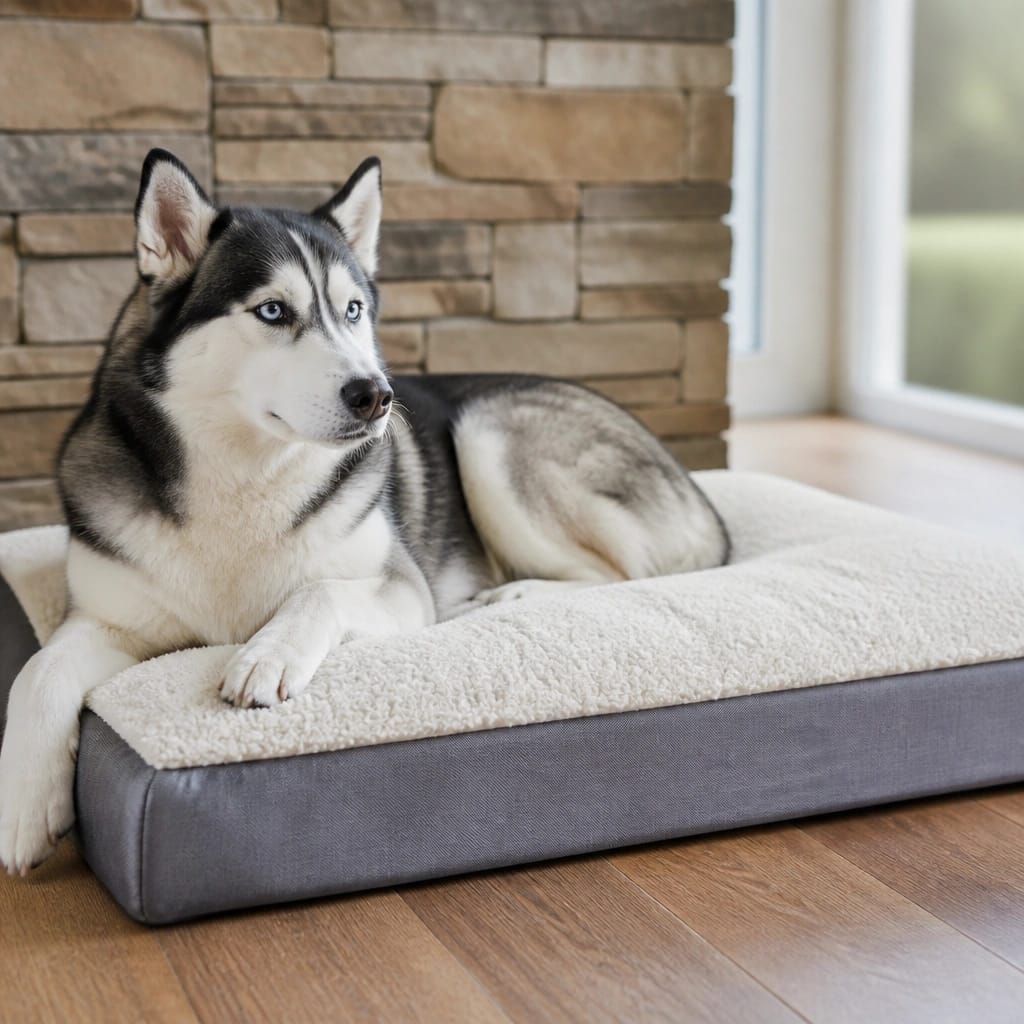
How Huskies Actually Sleep
Huskies are natural diggers. In the wild, they’d scoop out a shallow nest in the snow to regulate their body temperature. Your Husky does the same thing on a dog bed, which is why fragile stitching and low-quality foam fail quickly.
Sleeping position matters too. Many Huskies sprawl out stretched, with legs fully extended, to cool off. Others curl up into a tight ball when they feel secure.
The best bed choices support both styles without confining the dog.
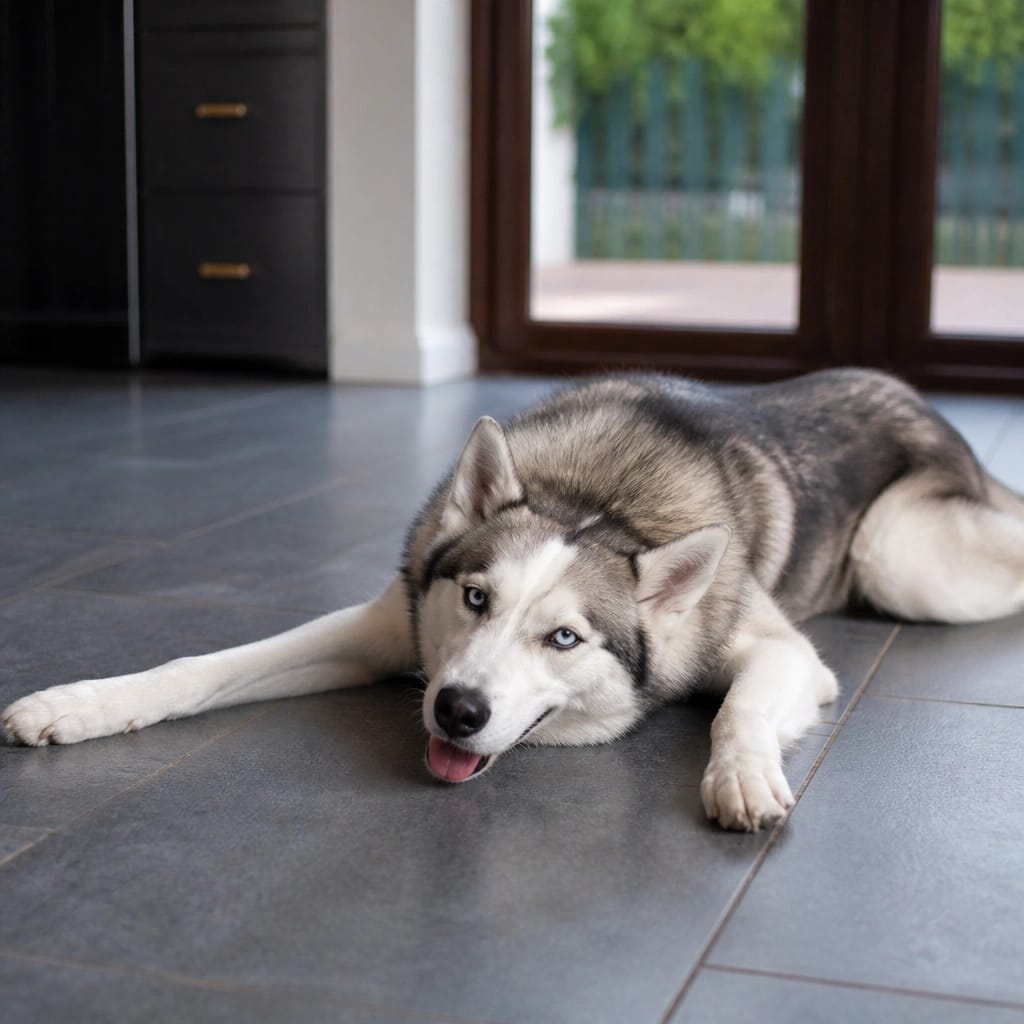
If your Husky constantly digs at its bedding or prefers bare floors, you’ll want to consider that before buying anything. The American Kennel Club notes the breed’s working origins, and those instincts still show up at bedtime. A simple, low-profile mat often beats an expensive plush bed because it feels closer to the ground.
It also helps to understand why dogs love to burrow, since that drive can show up even in a Husky.
The Main Bed Types That Work for Huskies

Not all beds are created equal for this breed. Here are the types that consistently survive and get used.
- Elevated cot-style beds. A raised platform with breathable mesh fabric. Great for airflow and staying cool. Also hard to chew through in most cases.
- Crate mats and flat pads. Firm, simple, and tough. They fit inside wire crates and give a Husky a stable surface. The best ones use ballistic nylon or Cordura.
- Orthopedic foam beds. A solid slab of high-density foam with a simple flat cover. Good for older Huskies with joint stiffness. Just avoid thick memory foam that holds heat.
- Chew-resistant beds. Built with heavy-duty fabrics and reinforced seams. These are the only realistic choice for a bored Husky that destroys everything.
- Cooling beds. These help in hot climates, but only if the bed doesn’t depend on gel that can be punctured. Many owners find a raised bed gives the same cooling effect.
For a full breakdown of one popular option, take a look at our review of elevated cot beds. If you’re deciding between a pad and a mat for a crate, our crate pad versus crate mat comparison explains the difference clearly.
Side-by-Side Comparison: Which Bed Style Wins
Here’s the short version of how the main styles stack up.
| Type | Durability | Cooling | Joint Support | Crate Fit | Ease of Cleaning |
|---|---|---|---|---|---|
| Elevated cot | High | Excellent | Low | Good | High |
| Crate mat / flat pad | High | Good | Medium | Excellent | High |
| Orthopedic foam | Medium | Fair | Excellent | Good | Medium |
| Chew-resistant | High | Medium | Medium | Medium | Medium |
| Cooling gel bed | Low | Excellent | Low | Good | High |
The right pick depends on what matters most. For a crate, a flat mat wins every time. For an open room in a warm house, an elevated cot is hard to beat.
For an older Husky with sore joints, a firm orthopedic slab gives the best support. Just avoid the fluffy, bolster-style beds unless your Husky is gentle. The same goes for waterproof dog beds, which help a lot with shedding and accidents, but only if the cover isn’t a chew target.
How to Choose the Right Bed for Your Specific Husky

Now it’s time to get specific. The best bed for your Husky depends on age, chewing habits, and where the dog sleeps.
- Puppies. Get a flat, tough mat. Puppies chew everything, and the mat should be easy to replace. A simple crate mat works well during house training.
- Adult Huskies. An elevated cot or a heavy-duty flat mat. Consider a chew-resistant cover if your dog likes to scratch before settling.
- Senior Huskies. Choose a firm orthopedic bed with a removable, washable cover. Confirm with your vet if joint issues are a concern.
- Heavy chewers. Only beds with ballistic nylon or Cordura fabric make sense. Check seams before every wash.
- Crate sleepers vs. free roamers. In a crate, the bed must fit flat without folding. In an open room, your Husky will often choose a cool hard floor anyway, so a simple cot gives them a comfortable option.
Use our dog bed size chart by weight to narrow down the dimensions before you order. That step saves you from buying a bed that fits like a welcome mat.


