

Why Puppies Sleep on the Floor Instead of Their Bed
Puppies often choose the floor because it feels cooler. Their bed may be too warm or uncomfortable. The texture or smell might be unfamiliar.
Sometimes anxiety or habit plays a role. Observe your puppy’s behavior to find the cause.
If you’ve just brought home a new puppy and they keep choosing the cold floor over their plush new bed, it can feel a bit frustrating. But this behavior is incredibly common. Understanding why puppies sleep on the floor instead of their bed is the first step to fixing it.
Puppies sleep up to 20 hours a day, so their sleeping surface matters a lot. Their choice usually comes down to temperature, comfort, or a simple lack of familiarity. Let’s walk through the most common reasons so you can help your pup feel right at home.
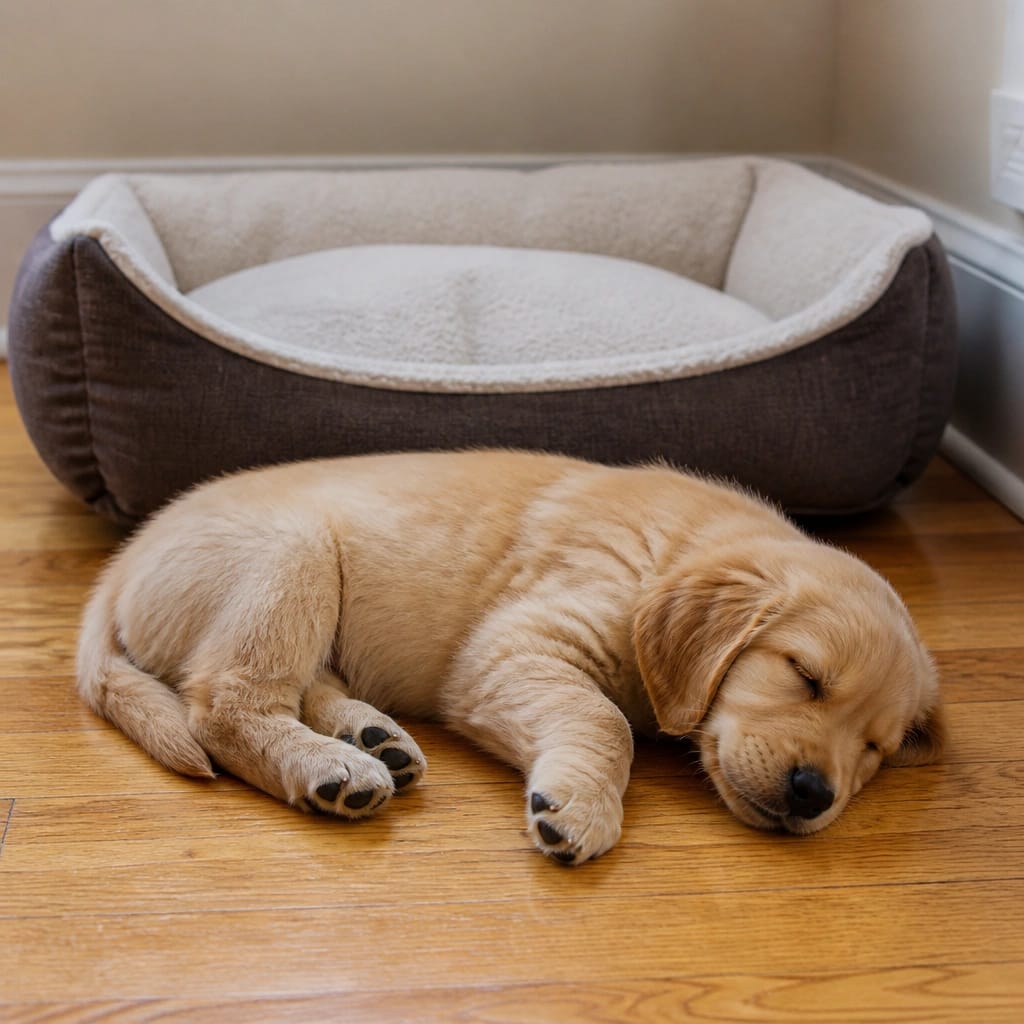
Why Puppies Sleep on the Floor: The Core Reasons
Puppies don’t reject their beds to be stubborn. They’re reacting to their environment. The four main drivers are temperature regulation, the bed’s physical characteristics, training gaps, and anxiety.
Every puppy is different. A breed with a thick double coat might overheat easily. A tiny Chihuahua might feel lost in a bed that’s too big.
Your job is to play detective. Watch when they choose the floor. Is it after playtime?
At night? In a specific room? That context tells you everything.
Let’s break down each cause so you can match the solution to your puppy’s actual problem.
Temperature Troubles: Is Your Puppy Overheating?

This is the number one reason puppies sleep on the floor. Tile, hardwood, and laminate act like natural heat sinks. They stay cool even when the room is warm.
A puppy’s thick bed, especially one with plush filling or bolsters, can trap body heat.
If your puppy pants heavily, stretches out flat on the floor, or presses their belly against the coolest surface, they’re overheated. This is especially common in the summer or in homes with poor air circulation.
Brachycephalic breeds like French Bulldogs and Pugs are more prone to overheating. So are huskies, golden retrievers, and other double-coated dogs. If this sounds like your puppy, focus on cooling options.
An elevated cot or a cooling mat can make a big difference. You might also want to check our guide to selecting the right crate bedding for a flat, breathable surface.
The Bed Itself: Size, Texture, and Smell Problems

Sometimes the bed is the problem. It might be too big, leaving your puppy feeling exposed. Or too small, making them feel cramped.
Puppies grow fast, and the bed you bought at eight weeks might not fit them at twelve weeks.
Texture matters too. Some puppies hate slick fabrics. Others find super plush materials too hot.
The smell of a new bed can also be off-putting. It smells like a factory, not like home.
Try washing the bed cover with a gentle, unscented detergent. Rub a towel on your puppy’s skin and then on the bed to transfer their scent. If the bed is too big, consider a smaller crate pad or a snug cave-style bed.
Getting the appropriate size bed for your growing puppy is crucial for their comfort.
Training and Behavioral Issues: Unfamiliarity and Habit
Puppies often need to be taught that their bed is a safe, happy place. They don’t innately know it’s for sleeping. If you just placed the bed down and expected them to use it, that’s a common mistake.
Start by making the bed rewarding. Toss treats on it. Feed them meals on it.
Give them a high-value chew toy while they sit on it. Never force them onto the bed or use it for punishment.
Crate training can also affect bed use. If your puppy is used to sleeping in a crate with a flat mat, an open fluffy bed might feel strange. Following crate training guidelines from the AKC helps build a positive association with their sleeping space.
With time and patience, most puppies learn to love their bed. If you’re struggling, our guide to calming a dog with anxiety might offer useful training techniques.
Anxiety or Fear: When the Bed Doesn’t Feel Safe
Some puppies avoid their bed because it makes them feel vulnerable. An open, flat bed in the middle of the room offers no protection. A floor corner or a spot under the couch feels safer.
Signs of anxiety include trembling, hiding, or refusing to settle. If your puppy only sleeps on the floor near a wall or under furniture, they’re seeking security.
Try moving the bed to a quieter, more enclosed area. A crate with the door open can feel like a den. A bolster bed with raised edges provides a sense of enclosure.
Calming aids like a heartbeat toy or a pheromone diffuser can also help. If the anxiety is severe, consult a vet or a certified dog trainer. We also have a guide on choosing the best spot for their bed that covers placement strategies.
Step-by-Step Guide to Fixing Floor Sleeping
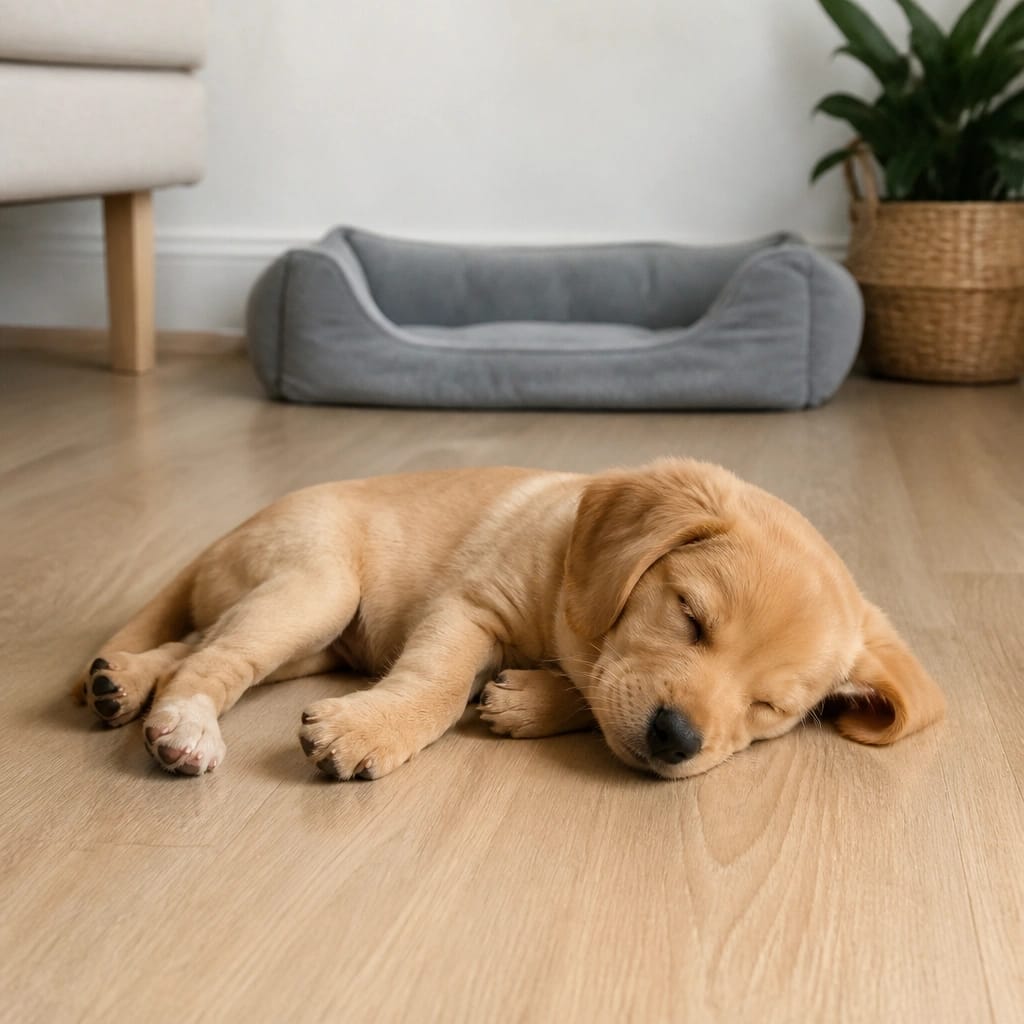
Start by ruling out health issues. If your puppy is limping, whining, or avoiding the bed entirely, check with a vet first. Once you know they’re healthy, move through these steps in order.
Step 1: Check the temperature. Feel the floor where they sleep. If it’s noticeably cool, that’s your clue. Try a cooling mat or an elevated cot.
Move the bed away from heaters and direct sunlight.
Step 2: Make the bed appealing. Place treats and toys on the bed. Feed your puppy their meals there. Use a command like “bed” and reward them when they step on it.
Keep sessions short and positive.
Step 3: Adjust the bed itself. If the bed is too big, you can try a smaller crate pad. If it’s too warm, switch to a breathable fabric like cotton or mesh. If it’s too slick, add a grippy mat underneath.
Step 4: Move the bed. Place it near your own sleeping area for comfort. Some puppies feel safer in a crate with the door open. Others prefer a corner of the room.
Watch where they choose to sleep on the floor and put the bed there.
Step 5: Be patient. Puppies take time to learn. Most will accept their bed within a week of consistent training. If they still refuse, go back to step one and recheck the temperature.
Common Mistakes That Make the Problem Worse
Don’t force your puppy onto the bed. That creates a negative association. They’ll learn to avoid it even more.
Don’t buy a bed that’s way too big for them to grow into. Puppies like snug spaces. A giant bed feels exposed and unsafe.
Stick to a size that fits them now.
Don’t ignore the washing instructions. A dirty bed smells like food or accidents. Your puppy won’t want to sleep there.
Wash the cover weekly with unscented detergent.
Don’t use the bed as a punishment zone. If you send your puppy to their bed when they misbehave, they’ll associate it with negative feelings. Keep it positive.
Don’t assume every bed works for every puppy. Plush beds can overheat some dogs. Bolster beds can feel too confining for others.
You may need to try a couple of different styles before finding the right fit.
When to See a Vet: Health Issues Behind Floor Sleeping
Sometimes floor sleeping signals a medical problem. If your puppy suddenly starts avoiding their bed, pay attention.
Orthopedic issues can make a soft bed painful. Puppies with growing pains, hip dysplasia, or injuries may prefer a hard, flat surface. Watch for limping, stiffness, or reluctance to jump.
Skin allergies or infections can make certain fabrics uncomfortable. If your puppy scratches excessively or has red, irritated skin, talk to your vet.
Urinary tract infections can cause accidents on the bed. If your puppy is having potty mishaps and then avoids the bed, that’s a red flag.
Anxiety or stress can also cause bed avoidance. Major changes like moving homes or introducing a new pet can trigger this. If the behavior is new and accompanied by other signs of distress, consider professional help.
The American Veterinary Medical Association recommends a checkup if you notice any sudden changes in sleeping behavior that last more than a few days.
Frequently Asked Questions
Why does my puppy sleep on the floor but not in their crate?
This is usually about temperature. Crates trap body heat, so a plush pad inside can get too warm. Try a flat crate mat or a cooling pad.
Also check that the crate is the right size and not too drafty.
Should I let my puppy sleep on the floor?
Yes, occasionally it’s fine. But if they consistently choose the floor over their bed, you should investigate the cause. Long-term floor sleeping on hard surfaces can lead to joint issues, especially in growing puppies.
How long does it take for a puppy to use their bed?
Most puppies adjust within a week with consistent training. Some take two weeks. If your puppy still refuses after two weeks, recheck the temperature, bed size, and placement.
A vet visit may be needed.
Is it okay if my puppy sleeps on the floor in summer?
Yes, cool floors can help them regulate their body temperature. But provide a comfortable alternative like a cooling mat or elevated cot. Hard floors over long periods can cause calluses and joint strain.
What kind of bed is best for a puppy that runs hot?
Look for a cooling bed with breathable mesh or a gel-infused foam. Elevated cots allow air to circulate underneath. Avoid plush, thick memory foam and beds with high bolsters.
Cotton and bamboo covers are good choices.
Why does my puppy sleep on the floor next to the bed?
This is often about security and scent. Your puppy wants to be near you but may not feel comfortable on the bed itself. Try moving their bed right next to yours.
Put a worn t-shirt of yours on it for comfort.
Decision Guide: What to Do Based on Your Puppy’s Situation
If your puppy pants and stretches out flat on the floor. The room is too warm for their bed. Try a cooling mat or an elevated cot. Move the bed away from sunny windows.
Check the room temperature stays between 65 and 75°F.
If your puppy sleeps on the floor but eats and plays on the bed. The bed is fine for positive activities. The problem is likely the bed itself. The texture or size might be wrong.
Switch to a flatter, breathable mat. Remove any bolsters that trap heat.
If your puppy only sleeps on the floor near a wall or under furniture. They want security, not comfort. Move the bed to a quiet corner. Add a crate or a cave-style bed.
Place a worn shirt of yours on it for scent comfort.
If your puppy is new to the house and avoids the bed. Give them time. Follow the step-by-step training guide. Use treats and positive reinforcement consistently.
Most puppies adjust within one to two weeks.
If your puppy suddenly starts sleeping on the floor after using the bed for months. Check for pain, injury, or anxiety. Look for limping, stiffness, or changes in appetite. A vet visit is wise if the behavior lasts more than a few days.


