
Why Do Dogs Change Positions While Sleeping?
You’ve watched your dog sleep through a dozen different positions in one night. Curled tight like a fox. Sprawled flat on their side.
Legs kicked out dramatically. Then curled again. It looks random, but it’s not.
Why do dogs change positions while sleeping? The short answer is that they’re constantly managing their body temperature, comfort, and safety, often without even waking up. Dogs don’t have sweat glands like we do, so shifting positions helps them cool down or warm up as needed.
As of 2026, veterinary behavior research confirms that these movements are usually healthy and normal. But sometimes, frequent shifting can signal something worth paying attention to.
Dogs change sleeping positions to regulate body temperature and relieve pressure on joints. They also shift during dreaming and REM cycles. Curling conserves heat.
Sprawling cools them down. Age, health, and bedding all affect how often they move. Most position changes are normal and healthy.
Why Sleeping Positions Actually Matter for Your Dog’s Health
A dog’s sleeping position tells you more than just whether they look comfortable. It’s a window into how their body is functioning at that moment.
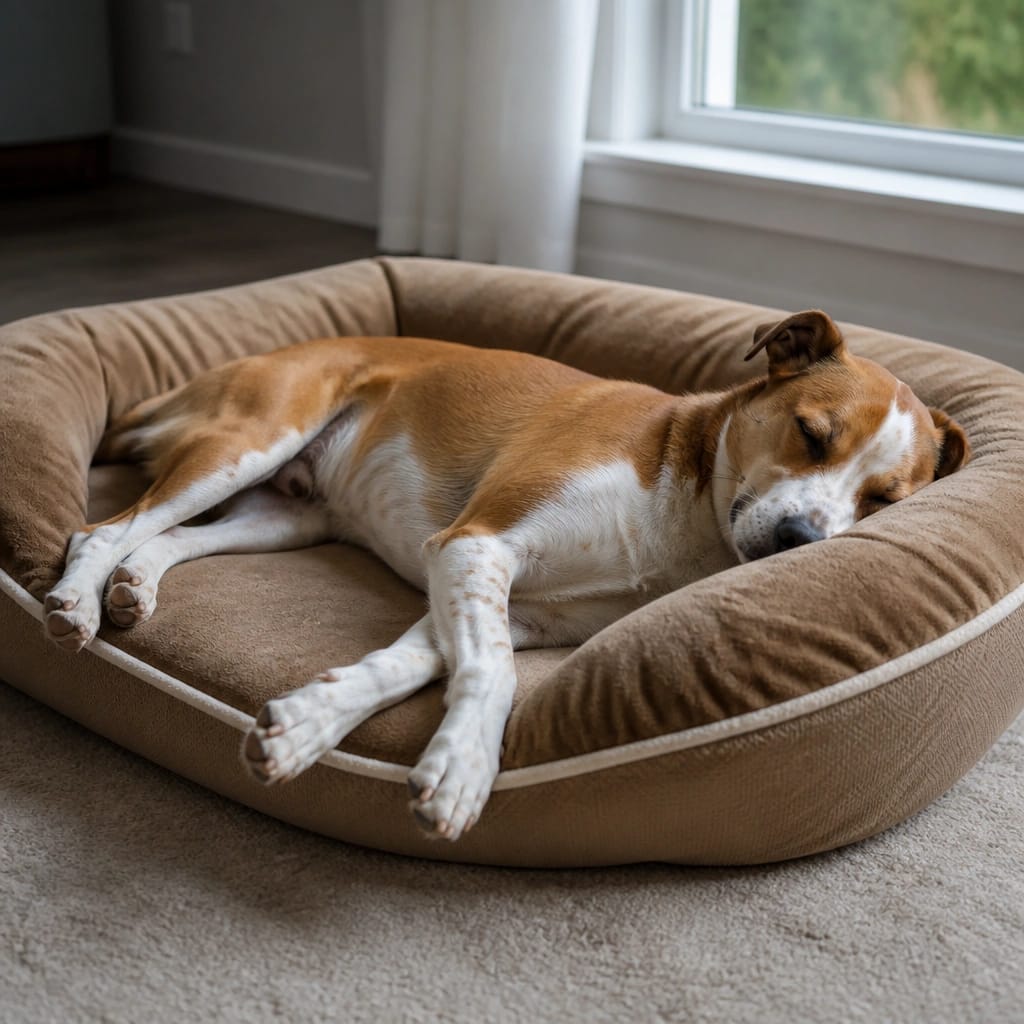
When your dog curls into a tight ball, they’re preserving body heat and protecting vital organs. That’s an instinct left over from wild ancestors. When they flop onto their side with legs stretched, they’re in deep sleep, fully relaxed and trusting their environment.
The positions your dog chooses and how often they switch between them can reveal:
- Joint comfort, Dogs with hip dysplasia or arthritis often shift more to find a pain-free spot
- Temperature regulation, Overheating or feeling cold triggers position changes
- Anxiety levels, Nervous dogs may struggle to settle into one position
- Sleep quality, Frequent repositioning can mean lighter, less restorative sleep
Veterinary sources from the American Veterinary Medical Association note that sudden changes in sleep behavior, like a previously still sleeper who now paces and repositions constantly, warrant a conversation with your vet.
If you’ve noticed your dog seems restless at night but settles fine during the day, their bed setup could be part of the problem. Something as simple as buying the right size or choosing the right firmness can make a surprising difference.
The 5 Most Common Sleeping Positions and What They Mean
Each position your dog adopts serves a specific purpose. Here’s what to look for and what it tells you.
Curled Up (“Donut” or “Fox” Position)
This is the classic circle. Tucked nose to tail. Paws hidden.
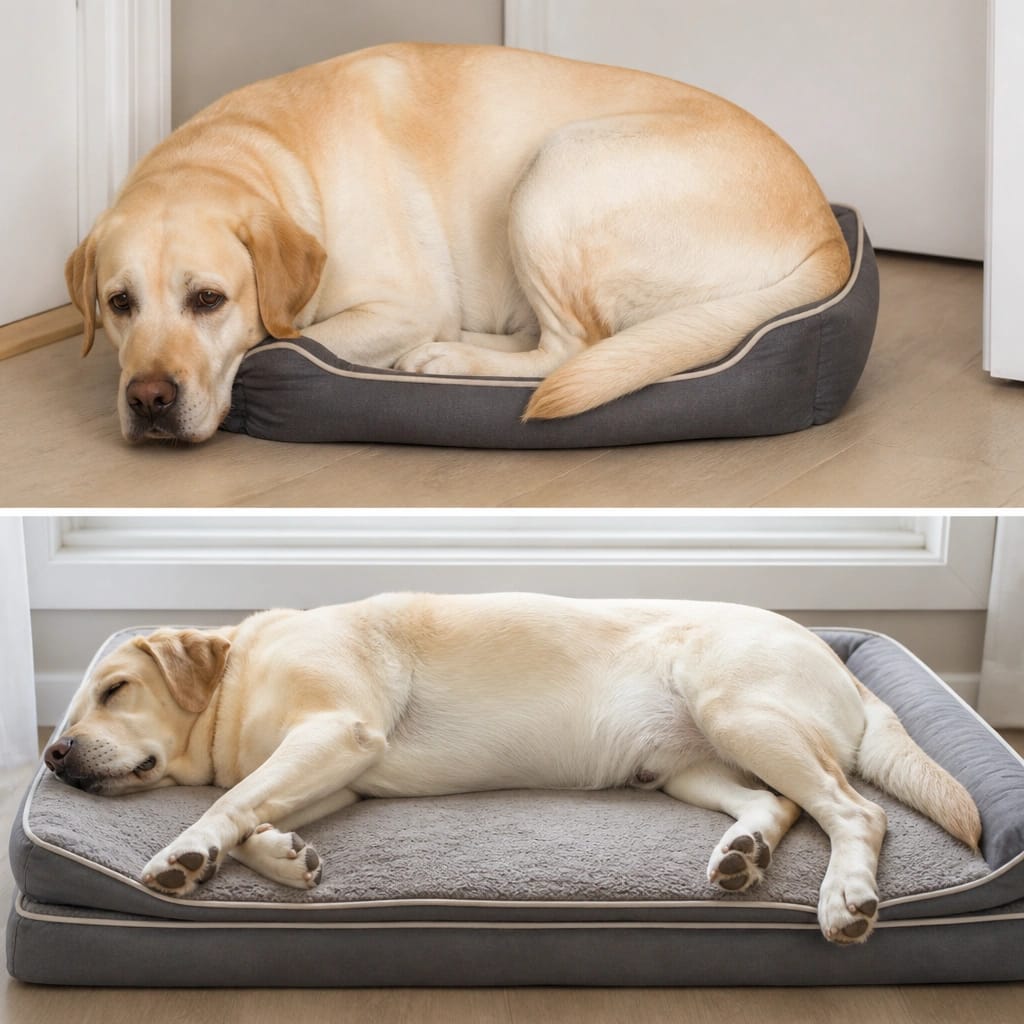
Dogs choose this position to conserve heat and protect their abdomen. It’s common in cooler weather and among smaller breeds that lose body heat faster. It’s also a default position for nervous dogs, covering the belly feels safer.
When it matters: If your dog used to sprawl but now curls constantly, check the room temperature. They might be cold. If the room is warm and they still curl tight every night, consider whether they’re feeling anxious or guarding a sore spot.
Side Sleeping
Legs stretched to one side. Head resting on the floor or a bolster.
This is the position of deep, restorative sleep. When a dog sleeps on their side, their muscles fully relax and their joints can realign. Most dogs cycle into this position during REM sleep.
It signals trust, they feel safe enough to be vulnerable.
When it matters: This is the gold standard for healthy sleep. If your dog prefers side sleeping, their bed probably suits them well. They have the space to stretch out completely, something a bed that’s too small won’t allow.
Sprawled Out (Belly-Down “Sploot” or “Superman”)
Back legs kicked behind. Front legs forward. Belly flat on the surface.
Puppies and young dogs love this position. It’s cool, it stretches the hip flexors, and they can spring up quickly if needed. Large breeds and dogs with deep chests may find this position less comfortable because of the pressure on their ribcage.
When it matters: Puppies who sploot are practicing hip flexibility. Adult dogs who sploot frequently may be overheated, the belly is one of the few areas where dogs can release heat. For a nervous or anxious dog, this position might work better for them because it allows a quick escape.
On the Back (Belly-Up)
Feet in the air. Belly fully exposed.
This is total vulnerability. Dogs only sleep on their backs when they feel completely secure. It also helps with cooling, the belly has less fur and more blood vessels near the surface, making it an effective radiator.
When it matters: Dogs who sleep belly-up in the middle of the room are confident and comfortable. If your dog only does this in their crate or on their own bed, they trust that space completely.
Sprawled on the Side with Legs Out
Imagine a dog who looks like they’re running mid-air. Legs fully extended. Sometimes twitching.
This happens during deep REM sleep when the brain is highly active but the body is paralyzed (a state called muscle atonia). The twitching you see is normal, it’s the brain sending signals that the body mostly blocks.
When it matters: Puppies and young dogs spend more time in REM sleep than seniors. If your dog twitches or paddles in their sleep, let them stay. Waking them abruptly can cause confusion or a startled reaction.

What It Means When Your Dog Cuddles Into You While Sleeping
Some dogs don’t change positions much. They pick one spot, pressed against your legs, tucked into your side, and stay there.
This is pack sleeping behavior. In the wild, dogs sleep in physical contact with each other for warmth and protection. Your dog is treating you like a littermate.
It’s a sign of deep trust and bonding.
But it can also mean your dog is seeking warmth or comfort they don’t get from their bed. If your dog always leaves their own bed to sleep on yours, their bed might be too cold, too firm, or simply in the wrong location.
Temperature Regulation — The Biggest Reason Dogs Shift at Night
Here’s what most people don’t realize: dogs regulate body temperature primarily through their paws, ears, and belly. They don’t sweat through their skin like humans do.
When your dog curls up, they trap body heat. When they stretch out, they release it. When they move from the bed to the floor, they’re hunting for a surface that feels better against their body.
A few temperature-related triggers for position changes include:
- Room above 75°F (24°C), Dogs will seek cool surfaces and stretch out
- Room below 50°F (10°C), Dogs will curl tight and seek bedding to burrow into
- Humidity above 60%, Panting and repositioning increase as evaporation becomes less effective
The breed matters here too. Brachycephalic breeds like French Bulldogs and Pugs overheat more easily, so they change positions more often in warm rooms. Cold-weather breeds like Huskies and Malamutes prefer cool environments and may shift less in winter.
If your dog seems to be repositioning constantly and you’ve ruled out health issues, start with the thermostat. A room that’s too warm is the most common cause of restless sleep in dogs.
Age and Life Stage: How Puppies, Adults, and Seniors Sleep Differently
Age is one of the biggest factors in how often and why your dog shifts positions at night.
Puppies change positions constantly. They spend more time in REM sleep than adult dogs, and their bodies are growing fast. A puppy might fall asleep splooting on the floor, wake up curled in their bed, and end the night sprawled across your lap.
This is normal. Their sleep cycles are shorter and their temperature regulation is still developing.
Adult dogs tend to settle into patterns. Most will pick a preferred position and stick with it through the night, shifting only once or twice. A healthy adult who changes positions more than five or six times per night might be uncomfortable or overheated.
Seniors are a different story entirely. Older dogs often become restless sleepers due to arthritis, joint stiffness, or cognitive decline. They may circle, reposition, and get up and down repeatedly.
If your senior dog used to sleep soundly and now moves constantly, their bed may no longer be supportive enough. A bed that helps protect sore joints can make a real difference in how often they need to shift.

Breed-Specific Factors That Affect Sleep Positions
Not every dog sleeps the same way. Breed anatomy plays a big role.
Brachycephalic breeds like French Bulldogs, Pugs, and Boston Terriers have shorter airways. They often prefer sleeping on their stomachs with their heads elevated to help them breathe. These dogs tend to shift positions more often in warm rooms because they overheat easily.
Choosing the right bed for a French Bulldog means looking for something with breathable fabric and low bolsters.
Large and giant breeds like Great Danes and Mastiffs have heavy body weight that puts pressure on their joints. They tend to favor side sleeping with legs stretched to take weight off their hips. They also shift more frequently if their bed lacks adequate support.
Sighthounds like Greyhounds and Whippets have very little body fat. They curl up tightly to conserve heat and may shift less often if their sleeping area is warm enough.
Sled breeds like Huskies and Malamutes tolerate cold well but overheat quickly indoors. They sprawl out on cool surfaces and may change positions frequently in a heated home.

Is Your Dog Changing Positions Because of Pain or Discomfort?
Most position changes are normal. But some patterns should raise a red flag.
Watch for these signs that discomfort might be driving the behavior:
- Pacing before settling, Circling more than three or four times before lying down
- Frequent repositioning, Getting up and resettling more than six times in an hour
- Limping after sleep, Stiffness that takes more than a few seconds to work out
- Whining during repositioning, Vocalizing when shifting weight
- Refusing their bed, Choosing hardwood or tile over their usual sleeping spot
If your dog shows any of these, their bed may be the problem. A bed that’s too firm can aggravate sore joints. One that’s too soft can fail to support the spine.
Dogs with arthritis often benefit from orthopedic foam that conforms to their body without sinking too deep.
Signs That Warrant a Vet Visit
Some sleep changes need professional attention. Contact your veterinarian if you notice:
- Sudden onset of nighttime restlessness in a previously calm sleeper
- Trembling or shaking during sleep that isn’t normal dreaming twitches
- Difficulty standing up after sleeping
- Panting during rest in a cool room
- Loss of coordination when getting out of bed
These can signal arthritis, hip dysplasia, neurological issues, or other medical conditions that need diagnosis and treatment.
How Your Dog’s Bed Affects Their Sleep Behavior
Your dog’s bed is more than a soft place to land. It directly influences how well they sleep and how often they shift positions.
Bed Too Small
A dog who can’t fully stretch out will shift positions constantly trying to get comfortable. The ideal bed length should be at least 10 to 15 centimeters longer than your dog from nose to tail. A proper size chart can help you measure accurately.
Bed Too Soft or Too Firm
Memory foam that’s too soft lets a dog’s hips and shoulders sink into an unnatural position. Foam that’s too firm creates pressure points. The sweet spot is medium-density orthopedic foam that supports without fighting the dog’s natural contour.
Temperature of the Bed Surface
Some beds trap heat. Others wick it away. If your dog keeps moving to the floor, their bed might be too warm.
Cooling beds with breathable covers or elevated designs can help dogs who run hot. For cold-weather breeds or winter sleeping, a heated bed or insulated option keeps them from curling up so tight.
When Position Changes Are Normal vs. When to Worry
Here’s a simple way to think about it. Normal position changes happen gradually during sleep and match the environment. A dog who curls up when the room cools down and stretches out when it warms up is behaving naturally.
Worrying patterns include dogs who can’t stay in any position for more than a few minutes. Dogs who wake up, circle, resettle, and repeat the cycle all night. Or dogs who avoid their bed entirely and sleep on hard surfaces despite having a comfortable option.
If you’re unsure, try changing one variable at a time. Adjust the room temperature. Swap the bedding.
Move the bed to a quieter spot. If the behavior improves, you’ve found the cause. If it doesn’t, a vet check is the next step.
How to Set Up the Best Sleep Environment for Your Dog
You can’t control every position change. But you can control the environment your dog sleeps in.
Room Temperature and Airflow
Keep the room between 60 and 70°F (15 to 21°C) for most dogs. Brachycephalic breeds need the cooler end of that range. A fan or open window can make a big difference for dogs who overheat easily.
Choosing the Right Bed Size and Type
Your dog needs enough room to stretch out fully. Measure from nose to tail and add 10 to 15 centimeters. That’s your minimum bed length.
The type matters too. Dogs who curl up tend to prefer nests and donut beds with raised edges they can tuck against. Dogs who sprawl need a flat, open surface.
Dogs who dig or scratch at their bed before lying down might be trying to shape the surface to their liking.
Multiple Sleeping Options
Give your dog choices. A bed in the bedroom and a crate in the living room lets them move to where they feel most comfortable. Some dogs prefer a cooler floor in summer and a warm bed in winter.
Having options reduces restless shifting.
FAQs About Dogs Changing Sleep Positions
Why does my dog keep moving around at night?
Most dogs shift positions to regulate body temperature or relieve pressure on joints. It’s usually normal. If your dog moves more than five or six times per hour or seems unable to settle, check the room temperature and bed condition.
Is it normal for my dog to change positions 10 times a night?
Yes, for most dogs. Light sleepers and growing puppies change positions more often. Dogs in deep REM sleep stay still longer.
Tracking the pattern over several nights is more useful than counting one night.
Why does my dog sleep curled up one night and sprawled the next?
Temperature drives this change. Cool nights trigger the curled donut position to conserve heat. Warm nights encourage sprawled sleeping to release body heat through the belly and paws.
Do dogs dream when they change positions?
Yes. Position changes often happen during REM sleep when dogs are dreaming. The twitching, paddling, and vocalizing that sometimes accompany these shifts are normal muscle signals from an active dream state.
Why does my senior dog pace and reposition constantly?
Arthritis, joint pain, and cognitive decline are common causes. Your senior dog may be struggling to find a position that doesn’t hurt. A supportive orthopedic bed and a vet check can help identify the cause.
Can an uncomfortable bed cause my dog to shift positions more?
Absolutely. A bed that’s too small, too firm, too soft, or too warm will cause more position changes. Dogs vote with their feet.
If your dog sleeps on the floor instead of their bed, the bed is probably the problem.


