

Why Bolster Beds Have Less Usable Space Than You Think
Bolster beds waste their outer footprint. The raised cushions on the sides and head take up real room. A 36-inch bed can have a usable center of under 30 inches.
Curled-up dogs fit fine. Large dogs that stretch lose out. Check the inner dimensions before you buy.
You unboxed a bolster bed, and it looked massive. Then your dog curled up, and suddenly there was hardly any room left. That’s the reality of why bolster beds have less usable space than you think.
The outer edge looks generous, but the sleeping zone is the inner bowl.
In our research, a 36-inch bolster bed often leaves just 27 to 30 inches of open center space. That’s a 15 to 25 percent loss before your dog even lies down. Let’s see where that space gets eaten.
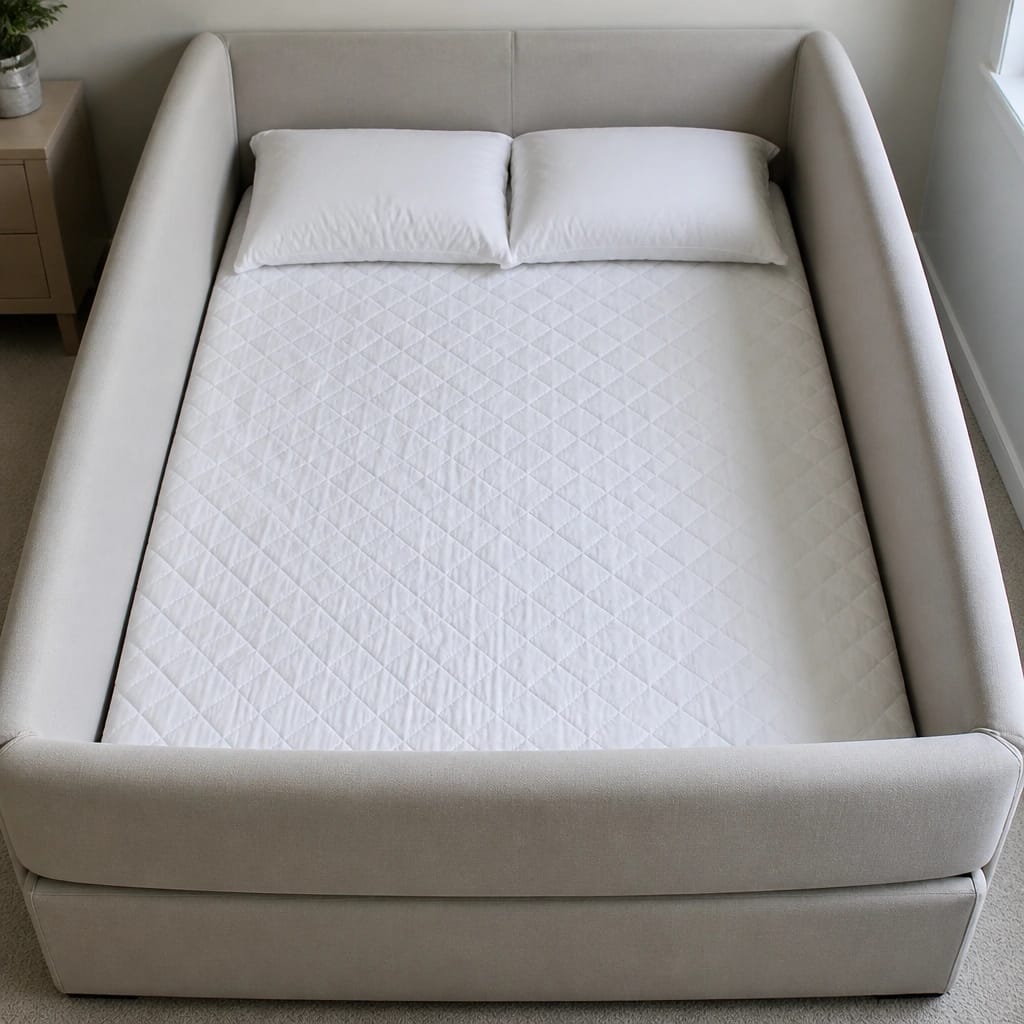
Why Size Isn’t What It Seems
When brands list a dog bed as 36 inches long, they almost always measure the entire outer shell. The bolsters are part of that package. The actual sleeping pad sits between them, and that’s a much smaller number.
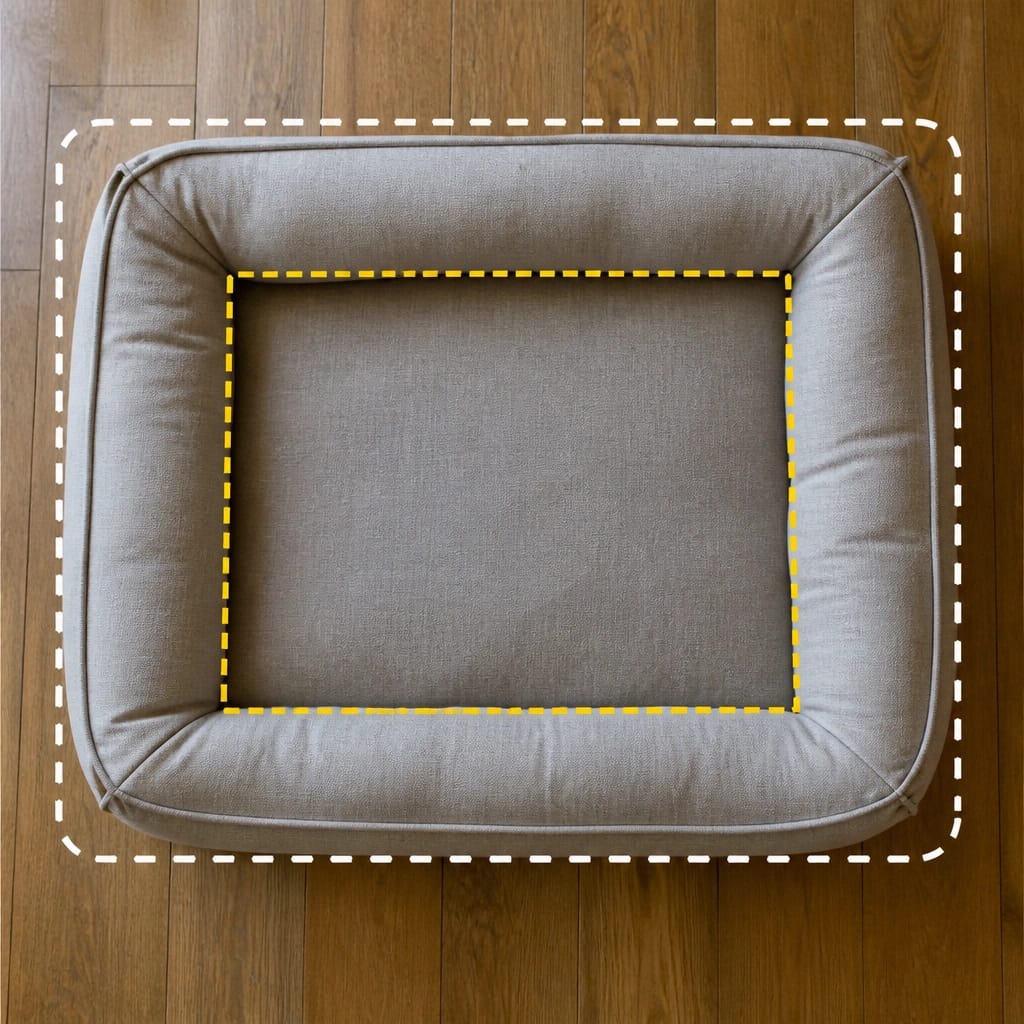
Aggregate reviews are full of owners saying, “I measured the bed, but my dog still hangs off the edge.” The photo above shows exactly how that misreading happens. The raised edges themselves are part of the bed’s selling point, but they cut into the room your dog can actually use.
Key Components That Shrink Usable Space
Three main parts steal real estate from the advertised footprint.
- Bolster walls. The thick padding on the sides and head is usually several inches wide. On both sides, that can eat up to 8 inches of total width.
- Fill density. A soft, flattening bolster takes up more space as it compresses outward. Higher-density foam keeps its shape but still occupies the same shell.
- Center pad. The middle mattress often sits below the bolsters. The effective sleep area is the pad itself, not the full inner hole.
Mismatched firmness also matters. The center is usually softer or firmer than the bolsters. When your dog shifts, they settle into the middle, but the walls don’t give, pushing them toward the available center.
For dogs that need even support, the center pad’s thickness can compress differently than the rim.
What This Means for Different Dogs
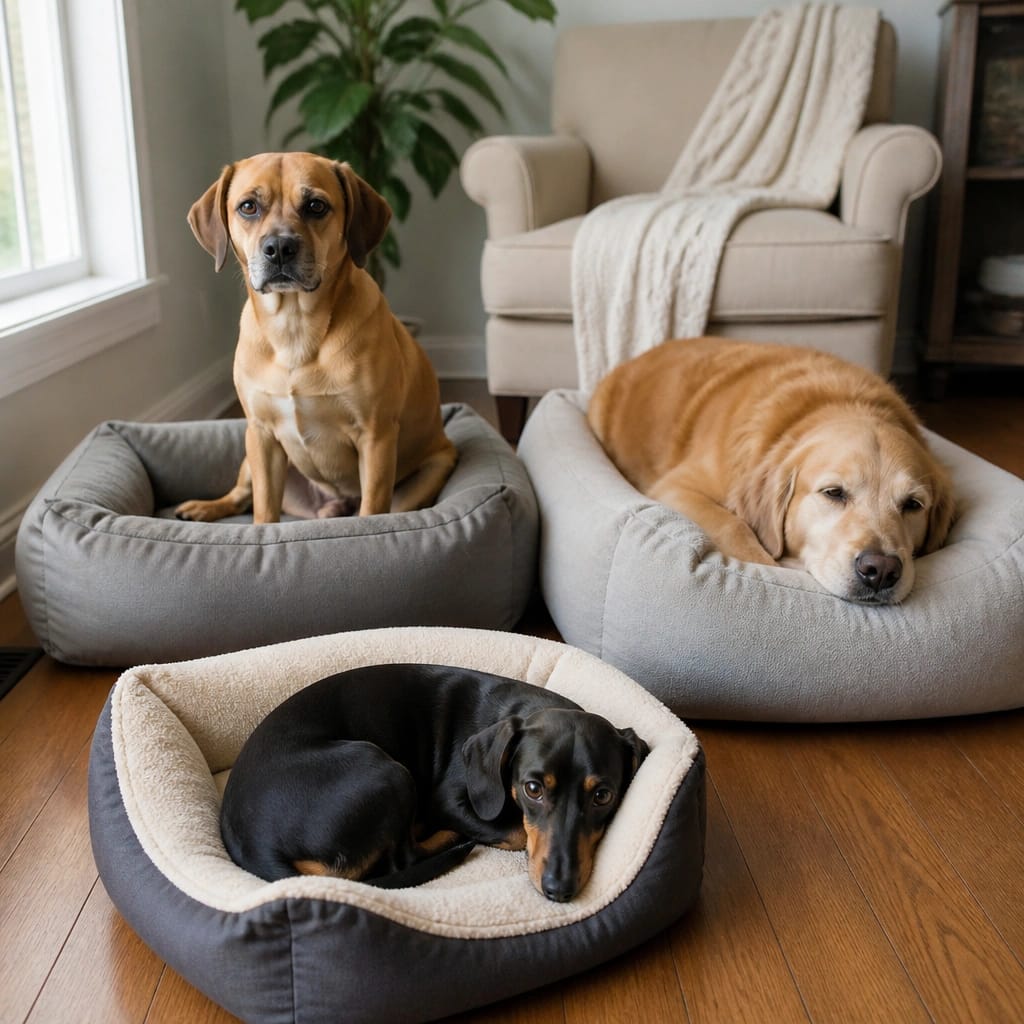
The impact depends entirely on the dog’s sleep style. Some dogs lose very little, while others lose almost everything.
| Dog Type | Sleep Style | Bolster Bed Fit |
|---|---|---|
| Curled-up sleepers | Tucked into a ball | Excellent. The walls mimic a burrow. |
| Stretch-out sleepers | Side sleeping with legs extended | Poor. They hit the walls immediately. |
| Senior dogs | Often stretch to relieve joints | Poor. They need a flat, clear surface. |
| Puppies | Curl up small, but grow fast | Risky. They outgrow the inner space quickly. |
If your dog avoids the bed and sleeps on the cold floor, it might not be stubbornness. They may simply be looking for more room. Many owners report that a bolster bed looks inviting but ends up ignored because the sleeping area feels cramped.
How to Measure a Bolster Bed Before You Buy
You can avoid this whole problem with a tape measure. Here’s the process we recommend.
- Measure your dog. Have them lie flat on their side or stretch out fully. Measure from the nose to the base of the tail. Add 4 to 6 inches for shifting room.
- Measure the bed’s inner space. Place a tape measure from the inside edge of one side bolster to the inside edge of the other. Do the same for the head and foot bolsters.
- Compare the numbers. The inner width needs to exceed your dog’s stretched length. If it doesn’t, the bed is too small.
- Check the center pad. A pad that’s narrower than the inner hole shrinks the real estate even further.
One more thing. A 70-pound dog can have an 18-inch or a 28-inch body length. Weight tells you almost nothing.
Body length is what matters. For a broader look at sizing a bed to your dog, our complete guide offers a solid approach to sizing.
Bolster Beds vs. Flat Beds: A Practical Comparison
If usable space is your top priority, a flat mattress bed is almost always the better choice. Bolster beds offer comfort and security, but they do so by sacrificing open area.

| Feature | Bolster Bed | Flat Bed |
|---|---|---|
| Usable surface | Inner area between bolsters | Full pad area |
| Size honesty | Outer dimensions measure full shell | Listed size is close to actual pad size |
| Best for | Curled-up sleepers, anxious dogs | Stretch-out sleepers, senior dogs |
| Security feel | High. The walls create a den. | Low. Open on all sides. |
A flat bed gives the dog the entire footprint. A 36-inch flat bed has roughly 36 inches of usable space. A 36-inch bolster bed may only offer 28 inches.
That’s the core difference.
Some owners switch to flat orthopedic pads or cots because their dogs simply stretch out too much. That said, we’re not dismissing bolster beds entirely. If your dog loves curling up against a raised rim, they’re a wonderful choice.
Just don’t expect the full footprint to be available for sleeping.


