

Dog Bed Safety: What Every Owner Should Check
Dog bed safety means checking for choking, toxicity, and fit. Inspect seams and zippers first. Look for small parts your dog could swallow. Make sure the bed supports your dog’s joints. Replace any bed showing wear or damage.
Most dog owners never think their dog’s bed could be dangerous. But Dog Bed Safety: What Every Owner Should Check is something you need to take seriously. A bed that looks fine can hide risks that put your dog in danger.
A five-minute inspection can prevent a trip to the emergency vet.
As of 2026, the Consumer Product Safety Commission has issued recalls for dog beds containing lead, phthalates, and fire retardant chemicals linked to health problems. These aren’t rare edge cases. They’re common enough that every owner should know what to look for.
Let’s walk through the real risks.
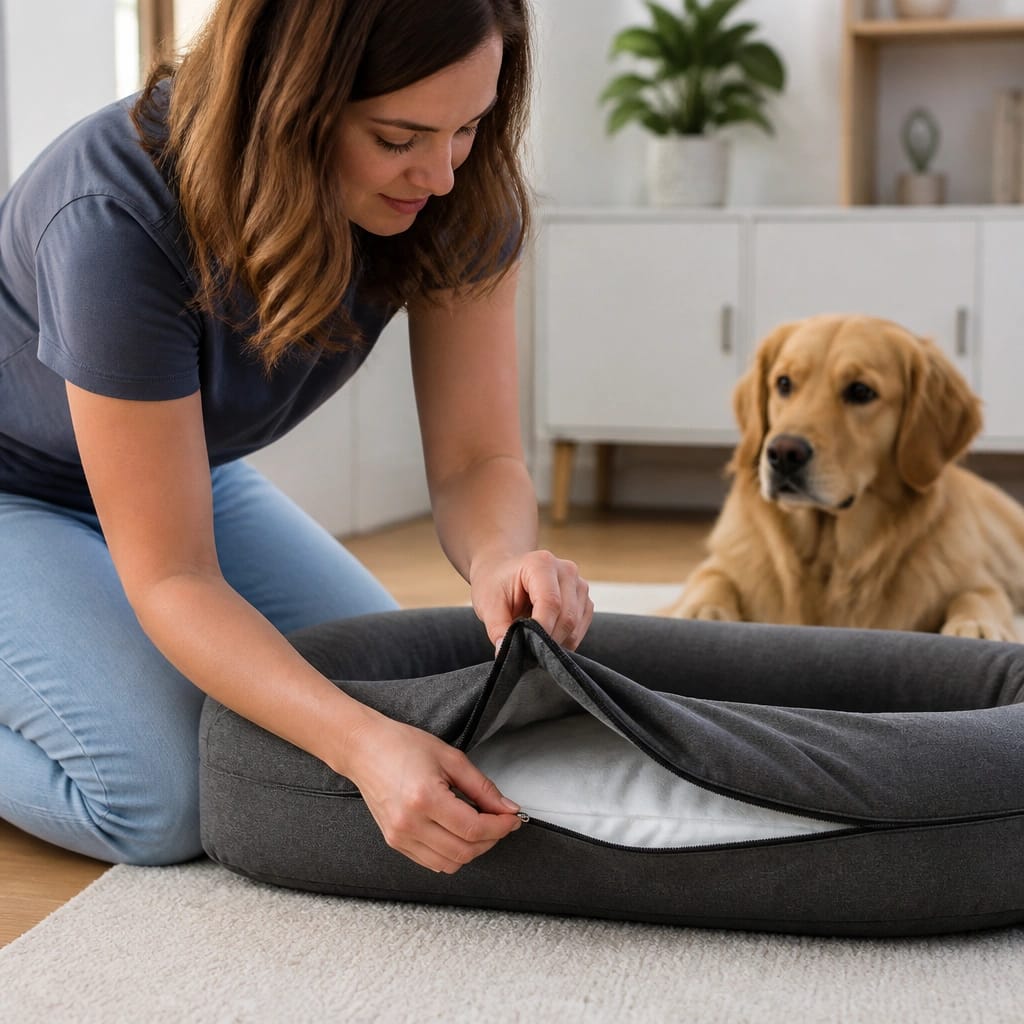
The Real Stakes: What Can Go Wrong When a Dog Bed Isn’t Safe
A dog bed is supposed to be a safe space. But when it’s poorly made or past its prime, it can become a hazard. The most common dangers fall into three categories: physical injury, poisoning, and suffocation.
Physical injury usually comes from loose parts. A torn seam releases stuffing. A dog eats that stuffing, and you’re looking at a blocked intestine.
Surgery for that runs thousands of dollars. Poisoning is harder to spot. Some beds contain chemicals that off-gas for weeks or leach into your dog’s skin.
Suffocation is rare but real. A bed with a thin plastic waterproof liner can trap a small dog that burrows into it.
The stakes are higher than most owners realize. And where you put the bed matters too. A bed near a heat source or in a damp area can create mold or fire risks.
Location and condition both play a role in keeping your dog safe.
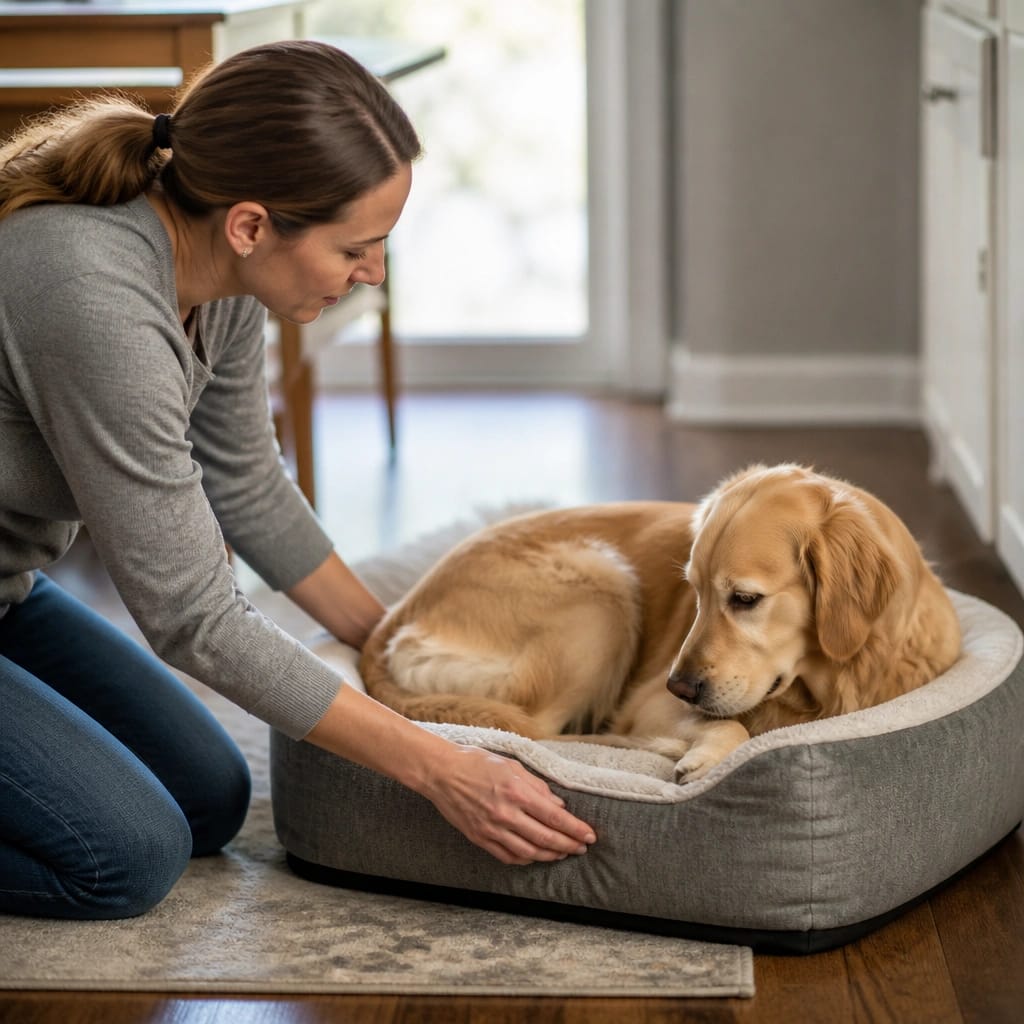
Core Safety Risks: Choking, Ingestion, and Suffocation Hazards
The number one risk with any dog bed is what your dog can tear off and swallow. Zippers, tags, pulls, buttons, and loose stitching are all potential choking hazards. A dog that chews will find these parts quickly.
Seams and Stitching
Weak seams are the most common point of failure. Double-stitched or bound seams last longer. If you can pull threads loose with your fingers, the bed won’t survive a determined chewer.
Loose threads can wrap around a dog’s toe or get swallowed.
Zippers and Fasteners
Zippers are a hidden danger. Dogs can chew through plastic zipper teeth and swallow them. Some beds have zipper guards or tamper-proof zippers that prevent access.
If your dog is a chewer, look for beds with no exposed zipper or a covered zipper track.
Fill Material
Foam and fiberfill are fine until they’re loose. Swallowing foam chunks can cause intestinal blockages. Shredded foam is especially risky because it breaks into small pieces.
If your dog has ever chewed a bed, check the fill carefully. Memory foam that crumbles with age should be replaced immediately.
Toxic Materials and Chemicals: What to Look For on the Label
Not all dog beds are made with safe materials. Some contain chemicals that can harm your dog over time.
Flame Retardants
Many beds are treated with flame retardants to meet flammability standards. Some of these chemicals, like TDCPP and TCEP, have been linked to cancer and hormone disruption. Look for beds that use naturally fire-resistant materials instead of chemical treatments.
The CertiPUR-US certification ensures foam is free from certain flame retardants and heavy metals.
VOCs and Off-Gassing
New beds often smell like chemicals. That’s volatile organic compounds (VOCs) releasing from the foam. High VOC levels can cause respiratory irritation, headaches, and nausea in dogs.
Beds certified by GREENGUARD Gold have been tested for low chemical emissions. If a new bed has a strong smell, let it air out in a well-ventilated room for a few days before letting your dog use it.
Natural Fill Options
Some owners prefer natural fill materials like cedar shavings, wool, or cotton. These can be safer alternatives, but they come with their own risks. Cedar shavings, for example, can cause respiratory issues in some dogs if inhaled.
It’s worth reading up on whether natural fill options like cedar are actually safe for your particular dog.
Heavy Metals and Dyes
Cheap dyes and pigments can contain lead, cadmium, and other heavy metals. This is especially concerning for puppies that chew on their beds. Look for beds that are OEKO-TEX certified, which means every component has been tested for harmful substances.
The Right Size and Fit: Why It’s a Safety Issue, Not Just Comfort
A bed that’s too small can cause physical problems. A bed that’s too large can be a fall risk. Size matters for safety, not just comfort.
Too Small
When a dog curls up on a bed that’s too small, their joints don’t get proper support. Over time, this can contribute to arthritis and hip dysplasia. A bed that’s too short means your dog’s legs or head hang off the edge.
That’s uncomfortable and can lead to pressure sores.
Too Large
A bed that’s too big can be confusing for some dogs. They don’t feel secure because the edges are too far away. For older dogs or puppies, a large bed means a longer drop to the floor.
If your dog has mobility issues, that drop can cause injury when they step off.
Crate Fit
Crate beds need to fit exactly. A bed that’s too big can bunch up and create unsafe gaps. A bed that’s too small leaves hard plastic exposed.
The difference between a puppy’s needs and an adult dog’s requirements is significant. Your dog’s bed size should change as they grow.
Measure your dog from nose to tail base and add 6 to 12 inches. That’s the minimum bed length. For deep-chested breeds, measure the widest point and add 6 inches.
If your dog likes to stretch out, go bigger. If they curl up, a smaller bed works fine.
Special Safety Needs: Puppies, Senior Dogs, and Heavy Chewers
Not every dog needs the same kind of bed. Life stage and behavior change the safety checklist.
Puppies
Puppies explore with their mouths. Every part of a bed is a potential chew toy. Remove all tags, pulls, and loose threads before giving a puppy access to a bed.
Watch for signs of chewing. If your dog licks or chews their bed regularly, inspect it daily. Some puppies will eat stuffing fast enough to cause a blockage before you notice.
Senior Dogs
Older dogs have different needs. They need a bed that’s easy to get in and out of. A low-profile bed with firm support is best.
Memory foam helps distribute weight and reduces pressure on arthritic joints. A bed that’s too soft can make it harder for a senior dog to stand up. That can lead to falls and injuries.
Incontinence is common in older dogs. A waterproof liner is essential, but it needs to be breathable. A non-breathable plastic liner can trap moisture against the skin, causing hot spots and infections.
Look for a waterproof dog bed that uses a breathable membrane.
Heavy Chewers
Some dogs will destroy any bed you give them. For these dogs, safety means choosing the right materials. Look for chew-resistant fabrics like ballistic nylon or canvas.
Avoid beds with zippers, buttons, or tags that can be pulled off. The best approach is to use a bed made from chew proof materials that can’t be easily torn.
Dogs with Anxiety
Dogs that burrow or nest aggressively need extra supervision. A donut or cave bed can be comforting, but it can also trap a dog if the fabric collapses. Make sure the bed maintains its shape.
If the bolsters flatten, the bed can become a suffocation risk.
How to Inspect Your Dog’s Bed at Home — Step by Step
A quick inspection takes five minutes. Do it every two weeks for beds that see daily use. Here’s what to check.
Run your hands over every seam. Feel for loose threads, holes, or thin spots. Squeeze the fill to check for lumps or hard areas.
Turn the bed over and inspect the zipper track. Open and close the zipper to make sure it moves smoothly.
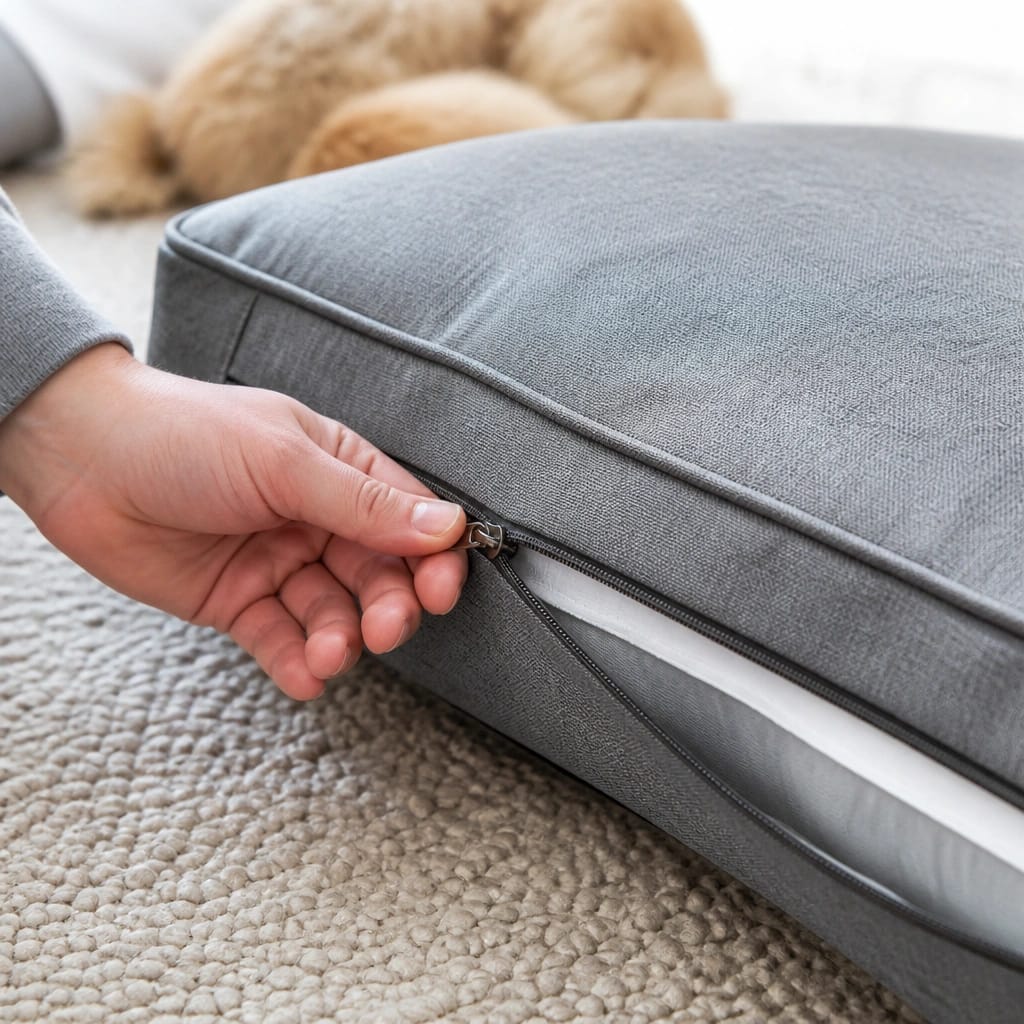
Check the non-slip backing. If it’s peeling or cracked, the bed can slide on hardwood floors. A sliding bed can cause your dog to slip and injure a joint.
Look at the cover for stains, odors, or discoloration. These can signal mold or mildew underneath.
Cleaning and Maintenance: Preventing Mold, Mildew, and Hidden Wear
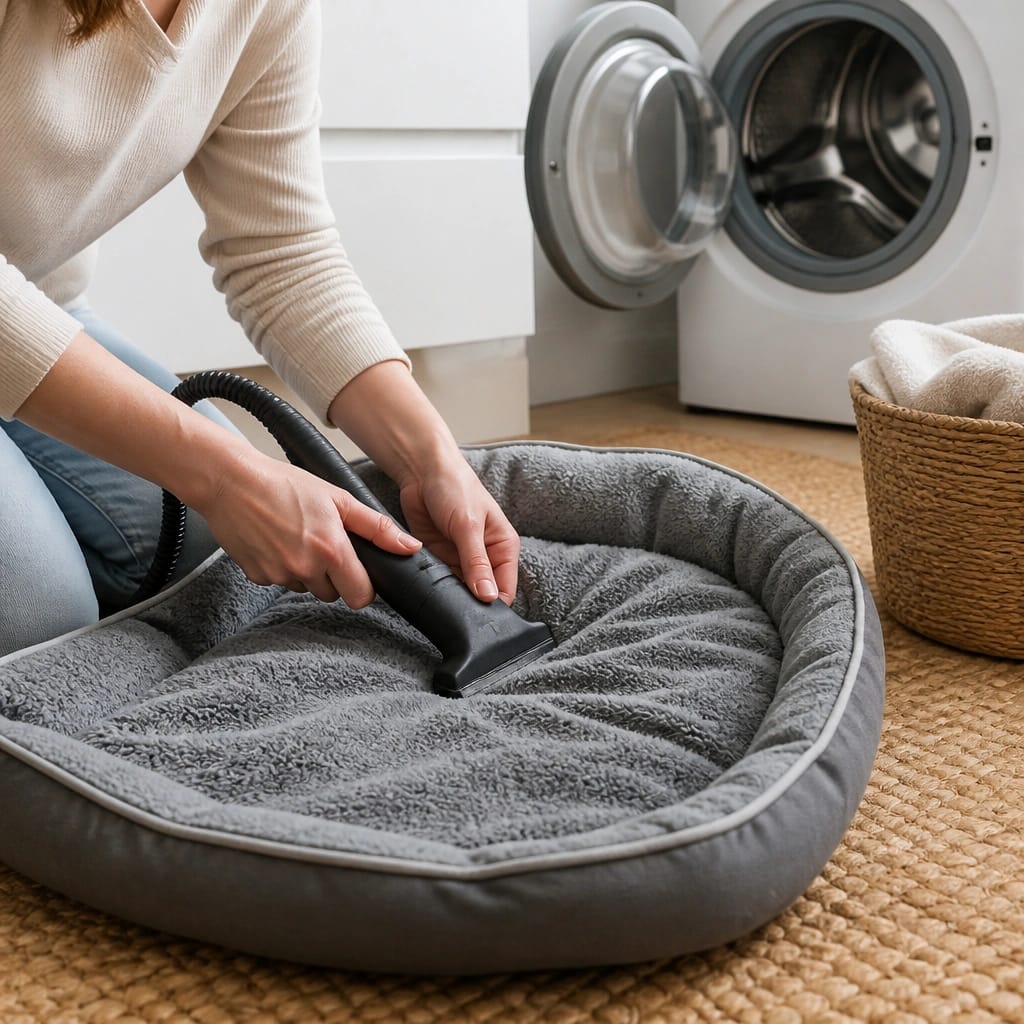
Dirt and moisture build up fast in a dog bed. Weekly vacuuming removes hair and dander. Monthly washing of the cover prevents bacteria growth.
Always follow the manufacturer’s wash instructions. Hot water can shrink some fabrics. High heat can damage waterproof liners.
Air drying is safer than machine drying for most beds.
If your dog has accidents, clean the bed immediately. Urine that soaks into foam creates a breeding ground for bacteria. Enzyme cleaners break down the proteins and remove the smell.
For stubborn odors, professional cleaning may be needed.
When to Replace a Dog Bed: Signs It’s No Longer Safe
A dog bed doesn’t last forever. Most beds need replacement every 12 to 24 months with regular use. Some signs mean it’s time to toss it.
Flattened foam no longer supports your dog’s joints. If the foam doesn’t spring back after pressing, replace it. Torn seams and leaking fill are an immediate choking hazard.
A zipper that’s broken or missing can cut your dog’s skin.
A bed that smells even after cleaning has bacteria or mold inside. That’s not safe for any dog to sleep on. A bed that’s been chewed and repaired more than once is better off replaced.
When to Call a Vet or Check for a Product Recall
If your dog eats any part of their bed, call your vet immediately. Symptoms of a blockage include vomiting, lethargy, and loss of appetite. Don’t wait to see if it passes on its own.
Check the CPSC website for active recalls on dog beds. As of 2026, several brands have been recalled for lead, phthalates, and fire hazards. If your bed matches a recalled model, stop using it and contact the manufacturer.
Some dogs develop skin reactions to bed materials. Redness, itching, or hair loss on the belly or legs can indicate a contact allergy. Switch to a different bed fabric and see if the symptoms improve.
Your Dog Bed Safety Checklist: What to Verify Today
| Check this | What to look for |
|---|---|
| Seams | No loose threads, holes, or thin spots |
| Zipper | Moves smoothly, no missing teeth |
| Fill | No lumps, crumbling, or leaking foam |
| Cover | No stains, odors, or discoloration |
| Non-slip base | No peeling or cracking |
| Fit | Bed is the right size for your dog |
This checklist takes two minutes. Run through it once a month. It’s the easiest way to keep your dog safe while they sleep.
Frequently Asked Questions
How often should I inspect my dog’s bed?
Every two weeks for beds used daily. Monthly for backup beds. Inspect immediately if your dog starts chewing or scratching at the bed.
What’s the most common dog bed safety hazard?
Torn seams and leaking fill. Dogs eat the stuffing, which can cause a life-threatening intestinal blockage that requires surgery.
Are memory foam beds safe for dogs?
Yes, if the foam is CertiPUR-US certified. That means it’s free from heavy metals, formaldehyde, and certain flame retardants. Check for crumbling foam over time.
Can a dog bed cause breathing problems?
Yes. Some beds off-gas VOCs that irritate the lungs. Mold in a damp bed can also cause respiratory issues.
Look for GREENGUARD Gold certified beds.
How do I know if my dog’s bed has mold?
Smell it. A musty odor means mold is present. Dark spots on the cover or foam are another sign.
Moldy beds should be thrown away immediately.


