

How to Move Your Dog’s Bed to a New Location
So, you’ve decided to rearrange the living room or shift your pup’s sleeping spot to a quieter corner. Knowing How to Move Your Dog’s Bed to a New Location the right way saves you from a stressed-out pup and a few sleepless nights.
A dog’s bed is a crucial anchor of scent and routine. A sudden shift can feel like a territory breach to some dogs, triggering mild anxiety. Canine behavior specialists at veterinary universities agree that respecting a dog’s sense of place makes transitions smoother.
Let’s walk through the right way to do it.
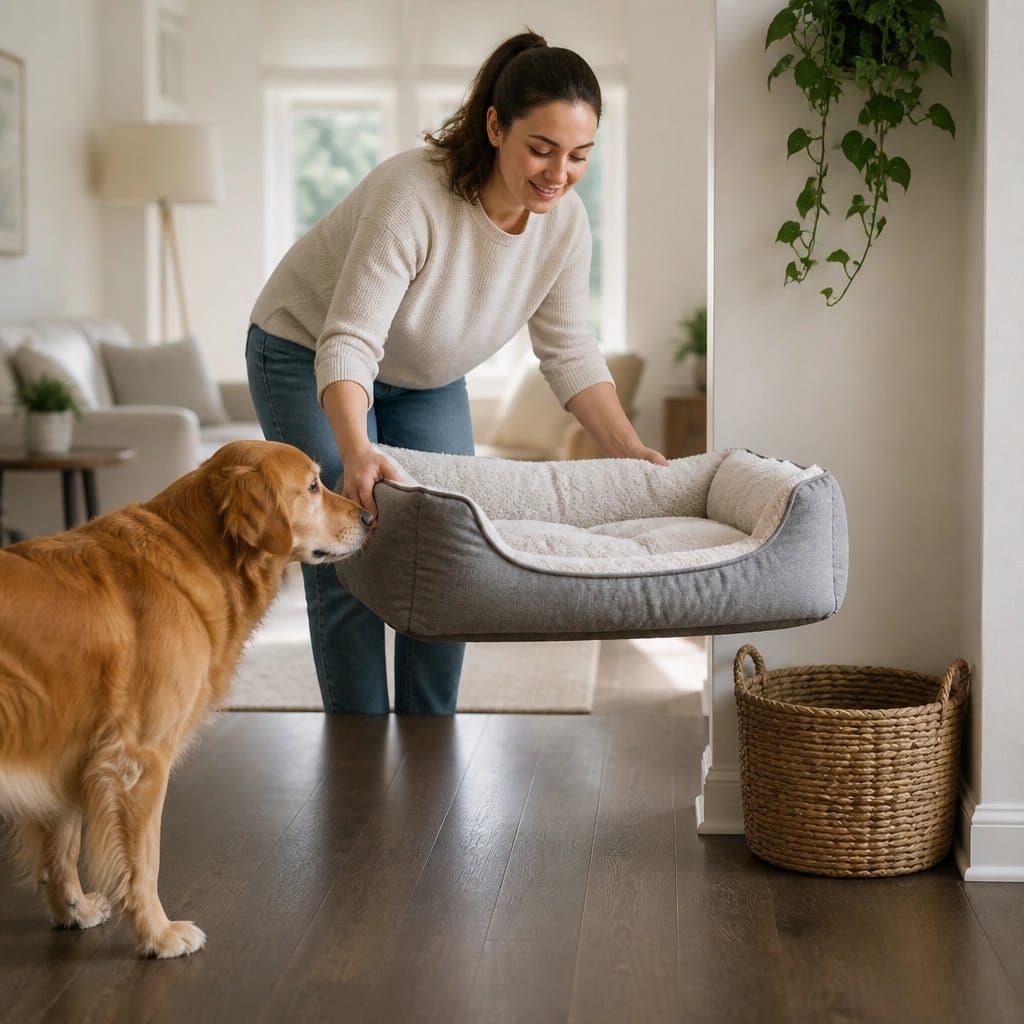
Why Dogs Get Confused When Their Bed Moves
It rarely makes sense to them at first. Dogs rely heavily on scent marking to feel secure. Their bed holds the olfactory map of their home and family, the smells of you, themselves, and their daily life.
Moving the bed breaks that map. The familiar object smells wrong because it’s in the wrong spot. This is why you might see them circle, scratch, or whine instead of settling down.
They aren’t being stubborn. They’re genuinely confused.
It’s also about routine. If their bed has been beside yours for two years, that’s a deeply ingrained habit. Breaking that habit gently is far better than breaking it abruptly.
Understanding this sensory world is the first step to a successful move.
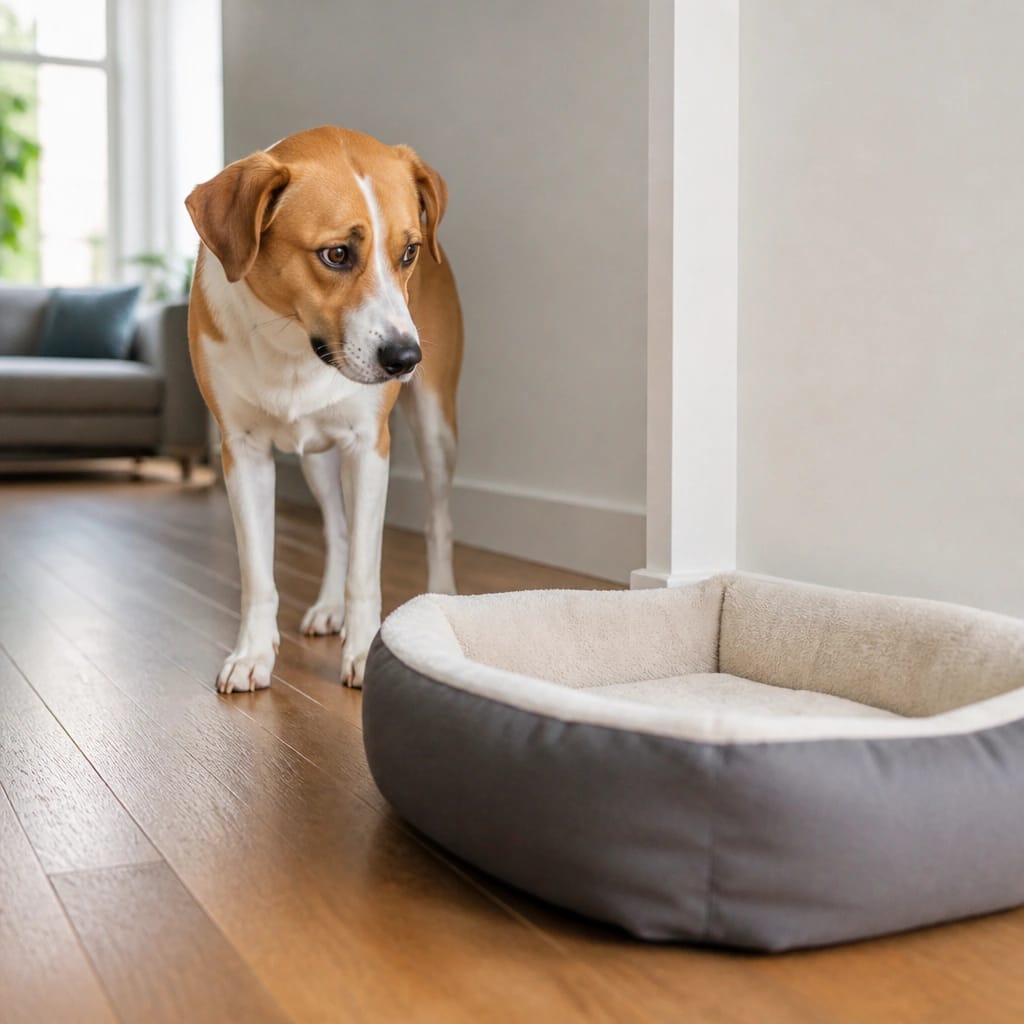
Is Your Dog a Good Candidate for an Immediate Move?
Some dogs genuinely don’t care where they sleep. Others are very particular about their geography. Let’s figure out where your dog falls.
Good candidates for an immediate move:
- Confident, social dogs who adapt to new environments quickly.
- Puppies under six months who are still forming their core habits.
- Dogs with a strong “place” command who will follow direction regardless of bed location.
Bad candidates for an immediate move:
- Senior dogs who are deeply set in their ways.
- Rescue dogs with a history of instability or neglect.
- Dogs already showing signs of anxiety like panting, pacing, or avoiding eye contact.
The simple test: move the bed six feet away and see what happens. If your dog follows it and lies down, you’re good. If they stand at the old spot looking confused, plan for a gradual shift.
How to Know Which Method Your Dog Needs
This decision tree hinges on two main factors: temperament and distance.
- Scenario A: The bed stays in the same room (moving 5, 10 feet).
, Confident dog? Go with the immediate move.
, Anxious or senior dog? Choose the gradual approach, shifting the bed a foot or two each day.
- Scenario B: The bed moves to a different room or floor.
, Always use the Fresh Start approach here. The context changes too much for a gradual slide to make sense.
- Scenario C: You bought a brand new bed for the new location.
, Keep the old bed or its cover nearby for a few days. Scent transfer is critical. Let the new bed absorb familiar smells before expecting your dog to love it.
Watch their body language. A relaxed dog investigates with a loose tail. A stressed dog avoids the bed or yawns excessively.
Their reaction tells you everything you need to know.
Method 1: The Gradual Relocation Approach
This works because it respects your dog’s timeline. The goal is for them to barely notice the bed is moving.
- Days 1, 2: Slide the bed 1, 2 feet toward the new spot. Toss a few treats on it and praise them when they lie down.
- Days 3, 4: Move it another 1, 2 feet. Keep the treats coming.
- Days 5, 6: Continue shifting until the bed reaches its final destination.
Keep a familiar blanket or a piece of your worn clothing on the bed during this transition. Your scent acts as a calming signal. If you’ve noticed your dog scratching at the fabric before lying down, they’re performing natural nesting behavior, and your scent helps them feel secure.
This is the safest method for senior dogs, nervous pups, and dogs who have already been through a lot of change lately.
Method 2: The Fresh Start Approach
This is for confident dogs, or when the bed is moving into a completely different environment, like a new home or a different floor of the house.
- Make the new spot exciting. Sprinkle a handful of kibble or small treats directly on the bed. Use their favorite toy.
- Use a clear command. A cheerful “go to your bed” paired with a treat creates a positive association instantly.
- Stay nearby. Sit with them in the new spot for a few minutes. Don’t leave them alone to figure it out right away.
- Praise calm behavior. When they lie down, give quiet, happy reinforcement. Keep your voice low and warm.
If they get up and walk away, don’t force it. Just call them back a few minutes later. Most confident dogs accept a fresh start within 24, 48 hours, especially if the new spot feels rewarding.
Just remember that choosing the right spot matters just as much as the move itself.
Step-by-Step: Moving the Bed the Right Way
Here’s the straightforward process that works for most dogs. Follow these steps in order.
Step 1: Choose the new spot carefully. Consider traffic flow, temperature, and your dog’s natural preferences. A quiet corner away from drafts and direct sunlight works best.
Step 2: Preserve the scent. Don’t wash the bed cover right before the move. That familiar smell is your strongest tool for a smooth transition.
Step 3: Introduce the new location. Bring your dog to the moved bed. Use a happy, relaxed tone. Drop a few high-value treats directly on the bed.
Step 4: Reinforce the new spot. Every time your dog chooses the bed in its new location, give quiet praise or a small reward. Keep it calm and positive.
Step 5: Be patient. Some dogs settle in minutes. Others need a few days. Let your dog set the pace and never force the issue.
How Scent and Familiar Items Help the Transition
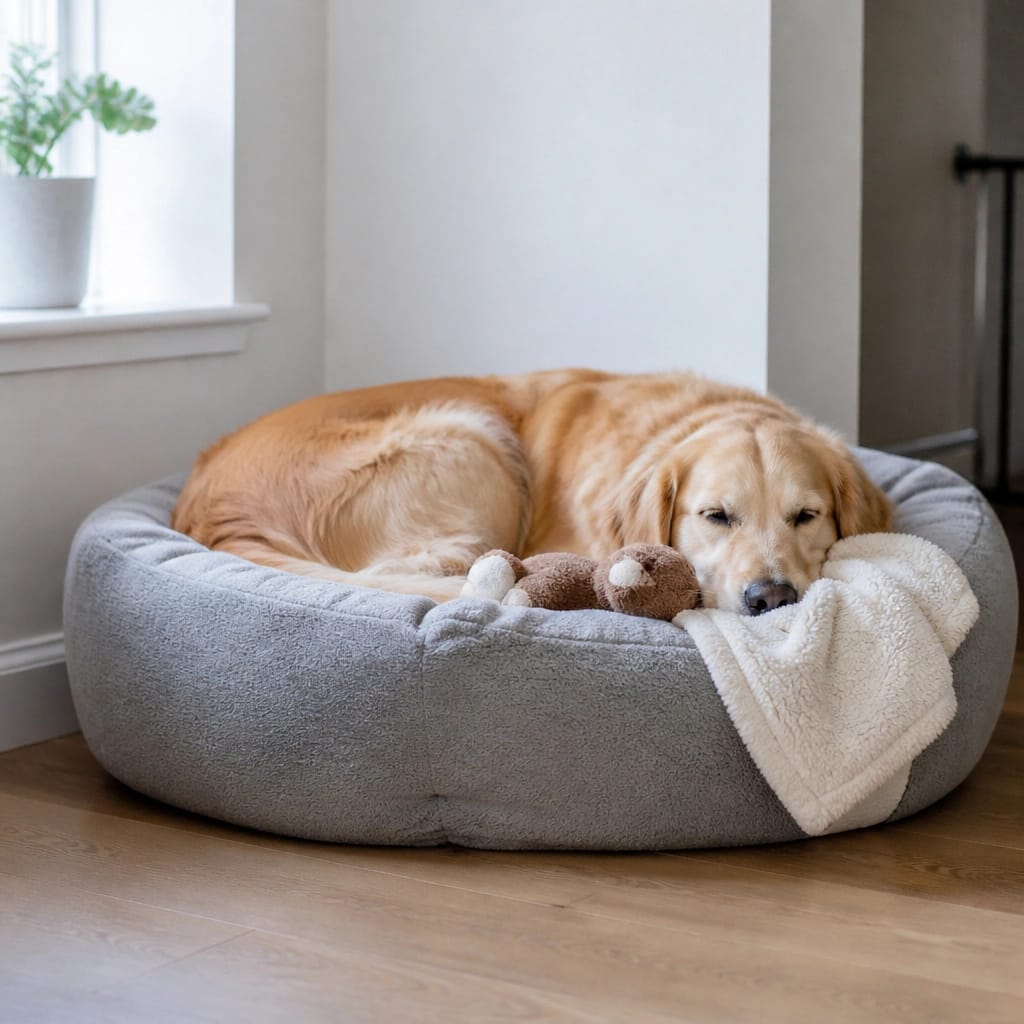
Scent is your secret weapon here. A dog’s nose contains up to 300 million scent receptors. That’s how they map their entire world.
When you move the bed, you’re disrupting that map. The fix is simple. Keep a blanket or toy that carries your scent on the bed.
Your smell tells your dog this new spot is safe.
If you have an old, unwashed bed cover, swap it onto the moved bed. The familiar scent of their own body oils helps them recognize the bed as theirs. This is the same natural nesting behavior that makes dogs dig or scratch before settling in.
Common Mistakes That Make the Move Harder
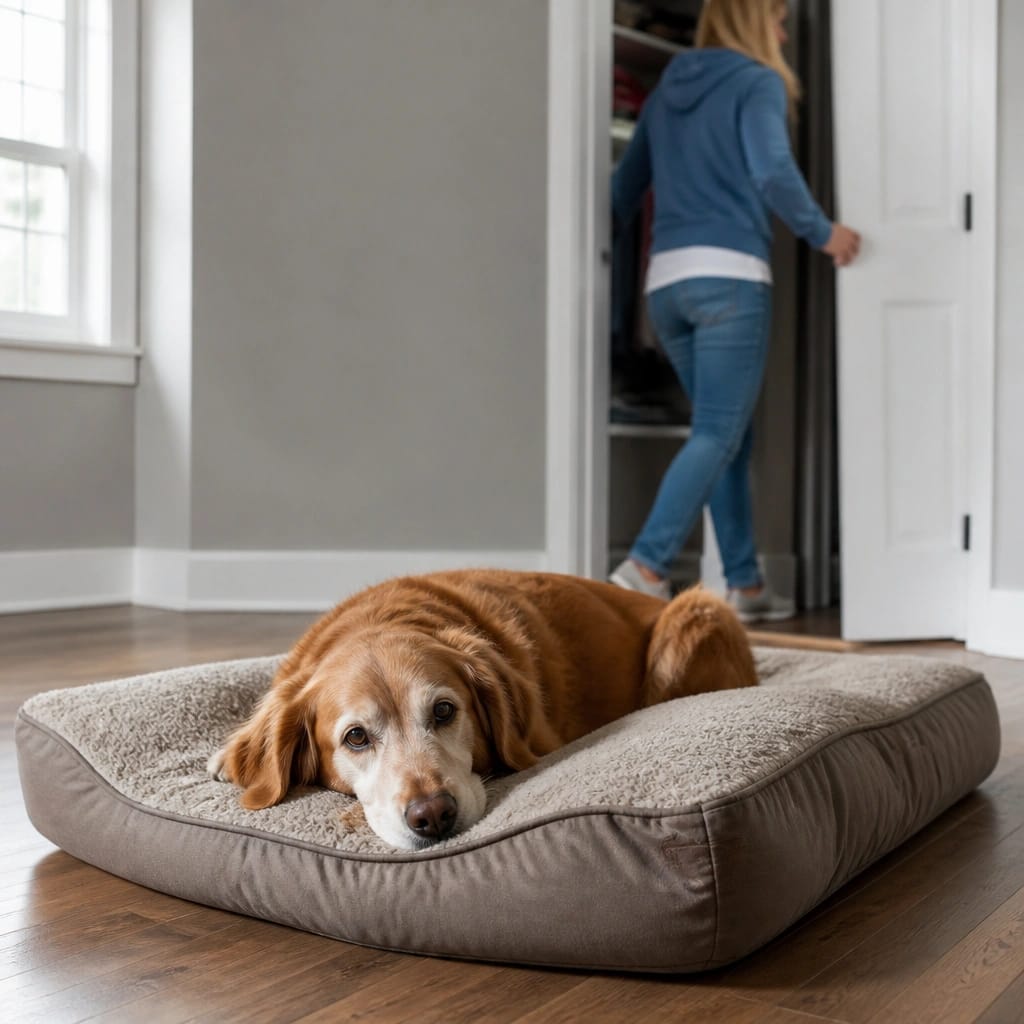
Most problems come from rushing. Here’s what to avoid.
Washing the bed before the move. You strip away all the familiar scent markers. Your dog ends up sleeping on a foreign object that smells like nothing.
Moving the bed to a high-traffic area. Doorways, hallways, and busy rooms are stressful for sleeping. Your dog needs a quiet, low-traffic spot.
Forcing the issue. Physically pushing your dog onto the moved bed creates negative associations. Let them investigate and choose on their own.
Ignoring the old spot. If you leave the old spot empty, some dogs will sleep on the bare floor there. Make the new spot more appealing than the memory of the old one.
Changing too many things at once. A new bed, new location, new room, and new crate all at once is overwhelming. Change one variable at a time. Chewing or licking the fabric can also signal stress during the transition.
Adjusting the New Location for Maximum Comfort
The new spot matters as much as the move itself. Here’s what to check.
Temperature. Avoid drafty windows and direct heat vents. Dogs prefer a stable temperature around 68 to 72 degrees Fahrenheit.
Noise level. A quiet, low-traffic area helps your dog settle. Avoid putting the bed next to a washing machine, television, or front door.
Floor surface. Hardwood or tile can be slippery under a dog bed. A non-slip rug or pad underneath keeps the bed from sliding. This is especially important for senior dogs.
Proximity to you. Many dogs feel safest when they can see or hear their owner. If you’re moving the bed out of your bedroom, consider a spot near the doorway or in an adjacent hallway. For more guidance on choosing the right spot, check our research on where to place a dog bed in the house.
What to Do If Your Dog Refuses the New Spot
It happens. Your dog walks to the moved bed, sniffs it, and walks away. Or they sleep on the floor in the old spot.
Don’t panic.
First, rule out a bad location. Is the new spot too hot, too cold, too noisy, or too far from you? If yes, move the bed somewhere better.
Second, increase the reward. Use higher value treats. Cheese, chicken, or freeze-dried liver work better than kibble for stubborn dogs.
Third, go back to the gradual method. If you tried a fresh start and it failed, shift the bed one foot per day back toward the original spot, then start again.
Fourth, use confinement. For some dogs, closing them in the room with the moved bed for a few hours helps them accept it. Don’t force them onto the bed. Just let them discover it on their own.
Fifth, consult your vet. If your dog is actively avoiding the bed and showing signs of pain or anxiety, there may be an underlying issue. A veterinarian can rule out joint pain or other health concerns.
Some dogs prefer sleeping on the floor instead of their bed. If that’s the case, check if the bed itself is the problem before blaming the location.
Special Cases: New Home, New Bed, or Senior Dogs
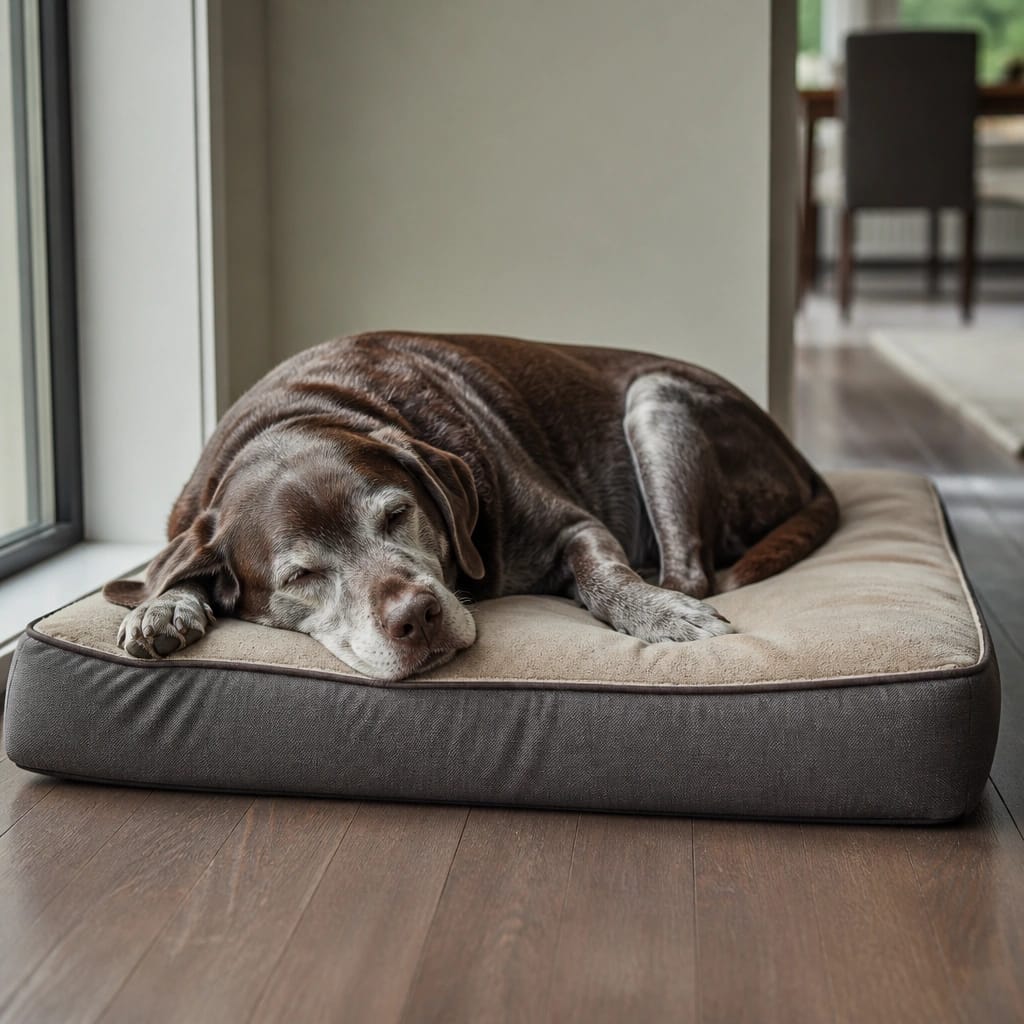
Moving to a new home. Everything is unfamiliar. Set up the bed first, before unpacking the rest. Put a worn shirt of yours on it.
The familiar scent gives your dog one anchor point in a sea of new smells.
Introducing a brand new bed. Don’t wash the old one yet. Keep it nearby for a few days. Let the new bed absorb your dog’s scent through contact with the old cover or a favorite blanket.
Senior dogs. Older dogs have established routines and may have joint pain. Move the bed gradually over a week. Keep it close to you.
Check if your dog needs a supportive bed for their aging body.
How Long Should the Adjustment Take?
Most dogs adjust within 2 to 7 days. Puppies and confident adult dogs often settle in 24 to 48 hours. Senior dogs and anxious rescues may need up to two weeks.
If your dog is still refusing the new spot after a week, go back to the gradual method. Move the bed one foot per day toward the new spot. If that fails, the location itself may be the problem.
Try a different spot in the same room.
Frequently Asked Questions
Should I wash my dog’s bed before moving it?
No. Washing removes the familiar scent markers that help your dog recognize the bed as theirs. Move the bed first, then wash it after your dog has settled into the new location.
What if my dog sleeps on the floor in the old spot?
This is common. Make the new spot more appealing with high-value treats and your scent on a blanket. If they still refuse, try the gradual method, shifting the bed a few feet each day.
Can I move the bed to a different room?
Yes, but expect a longer adjustment period. Use the fresh start approach with extra treats and praise. Spend time with your dog in the new room so they associate it with positive experiences.
My dog is anxious. Should I still move their bed?
Move it gradually over a week or more. Keep their crate or a safe space in the old location for a while. Consider a calming bed designed for anxious dogs to help with the transition.
What if my dog chews the bed after I move it?
Chewing can signal stress. Give them a chew toy or a frozen Kong in the new spot. If the behavior continues, check the bed’s location for drafts or noise that might be causing anxiety.
A Simple Decision Guide for Your Dog’s Move
| If your dog is… | Use this method | Expected timeline |
|---|---|---|
| Confident adult | Fresh start approach | 1–2 days |
| Puppy under 6 months | Fresh start or gradual | 1–3 days |
| Senior dog | Gradual relocation | 5–10 days |
| Anxious or rescue dog | Gradual relocation | 7–14 days |
| Moving to a new home | Fresh start with scent | 3–7 days |
Trust your dog’s cues. A relaxed posture, soft eyes, and a wagging tail tell you the move is working. If you see stress signals like tucked tail, excessive panting, or avoidance, slow down.
Your dog’s comfort is the only timeline that matters.


