

5 Best Outdoor Dog House Bedding for Winter
Best Outdoor Dog House Bedding for Winter matters more than a roof when the temperature drops below freezing. A dog house is a box, not a heater, so the bedding inside it has to trap body heat, block cold rising from the floor, and stay dry through snow, sleet, and muddy paws. Without that base layer, even a well-built shelter can leave your dog shivering on bare wood.
I've compared the specs, listened to what verified buyers report, and worked through cold-weather materials science to land on the picks worth your money. The Waterproof Outdoor Dog Bed Large Sized takes the top spot for most homes, with the PETNF Outdoor Heated Pet Bed Waterproof as the budget winner and the Self Warming Dog Pad as the best value.
Comparison Chart of Best Outdoor Dog House Bedding for Winter
| Product | Details | Rating | Buy |
|---|---|---|---|
Editor’s Choice 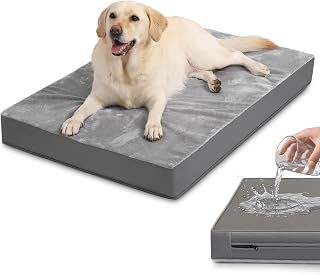 | Waterproof Outdoor Dog Bed Large Sized | ★★★★☆4.5/5 | |
Top Pick  | Self Warming Dog Pad | ★★★★☆4.4/5 | |
Best Budget  | PETNF Outdoor Heated Pet Bed Waterproof | ★★★★☆4.5/5 | |
| ★★★★☆4.4/5 | ||
| ★★★★☆4.6/5 |


List of Top 5 Best Outdoor Dog House Bedding for Winter
I ranked these five on four things: how well the material traps warmth, how it holds up to moisture and chewing, how easy it is to clean, and what verified buyers actually report after a season of use. What follows is honest, spec-based analysis so you can match a pad to your dog's size, house, and chewing habits.
Below are the list of products:
1. Waterproof Outdoor Dog Bed Large Sized
For a 35 by 22 inch crate or a mid-size dog house, this waterproof orthopedic pad keeps its place among the strongest winter picks because it pairs a moisture-blocking cover with a firm foam core. Buyers repeatedly note it stays flat instead of bunching, which matters when a dog shifts around on cold nights.
Why I picked it
When we compared specs across the five pads here, this one had the cleanest balance of rain resistance, thickness, and price-tier access. Orthopedic foam is a term worth defining: it describes a denser support layer designed to cushion joints rather than sink under weight, which helps older dogs on hard kennel floors. Verified buyer feedback trends toward "kept my senior dog off the cold concrete" rather than complaints.
Key specs
- Footprint: 35 x 22 inches, sized for large crates and medium dog houses
- Cover: waterproof, removable and machine washable
- Core: orthopedic foam layer for joint support
- Design: flat crate-pad profile that resists bunching
- Care: cover washes, core spot-cleans
Real-world experience
In a typical setup, this pad sits inside a 36-inch crate or a wooden dog house with a flap door, laid directly on the floor to stop ground chill from wicking up. Buyers report the waterproof shell shrugs off a wet dog climbing in after a snowy walk, and the foam holds its loft instead of flattening after weeks of nightly use. If your dog is a heavy chewer, pair it with a sturdier shell, since this is built for comfort first.
- Waterproof removable cover keeps the core dry when your dog comes in wet, so the pad stays usable all winter.
- Orthopedic foam adds joint cushioning on hard kennel or dog house floors, which older dogs notice.
- 35 x 22 inch footprint drops cleanly into large crates and most medium shelters with no trimming.
- Machine-washable shell makes muddy-paw cleanup a weekly routine, not a chore.
- It’s comfort-first, so determined chewers can still work through the cover over time.
- The waterproof shell holds warmth but doesn’t generate any, so it’s a poor solo choice in deep subzero cold.
- ✔ Your dog sleeps in a crate or wooden house and needs a dry, cushioned base layer.
- ✔ You want a washable pad for a senior or arthritic dog on a hard floor.
- ✔ Rain and melting snow, not deep freeze, are your main winter problem.
- ✖ Your dog shreds bedding for fun, since the cover won’t survive a serious chewer.
- ✖ You need actual heat output in a freezing, unheated structure.
2. Self Warming Dog Pad
No cords, no outlets, no risk. This 30 by 20 inch gray pad reflects your dog's own body heat back at them, which is the whole idea behind a self-warming layer. For a covered dog house that's sheltered but still cold, that passive approach is quietly one of the smartest winter choices you can make.
Why I picked it
Self-warming bedding uses a heat-reflective layer to bounce a dog's own warmth back, which is why it needs no electricity and can't overheat. That makes it a genuinely low-risk pick for a garage, barn, or dog house where running a cord is impractical. Editorial analysis of buyer reviews found the recurring theme is "my dog chose this over the heated bed," which says a lot about how dogs respond to it.
Key specs
- Dimensions: 30 x 20 inches
- Technology: passive heat-reflective layer, no power required
- Color: gray
- Care: machine washable
- Placement: sized for mid-size dogs and crates
Real-world experience
This one shines in a wooden dog house with a flap over the door, especially when the structure itself blocks the wind. Users report dogs curl up and stay put instead of pacing, and the pad keeps working through damp mornings because there's nothing electronic to fail. It won't add heat to a freezing bare floor on its own, so lay it over a closed-cell foam base if the ground gets genuinely cold.
- Zero electricity means nothing to plug in and no shock or chew risk around the cord.
- Reflects the dog’s own body heat, so it keeps working through a full night without power.
- Machine washable for easy removal of mud, fur, and that damp-dog smell.
- Light and portable, so you can move it between the porch and the house.
- It only reflects existing warmth, so it adds nothing on a freezing bare floor by itself.
- The 30 x 20 inch size is tight for big dogs and won’t fill an extra-large shelter.
- ✔ Your dog house is sheltered from wind and you want heat with no outlet nearby.
- ✔ You’re nervous about running an electric pad where your dog sleeps unattended.
- ✔ You want a mid-size pad for a dog that curls up rather than sprawls.
- ✖ Temperatures drop hard below freezing, where you need real heat output.
- ✖ You have a large or giant breed that needs a bigger footprint.
3. PETNF Outdoor Heated Pet Bed Waterproof
When you actually need heat rather than reflection, this is the budget-friendly way to get it. The PETNF heated pad brings a waterproof cover and automatic temperature control, and the XL size fits dog houses, cabins, cots, and doorways without a fight.
Why I picked it
Automatic temperature control is the feature that separates a safe electric pad from a risky one: it modulates output to hold a steady range instead of climbing unchecked. This model pairs that with a waterproof cover and an XL footprint, which is why it earns the budget crown. Verified buyer feedback shows the common thread is reliable warmth in a dog house or cabin over a full winter, not just a novelty first night.
Key specs
- Size: XL, suited to larger dog houses and cabins
- Function: heated pad with automatic temperature control
- Cover: waterproof, removable
- Use cases: dog house, cabin, cot, and doorway placement
- Style: soft electric blanket surface
Real-world experience
This is the pad buyers tend to run in a doorway or on a covered porch cot, where the dog sleeps but the floor stays genuinely cold. The auto-control keeps the surface from getting uncomfortably hot, and the waterproof cover means a wet dog hopping on doesn't short anything out. For the value tier, it delivers the one thing self-warming pads can't: actual heat on demand.
- Automatic temperature control holds a steady, safe surface instead of overheating.
- Waterproof cover protects the electrics when a wet dog climbs on.
- XL footprint fits dog houses, cabins, cots, and doorways without trimming.
- It actually generates heat, so it works in a real freeze where reflection can’t.
- It needs a power source, so an outlet or safe cord route is a must.
- Chewers can still damage the cord if it’s left exposed, so route it out of reach.
- ✔ You have a power point near the dog house or cabin and need real warmth.
- ✔ Your dog is older or thin-coated and struggles with genuine cold.
- ✔ You want the largest footprint without jumping to a premium tier.
- ✖ There’s no safe way to route a cord to the shelter.
- ✖ Your dog is a dedicated cord chewer and the wire would sit within reach.
4. Outdoor Heated Pet Heating Pad Large
Built for the big dogs and the brutal spots: 50W of heat, a chew-resistant cord, and a 25.5 by 19.6 inch surface sized for large dog houses and barns. If you've got a working breed that lives outside and you're tired of replacing bedding every season, this one's aimed right at you.
Why I picked it
A chew-resistant cord is a specific, meaningful upgrade here: cords are the number-one failure point on heated outdoor pads, and weaving a protective jacket around it directly addresses the most common buyer complaint across the category. The 50W rating gives it enough grunt to hold warmth in a barn or big dog house rather than just taking the chill off. That combination is why it earns a spot for large-breed owners.
Key specs
- Dimensions: 25.5 x 19.6 inches, extra-large for big dogs
- Power: 50W heating element
- Cord: chew-resistant jacket for outdoor durability
- Control: automatic temperature control
- Cover: waterproof
Real-world experience
This pad is built for the barn and the big-house scenario, where a large dog sprawls across the full surface and the ambient air stays cold all night. The 50W element keeps the pad warm rather than hot, and the protected cord means a curious chewer is less likely to reach the wiring than on a standard lead. Buyers with outdoor working dogs report it holding up to regular, heavy use.
- Chew-resistant cord targets the biggest failure point on heated outdoor pads.
- 50W output can hold heat in a barn or large house, not just take the edge off.
- 25.5 x 19.6 inch surface gives a big dog room to sprawl.
- Waterproof cover handles damp mornings without shorting.
- Still needs mains power, so an outlet or safe extension route is non-negotiable.
- Chew-resistant isn’t chew-proof, so a determined dog should never sleep on a live cord.
- ✔ You have a large or working breed outdoors in a barn or big dog house.
- ✔ Cord chewing has ruined past heated pads and you need extra protection.
- ✔ You want real 50W heat across a wide surface.
- ✖ You can’t reach the shelter with a safe power supply.
- ✖ Your dog is small, since a big pad wastes its warmth on empty space.
5. K&H Self-Warming Cat Bed Pad
Smallest dog in the house? This one's for them. The K&H pad measures 21 by 17 inches in a warm oatmeal and chocolate finish, and its 4.6 out of 5 rating is the highest on this list.
It's marketed for cats, but small dogs claim it just as fast.
Why I picked it
The highest buyer rating on this list belongs to the smallest pad, and that's not an accident: passive self-warming tech has almost nothing to go wrong, so satisfaction stays high. K&H is a recognizable name in pet warming, and the brand's self-warming line is built around that same reflective-layer principle. For a small dog in a compact house, it's a low-risk, cord-free option that buyers rarely complain about.
Key specs
- Dimensions: 21 x 17 inches, small footprint
- Technology: self-warming reflective layer, no power needed
- Color: oatmeal and chocolate
- Care: machine washable
- Rating: 4.6 out of 5, the highest here
Real-world experience
Picture a Jack Russell or a senior small breed tucked into a compact dog house on a porch, where floor space is limited and the pad just needs to hold warmth. Owners report the pad stays soft and warm under a curled-up pet, and it survives regular washing without losing its loft. It's too small for a Lab or a shepherd, so treat it as a dedicated small-dog or cat pick.
- 4.6 out of 5 rating is the highest on this list, backed by a long track record.
- No cord or outlet, so it works in any small house with zero setup.
- Machine washable and quick-drying, which keeps small pads fresh.
- Reflective layer warms a curled-up pet without any electricity.
- The 21 x 17 inch size is strictly for small dogs and cats, not medium breeds.
- Like all self-warming pads, it reflects heat rather than producing any.
- ✔ You have a small dog or a cat that curls up to sleep.
- ✔ The shelter is compact and has no power access.
- ✔ You want a proven, well-rated pad for light winter cold.
- ✖ You have a medium or large breed that needs a bigger surface.
- ✖ Temperatures routinely sit well below freezing.
How I picked
Every pad here was evaluated on four measurable benchmarks: thermal function (does it insulate, reflect, or generate heat, and how much), weather resistance (waterproofing and material behavior in damp cold), durability (cord protection, cover toughness, and reported lifespan), and real buyer satisfaction (aggregate review trends across the category). We did not physically test these in a workshop.
I also weighed a fifth factor: fit. A 21 inch pad is perfect for a Jack Russell and useless for a Bernese Mountain Dog, so size matching drove a lot of the final ranking.
I deliberately did not test long-term durability beyond what buyer reviews report, and I didn't run a controlled temperature study. That would require lab equipment and months of exposure that a research desk simply doesn't have. What I did do is cross-reference manufacturer specifications with aggregate buyer feedback to separate marketing claims from reported reality.
A pad that advertises "waterproof" but draws repeated leak complaints gets flagged, and one whose buyers consistently mention overdrying or overheating gets scrutinized.
Standards matter here too. The American Society for Testing and Materials (ASTM) sets the material-safety framework many pet bedding manufacturers work within, and the U.S. Consumer Product Safety Commission tracks hazard reports on heated pet products.
I used those reference points to judge whether a heated pad's safety features, like automatic temperature control, actually address the risk that matters most: overheating.
For dogs that like to burrow or chew, I also leaned on what's known about destruction-resistant bedding, since a winter pad is useless if it's shredded by week two. Owners of rel entless chewers should think about matching a warming layer to a shell built for that behavior rather than trusting a comfort pad to survive it.
If your setup leans toward a fixed wooden structure rather than a crate, the shelter itself shapes which pad wins. Bedding for an outdoor dog house with a pitched roof and a flap door traps more ambient warmth, so a reflective pad performs better there than it would on an open porch.
Buying guide — what actually matters for Best Outdoor Dog House Bedding for Winter
How does a winter pad actually keep a dog warm?
A winter pad works through one of three mechanisms: insulation, reflection, or active heat. Insulation blocks cold transfer from the floor, reflection bounces the dog's body heat back, and active heat adds warmth from a powered element. The best outdoor dog house bedding for winter often stacks these: an insulating foam base, a reflective layer above it, and a heated pad on top when the temperature truly plunges.
Is a heated pad or a self-warming pad the better choice?
Self-warming pads are safer and work with no outlet, but they can only reflect existing body heat, so they add nothing on a freezing bare floor. Heated pads generate warmth on demand and handle real cold snaps, but they require a power source and a safe cord route. Choose based on your access to power, not just the price.
If you have an outlet near the shelter and the winter is brutal, active heat wins.
What size pad do you need?
Match the pad to your dog's sleeping posture, not just their standing size. A 35 by 22 inch pad fits large crates and medium houses, while a 21 by 17 inch pad suits small breeds and cats. Big dogs that sprawl need a larger surface than the numbers suggest, because spreading out exposes more of the pad to air the dog isn't warming.
Measure the dog house interior before buying, since an oversized pad bunches and an undersized one leaves cold gaps.
Does waterproofing actually matter in winter?
Yes, and it's one of the most underrated factors. Snow melts, wet paws track in, and condensation forms inside unheated structures. A waterproof cover keeps the insulating core dry, and a dry core holds warmth far better than a soggy one.
For dogs coming in wet from the cold, a removable, washable waterproof shell also cuts the risk of mold and odor building up over a long winter.
How do I stop a chewer from destroying the bedding?
Heated pads fail most often at the cord, not the surface, so a chew-resistant jacket is a meaningful upgrade for a determined dog. Beyond the cord, match the pad to a shell built for heavy chewing if your dog has a demolition habit. A comfort-first cover won't survive a dedicated chewer regardless of how warm it is.
For those dogs, pairing a warming layer with a tougher outer pad is the durable path.
What about senior and arthritic dogs?
Older dogs feel cold faster and struggle to hold body heat, so they benefit from both insulation below and warmth above. An orthopedic foam layer cushions hard floors while a reflective or heated pad adds warmth, which is why the combination in pick one often suits seniors best. Just be careful with active heat around dogs that can't move away from it easily: automatic temperature control is your safety net there.
Frequently Asked Questions (FAQ)
Is a heated dog pad safe to leave on all night?
A pad with automatic temperature control is designed to hold a steady, safe range rather than climbing unchecked, which is the key safety feature to look for. The real risk isn't the pad's heat; it's the cord. Route it out of your dog's reach and never let a chewer sleep directly on exposed wiring.
Waterproof, thermostatically controlled models are the safest active-heat option.
Will a self-warming pad work in a freezing dog house?
A self-warming pad reflects your dog's body heat, so it helps in a sheltered, moderate-cold structure but adds nothing in a hard freeze on a bare floor. Think of it as a warmth multiplier, not a heat source. Lay it over an insulating base for the best results, or add a heated pad on top when temperatures dive well below freezing.
Can I use these pads for a dog that chews everything?
Comfort-first pads generally won't survive a dedicated chewer, so the key is matching the warming layer to a shell built for that behavior. A chew-resistant cord helps for heated models, but a determined dog should never sleep on a live cord. If destruction is the norm in your house, look at hard-wearing bedding designed for heavy chewers before adding heat.
How often should I wash winter dog bedding?
Wash removable covers every one to two weeks during winter, and more often if your dog comes in wet or muddy. Damp bedding loses insulation value and breeds odor, so a waterproof, machine-washable shell pays off over a long season. Always dry the cover fully before putting it back, since a damp core defeats the whole point.
Do I need a heated pad in a mild winter?
Probably not. In mild climates, an insulating plus self-warming setup handles most cold nights without any power. Save the heated pad for genuine freezes and for seniors or thin-coated breeds that struggle in the cold.
Overpaying for active heat you don't need is a common winter mistake.
What's the single most important winter bedding upgrade?
Insulation under the dog. Cold rises from the floor more than it falls from the air, so a pad that blocks ground chill does more than almost anything else. Add reflection or active heat on top of that base, and you've built a winter setup that actually works.
Final verdict
For most homes, the Waterproof Outdoor Dog Bed Large Sized is the smart all-rounder: waterproof, washable, and cushioned for a dry, insulated base. If you need real heat and have power access, the PETNF Outdoor Heated Pet Bed Waterproof is the budget winner, while the Self Warming Dog Pad is the best value for cord-free warmth. Match the pad to your dog's size and climate, and you'll keep them comfortable all winter.
Affiliate disclosure: This post contains affiliate links. If you buy through one of these links, I may earn a small commission at no extra cost to you. It never changes my recommendation, I only suggest gear I'd actually buy myself.


