

Which Dog Bed Features Are Mostly Marketing?
Walking into a pet store or scrolling through dog beds online, you’re drowned in buzzwords. Orthopedic. Calming.
Self-warming. Cooling gel. Anti-anxiety.
Which Dog Bed Features Are Mostly Marketing? It’s a fair question, because the pet industry has gotten very good at making simple foam sound like premium medical equipment.
Here’s a reality check: as of 2026, the term “orthopedic” on a dog bed is not regulated by any federal agency. A manufacturer can legally stamp it on a box of cheap polyfill foam. That single fact explains most of the confusion in the market.
Let’s break down what’s genuinely useful and what’s just noise.
Why This Matters: How Dog Bed Marketing Gets You to Spend More
The pet bedding industry is a multi-billion dollar market, and competition is fierce. Brands need ways to stand out, so they pile on features that sound impressive but cost pennies to add. The result is a landscape where a $40 bed and a $200 bed can carry the same exact buzzwords.
The problem is real. A dog that sleeps on a poorly supportive bed can develop pressure points, especially if they’re older or have joint issues. But buying a bed with “orthopedic” in the name doesn’t guarantee actual support.
What matters is what’s inside the cover.
Understanding your dog’s habits helps too. For instance, knowing why they scratch before settling can tell you whether they need a firmer surface or a softer one. Most owners don’t know what to look for, so they rely on the packaging claims.
That’s exactly what the marketing departments are counting on.
The Features That Are Mostly Marketing
Let’s go through the biggest offenders. These are features you’ll see on nearly every dog bed listing, but they rarely deliver what they promise.
“Orthopedic” Claims Without Foam Specs
This is the king of marketing gimmicks. Any bed with a slab of foam, even a low-density one, can legally call itself orthopedic. The label means nothing unless the manufacturer specifies the foam density and thickness.
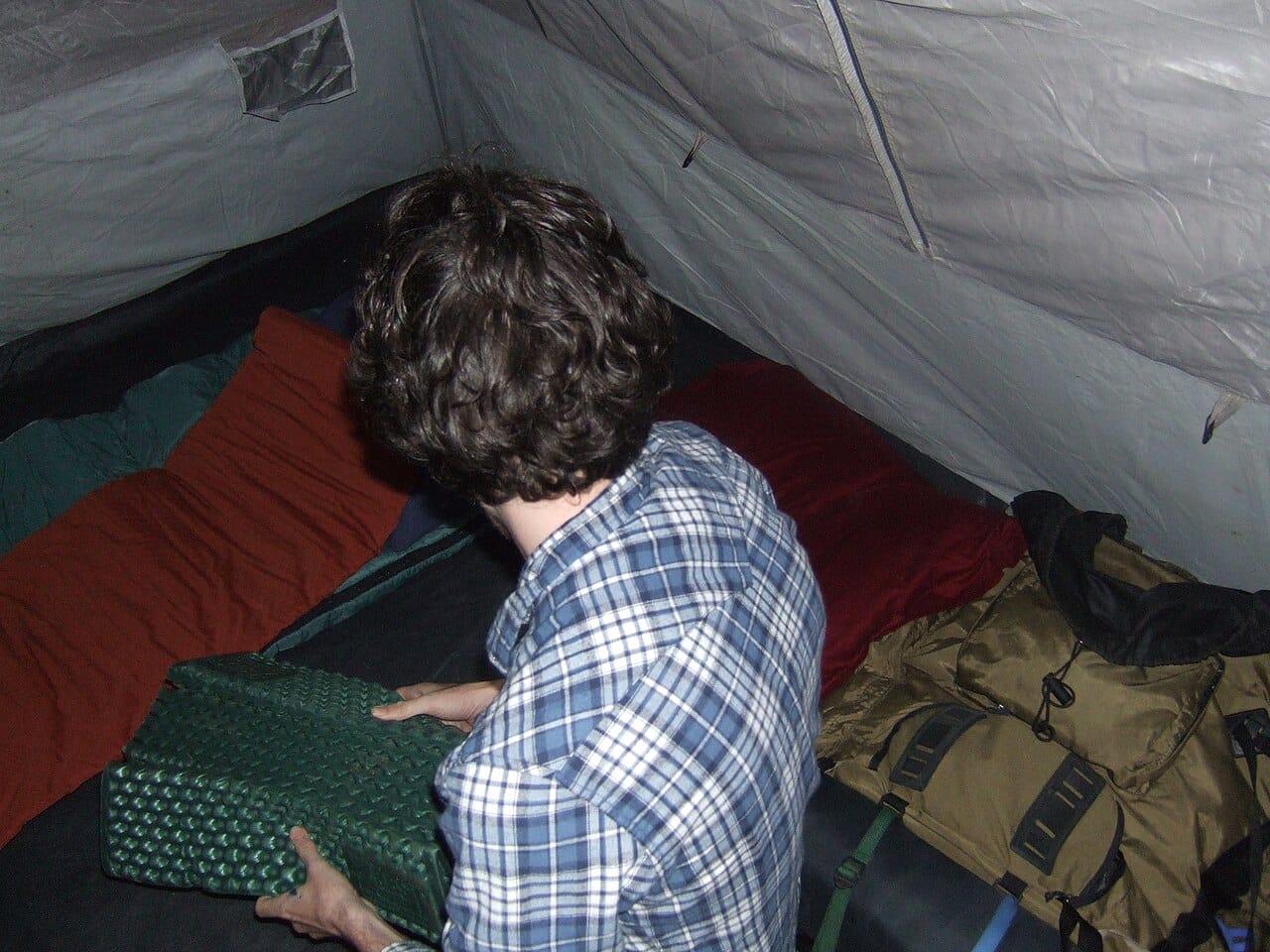
Image source: Wikimedia Commons / Mike Burns (CC BY-SA)
That image shows egg-crate foam, a cheap material often marketed as orthopedic. It provides minimal support and flattens within months. Real support comes from high-density foam, typically 2.5 pounds per cubic foot or higher.
“Anti-Anxiety” and “Calming” Beds
A bed shape cannot treat anxiety. That’s a medical claim with no scientific backing. Some designs, like donut or cave beds, can feel more secure for certain dogs.
But the term “anti-anxiety” is pure marketing.
If your dog has genuine anxiety, focus on their sleeping environment and routine. The right bed for a nervous dog is one that fits their preferred sleeping position, not one with a label.
“Self-Warming” Fabric Technology
This is a fancy way of saying the bed has a reflective layer, similar to an emergency space blanket. It bounces the dog’s own body heat back at them. It’s not technology, it’s basic physics.
It can be useful in cold climates, but it’s not a premium feature. The same effect comes from a fleece blanket. Don’t pay extra for this.
“Cooling Gel” That Doesn’t Actually Cool
Many cooling gel beds use memory foam infused with a gel that feels cool to the touch for about five minutes. After that, it absorbs body heat and stops cooling. The gel doesn’t actively dissipate heat.
Real cooling comes from breathable fabric, mesh construction, or elevated designs that allow airflow. A gel layer on top of standard foam is not a cooling solution.
“Waterproof” That’s Loud or Uncomfortable
Cheap waterproof liners crinkle like a tarp. Some dogs are terrified of the sound and refuse to lie on the bed. Others find the plastic feel unpleasant.
A good waterproof bed uses a quiet, fabric-backed liner. The difference is night and day. Listen for crinkle sounds before you buy.
Bolsters Marketed as “Supportive” vs. Actually Supportive
Many bolster beds are filled with loose polyfill, the same material used in cheap pillows. It looks plush in the store, but it flattens within weeks. A genuinely supportive bolster uses dense foam or a high-loft fill.
What’s Actually Worth Paying For
Now let’s flip the script. These are the features that genuinely improve your dog’s sleep and your experience as an owner.
Foam Density and Thickness That Lasts
This is the single most important factor. Foam density is measured in pounds per cubic foot. Anything above 2.0 lbs is decent.
Above 3.0 lbs is premium. Thickness matters too. A large dog needs at least 4 inches of foam to avoid bottoming out.
Removable, Machine-Washable Covers
A bed that can’t be washed is a hygiene problem waiting to happen. Look for a zippered cover that comes off completely. Full-length zippers are better than half-zips, and a flap over the zipper prevents your dog from chewing it open.
Waterproof Liners Done Right
A quiet, fabric-backed waterproof liner between the foam and the cover protects the bed without being noisy. This is especially important for puppies, senior dogs with incontinence issues, or any dog that likes to drag food onto their bed.
Proper Sizing
The most common mistake is buying a bed that’s too small. Your dog should be able to stretch out fully without hanging off the edge. Measure your dog from nose to tail while they’re sleeping, then add 6 to 12 inches.
Marketing vs. Real Value: A Quick Comparison
Here’s a simple table to help you decode what you’re actually paying for.
| Marketing Claim | What It Actually Means | What to Look for Instead |
|---|---|---|
| Orthopedic | Any foam, any density | Foam density (lbs per cubic foot) and thickness |
| Anti-Anxiety | Novel shape, no guarantee | Sleeping style match and personal comfort |
| Self-Warming | Reflective layer | Proper insulation for your climate |
| Cooling Gel | Gel-infused memory foam | Breathable, air-permeable fabric |
| Waterproof | Plastic liner inside | Quiet, fabric-backed waterproof liner |
| Supportive Bolster | Loose fill or cheap foam | Dense, structured foam core |
How to Spot a Gimmick Before You Buy
Use this checklist when you’re shopping.
- Check the foam specs. If the density isn’t listed, it’s likely low quality.
- Read the washing instructions. A bed that can’t be washed is a red flag.
- Look at the zipper. Full-length, covered by a flap, and made of heavy-duty plastic or metal.
- Consider the fill. For bolsters, look for “shredded foam” or “high-density polyfill.” Loose fiber fill will flatten.
- Smell the bed if possible. Strong chemical odors indicate off-gassing, which is a sign of cheap foam.
If a product page is vague on any of these points, assume the feature is marketing. Real quality speaks through specs, not slogans.
Common Mistakes Dog Owners Make When Shopping
The biggest error is buying based on a photo instead of a spec sheet. If the product page won’t tell you the foam density, that’s a red flag. Pass on it.
Another common one is ignoring your dog’s sleeping style. A dog that stretches out needs a flat, open surface. A curler might prefer a nest with raised edges.
Check a proper sizing guide before you buy.
Don’t forget about the cover. A bed that isn’t fully machine washable will trap dirt and odors. Eventually, your dog will reject it.
Look for a zipper that goes all the way around, and check if the liner is quiet.
FAQs
How do I know if a dog bed is truly orthopedic?
The only way to be sure is to check the foam density and thickness. True orthopedic support requires foam at least 4 inches thick with a density of 2.5 pounds per cubic foot or higher. If those numbers aren’t listed, the word “orthopedic” is just marketing.
Is a cooling gel bed worth it?
Only if the bed uses breathable fabric and mesh sides. A gel layer on top of standard memory foam will stop cooling after a few minutes. For hot climates, look for elevated beds or those with air-permeable covers instead.
What’s the best bed for a dog with anxiety?
No bed can cure anxiety on its own. But a bed with high walls can feel secure for some dogs, especially if they like to burrow. The right sleeping position matters more than the label.
Focus on comfort and familiarity.
How often should I replace my dog’s bed?
Replace the bed when the foam starts to sag or the cover can’t be cleaned properly. This is usually every 1 to 3 years depending on the foam quality. A high density foam bed will last longer than one with cheap fill.
The Bottom Line: What to Look For, What to Ignore
Ignore the buzzwords. Orthopedic, anti-anxiety, self-warming, cooling gel. These are mostly labels designed to sell.
Look for foam density, full zippers, and washable covers. If you find a bed that ticks those boxes, you’ve found a solid product. The rest is noise.


